 listicle
Best Post Workout Recovery Snacks for Faster Results
Table of Contents
- Why Your Post Workout Recovery Snack Matters More Than You Think
- When to Eat After a Workout: Timing Your Recovery Window
- Post-Workout Protein Requirements: How Much You Actually Need
- Carb to Protein Ratio for Recovery: Getting the Balance Right
- The Best Post Workout Recovery Snacks Ranked by Goal
- Hydration and Electrolyte Replenishment After Exercise
- Meal Prep for Recovery: Temperature-Specific Snack Strategies
- Conclusion
Last Updated: August 5, 2026
Why Your Post Workout Recovery Snack Matters More Than You Think
A post workout recovery snack is one of the most underrated tools in any fitness routine. Most people obsess over what happens inside the gym and ignore the 60 minutes that follow, where muscle protein synthesis ramps up, glycogen replenishment begins, and your body shifts from breaking tissue down to building it back up. This guide covers exactly what to eat, when to eat it, and how to make recovery nutrition fit your real life.
The right post workout recovery snack depends on your goal, schedule, dietary preferences, and budget. According to the Academy of Nutrition and Dietetics' sports nutrition guidance, the combination of protein and carbohydrates after exercise is consistently associated with better muscle repair and reduced soreness compared to fasting or carbohydrate-only approaches.
When to Eat After a Workout: Timing Your Recovery Window
Consuming a recovery snack within 30 to 90 minutes post-exercise produces meaningful benefits, with the advantage tapering off rather than disappearing entirely after two hours.
When to eat after a workout depends on several factors:
- Fasted training: If you exercised without eating beforehand, prioritize your post-workout snack within 30-45 minutes. Your glycogen stores and amino acid availability are both depleted.
- Fed training: If you ate a full meal 1-2 hours before your workout, eating within 90 minutes is still beneficial, but a delayed snack won't undo your session.
- Endurance vs. strength training: Endurance athletes deplete glycogen more aggressively and benefit from faster carbohydrate replenishment. Strength training creates greater demand for protein to support muscle repair.
A solid post workout recovery snack eaten 90 minutes after exercise beats a perfect snack you never get around to.
Post-Workout Protein Requirements: How Much You Actually Need
Protein is the cornerstone of any recovery strategy. The goal post-exercise is to trigger muscle protein synthesis, the process by which your body uses amino acids to repair and build muscle tissue.
According to the International Society of Sports Nutrition's position stand on protein and exercise, consuming 20 to 40 grams of protein per post-workout meal is sufficient to maximize muscle protein synthesis for most adults. Excess amino acids are simply oxidized for energy.
| Protein Source | Protein per Serving | Bioavailability | Best For |
|---|---|---|---|
| Whey protein isolate | 24-25g | Very high | Fast post-workout absorption |
| Greek yogurt (6 oz) | 17-18g | High | Whole-food option with probiotics |
| Plant-based protein powder | 21-30g | Moderate-high | Vegan athletes |
| Protein bar (Quest) | 20-21g | High | Grab-and-go convenience |
| RXBAR | 12g | High | Clean-ingredient, lower dose |
Whey protein earns its reputation for a reason: its high leucine content and rapid digestion make it particularly effective at triggering muscle protein synthesis. Plant-based proteins can match whey's outcomes when the dose is adequate and the amino acid profile is complete.
Carb to Protein Ratio for Recovery: Getting the Balance Right
Carbohydrates are equally critical for recovery. During exercise, your muscles burn through stored glycogen for fuel. Without carbohydrate replenishment after training, glycogen stores remain depleted, leaving you fatigued for your next session.
The carb to protein ratio for recovery that sports nutrition research most consistently supports is roughly 3:1 to 4:1 carbohydrates to protein for endurance athletes, and closer to 1:1 to 2:1 for strength and resistance training.
Practically, this translates to:
- Strength training recovery: 25g protein + 25-50g carbohydrates
- Endurance recovery: 20g protein + 60-80g carbohydrates
- General fitness: 20g protein + 30-40g carbohydrates
Immediately post-exercise, a mix of fast-digesting simple sugars and complex carbohydrates is effective. Simple sugars spike the insulin response, which helps shuttle amino acids into muscle cells. Complex carbohydrates sustain glucose levels over time. Whole grains, fruit, and starchy vegetables all work well.
The Best Post Workout Recovery Snacks Ranked by Goal
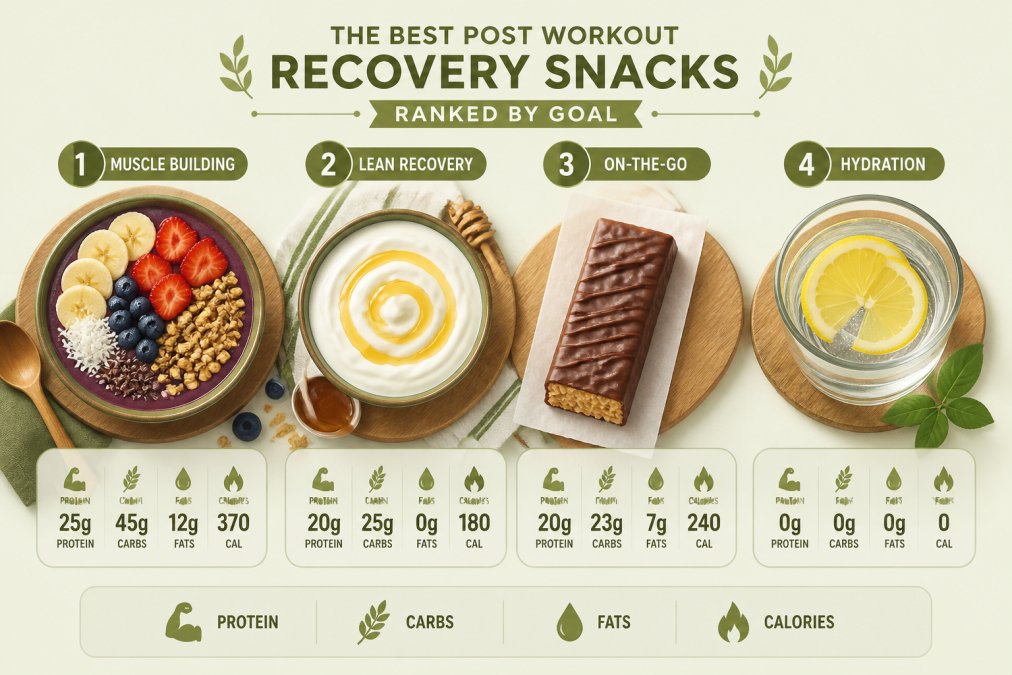
The best post workout recovery snack is a match between your nutritional needs, schedule, and what you'll actually eat consistently.
For Muscle Building: High-Protein Whole-Food Options
Muscle building demands the highest protein intake of any fitness goal, and whole-food sources deliver additional micronutrients that protein powders alone can't match.
1. Açai Bowl, An organic açai bowl delivers antioxidants that support inflammation reduction, natural carbohydrates for glycogen replenishment, and a customizable topping base where you can add granola, banana, and nut butter to hit your macronutrient targets. The antioxidant density of açai berries actively supports muscle soreness reduction.
2. Greek Yogurt with Fruit and Granola, Fage Total 0% Greek yogurt provides 18g of protein per 6oz serving with zero added sugar, plus live active cultures that support gut health. Pair it with a banana and a tablespoon of honey for a 3:1 carb-to-protein ratio that covers both glycogen replenishment and muscle repair.
3. Whey Protein Shake with Banana, Optimum Nutrition Gold Standard whey delivers 24g of fast-absorbing protein per serving with high leucine content. Blended with a banana, you get simple sugars to drive the insulin response and complex carbohydrates to sustain glucose levels.
For Plant-Based Athletes: Vegan Recovery Picks
Plant-based recovery is entirely viable when the protein dose and amino acid profile are right.
1. Garden of Life Sport Organic Plant-Based Protein, 30g of organic plant-based protein per serving, plus 5.5g of BCAAs, 5g of glutamine, and a recovery blend featuring tart cherry and turmeric for inflammation reduction. Tart cherry has a well-documented association with reduced muscle soreness in the 24-48 hours following intense training.
2. Orgain Organic Protein Powder, 21g of organic plant-based protein and a blend of 50 organic superfoods at a more accessible price point. Mix with oat milk and frozen banana for a complete recovery shake.
3. Açai Bowl with Hemp Seeds and Nut Butter, For plant-based athletes who prefer whole food over powder, an açai bowl topped with hemp seeds (complete amino acid profile), almond butter, and banana hits protein, carbohydrates, and antioxidants in a single bowl.
For Busy Schedules: Grab-and-Go Snacks That Actually Work
The best post workout recovery snack for a busy schedule is the one you can actually execute in under two minutes.
1. Quest Nutrition Protein Bar, 20-21g of protein, less than 1g of sugar, gluten-free, and available at most grocery stores and gyms. Keep a box in your gym bag and the recovery problem is solved before it starts.
2. Gatorade Recover Protein Shake (RTD), 20g of protein from a whey and casein blend, plus carbohydrates for glycogen replenishment, in a ready-to-drink bottle. The casein component extends amino acid availability longer than whey alone.
3. Muscle Milk Pro Series Shake, 33-40g of protein in a ready-to-drink format. This is the highest-protein grab-and-go option available.
4. RXBAR, 12g of protein from egg whites, dates, and nuts with a completely transparent ingredient list. The protein dose is lower than other bars, making it better as a bridge snack than a primary recovery meal.
Budget-Friendly Recovery Snacks Under $2 Per Serving
Recovery nutrition doesn't require expensive supplements.
Eggs, Hard-boiled eggs provide roughly 6g of complete protein per egg with high bioavailability. Two eggs post-workout costs well under $1 and provides all essential amino acids.
Cottage Cheese, High in casein protein, which digests slowly and extends amino acid availability for muscle repair. A cup of low-fat cottage cheese provides approximately 25g of protein. Pair with fruit for carbohydrates.
Banana with Peanut Butter, A banana replenishes glycogen with fast-acting simple sugars and provides potassium for electrolyte balance. Two tablespoons of peanut butter add protein and healthy fats. Total cost: under $1 per serving.
Whole Grain Toast with Tuna, Canned tuna provides roughly 20g of protein per can. Paired with whole grain toast for complex carbohydrates, this is a complete recovery meal that costs under $2.
Hydration and Electrolyte Replenishment After Exercise
Hydration status is the most overlooked variable in post-workout recovery. Muscle function, metabolic rate, and nutrient transport all depend on adequate hydration. Even mild dehydration impairs muscle protein synthesis and extends recovery time.
The goal post-exercise is rehydration, not just fluid replacement. Sweat contains sodium, potassium, magnesium, and chloride. Replacing fluid volume without replacing electrolytes can dilute blood sodium levels.
Practical electrolyte replenishment strategies:
- Water with sodium: Adding a small pinch of sea salt to your post-workout water accelerates rehydration by improving fluid retention at the cellular level.
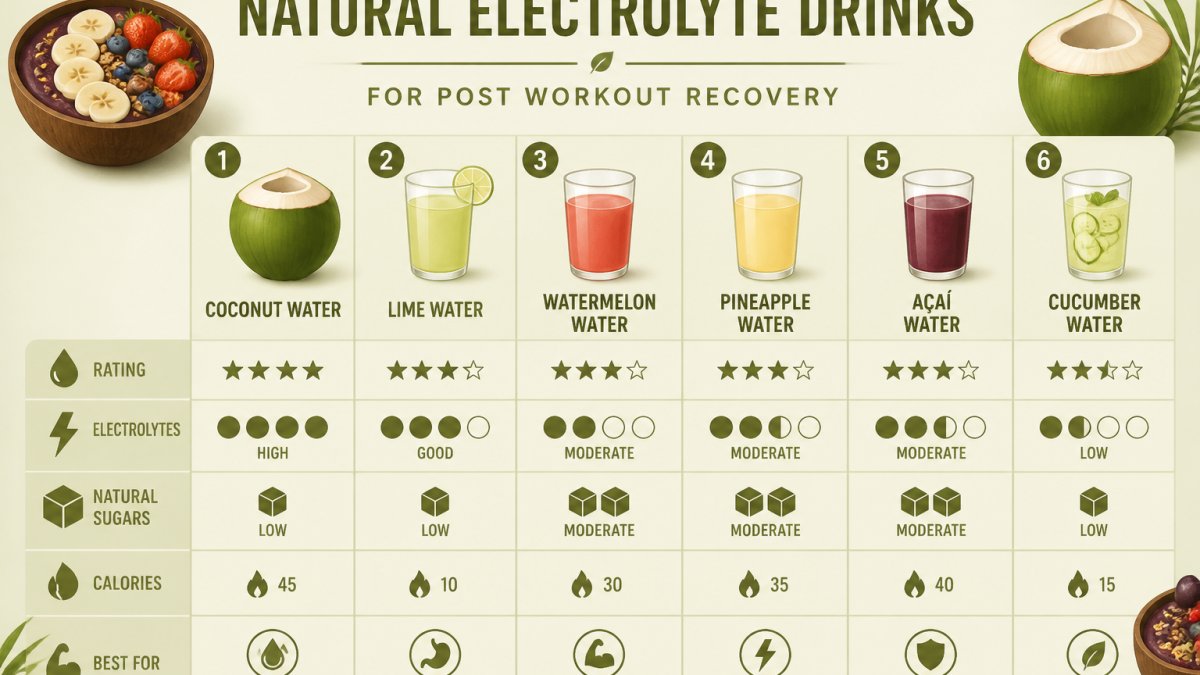
- Coconut water: A natural source of potassium and moderate sodium. Works well as a lower-sugar alternative to commercial sports drinks for moderate-intensity sessions.
- Whole food sources: Banana (potassium), Greek yogurt (sodium, potassium), and fruit naturally replenish several key electrolytes alongside macronutrients.
For most recreational athletes, plain water combined with a food-based post workout recovery snack that contains sodium and potassium covers electrolyte needs adequately. According to the American College of Sports Medicine's exercise and fluid replacement guidelines, drinking approximately 16-24 oz of fluid for every pound of body weight lost during exercise is a reliable rehydration target.
Meal Prep for Recovery: Temperature-Specific Snack Strategies
Meal prep is the difference between a recovery plan that works in theory and one that works on a Tuesday after a 6 a.m. workout when you're already running late. The goal is to remove every decision from the post-workout moment so that eating the right snack requires zero effort.

Temperature-specific snack strategies solve a problem most guides ignore: not all recovery snacks are practical in all conditions. Matching your snack format to the temperature and your environment improves consistency.
Cold-weather and indoor recovery:
- Overnight oats with protein powder: prep five jars on Sunday, refrigerate, grab one post-workout.
- Hard-boiled eggs and whole grain crackers: shelf-stable for several days, no reheating needed.
- Greek yogurt parfait: layer yogurt, granola, and fruit in a jar for a portable, cold-appropriate recovery meal.
Warm-weather and outdoor recovery:
- Açai bowls are the ideal warm-weather recovery snack. Cold, antioxidant-rich, and customizable for macronutrient targets.
- Frozen protein smoothie packs: blend and freeze in individual bags. Toss one in your gym bag and it thaws to smoothie consistency by the time you finish your cooldown.
- Chilled overnight oats with fresh fruit: more refreshing when consumed cold on a warm day.
Weekly meal prep checklist for recovery snacks:
- Hard-boil 8-10 eggs and refrigerate
- Prep 5 overnight oat jars with protein powder
- Portion peanut butter into individual containers
- Stock bananas, apples, and berries for grab-and-go carbohydrates
- Pre-portion protein powder into shaker cups for the week
- Save your World Green Açai order as a favorite for one-tap reordering on busy days
The goal isn't variety. It's reliability. Having the same two or three options prepped and ready every week removes decision fatigue and makes consistent post-workout nutrition automatic rather than aspirational.
Recovery nutrition is one area where the gap between knowing what to do and actually doing it consistently is enormous. The best post workout recovery snack is the one you actually eat, within the right timing window, with the right macronutrient balance for your goal. For athletes and active professionals in Larkspur and Marin County, World Green Açai makes that consistency easy: organic açai bowls crafted with the finest berries, ready when you are through convenient online ordering. Skip the line, hit your recovery window, and get back to what matters. Order online at World Green Açai today.
Frequently Asked Questions
What is a good recovery snack after a workout?
A good post workout recovery snack combines lean protein to support muscle protein synthesis and complex carbohydrates to replenish glycogen stores. Strong options include Greek yogurt with fruit, a protein bar with at least 20g of protein, a whole-food smoothie bowl, or a protein shake paired with a banana. Açai bowls are a particularly well-rounded choice, they deliver antioxidants, natural carbohydrates, and can be topped with protein-rich add-ins like nut butter or granola.
How much protein do I need after a workout?
Most sports nutrition guidance points to 20-40 grams of protein after training as the range that maximizes muscle protein synthesis for the average adult. Larger athletes or those doing heavy resistance training sit toward the higher end. The source matters too, whey protein is fast-digesting and well-studied, but plant-based proteins like pea or brown rice protein work well when combined to cover all essential amino acids.
Is it better to eat carbs or protein after a workout?
Both matter, and eating them together produces better recovery outcomes than either alone. Protein supplies the amino acids needed for muscle repair, while carbohydrates trigger an insulin response that drives glucose into muscle cells and accelerates glycogen replenishment. A carb to protein ratio for recovery of roughly 3:1 or 4:1 is commonly recommended for endurance athletes, while strength-focused individuals often do well with a 2:1 ratio and a higher absolute protein intake.
What is the golden hour after exercise?
The 'golden hour' refers to the anabolic window, roughly 30 to 60 minutes after your workout ends, when muscles are most receptive to nutrients. During this period, blood flow to muscle tissue is elevated, glucose uptake is faster, and muscle protein synthesis rates are at their peak. Eating a post workout recovery snack within this window helps reduce muscle soreness, speed up glycogen replenishment, and support overnight muscle repair.
Are açai bowls a good post-workout snack?
Yes, açai bowls made with organic açai and whole-food toppings are an excellent post workout recovery snack. Açai delivers antioxidants that help with inflammation reduction and muscle soreness, while natural fruit toppings provide simple sugars for fast glycogen replenishment. Add granola for complex carbohydrates and nut butter or protein powder for amino acids, and you have a snack that checks every recovery box in one convenient, great-tasting bowl.
This article was written using GrandRanker