 listicle
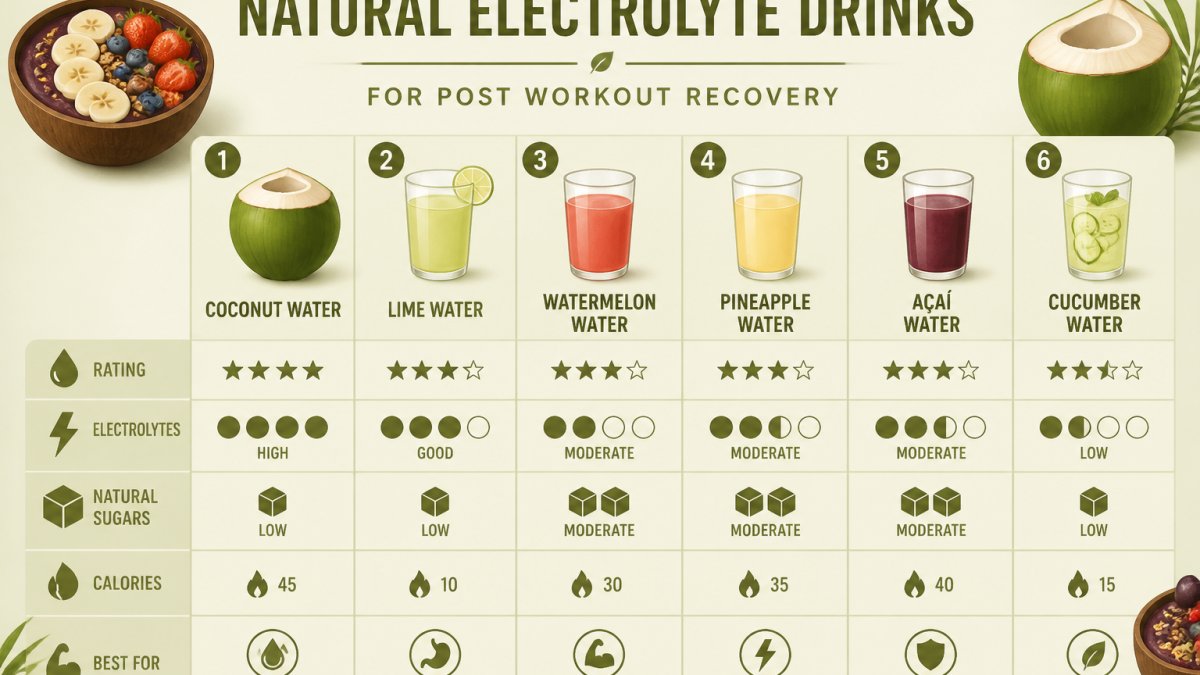
Natural Electrolyte Drinks for Post Workout Recovery
Table of Contents
- Why Your Body Needs Electrolytes After a Workout
- How to Replace Electrolytes After Exercise
- Natural Electrolyte Sources: What to Look For
- 1. Coconut Water: The Classic Post-Workout Hydration Option
- 2. Fruit Juices: Orange, Lemon, Watermelon, and Tart Cherry
- 3. Homemade Electrolyte Drink Recipe You Can Make in Minutes
- 4. Milk, Smoothies, and Broth: Overlooked Recovery Drinks
- Safety and Health Considerations Before You Mix Your Own
- Frequently Asked Questions
Last Updated: October 6, 2026
Why Your Body Needs Electrolytes After a Workout
Natural electrolyte drinks for post workout recovery work because sweat strips away minerals your muscles and nerves need, and plain water alone does not fully replace them, which is why electrolyte drinks earn their place after a sweaty session.
Electrolytes are minerals that carry an electric charge and help regulate fluid balance, muscle contractions, and nerve signals. The main ones you lose through sweat are sodium, potassium, magnesium, and calcium.
What Electrolytes Are and What They Do
Sodium controls how much water your body holds and keeps your nerves firing. Potassium supports muscle function and heart rhythm. Magnesium and calcium handle muscle relaxation and bone health. When these minerals drop too low, cramps, fatigue, and post-exercise fog often trace back to fluid and electrolyte loss rather than a lack of fitness.
How Much You Actually Lose Through Sweat
The amount varies widely: a light session might cost a few hundred milliliters, while an intense hour in the heat pushes loss far higher. Sodium is the electrolyte you lose in the greatest quantity, which is why salty foods and drinks matter after a sweaty workout.
According to Cleveland Clinic guidance on electrolyte sources, sodium, potassium, magnesium, and calcium are the key minerals to replace, and food and drink sources can do the job just as well as formulated products.
How to Replace Electrolytes After Exercise
Replacing electrolytes after exercise comes down to fluid and minerals: drink enough to cover your sweat loss, and pair it with sodium and potassium from real food or a simple homemade mix. Here is a framework to consider:
- Under 60 minutes, light sweating: water plus a balanced meal within a couple of hours
- 60 to 90 minutes, moderate sweating: water plus a natural electrolyte drink or a salty snack
- Over 90 minutes or heavy sweating: a drink with sodium and potassium, plus carbohydrates for energy
Matching Your Drink to Workout Duration and Sweat Rate
Sweat rate is personal. To estimate your loss, weigh yourself before and after a session: each pound lost is roughly a pint of fluid to replace. If you sweat heavily or notice white salt streaks on your clothes, lean toward drinks with more sodium; light sweaters doing short sessions do fine with fruit juice or coconut water.
| Workout Scenario | Fluid Need | Electrolyte Priority | Good Natural Option |
|---|---|---|---|
| Under 60 min, light sweat | Water | Minimal | Water + fruit |
| 60-90 min, moderate sweat | 1-2 cups | Sodium, potassium | Coconut water |
| 90+ min or heavy sweat | 2-3 cups | Sodium, potassium, carbs | Homemade mix |
| Hot weather, long session | 3+ cups | Sodium first | Salted citrus drink |
Natural Electrolyte Sources: What to Look For
The best natural electrolyte sources give you sodium and potassium together, with little else you do not need. Favor drinks with real ingredients over long lists of additives.
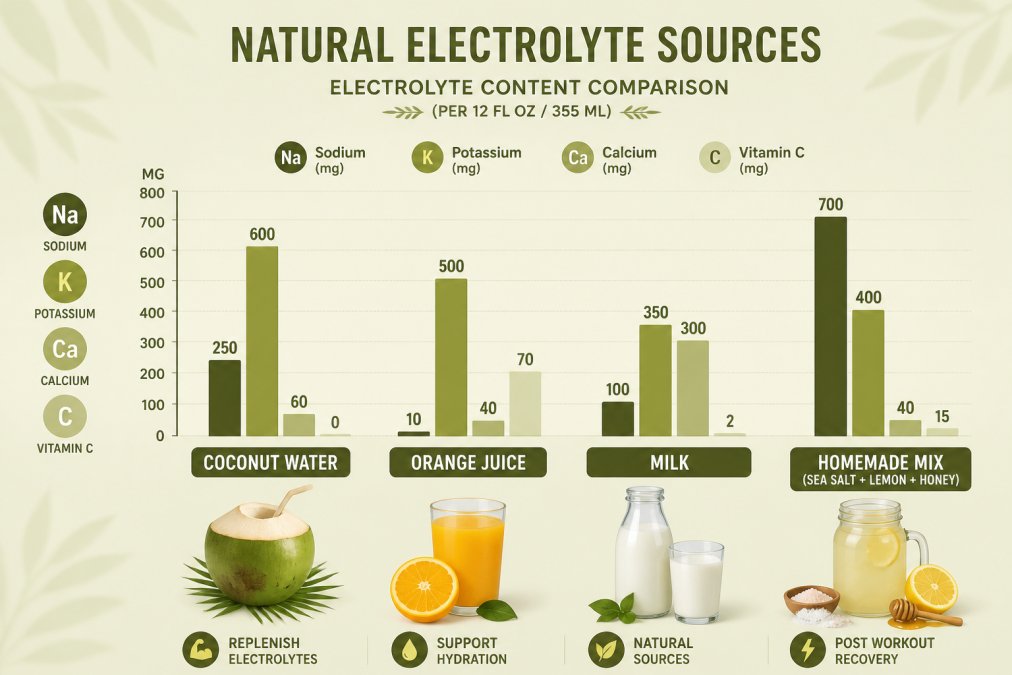
A few things to check before you buy or mix:
- Sodium content: the mineral most people lose most of, so it should be present
- Potassium: supports muscle function and pairs well with sodium
- Sugar: some natural sugar aids absorption, but you do not want a dessert
What the Numbers Actually Look Like
Here are approximate amounts common natural options deliver per one-cup (8 fl oz) serving. Values are typical, not exact, because brands and ripeness vary:
| Natural Option | Sodium (mg) | Potassium (mg) | Carbs (g) | Calories |
|---|---|---|---|---|
| Coconut water (unsweetened) | 40-60 | 470-600 | 9-11 | 45-60 |
| Orange juice (fresh) | 0-5 | 450-500 | 26 | 110-120 |
| Watermelon juice (fresh) | 0-5 | 170-220 | 10-12 | 45-55 |
| Low-fat milk | 100-120 | 380-400 | 12 | 100-120 |
| Broth (vegetable or chicken) | 500-900 | 50-150 | 1-3 | 15-40 |
| Homemade mix (recipe below) | 250-300 | 60-90 | 10-14 | 50-70 |
Two things jump out. Coconut water is a potassium powerhouse but a sodium lightweight, so salty sweaters need a pinch of salt. Broth flips that ratio, delivering more sodium per cup than almost any sports drink.
How These Numbers Compare to What You Lose
Sweat is mostly water, but its sodium concentration typically runs 500 to 1,500 mg per liter, with heavy, salty sweaters at the top of that range. Potassium loss is much smaller, usually under 200 mg per liter. Lose a liter of sweat during a hot hour of cycling and you may need 800 mg or more of sodium; a cup of coconut water gives you 50 mg, a cup of broth 700 mg.
A practical way to think about it:
- Light sweater, short session: potassium-forward options like coconut water or watermelon juice are fine on their own.
- Heavy sweater or salty streaks on your clothes: you need a sodium-forward drink, so add salt to whatever base you prefer.
- Long session with real fatigue: you want sodium and some carbohydrate together, which is where the homemade mix below earns its place.
Reading a Label Without Getting Fooled
When you buy a bottled natural electrolyte drink, check the nutrition panel against the numbers above. A drink claiming "natural electrolytes" but listing 10 mg of sodium and 30 mg of potassium per serving is essentially flavored water. Also watch for added sugar hiding behind natural-sounding names: cane sugar, agave, honey, and fruit juice concentrate all count, and a bottle can easily carry 25 to 35 grams.
1. Coconut Water: The Classic Post-Workout Hydration Option
Coconut water earns its reputation as a natural hydration drink. It carries potassium and other electrolytes and comes ready to drink straight from the container. For moderate workouts, it is one of the simplest options available.
Where it falls short is sodium. Most coconut water is relatively low in sodium compared with what heavy sweaters lose. If you are a salty sweater, pair it with a pinch of sea salt or a salty snack.
2. Fruit Juices: Orange, Lemon, Watermelon, and Tart Cherry
Fruit juices bring potassium, natural sugar, and flavor to post-workout hydration.
Watermelon juice is light, refreshing, and easy to blend fresh at home. A squeeze of lemon or lime in any of these adds brightness and vitamin C.
One caution: juice is high in natural sugar. For everyday recovery, dilute it with filtered water and add a pinch of salt so you get the minerals without a sugar spike.
3. Homemade Electrolyte Drink Recipe You Can Make in Minutes
A homemade electrolyte drink recipe takes about two minutes and can be a cost-effective alternative to packaged mixes. Here is a version you might consider.
You will need:
- 2 cups filtered water
- Juice of 1 lemon or 1 orange (about 2 to 3 tablespoons)
- 1/8 teaspoon sea salt
Steps:
- Pour the filtered water into a glass or bottle.
- Add the sea salt and stir until it dissolves.
- Squeeze in the citrus juice.
- Stir in honey to taste for a little energy.
- Chill and drink within a few hours.
The salt supplies sodium, the citrus adds flavor and vitamin C, and the honey provides a small amount of carbohydrate. Cleveland Clinic's DIY electrolyte guidance notes that citrus juices like lemon, lime, and grapefruit can serve as a sodium source in homemade drinks, which is exactly the role they play here.
What One Serving Actually Delivers
Here is the approximate nutrition for the full recipe (2 cups), which most people drink as one or two servings:
| Nutrient | Amount per 2-cup batch |
|---|---|
| Sodium | 250-300 mg |
| Potassium | 60-90 mg |
| Carbohydrate | 10-14 g |
| Calories | 50-70 |
| Sugar | 8-12 g |
For comparison, a typical 20 oz bottled sports drink carries roughly 270 mg of sodium, 75 mg of potassium, 34 g of carbohydrate, and 130 calories. The homemade version lands in the same sodium range with about a third of the sugar. If you are a heavy sweater and want to push sodium higher, add another 1/8 teaspoon of salt, which adds roughly 290 mg and brings the batch to about 550 mg total.
Flavor Variations That Actually Work
Citrus and honey is the base, but it gets old fast. These swaps hold up:
- Lime and mint: swap lemon for lime, muddle a few mint leaves, skip the honey if you want it tart.
- Watermelon and sea salt: blend 1 cup of fresh watermelon, strain, and use it in place of half the water. Adds potassium and natural sweetness.
- Tart cherry and orange: half tart cherry juice, half orange juice, topped with water and salt. Tart cherry brings potassium and a distinct flavor that some people find easier to drink after a hard session.
Storage and Make-Ahead Limits
A fresh citrus-and-salt drink is not shelf-stable, so plan accordingly.
- Refrigerate in a sealed bottle and drink within 24 hours; after that the citrus tastes flat and bacterial risk climbs.
- Do not leave it in a hot car or gym bag for more than about two hours.
- For make-ahead, mix the dry portion (salt and any honey) into a small jar and keep it at room temperature, then add water and citrus fresh. The dry mix keeps for weeks.
4. Milk, Smoothies, and Broth: Overlooked Recovery Drinks
Milk, smoothies, and broth all supply electrolytes and often get ignored. Milk provides calcium and potassium and is ready to drink for anyone who tolerates dairy.
This is also where a thick, real-fruit bowl fits naturally. At World Green Açai, our organic açai bowls give you a nutrient-dense option that works as a post-workout recovery snack, and you can order online through our app to skip the line.
Safety and Health Considerations Before You Mix Your Own
Most people can handle a homemade electrolyte drink without issue, but a few cautions matter.
- Watch your sodium if you have high blood pressure or heart or kidney conditions. Talk to your doctor before adding salt to drinks.
- Do not treat a drink as a meal. Electrolytes replace minerals, not the protein and calories a hard workout burns.
- Skip the sugar overload. A little honey helps absorption; a lot just adds empty calories.
If you are unsure how much you need, start simple: water, a pinch of salt, and a piece of fruit cover most everyday workouts. Save concentrated mixes for your longest, sweatiest sessions.
Frequently Asked Questions
What are the best natural electrolyte drinks after a workout?
Coconut water, 100% fruit juices like orange and tart cherry, milk, smoothies, and broth all provide naturally occurring electrolytes. A homemade mix of filtered water, lemon juice, a pinch of sea salt, and honey gives you control over sodium and sugar. The best choice depends on your sweat rate and workout duration. For light sweating under 60 minutes, coconut water or juice works well. For longer or more intense sessions, a drink with added sodium like a homemade recipe or broth may replenish losses more effectively.
Can you make an electrolyte drink at home?
Yes. A basic homemade electrolyte drink recipe combines filtered water, a pinch of sea salt for sodium, lemon or lime juice for flavor and additional sodium, and a small amount of honey for glucose and carbohydrates. The sodium-glucose cotransport mechanism helps your body absorb water faster when sodium and glucose are present together. You can adjust the salt and honey based on how much you sweated. This approach avoids artificial ingredients found in many commercial sports drinks while still supporting rehydration.
Is coconut water good for post-workout recovery?
Coconut water is a natural source of potassium and other electrolytes, making it a solid choice for everyday hydration and light to moderate exercise. It contains less sodium than most commercial electrolyte replacement drinks, so if you sweat heavily or exercise for over an hour, you may need to pair it with a salty snack or add a pinch of salt. It is low-calorie and refreshing, which makes it easy to drink after a workout when you want something light.
When should I drink electrolytes after exercise?
You need electrolyte replacement when you sweat significantly, typically during exercise lasting longer than 60 minutes or in hot conditions. For light sweating under an hour, water and a balanced meal usually restore fluid loss and minerals. Signs that you need more than water include muscle cramps, fatigue that lingers, or dark urine. After intense or long workouts, drink a natural electrolyte drink within 30 to 60 minutes to support rehydration and post-workout recovery. Listen to your body and adjust based on how you feel.
Are sports drinks better than natural electrolyte drinks?
Commercial sports drinks are formulated with specific sodium, potassium, and carbohydrate ratios, which can be useful for endurance athletes or very intense training. Natural options like coconut water, fruit juice, milk, and homemade recipes provide electrolytes from whole-food sources without artificial ingredients, colors, or excess sugar. For most people doing moderate exercise, natural electrolyte drinks support hydration and recovery just as well. The right choice comes down to your workout intensity, how much you sweat, and whether you prefer organic ingredients over packaged mixes.
Recovery is about more than a single drink. It is fluid, minerals, and real food working together, and getting it right takes some planning. At World Green Açai, we make that easier with organic açai bowls, convenient online ordering, and easy mobile app access so you can refuel fast. Order online with World Green Açai and give your body a recovery option that actually tastes good.