 how-to
How to Balance Macronutrients in Açai Bowls
Table of Contents
- Understanding Macronutrients in Açai Bowls
- Step 1: Choose Your Unsweetened Açai Base
- Step 2: Calculate Your Protein Needs and Select High Protein Acai Bowl Toppings
- Step 3: Add Healthy Fats for Satiety and Nutrient Absorption
- Step 4: Balance Carbohydrates and Manage Sugar Content
- Acai Bowl Nutrition Facts and Macro Ratios
- Low Sugar Acai Bowl Recipes for Different Fitness Goals
- Common Mistakes to Avoid When Building Your Bowl
- Putting It All Together
- Frequently Asked Questions
Last Updated: October 2, 2026
Understanding Macronutrients in Açai Bowls
Macronutrients, protein, carbohydrates, and fat, are the three nutrients your body needs. When you balance macronutrients acai bowls, you create a meal that fuels your body and keeps you satisfied longer.
Most açai bowls sold today are sugar bombs, loaded with sweetened bases, honey, and syrups.
To balance macronutrients acai bowls, it's simple: pick an unsweetened base, add protein, and include healthy fats.
Step 1: Choose Your Unsweetened Açai Base
Your base is everything. Most commercial açai bowls use sweetened purees loaded with added sugars. This single choice determines whether your bowl is healthy or just dessert.
How to Identify Truly Unsweetened Açai
Real açai is tart and earthy with no added sugar. If your base tastes sweet, something's been added.
Unsweetened açai should taste slightly bitter and earthy (not sweet), appear deep purple to black (not bright magenta), feel smooth and creamy, and smell mildly fruity (not artificially sweet).
Reading the Ingredient List
Unsweetened açai puree should list only one ingredient: "Açai." Avoid added sugars (cane sugar, honey, agave), sugar alcohols (erythritol, xylitol), fruit juice concentrates, artificial sweeteners, and fillers (guar gum, maltodextrin). If you see more than one ingredient, it's not pure açai.
Why Unsweetened Açai Matters for Blood Sugar
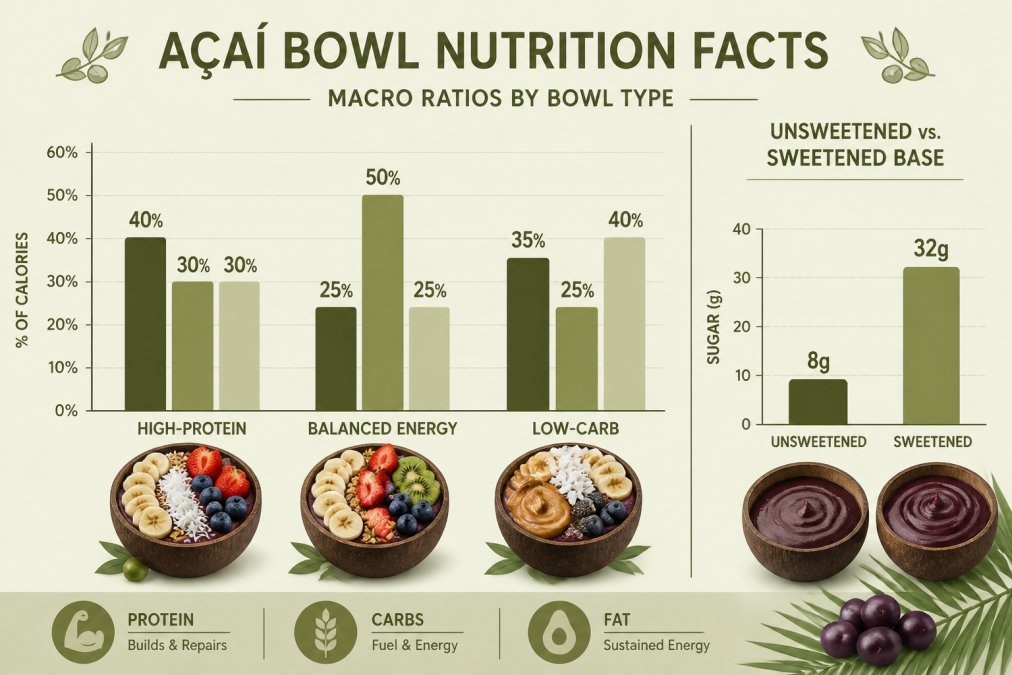
Unsweetened açai contains 1-2 grams of natural sugar per half cup and is high in fiber and polyphenols that slow sugar absorption. Sweetened versions spike glucose and cause crashes. A bowl with sweetened açai base contains 25-35 grams of sugar before toppings; unsweetened starts at 1-2 grams, a 30-gram difference between a meal and a dessert.
Where to Buy Unsweetened Açai
Look for brands sourcing directly from Brazil or Peru with only açai on the label. Avoid chain smoothie shops unless they confirm unsweetened bases.
Step 2: Calculate Your Protein Needs and Select High Protein Acai Bowl Toppings
Protein is the most important macronutrient for satiety. Most açai bowls contain almost zero protein, which is why you're hungry an hour later. Aim for 15-30 grams per bowl, depending on your body weight and fitness goals.
Once you know your target, choose your sources. You have two options: protein powder or whole foods.
Protein Powder Options
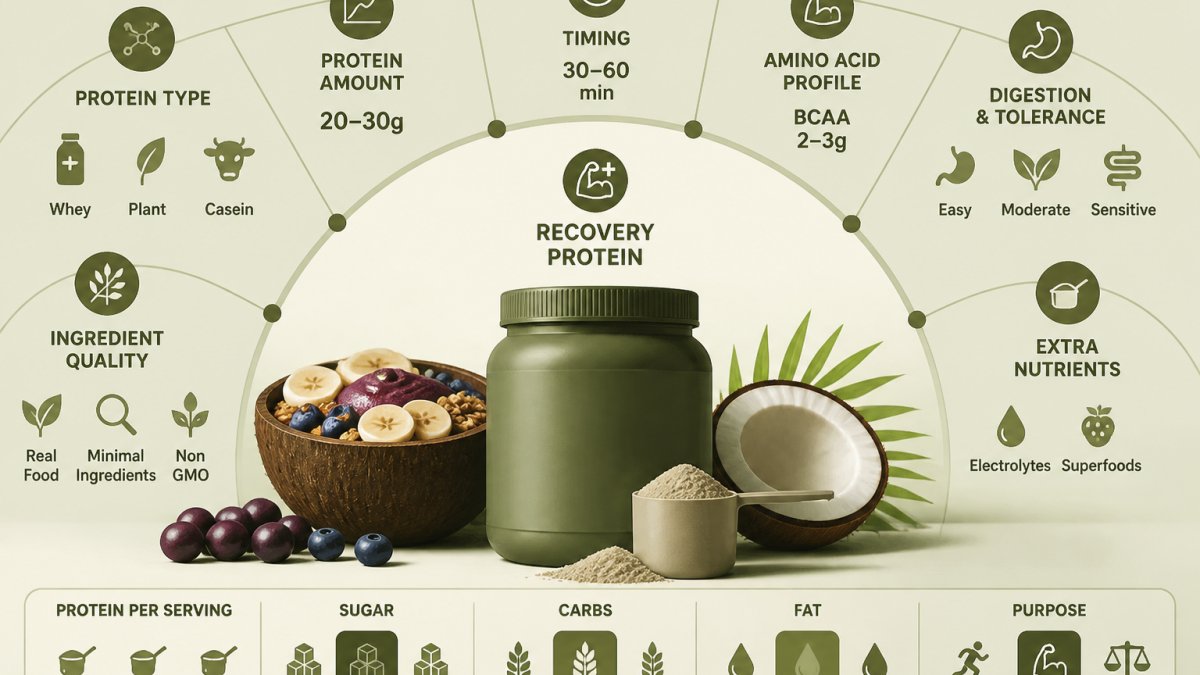
Protein powder is the fastest way to add protein. Whey protein adds 20-25 grams per scoop and blends seamlessly; plant-based options (pea, hemp, rice) work too but are slightly grainier. Blend your powder with açai, liquid, and fruit until smooth.
Whole Food Protein Sources
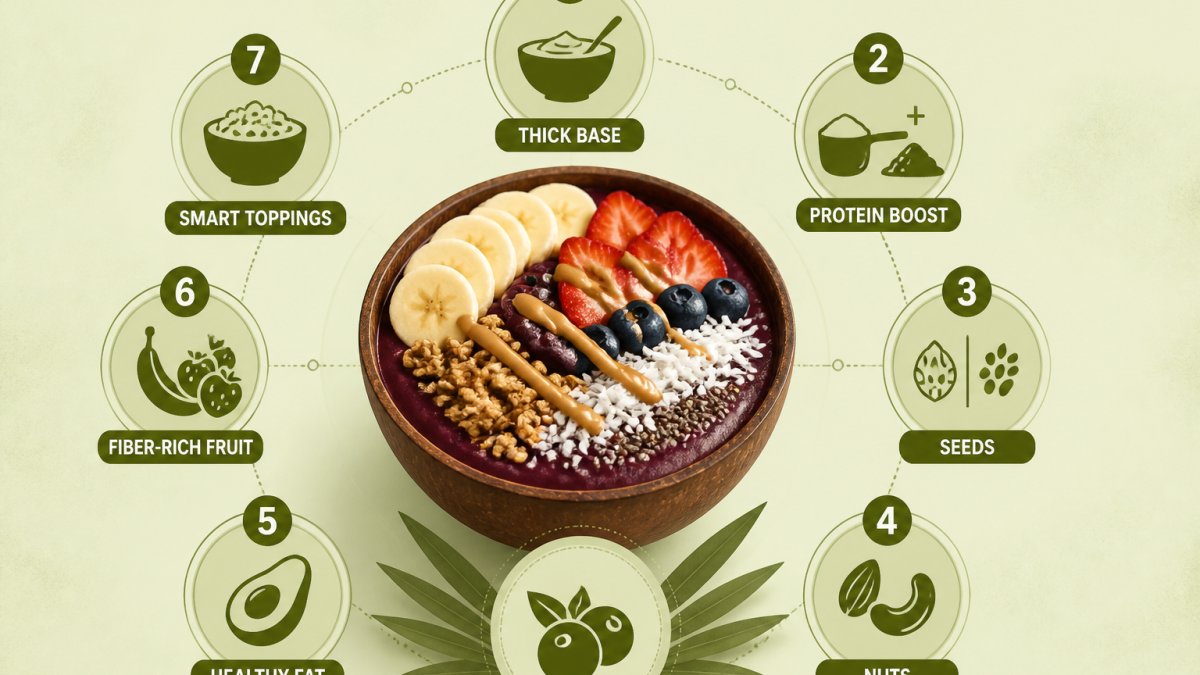
Greek yogurt adds 15-20 grams per half cup and blends smoothly. Nut butters (2 tbsp) add 6-8 grams of protein plus healthy fats. Nuts and seeds on top add crunch: hemp hearts (10g per 3 tbsp), chia seeds (5g per 2 tbsp), flax seeds (8g per 3 tbsp).
Step 3: Add Healthy Fats for Satiety and Nutrient Absorption
Healthy fats keep you satisfied, help your body absorb fat-soluble vitamins (A, D, E, K), and slow carbohydrate absorption. This last point is why fat matters more than most people realize.
How Fat Stabilizes Blood Sugar
Carbs alone spike blood sugar quickly, triggering an insulin crash. Fat slows carbohydrate digestion by coating carbs and delaying their entry into your bloodstream, creating a gentler rise and sustained energy. A bowl with 15 grams of fat keeps you full until lunch; one with no fat leaves you hungry by mid-morning, even at the same calories.
Glycemic Index: Which Fats Matter Most
Best fats for blood-sugar control: Nut butters (2 tbsp = 8g fat + 3-4g fiber; blend in), whole nuts and seeds (almonds, walnuts, hemp, chia; scatter on top), coconut oil (1 tbsp = 14g MCT fat; blend in), avocado (1/4 fruit = 6g fat + 2.5g fiber; layer on top).
Practical Fat Targets for Different Goals
Aim for 10-15 grams of healthy fat per bowl. For sustained energy: 15-18g (nut butter + nuts). For post-workout recovery: 10-12g (carbs absorb faster). For blood-sugar management: 15-20g (stronger carb buffer).
How to Add Fat Without Overdoing Calories
Fat is calorie-dense (9 per gram vs. 4 for carbs/protein). Strategy 1: Blend 1-2 tbsp nut butter into your base for creaminess. Strategy 2: Scatter 1 oz nuts or seeds on top for crunch. Strategy 3: Use full-fat coconut milk as your liquid base (5g fat per 1/4 cup). Strategy 4: Layer 1/4 avocado on top for fiber + fat synergy.
Step 4: Balance Carbohydrates and Manage Sugar Content
Keep total sugar under 25-30 grams per bowl. Use: fresh berries (1 cup = 2-4g sugar), banana (1/2 = 7g sugar), mango (1/4 cup = 6g sugar), unsweetened granola (1/4 cup = 7g sugar). Avoid: honey (1 tbsp = 17g sugar), agave (1 tbsp = 16g sugar), sweetened granola, chocolate chips.
Acai Bowl Nutrition Facts and Macro Ratios
A balanced açai bowl should hit: 20-30g protein, 40-50g carbs, 10-15g fat, 300-400 calories. This ratio keeps you full and gives steady energy.
| Component | Protein (g) | Carbs (g) | Fat (g) | Calories |
|---|---|---|---|---|
| 1/2 cup unsweetened açai | 1 | 4 | 2 | 45 |
| 1 scoop protein powder | 25 | 2 | 1 | 110 |
| 1/2 cup berries | 1 | 10 | 0 | 40 |
| 2 tbsp almond butter | 7 | 3 | 18 | 190 |
| 2 tbsp granola | 3 | 15 | 5 | 100 |
| 1 tbsp chia seeds | 2 | 5 | 3 | 60 |
| Total | 39 | 39 | 29 | 545 |
[IMAGE: Bar chart comparing macro ratios across four bowl types: High-Protein (40% protein, 30% carbs, 30% fat), Balanced Energy (25% protein, 50% carbs, 25% fat), Low-Carb (35% protein, 25% carbs, 40% fat), and Unsweetened vs.
Low Sugar Acai Bowl Recipes for Different Fitness Goals
Building the right bowl depends on your goals. Here are three recipes designed for different needs.
High-Protein Recipe
High-Protein (35g protein, 42g carbs, 12g fat, 340 cal): 1/2 cup unsweetened açai + 1/2 cup almond milk + 1 scoop protein powder. Top with 1/2 banana, 1/2 cup blueberries, 2 tbsp almonds, 1 tbsp chia seeds, 1/4 cup Greek yogurt. Eat within 30 minutes of workout.
Low-Carb Recipe
Target: 28 grams protein, 25 grams carbs, 18 grams fat
This recipe works if you're managing blood sugar or following a low-carb approach.
Base:
- 1/2 cup unsweetened açai puree
- 1/2 cup unsweetened coconut milk
- 1 scoop vanilla protein powder
Toppings:
- 1/4 cup raspberries
- 2 tablespoons raw walnuts
- 1 tablespoon almond butter
- 1 tablespoon unsweetened coconut flakes
- Pinch of cinnamon
Macros: 28g protein, 24g carbs, 18g fat (340 calories)
Raspberries are lower in sugar than most fruits. Walnuts and almond butter provide healthy fats. Coconut milk is lower in carbs than regular milk.
Balanced Energy Recipe
Target: 22 grams protein, 55 grams carbs, 14 grams fat
This recipe is ideal for sustained energy throughout your day. It works for anyone who wants a complete meal.
Base:
- 1/2 cup unsweetened açai puree
- 1/2 cup unsweetened almond milk
- 1/2 frozen banana
Toppings:
- 1/2 cup fresh strawberries
- 1/4 cup granola (unsweetened)
- 2 tablespoons almond butter
- 1 tablespoon flax seeds
- Drizzle of raw honey (1 teaspoon)
Macros: 22g protein, 56g carbs, 14g fat (380 calories)
This bowl includes all three macros in balanced amounts. The honey adds just enough sweetness without overdoing sugar.
Common Mistakes to Avoid When Building Your Bowl
Most people sabotage their açai bowls without realizing it.
Mistake 2: Skipping protein. A bowl with fruit and granola is just dessert.
Mistake 4: Choosing granola over nuts. Most granola is 30% sugar.
Mistake 5: Making your bowl too big. Portion control matters.
Mistake 6: Adding fruit juice or smoothie mixes. These are concentrated sugar.
Putting It All Together
Building a balanced açai bowl takes five minutes once you know the formula. Start with unsweetened açai.
The result is a bowl that tastes like a treat but actually fuels your body.
When you're ready to try a professionally made bowl, World Green Açai uses real, unsweetened açai from Northern Brazil.
Frequently Asked Questions
How much protein should I add to an acai bowl to balance macros?
Most fitness goals require 20-40g of protein per bowl. For post-workout recovery, aim for the higher end. You can reach this with 1-2 scoops of protein powder (20-40g), Greek yogurt (15-20g per serving), or a combination of nut butters and seeds. The exact amount depends on your daily protein target and other meals you're eating.
What are the best high protein acai bowl toppings?
Collagen peptides, hemp hearts, chia seeds, and nut butters deliver both protein and healthy fats. Greek yogurt adds creaminess and protein. For whole-food options, add granola with nuts or seeds, or layer in unsweetened coconut flakes. Combine 2-3 toppings to reach your protein goal without overloading calories.
How do I know if my acai bowl is balanced nutritionally?
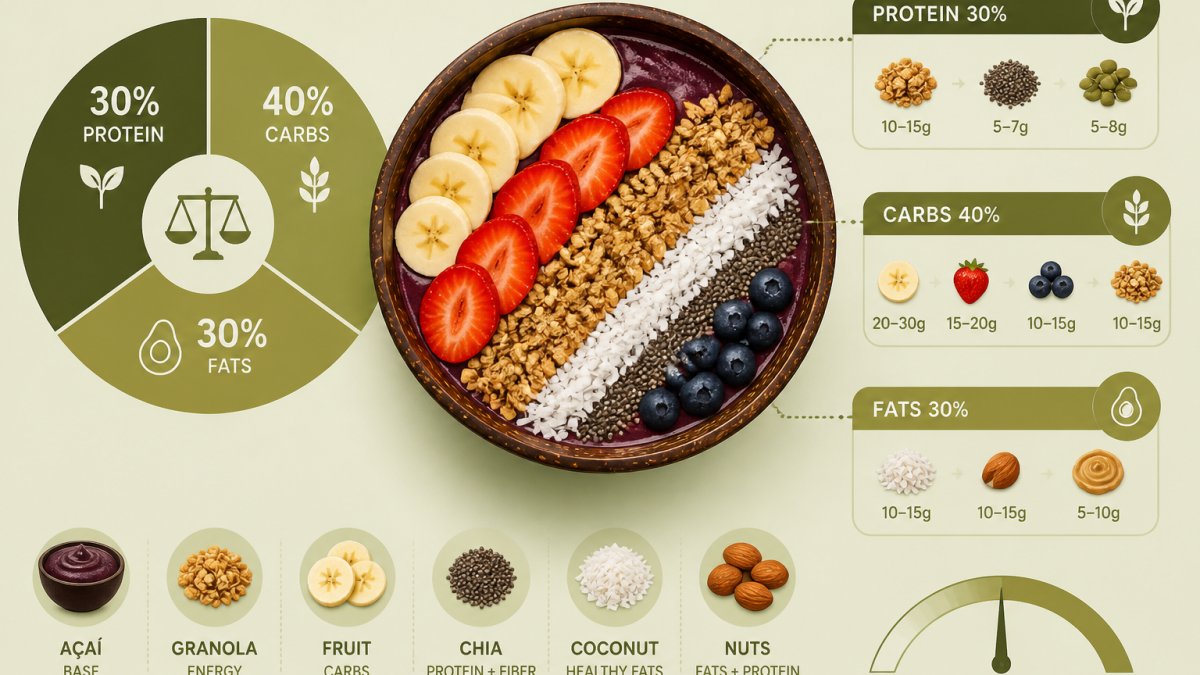
Check the macronutrient breakdown: aim for roughly 40% carbs, 30% protein, and 30% healthy fats. Use the acai bowl nutrition facts approach: measure your base (unsweetened puree), protein source, toppings, and any liquid. Apps or simple calculations help track this. Real açai from reputable sources ensures you're starting with a nutrient-dense foundation.
Can I make a low sugar acai bowl that still tastes good?
Yes. Use unsweetened açai puree as your base, skip honey or sweetened yogurt, and rely on natural sweetness from berries and nuts. Add healthy fats like almond butter or coconut oil for richness. Low sugar acai bowl recipes work best when you layer textures: creamy base, crunchy toppings, and chewy elements like chia seeds. The quality of real organic açai makes a significant difference in flavor.
USDA Nutrition Database
Academy of Nutrition and Dietetics on Macronutrient Balance
Harvard School of Public Health on Healthy Fats and Satiety