 how-to
Benefits of Eating Antioxidants After Intense Exercise
Table of Contents
- How Antioxidants After Exercise Help Your Body Recover
- Antioxidants and Muscle Soreness: What the Evidence Shows
- Antioxidant-Rich Foods for Athletes to Eat After Training
- Antioxidant Supplements and Exercise Adaptations: When More Isn't Better
- Post-Workout Nutrition for Recovery: Timing, Dose, and Real Meals
- Matching Antioxidant Choices to Your Training Type and Goal
- Conclusion: Eat Real Food, Recover Well
- Frequently Asked Questions
Last Updated: October 12, 2026
How Antioxidants After Exercise Help Your Body Recover
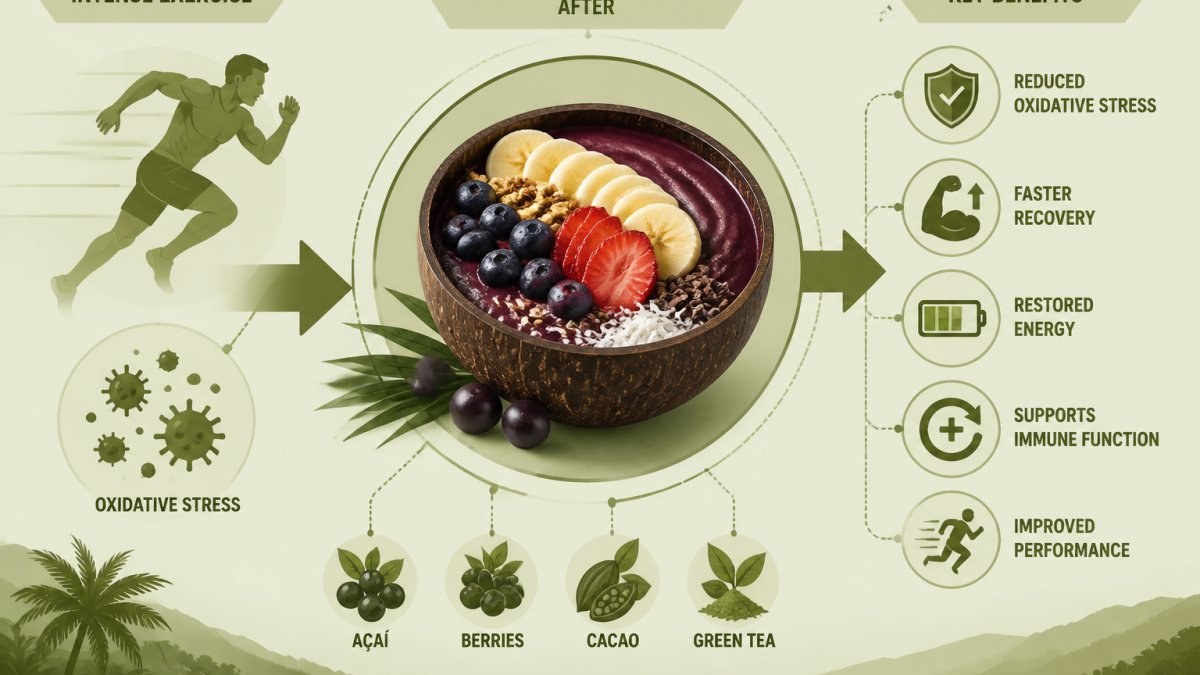
The benefits of eating antioxidants after intense exercise come down to one job: cleaning up the mess a hard workout leaves behind.
Oxidative stress is the imbalance between free radicals and your body's ability to neutralize them.
At World Green Açai, runners and gym regulars in Larkspur ask us the same thing: what should I eat after a hard workout?
Antioxidants are natural compounds that neutralize free radicals, limiting damage so your muscles can rebuild.
What Oxidative Stress and Free Radicals Actually Do
Free radicals are molecules with an unpaired electron that steal electrons from nearby cells, triggering a chain reaction called oxidative stress. Hard training spikes these molecules, and the body uses that spike as a signal to build endurance and strength. The goal isn't zero free radicals, it's balance.
- Reactive oxygen species (ROS): the main free radicals made during exercise
- Cell protection: antioxidants donate electrons to stop the chain
- Scavenging: the process of clearing free radicals from the bloodstream
That's the theory. But what does it mean for soreness?
Antioxidants and Muscle Soreness: What the Evidence Shows
Research on antioxidants and muscle soreness is mixed: some studies show less soreness with antioxidant-rich foods, others little change. The strongest signal comes from whole foods, not high-dose pills.
Delayed-Onset Muscle Soreness (DOMS) and the 24- to 72-Hour Window
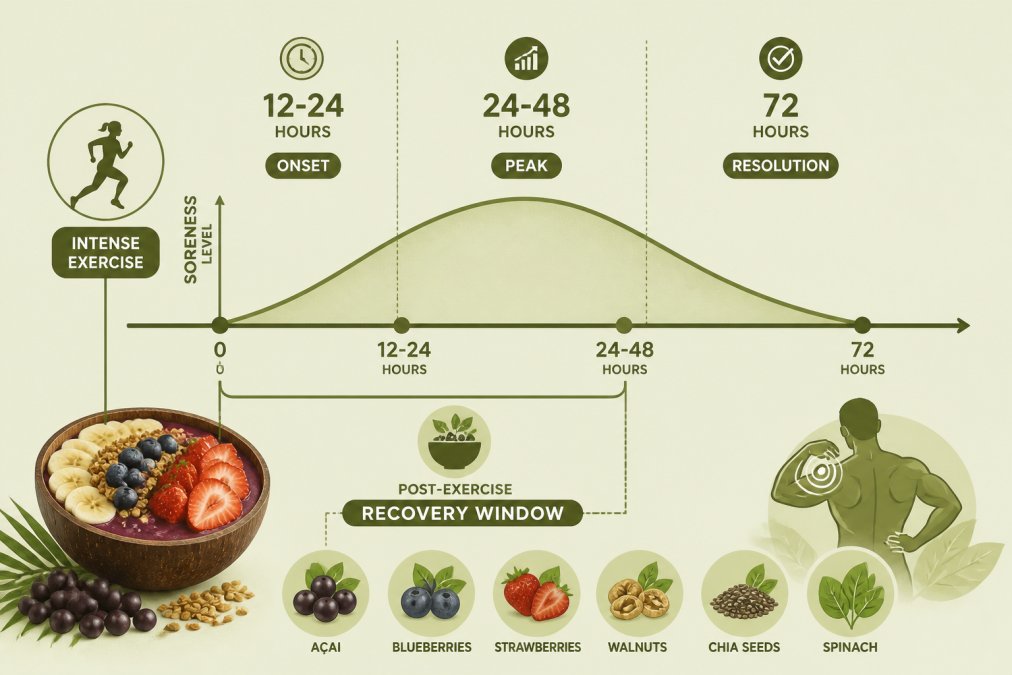
Delayed-onset muscle soreness (DOMS) is the aching you feel a day or two after hard training. It starts within 24 hours, peaks between 24 and 48 hours, and fades by 72 hours. DOMS comes from tiny tears in muscle fibers, not lactic acid, a myth worth dropping. Antioxidants may ease the ache by calming inflammation, but timing matters: eat them during the recovery window, roughly the first few hours after training, when your body is most receptive.
Antioxidant-Rich Foods for Athletes to Eat After Training
The best antioxidant-rich foods for athletes are colorful plants: berries, tart cherries, leafy greens, and green tea. They deliver polyphenols and flavonoids, plant compounds that fight oxidative damage. Whole foods beat supplements because real berries come packaged with fiber, water, vitamin C, and dozens of polyphenols that appear to work together rather than in isolation. Here's a practical framework you can use after a hard session.
What a Recovery Portion Actually Looks Like
You don't need a lab scale, everyday references get you close:
- Berries: about 1 cup fresh or 1/2 cup frozen, roughly a cupped handful
- Tart cherry juice: about 8 to 12 ounces of 100% juice, not a sweetened blend
- Green tea: 1 to 2 cups brewed, hot or iced
These are food-first amounts, not therapeutic doses. Consistency across the week matters more than one heroic smoothie.
Açai and Other Polyphenol-Dense Berries
Açai stands out for its deep purple color, a sign of dense anthocyanins, the same polyphenol family that colors blueberries, blackberries, and tart cherries. Tart cherries have a strong following among runners, and blueberries are the most studied berry in exercise research.
- Berries: açai, blueberries, blackberries, raspberries, strawberries
- Tart cherries: juice, frozen, or dried
- Green tea: rich in flavonoids called catechins
We build our açai bowls around organic berries for exactly this reason, one bowl after a long run covers the fruit, the color, and the recovery window.
Five Post-Workout Combinations You Can Make Tonight
Most articles tell you what to eat but never how to combine it. Here are five pairings that hit antioxidants plus protein plus carbs in one sitting:
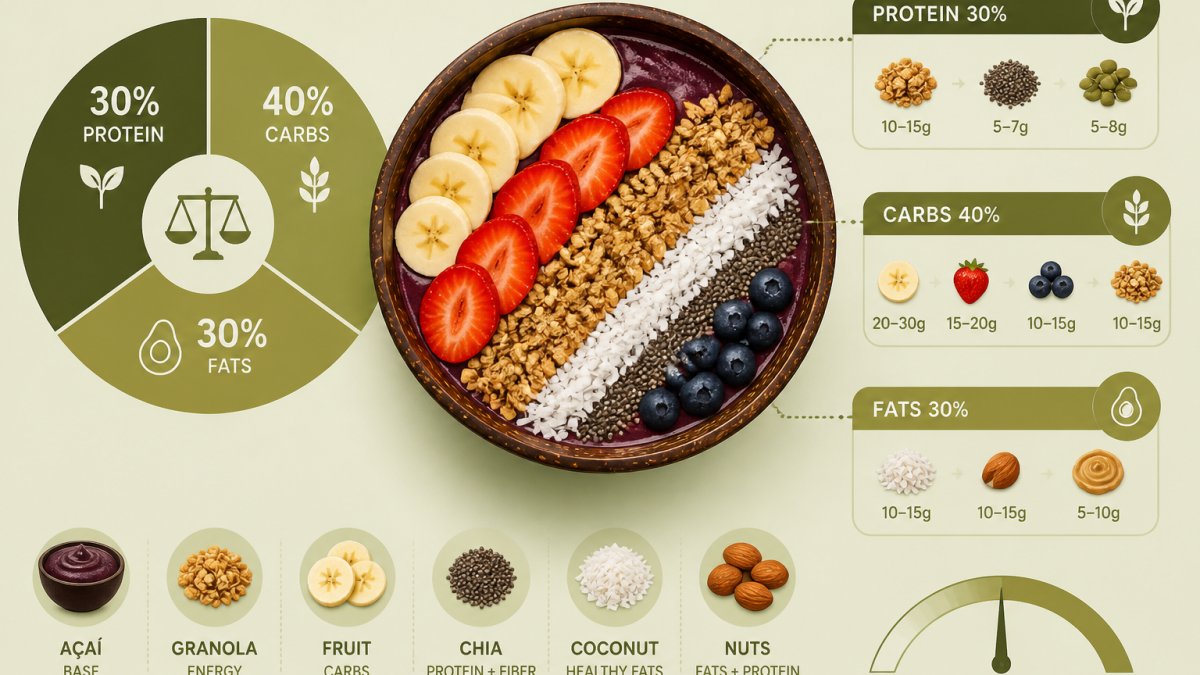
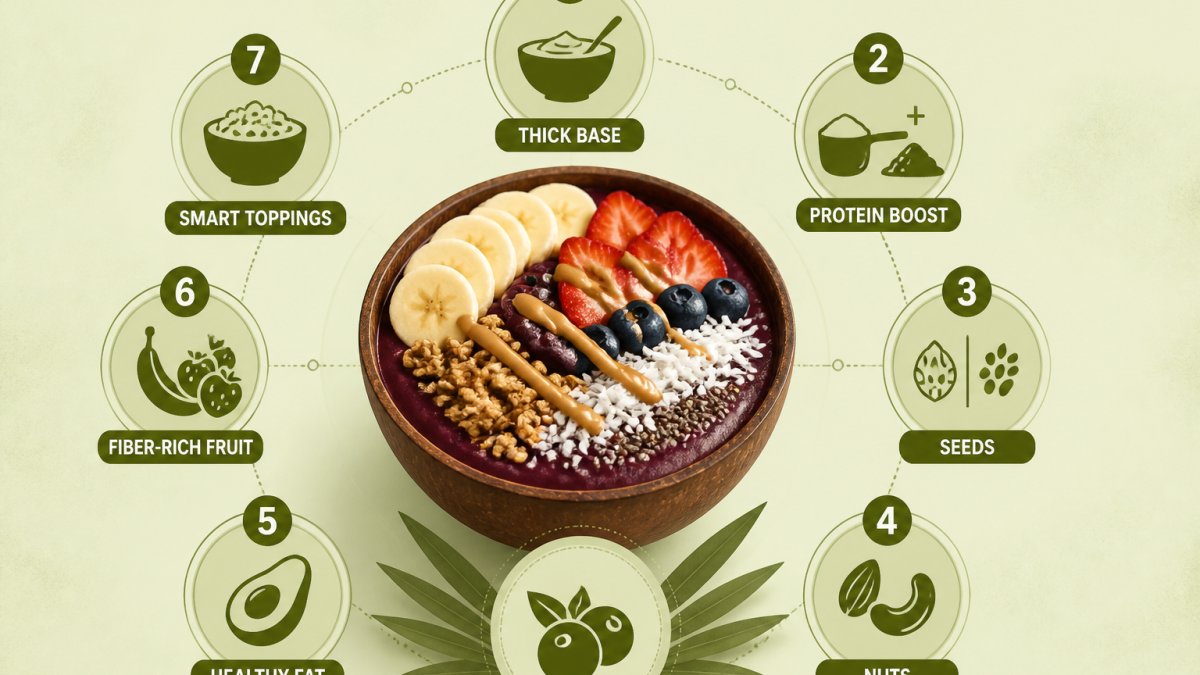
- Açai bowl with berries and a scoop of Greek yogurt, polyphenols, protein, and carbs in one bowl
- Oatmeal topped with tart cherries and walnuts, slow carbs, anthocyanins, and healthy fats
- Green tea smoothie with spinach, banana, and whey or plant protein, flavonoids plus 20 to 25 grams of protein
- Greek yogurt parfait with blueberries and granola, protein, probiotics, and polyphenols
- Whole-grain toast with almond butter and sliced strawberries, quick carbs and vitamin C
Each lands in the recovery window, the first couple of hours after training, when your body is most receptive to fuel and plant compounds.
Whole Foods Versus Supplements: A Simple Decision Framework
Whole-food sources are almost always the better default. Supplements are worth considering only in narrow cases, and research on high-dose vitamin C and vitamin E suggests they can interfere with training adaptations.
- Default choice: whole foods, most days, in normal portions
- Consider a supplement only if: a clinician has identified a specific deficiency, or a qualified sports dietitian has recommended one for a defined reason
- Avoid: routine high-dose vitamin C or E right after every workout
If you're unsure which category you fall into, talk to a registered dietitian who works with athletes, a short conversation that can save months of stalled progress.
Antioxidant Supplements and Exercise Adaptations: When More Isn't Better
Here's the counterintuitive part: high-dose antioxidant supplements can blunt the very gains you're training for. A huge dose of vitamin C or vitamin E may block the oxidative training signal that tells muscles to adapt. Kill it, and you may recover faster today but build less strength over months.
So the guidance is simple: get antioxidants from food, not from a megadose bottle.
Post-Workout Nutrition for Recovery: Timing, Dose, and Real Meals
Post-workout nutrition for recovery works best with real food eaten within a couple of hours of training: a mix of protein, carbs, and antioxidant-rich plants. There's no single magic dose, think in terms of a plate, not a pill. The harder questions are how soon, how much, and does it change based on what you're training for? Here's what's established, what's uncertain, and how to apply it.
What Is Established Versus What Is Still Uncertain
Most articles blur these together, so it helps to separate them.
Well established:
- Eating protein and carbohydrates after intense training supports muscle repair and refuels glycogen
- Whole foods deliver antioxidants alongside fiber, water, vitamins, and minerals
- High-dose antioxidant supplements can blunt some training adaptations
Still uncertain:
- The exact dose of polyphenols that meaningfully reduces soreness
- Whether antioxidant timing within the recovery window changes outcomes
- How much individual variation exists in response to the same foods
When evidence is uncertain, take the low-risk route: whole foods in normal portions, no megadose.
Timing: The Recovery Window in Practice
The recovery window is roughly the first couple of hours after training, when your muscles are most receptive to fuel and antioxidant-rich foods fit most naturally into a meal.
- Within 30 to 60 minutes: fluids, carbs, and a protein source if you trained hard
- Within 2 hours: a full meal that includes antioxidant-rich plants
- Rest of the day: keep colorful plants in your other meals too, recovery is a 24-hour process, not a single window
Dose: Food Amounts, Not Pill Numbers
There's no official daily antioxidant target for athletes. Instead of chasing a number, aim for these benchmarks:
- 5 to 9 servings of fruits and vegetables per day, a common public-health target
- 1 to 2 antioxidant-rich servings in your post-workout meal specifically
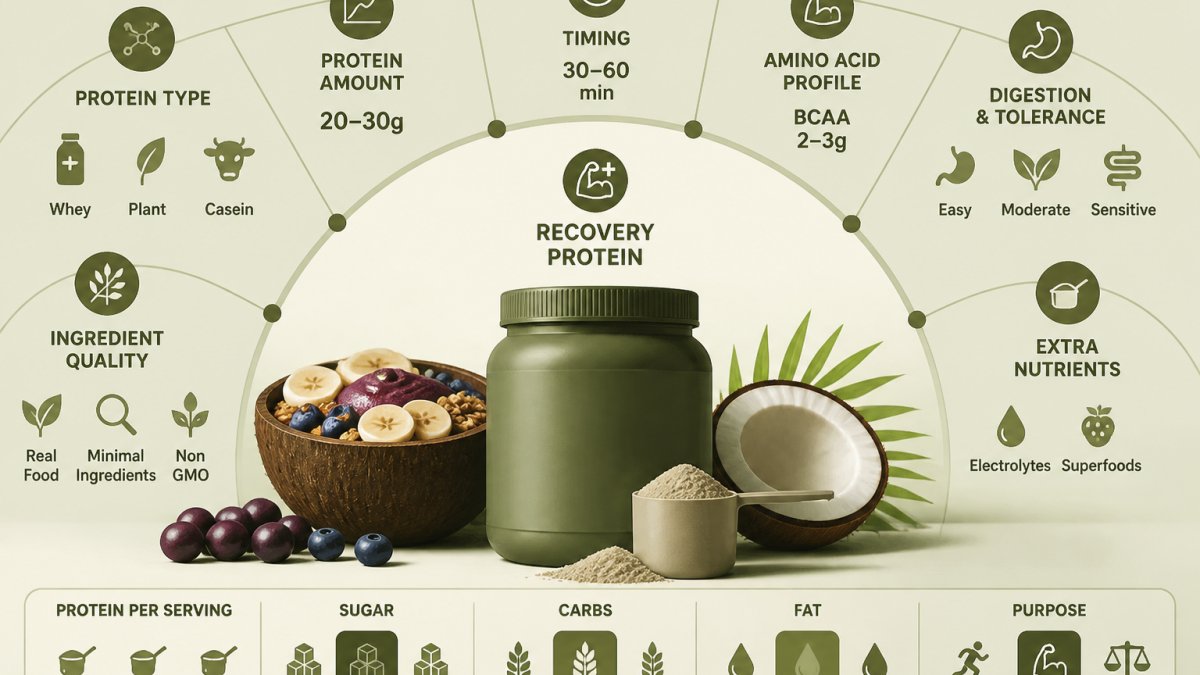
- Protein: roughly 20 to 30 grams after resistance training
| Recovery Goal | Food Example | Why It Helps |
|---|---|---|
| Ease soreness | Açai bowl with berries | Polyphenols plus carbs |
| Rebuild muscle | Greek yogurt with blueberries | Protein plus antioxidants |
| Refuel energy | Oatmeal with tart cherries | Carbs plus plant compounds |
| Rehydrate | Green tea and water | Fluids plus flavonoids |
| Support adaptation | Whole-food meal, no megadose | Preserves the training signal |
Recovery Outcomes Beyond Soreness
Soreness gets all the attention, but it's only one outcome. Here's how the evidence stacks up across the others:
- Soreness (DOMS): mixed evidence; whole foods show the most promise, supplements the least
- Strength recovery: driven mostly by protein and carbs, not antioxidants
- Performance: no reliable evidence that antioxidants improve next-day performance
The takeaway: judge a recovery meal by how you perform and adapt over weeks, not just by how sore you feel.
How Advice Changes by Training Type and Goal
A marathoner and a powerlifter do not have the same needs.
- Endurance training: steady oxidative stress over hours; tart cherries, berries, and green tea fit well, with carbs as the priority
- Resistance training: more muscle damage; protein matters as much as antioxidants, pair them in the same meal
- Interval or HIIT training: high oxidative load in a short time; prioritize fluids, carbs, and a colorful whole-food meal
Individual Considerations and Safety
Recovery advice isn't one-size-fits-all. A few situations call for extra care:
- Dietary restrictions: if you avoid dairy, choose a plant protein that still delivers 20 to 30 grams per serving
- Medication interactions: some antioxidants, especially in concentrated supplement form, can interact with medications, ask a pharmacist or clinician
- Chronic conditions: check with your care team before adding high-dose supplements
Recovery is also about sleep, hydration, and how ready you feel for the next session, and the food choices above support all three.
Matching Antioxidant Choices to Your Training Type and Goal
Different training calls for different recovery food. Endurance exercise like running or cycling creates steady oxidative stress over hours, so tart cherries and berries fit well. Resistance training causes more muscle damage, so protein matters as much as antioxidants.
- Endurance athletes: berries, tart cherries, green tea
- Strength athletes: açai bowls plus protein, leafy greens
- Weekend warriors: any colorful fruit after the session
- Recovery-focused days: whole-food bowls over supplements
Conclusion: Eat Real Food, Recover Well
The benefits of eating antioxidants after intense exercise are real, but they come from food, not a giant pill. Fill your plate with berries, greens, and green tea during the recovery window, and skip megadose supplements unless a doctor says otherwise.
That's where we come in. At World Green Açai, we make organic açai bowls built on the finest berries, ready when you are.
Frequently Asked Questions
Do antioxidants help with muscle soreness after intense exercise?
Research on antioxidants and muscle soreness is mixed. Some studies suggest that polyphenol-rich foods like tart cherries and berries may reduce soreness and support recovery, while others show little effect. The strongest evidence points to whole foods rather than high-dose supplements. Eating antioxidant-rich foods after intense exercise can support your body's natural recovery processes, but it works best as part of an overall post-workout nutrition plan that includes protein, carbohydrates, and fluids.
Should you eat antioxidant-rich foods after a workout?
Yes, eating antioxidant-rich foods after a workout is generally a good idea. Foods like berries, leafy greens, and other colorful fruits and vegetables provide vitamins C and E, polyphenols, and flavonoids that help neutralize free radicals produced during intense exercise. Aim to include them within a balanced post-workout meal or snack. Whole foods are preferred over supplements because they deliver a mix of nutrients that work together without the risk of blunting training adaptations from high doses.
Can antioxidant supplements interfere with exercise adaptations?
Yes, high-dose antioxidant supplements like vitamin C and vitamin E may interfere with exercise adaptations. Some research suggests that large doses can blunt the signaling that triggers training adaptations such as mitochondrial growth and improved endurance. This is why many sports nutrition experts recommend getting antioxidants from whole foods rather than pills. If you are considering supplements, talk to a healthcare provider about whether they fit your training goals and current intake.
How soon after exercise should you eat antioxidant-rich foods?
Aim to eat a balanced meal or snack containing antioxidant-rich foods within about 30 to 60 minutes after intense exercise. This post-exercise window is when your muscles are most receptive to nutrients that support recovery. Pair antioxidants with protein and carbohydrates. A smoothie bowl with açai, berries, and a protein source is a convenient option that covers multiple recovery needs in one meal.
Hard training earns a real recovery meal, and the right one should be fast and easy to get. World Green Açai serves organic açai bowls made from high-quality berries, with online ordering and mobile app pickup so you skip the line. Order online with World Green Açai and give your muscles the whole-food recovery they've earned.