 ultimate-guide
Organic Açai for Energy: Benefits & Nutrition Facts
Table of Contents
- What Makes Organic Açai Different for Energy
- Açai Nutrition Facts: The Nutrients Behind Energy Support
- Does Açai Have Caffeine? What You Should Know
- Açai and Blood Sugar: Why Sustained Energy Matters
- Building an Energy-Focused Açai Bowl with Healthy Toppings
- Organic vs. Conventional Açai: What the Difference Means for Energy
- How to Use Açai for Real, Lasting Energy
- Frequently Asked Questions
Last Updated: October 10, 2026
What Makes Organic Açai Different for Energy
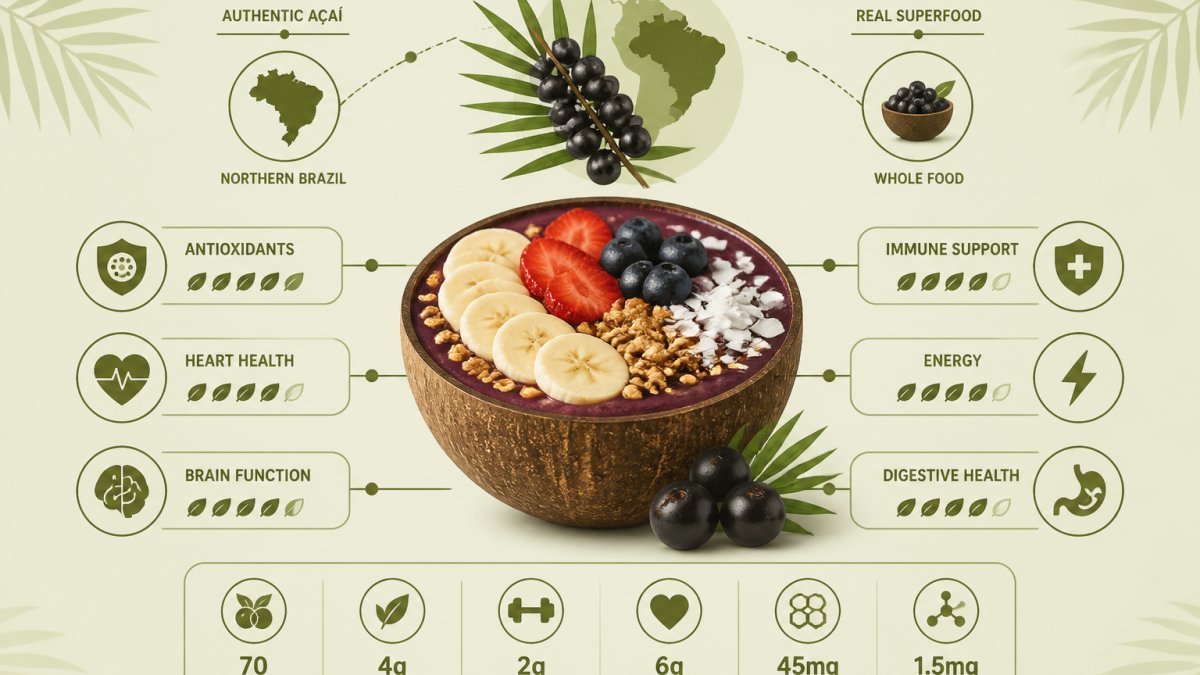
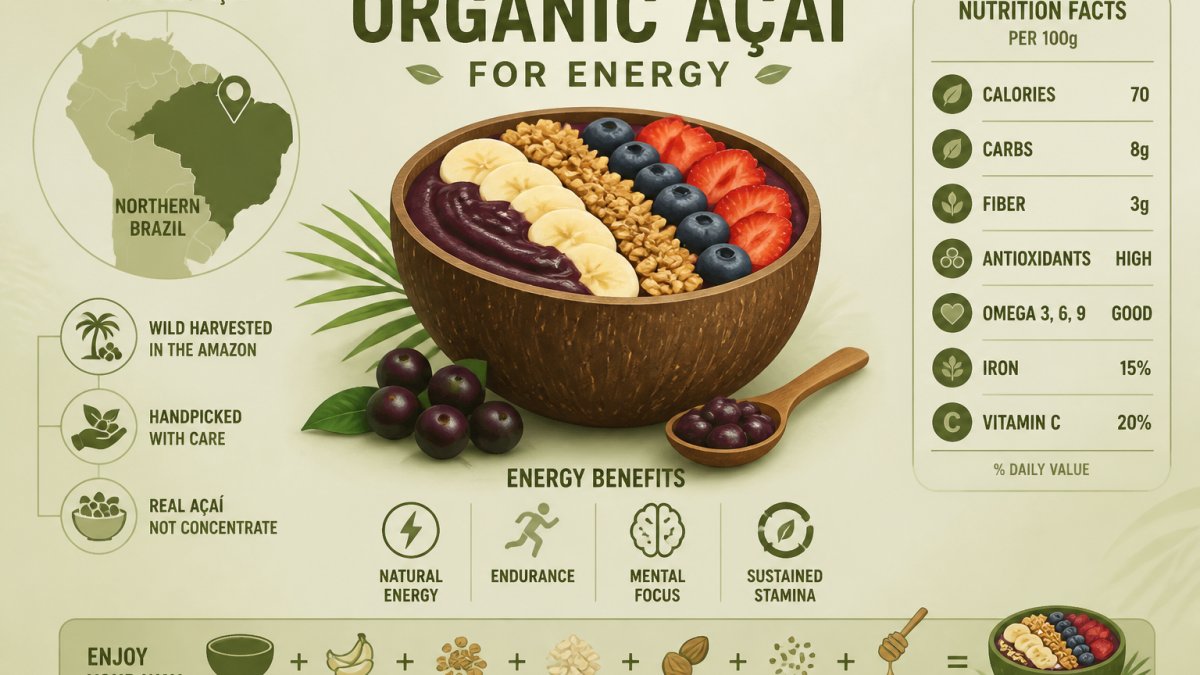
Organic acai energy comes from berries cultivated without synthetic pesticides or fertilizers, preserving their natural nutrient density in ways conventional farming often cannot match. At World Green Açai, we source our berries directly from Northern Brazil, where the fruit thrives in its native environment.
The difference between organic and conventional açai extends beyond farming practices. Organic berries retain higher levels of anthocyanins and other antioxidants that conventional processing sometimes diminishes. When you're seeking real, lasting energy rather than a sugar spike, this distinction matters.
Many people assume all açai bowls deliver the same nutritional benefit. That assumption costs them energy consistency throughout the day. The real value of organic acai energy lies in how its nutrient profile works with your body's metabolism, not just the calories it contains.
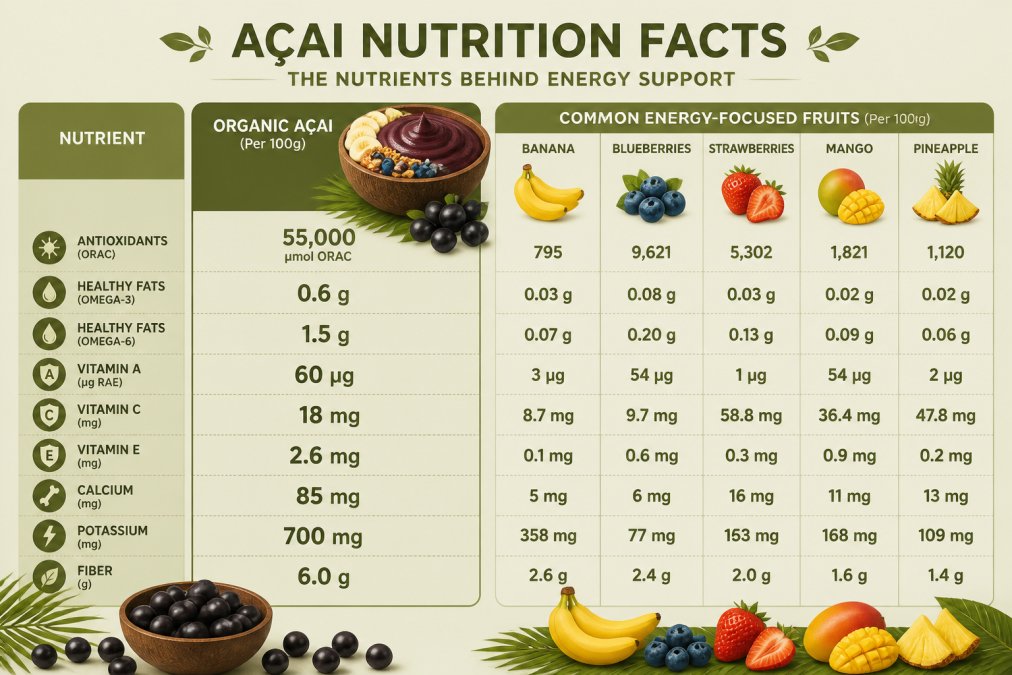
Açai Nutrition Facts: The Nutrients Behind Energy Support
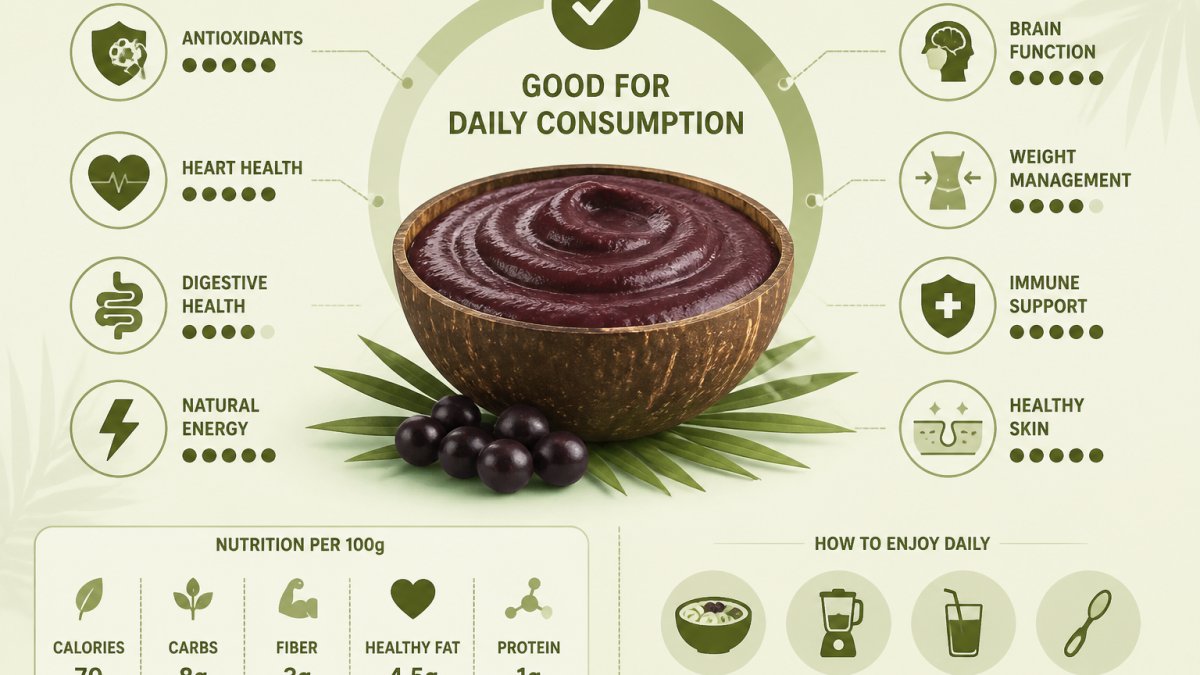
Organic açai contains a concentrated blend of nutrients that work together to support sustained energy. A typical serving provides healthy fats, fiber, and polyphenols that stabilize blood sugar and prevent the energy crashes common to sugary snacks.
Antioxidants and Free-Radical Protection
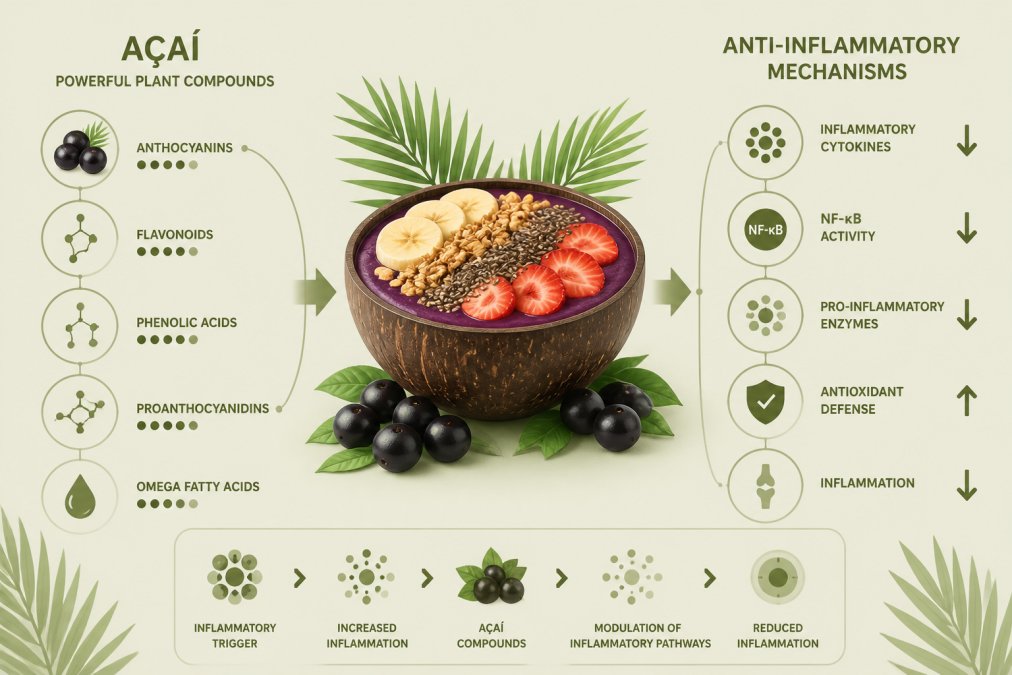
Antioxidants are compounds that neutralize free radicals in your body, reducing oxidative stress that can drain energy and slow recovery. Organic açai ranks among the highest-antioxidant fruits available, with anthocyanins as its primary active compound.
These polyphenols do more than protect cells. They support blood flow, which improves oxygen delivery to muscles and brain tissue. Better oxygen circulation translates directly to improved mental clarity and sustained physical endurance.
Healthy Fats and Omega Fatty Acids
Organic açai contains both omega-3 and omega-6 fatty acids in a balanced ratio. These fats are essential for brain function and sustained energy production. Unlike simple carbohydrates that spike and crash, healthy fats provide steady fuel your body can draw from over hours.
The fat content in açai also slows sugar absorption from other ingredients in your bowl, preventing blood sugar spikes that lead to energy crashes. A bowl with toppings like nuts and seeds amplifies this stabilizing effect.
Does Açai Have Caffeine? What You Should Know
Organic açai contains zero caffeine. Its energy benefits come entirely from nutrient density, not stimulation. This is actually an advantage for sustained energy: caffeine provides a quick boost followed by a crash, while açai's nutrients support steady performance throughout your day.
Many people confuse the energy they feel from açai with a caffeine effect. What they're actually experiencing is improved oxygen delivery, stable blood sugar, and reduced inflammation, all effects that build gradually and last longer than any stimulant could provide.
Açai and Blood Sugar: Why Sustained Energy Matters
Blood sugar stability is the foundation of consistent energy. When blood sugar spikes and crashes, your energy follows the same pattern. Organic açai's fiber content and healthy fats slow sugar absorption, keeping your blood glucose steady.
This matters more than you might think.
Building an Energy-Focused Açai Bowl with Healthy Toppings
The bowl you build around organic açai determines whether you get sustained energy or another sugar crash. A properly balanced energy bowl follows a simple formula: unsweetened organic açai base (4-6 oz), protein and fat layer, complex carbohydrate layer, and minimal added sweetener.
The Base: Unsweetened Organic Açai Puree
Start with 4-6 ounces of unsweetened organic açai puree. This provides approximately 90-135 calories, 9-12 grams of healthy fat, 3-4 grams of fiber, and the antioxidant profile you're seeking. Unsweetened is critical: many commercial açai products contain added sugars (often 8-15 grams per serving) that undermine sustained energy. Check the ingredient list, it should read "açai" or "organic açai puree," nothing else.
Protein and Fat Layer: Nuts, Seeds, and Nut Butters
Add 1 ounce (about ¼ cup) of raw almonds, walnuts, or a mix of seeds (pumpkin, sunflower, hemp, or flax). This adds 160-180 calories, 5-7 grams of protein, and 14-16 grams of fat, the macronutrients that slow sugar absorption and extend satiety to 4-5 hours. Alternatively, 1 tablespoon of almond or peanut butter provides similar macros in a more compact form. This layer is non-negotiable for sustained energy; without it, even nutrient-dense açai acts like a simple carbohydrate.
Complex Carbohydrate Layer: Fresh Fruit and Fiber
Add ½ cup of fresh berries (blueberries, strawberries, raspberries) or ½ banana. Fresh fruit provides natural sweetness, fiber, and micronutrients without the concentrated sugar load of dried fruit or honey. Berries are superior to banana for energy stability because their fiber-to-sugar ratio is higher; a medium banana contains 27 grams of carbohydrate but only 3 grams of fiber, while 1 cup of raspberries contains 12 grams of carbohydrate and 8 grams of fiber. The fiber slows glucose absorption, preventing the spike-and-crash pattern.
Optional Additions: Coconut and Minimal Sweetener
Unsweetened coconut flakes (2 tablespoons) add 70 calories, 6 grams of fat, and 4 grams of fiber, all supportive of sustained energy. If the bowl tastes too tart without added sweetness, use 1 teaspoon of raw honey or pure maple syrup (17 calories, 4 grams of carbohydrate). Avoid granola, sweetened coconut, dried fruit, and chocolate chips; these are energy traps that spike blood sugar and undo the stabilizing effect of the açai and nuts.
Complete Bowl Macronutrient Profile
Timing and Consistency
Eat your bowl 1-2 hours before you need sustained energy: before a workout, before a long work meeting, or as an early lunch that carries you through the afternoon. Consistency matters more than occasional use.
Organic vs. Conventional Açai: What the Difference Means for Energy
Organic açai is grown without synthetic pesticides, herbicides, or chemical fertilizers. Conventional açai uses these inputs to maximize yield and shelf life. The farming method does change the final nutrient profile.
Organic Certification: What It Actually Guarantees
Organic certification, administered by the U.S. Department of Agriculture (USDA), means the açai was grown in soil free of synthetic chemicals for at least three years before harvest. It does not guarantee higher antioxidant content, better taste, or superior energy effects. Laboratory studies show that organically grown berries can develop stronger antioxidant defenses naturally because the plant must protect itself without chemical assistance.
The USDA does not test antioxidant content as part of organic certification; it verifies farming practices only.
What Actually Preserves Antioxidants: Processing and Storage
The real determinant of antioxidant retention is what happens after harvest. Açai berries are highly perishable; their anthocyanin content degrades rapidly when exposed to heat, light, and oxygen. Most açai sold in the United States arrives as frozen puree (flash-frozen within hours of harvest) or freeze-dried powder. Both methods preserve antioxidants effectively if done immediately.
Problematic processing includes:
- Heat pasteurization (common in conventional products to extend shelf life): Reduces anthocyanin content by 15-30% depending on temperature and duration.
- Extended storage at room temperature or in warm conditions: Degrades polyphenols by 5-10% per week.
- Exposure to light during packaging and retail display: Accelerates oxidation of antioxidants.
Certification does not control for these post-harvest variables.
How to Read Labels and Verify Quality
When choosing organic açai for energy support, look for these markers on the label or product description:
- USDA Organic Seal: Confirms the farming method, but says nothing about antioxidant content or processing.
- "Flash-frozen" or "freeze-dried": Indicates the berry was processed immediately after harvest, preserving antioxidants.
- "Unsweetened" or "No added sugar": Essential; added sugars undermine sustained energy. Check the ingredient list, it should contain only "açai" or "organic açai puree."
- Minimal ingredients in powders: A quality freeze-dried powder lists only "organic açai." If the label includes maltodextrin, inulin, or other fillers, antioxidant concentration is diluted.
- Sourcing transparency: Products that specify the region of origin (e.g., "from Northern Brazil") and harvest timing are more likely to have been processed quickly. Vague sourcing ("from South America") or no sourcing information suggests the product may have been stored or traded through multiple intermediaries, increasing degradation risk.
- Expiration date and storage instructions: Frozen açai should be stored at 0°F or below.
The Organic Advantage for Energy: Consistency and Traceability
Organic certification's real value for sustained energy is consistency and traceability. Certified organic suppliers are audited annually and must document their sourcing, processing, and storage. This reduces the risk of contamination, mislabeling, or degradation from poor handling.
Conventional açai may be equally nutrient-dense.
Practical Guidance
Choose organic açai that is flash-frozen or freeze-dried, unsweetened, and sourced from a producer who discloses harvest and processing timelines. This combination, organic farming + immediate processing + transparent sourcing, maximizes the likelihood that the antioxidants supporting sustained energy are actually present in the product you buy. A conventional product with identical processing speed and transparency may perform identically.
How to Use Açai for Real, Lasting Energy
Timing and consistency determine whether organic açai becomes part of your energy strategy or just another snack. Eat your bowl 1-2 hours before you need sustained energy: before a workout, before a long work meeting, or as an early lunch that carries you through the afternoon.
Consistency matters more than occasional use.
Don't rely on açai alone. Pair it with adequate water, sleep, and movement. Organic açai is a tool for sustained energy, not a replacement for the fundamentals.
You can build this consistency easily with World Green Açai's online ordering. Skip the lines and have your bowl ready when you need it, whether that's a quick lunch between meetings or a post-workout recovery snack.
Sustaining energy throughout your day requires nutrients that work with your metabolism, not against it. Organic açai delivers antioxidants, healthy fats, and fiber that stabilize blood sugar and support steady performance. World Green Açai sources authentic organic berries from Northern Brazil and prepares bowls with nutrient-dense ingredients you can order online and grab whenever you need them. Visit World Green Açai's online ordering platform to start building consistent energy into your routine.
Frequently Asked Questions
Does açai give you energy?
Açai supports energy through its nutrient profile: healthy fats provide sustained fuel, antioxidants reduce oxidative stress that drains vitality, and natural carbohydrates offer quick glucose. However, açai contains no caffeine, so it doesn't provide the spike of stimulant-based energy drinks. The real benefit comes from pairing organic açai with protein and complex carbs in a balanced bowl, which stabilizes blood sugar and prevents the energy crash.
How much caffeine is in açai?
Açai berries contain no caffeine. The energy support from organic açai comes entirely from its nutrient density: antioxidants like anthocyanins, healthy omega fatty acids, and vitamins. If you're seeking caffeine-based energy, açai bowls won't deliver that effect. Instead, they provide sustained energy through stable blood sugar and nutrient absorption, making them ideal for post-workout recovery or a mid-morning snack when you need steady vitality without stimulants.
What should you add to an açai bowl for longer-lasting energy?
Pair organic açai with protein (Greek yogurt, nut butter, hemp seeds), complex carbs (granola, oats), and healthy fats (coconut, almonds, walnuts) to sustain energy levels. Avoid adding excess honey or sweetened granola, which increase natural sugar content and work against sustained energy.
Does organic açai have more health benefits than conventional açai?
Organic açai is grown without synthetic pesticides or fertilizers. Authentic sourcing from Northern Brazil ensures you're getting real berries, not fillers or additives.