 ultimate-guide
Açai Anti-Inflammatory Properties: The Science
Table of Contents
- What Makes Açai Anti-Inflammatory
- The Açai Antioxidant Profile Explained
- How Açai Reduces Inflammation at the Cellular Level
- Açai Bowl Health Benefits for Inflammation Management
- Clinical Studies on Açai and Inflammation
- Bioavailability and Dosage: What the Research Shows
- Synergistic Pairings to Maximize Anti-Inflammatory Benefits
- Frequently Asked Questions
Last Updated: September 24, 2026
What Makes Açai Anti-Inflammatory
Açai anti-inflammatory properties stem from bioactive compounds that combat oxidative stress and reduce systemic inflammation through specific, well-documented chemical mechanisms.
The difference between real, organic açai and frozen juice concentrates sold elsewhere is dramatic, whole berries contain significantly higher concentrations of anti-inflammatory compounds.
Consistent consumption over weeks builds a cumulative antioxidant effect, meaningfully reducing inflammation markers over time.
The Açai Antioxidant Profile Explained
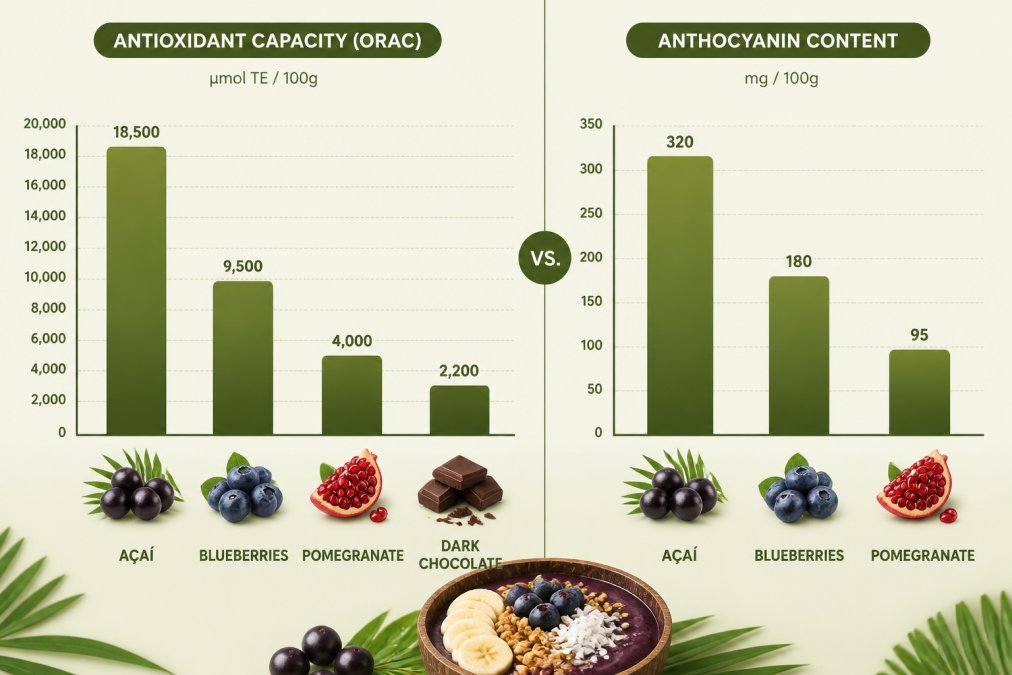
Açai berries contain one of the highest antioxidant capacities of any food. The primary drivers of this antioxidant power are anthocyanins and polyphenols, compounds that give the berry its deep purple color and protect it from environmental stress in the rainforest.
Anthocyanins and Polyphenols
Anthocyanins are water-soluble pigments that give açai its deep purple color and provide powerful antioxidant effects, crossing the blood-brain barrier for neuroprotection.
Polyphenols are a broad class of compounds including anthocyanins, flavonoids, and other phytochemicals that work synergistically in authentic açai bowls.
Heat treatment, long storage, and concentration degrade delicate compounds; fresh-frozen açai preserves far more antioxidant capacity than juice concentrates or shelf-stored powders.
How These Compounds Fight Oxidative Stress
Oxidative stress occurs when free radicals accumulate faster than your body neutralizes them, damaging cells and contributing to aging, cardiovascular disease, cognitive decline, and inflammation.
Anthocyanins and polyphenols stabilize free radicals through free radical scavenging, effectively neutralizing reactive oxygen species that drive inflammation.
Açai's diverse polyphenol profile targets different free radical types across cellular compartments, providing broader protection than single-compound supplements.
How Açai Reduces Inflammation at the Cellular Level
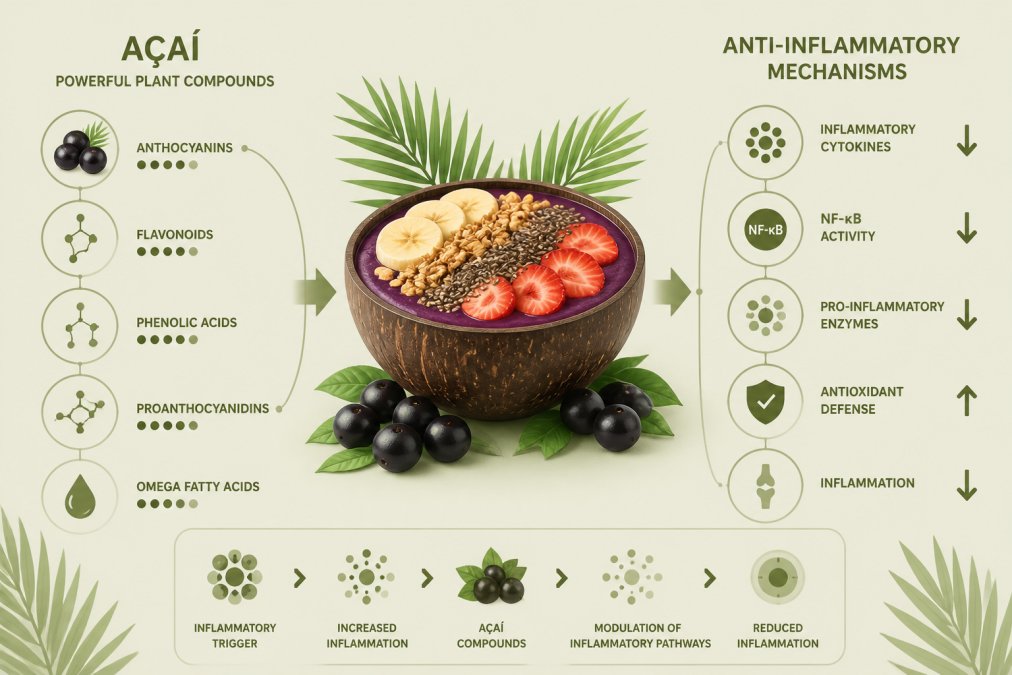
Açai's anti-inflammatory mechanism operates through multiple pathways, modulating interconnected systems that control immune response and cellular inflammation.
Proinflammatory Cytokines and Signaling Pathways
Proinflammatory cytokines (TNF-alpha, IL-6, IL-8) perpetuate chronic inflammation; açai's polyphenols suppress their expression by interfering with intracellular signaling pathways.
NF-kappaB, a master switch for inflammatory gene expression, is inhibited by açai compounds, reducing the inflammatory cascade at its source.
This mechanism is documented across cell culture and animal studies, with dose-dependent effects.
Free Radicals and Cellular Protection
Açai protects cells from oxidative damage that perpetuates inflammation by neutralizing free radicals before they trigger secondary inflammatory responses.
Açai's polyphenols prevent lipid peroxidation, protecting cell membrane integrity and reducing inflammation signaling.
Açai Bowl Health Benefits for Inflammation Management
Regular açai consumption produces measurable improvements in inflammatory response management.
Cardiovascular and Metabolic Benefits
Açai's anti-inflammatory compounds reduce cardiovascular disease risk by lowering inflammatory markers and supporting healthier cholesterol profiles.
By reducing systemic inflammation, açai supports more efficient glucose metabolism and metabolic function as part of a balanced diet.
Whole açai fiber supports cardiovascular health and beneficial gut bacteria that produce anti-inflammatory compounds.
Neuroprotective Effects
Anthocyanins in açai cross the blood-brain barrier to protect against neuroinflammation, which is implicated in cognitive decline and neurodegenerative conditions.
Açai polyphenols reduce neuroinflammatory markers and support synaptic function, though more human research is needed on long-term cognitive effects.
Clinical Studies on Açai and Inflammation
Research on açai's anti-inflammatory properties spans laboratory experiments to human trials, with varying levels of rigor.
In Vitro and Animal Model Evidence
Cell culture studies consistently show that açai polyphenol extracts suppress proinflammatory cytokine production, with some studies reporting 40-60% suppression of TNF-alpha.
Animal studies show that açai supplementation reduces inflammatory markers in blood and tissue, with consistent improvements in inflammation and tissue integrity.
In vitro and animal evidence clarifies mechanisms but does not fully replicate human physiology, gut microbiota, or whole-food complexity.
Human Clinical Trial Data
Human studies are fewer than animal research but support anti-inflammatory benefits, measuring inflammatory markers like CRP and TNF-alpha.
Regular açai consumption (100-200 grams daily for 4-12 weeks) produces measurable reductions in inflammatory markers, though magnitude varies by study design and product type.
A key limitation is standardization: different studies use different açai products with vastly different polyphenol concentrations, making universal dosage recommendations difficult.
Most human studies measure blood inflammatory markers, which may not capture localized tissue inflammation.
Study Quality and Evidence Limitations
Evidence is strongest for mechanistic plausibility and moderate for clinical efficacy; high-quality randomized controlled trials with standardized products are limited.
Most human studies use small sample sizes, limiting statistical power; longer-term studies examining persistent effects are largely absent.
Consistent findings across cell culture, animal, and human studies provide reasonable confidence that açai possesses genuine anti-inflammatory properties.
Bioavailability and Dosage: What the Research Shows
Bioavailability, the proportion of consumed polyphenols reaching your bloodstream, determines whether a product delivers meaningful anti-inflammatory benefit.
How Processing Method Affects Polyphenol Content
Not all açai products contain the same concentration of anti-inflammatory compounds. Processing method is the primary driver of this variation, and most consumers are unaware of how dramatically different forms of açai differ in potency.
Fresh-frozen whole berries preserve the highest polyphenol content, with a 100-gram serving containing 320-400 mg of anthocyanins and 1,500-2,000 mg of total polyphenols.
Açai powder (freeze-dried) retains most polyphenols but requires 8-10 tablespoons to match fresh-frozen berries; most consumers use only 1-2 tablespoons, delivering subtherapeutic doses.
Açai juice concentrate (the form used in many commercial products) undergoes heat treatment during processing to concentrate the juice and extend shelf life. Heat degrades anthocyanins significantly. A typical juice concentrate retains only 40-60% of the original anthocyanin content.
Bioavailability: From Consumption to Cellular Effect
Even if a product contains high polyphenol content, bioavailability determines how much actually reaches your cells. Polyphenols are poorly absorbed in the small intestine, only 5-10% of consumed anthocyanins are absorbed intact. The remaining 90-95% pass into the colon, where they undergo a critical transformation.
Dosage Recommendations Based on Processing Type
Effective anti-inflammatory dosage depends on which form of açai you're consuming:
-
Fresh-frozen whole berries: 80-120 grams daily (a typical açai bowl) provides 250-400 mg of anthocyanins and 1,200-1,800 mg of total polyphenols. This is sufficient to produce measurable anti-inflammatory effects in most people with healthy gut microbiota.
-
Freeze-dried powder: 8-12 tablespoons daily (64-96 grams) is needed to match fresh-frozen berries. Most commercial smoothie recipes use only 1-2 tablespoons, delivering subtherapeutic doses.
-
Juice concentrate: 200-300 ml daily of a quality concentrate (not heavily diluted) may provide anti-inflammatory benefit, though the effect is likely less pronounced than fresh-frozen berries due to heat-induced polyphenol degradation.
-
Polyphenol extract: Dosage varies by product; follow label recommendations and verify third-party testing for polyphenol content.
Consistency Matters More Than Quantity
Regular daily consumption produces more stable blood levels of polyphenols and their metabolites than sporadic consumption. A person eating an açai bowl three times per week will have fluctuating polyphenol levels and may not achieve the cumulative anti-inflammatory effect of daily consumption, even if total weekly intake is identical.
Individual Variation in Response
Not everyone responds identically to the same dose of açai. Factors influencing individual response include:
- Baseline microbiota composition: People with dysbiosis or recent antibiotic use may have reduced polyphenol bioavailability.
- Genetic variation in polyphenol-metabolizing enzymes: Some people have genetic variants that affect how efficiently they metabolize certain polyphenols.
- Baseline inflammation levels: People with higher baseline inflammatory markers may see larger absolute reductions from açai consumption.
- Overall diet quality: A diet rich in other polyphenol sources (berries, tea, dark chocolate) may produce different effects than a diet low in polyphenols.
Synergistic Pairings to Maximize Anti-Inflammatory Benefits
Certain foods enhance the anti-inflammatory effects of açai by providing complementary compounds or improving polyphenol bioavailability. Strategic pairing amplifies the health benefits beyond what each food provides alone.
Frequently Asked Questions
Does açai have a measurable effect on inflammation?
Yes. The bioactive compounds in açai, particularly anthocyanins and polyphenols, interact with cellular signaling pathways to reduce proinflammatory cytokine expression. Research indicates that regular consumption can lower systemic inflammation markers, though the magnitude depends on dosage, frequency, and individual factors like diet and lifestyle. Acute effects appear within hours of consumption, while chronic benefits develop over weeks of consistent intake.
What specific compounds in açai contribute to its anti-inflammatory properties?
Anthocyanins (the pigments that give açai its deep purple color), flavonoids, and other polyphenols are the primary bioactive compounds. These phytochemicals neutralize free radicals and reactive oxygen species, reducing oxidative stress. They also modulate signaling pathways that control cytokine expression, directly suppressing the inflammatory response at the cellular level. The concentration of these compounds in açai is significantly higher than in most other fruits.
Are there potential risks or side effects to consuming açai regularly?
Açai is generally safe for most people when consumed as part of a balanced diet. However, individuals with certain conditions should consult a healthcare provider: those with kidney disease should monitor oxalate intake, and people on blood-thinning medications should be aware that high-dose polyphenol supplementation may interact with medications. Whole açai bowls carry minimal risk. Allergic reactions are rare but possible. Always verify product purity and sourcing to avoid contaminants.
How should açai be prepared to preserve its anti-inflammatory nutrients?
Minimal processing preserves the most bioactive compounds. Whole açai berries or high-quality frozen açai pulp retain anthocyanins and polyphenols better than heavily processed powders or juices. Avoid excessive heat, as high temperatures degrade polyphenols. Pairing açai with other nutrient-dense foods, such as berries, nuts, seeds, and leafy greens, creates synergistic effects that enhance the anti-inflammatory response. Consuming açai bowls fresh, within hours of preparation, maximizes nutrient density.
How does the antioxidant profile of açai compare to other superfoods?
Açai ranks among the highest in antioxidant capacity by ORAC (Oxygen Radical Absorbance Capacity) scores, often exceeding blueberries, pomegranates, and goji berries. The concentration of anthocyanins per gram is particularly impressive. However, antioxidant capacity alone does not determine health impact; bioavailability and the specific polyphenol profile matter equally. Açai's unique combination of compounds makes it especially effective at modulating inflammation pathways compared to other berries.
What does current clinical research say about açai and joint health?
In vitro and animal studies show that açai's polyphenols reduce inflammatory markers associated with joint degradation and osteoarthritis progression. Human clinical trials remain limited, but preliminary evidence suggests that dietary supplementation with açai polyphenols may support range of motion and reduce joint discomfort in individuals with chronic inflammation. Long-term effects in humans require further research, but short-term studies show measurable improvements in inflammation markers within 4-8 weeks of consistent consumption.