 ultimate-guide
How to Understand What Açaí Is Made Of (and What's in Your Bowl)
Last Updated: October 29, 2026
Quick Summary
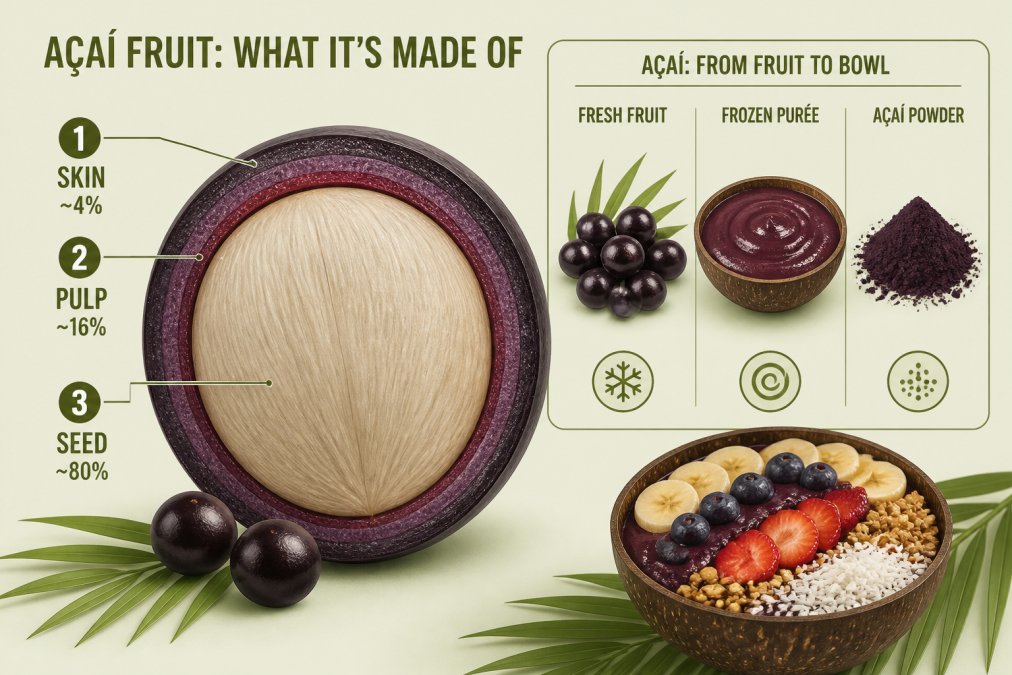
Açaí made from whole fruit has three parts: a thin dark-purple skin, a small layer of edible pulp, and one large seed that takes up most of the fruit. Only the pulp is eaten, and the seed is separated out during processing.
- The açaí palm grows across Amazon floodplains in Brazil and tropical South America.
- By volume, an açaí berry is mostly seed with only a thin edible pulp layer.
- Frozen purée is generally pulp plus a small amount of water, sometimes with citric or ascorbic acid.
- A powder listing maltodextrin first is mostly carrier, not fruit.
- A thick, scoopable base needs the açaí to stay frozen until it hits the blender.
Table of Contents
- What Açaí Is Made Of: Fruit, Seed, and Skin
- What Does Açaí Taste Like?
- Açaí Bowl Ingredients: What Goes Into the Bowl
- Frozen Açaí Purée: How the Pulp Is Made
- Are Açaí Bowls Healthy? Nutrition and Added Sugar
- How to Read Açaí Product Labels
- Order Your Bowl and Taste the Difference
- Frequently Asked Questions
What Açaí Is Made Of: Fruit, Seed, and Skin
Açaí made from whole fruit has three parts: a thin dark-purple skin, a small layer of edible pulp, and one large seed that takes up most of the fruit. The pulp is the only part people eat. Everything else, including that seed, gets separated out during processing. The honest answer to what is acai made of surprises many people: the fruit you eat is a thin layer wrapped around a pit.
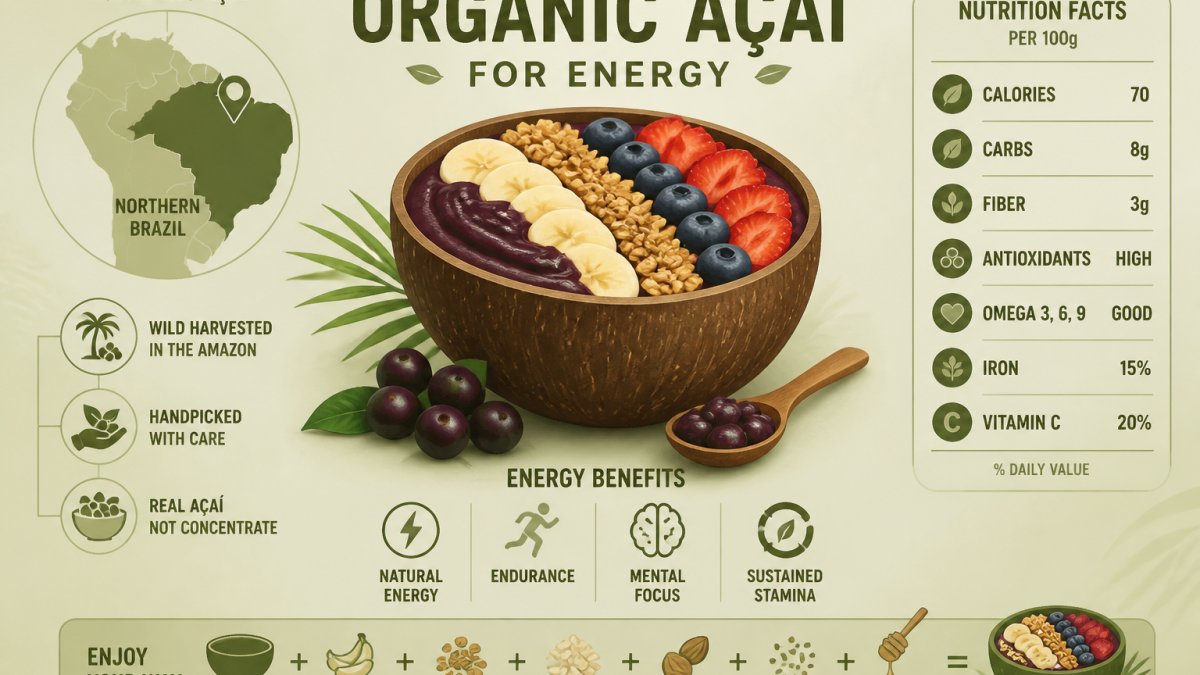
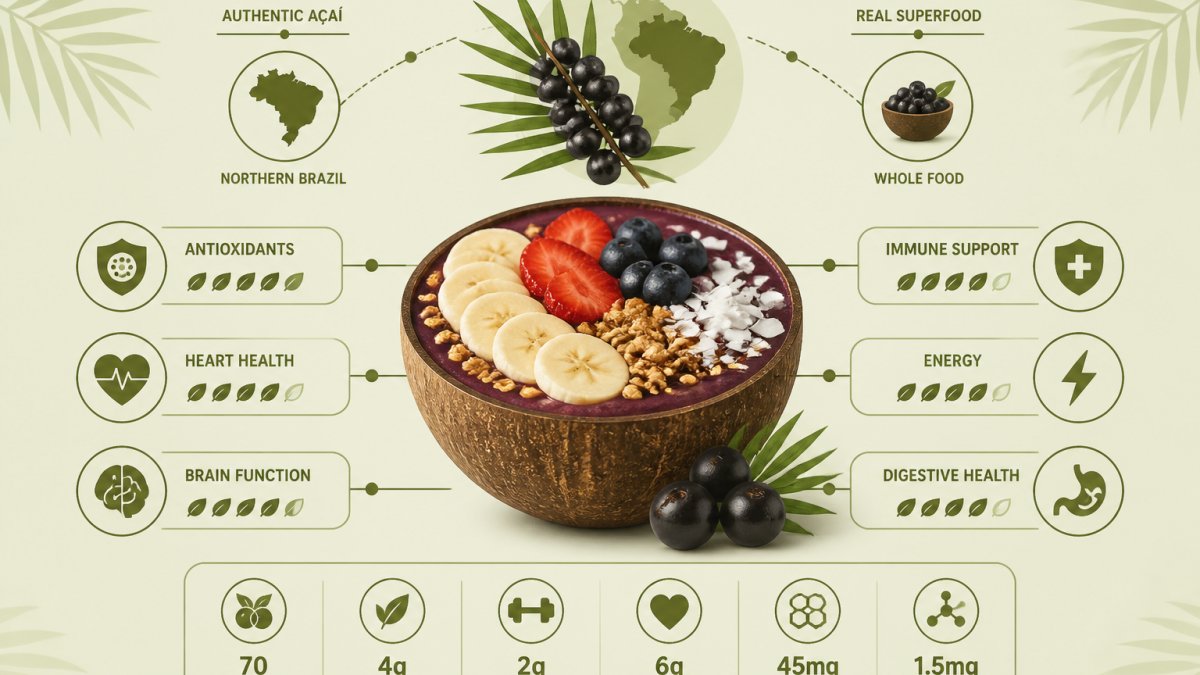
The açaí palm (Euterpe oleracea) grows across the floodplains of the Amazon basin in Brazil and tropical South America. It produces small, round, dark purple fruit in clusters, and each fruit is roughly the size of a blueberry.
The Açaí Palm and Its Fruit
The açaí palm is a tall, slender palm that thrives in the wet, nutrient-rich floodplains of the Amazon. It fruits in bunches, and harvesters climb the trunks to cut whole clusters down rather than picking individual berries. That matters for quality: fruit starts degrading quickly after picking, which is why almost all açaí sold in the United States arrives frozen or dried rather than fresh.
Seed-to-Fruit Composition
Here is the part most people never hear. By volume, an açaí berry is mostly seed. The edible pulp is a thin layer between the skin and the pit, which is why a bowl of açaí takes a lot of fruit to produce.
- Skin: thin, dark purple, and rich in the pigments that give açaí its color
- Pulp: the edible portion, a small fraction of the fruit's mass, and the only part used in food
- Seed: the large pit at the center, inedible and removed during processing
That ratio explains a lot about açaí pricing and why real açaí is never cheap to produce. You are paying for a thin layer of fruit, not a full berry.
The Fruit vs. the Products Sold as 'Açaí'
This is where most explanations stop, and where readers get misled. The fruit itself is one ingredient. The bag of frozen purée, the tub of powder, and the bowl on the menu are three different products with three different ingredient lists, and only one of them is just fruit.
- Fresh fruit: skin, pulp, and seed. In practice you will almost never see it sold whole outside growing regions, because it oxidizes within a day of harvest.
- Frozen açaí purée: pulp plus water in most commercial packs. Some packs add citric acid or ascorbic acid to hold color; unsweetened versions add nothing else. This is the closest thing to 'just the fruit' most buyers can get.
- Açaí powder: dried pulp, sometimes with a carrier such as maltodextrin to keep it free-flowing. Read the label, a powder that lists maltodextrin first is mostly carrier, not fruit.
- Prepared açaí bowls and sorbets: purée plus banana, liquid, sweetener, and stabilizers. The açaí may be a minority ingredient by weight.
So when someone asks what açaí is made of, the accurate answer depends on which product they are holding. The fruit is skin, pulp, and seed. The purée is pulp and water. The bowl is a recipe. Keeping those three separate is the single most useful thing you can know before you buy.
The fruit and the products sold as açaí have different ingredient lists, so here is how they break down.
| Product | What it contains | Note |
|---|---|---|
| Fresh fruit | Skin, pulp, and seed | Almost never sold whole outside growing regions |
| Frozen açaí purée | Pulp plus water in most commercial packs | Some packs add citric acid or ascorbic acid |
| Açaí powder | Dried pulp, sometimes with a carrier such as maltodextrin | A powder listing maltodextrin first is mostly carrier |
| Prepared açaí bowls and sorbets | Purée plus banana, liquid, sweetener, and stabilizers | Açaí may be a minority ingredient by weight |
What Does Açaí Taste Like?
Açaí tastes earthy and berry-like with a tart edge, closer to unsweetened blackberry than to a sweet fruit smoothie. The texture is smooth and thick when blended from frozen pulp. Most of the sweetness in a typical bowl comes from added ingredients, not the fruit itself.
That is the single biggest misconception we run into. People try a bowl somewhere, taste something sweet and creamy, and assume that is what açaí tastes like. It is not. Plain açaí is dense, slightly bitter, and earthy. Traditional Brazilian servings pair it with banana or granola to balance that tartness.
Açaí Bowl Ingredients: What Goes Into the Bowl
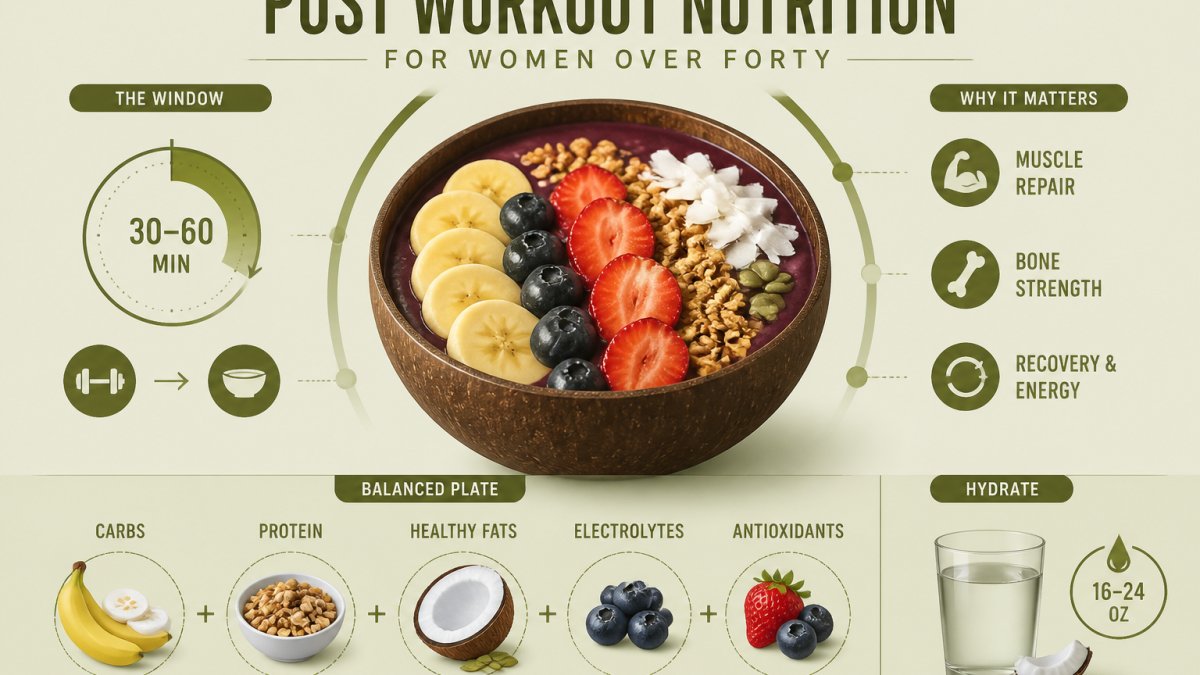
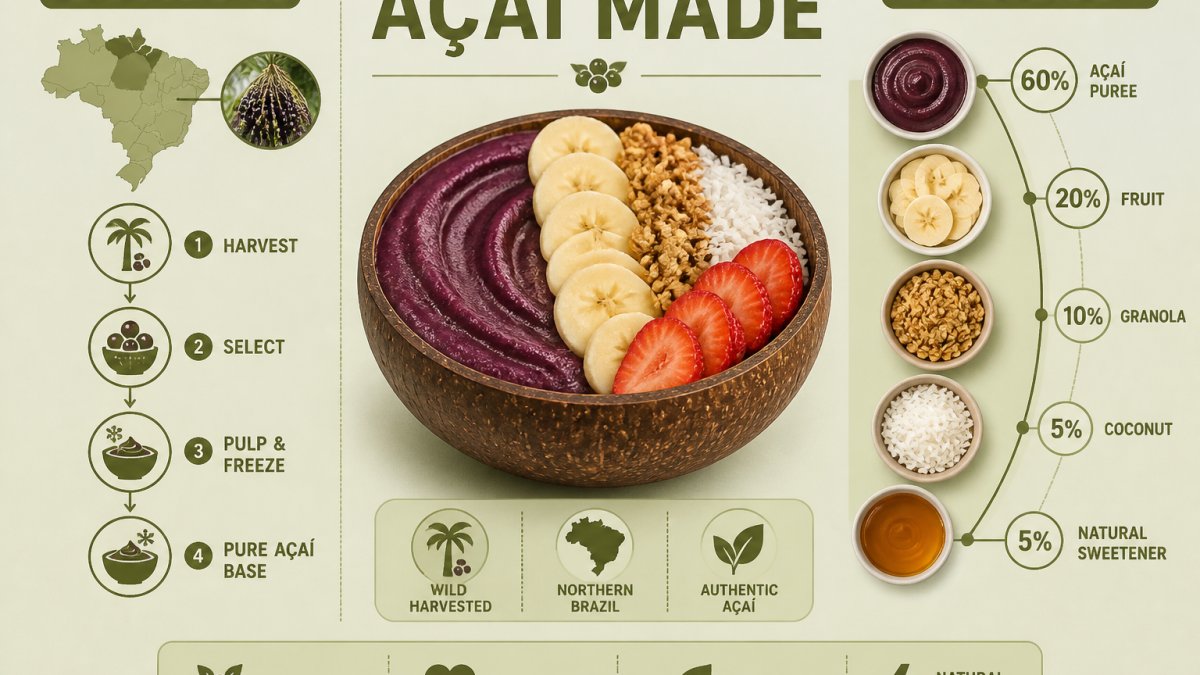
A standard açaí bowl contains a frozen açaí base blended with liquid and often banana, topped with granola, fruit, and a sweetener. The base is the part that matters most. Everything above it is customization.
Here is what typically goes into an authentic bowl, layer by layer:
- The base: frozen açaí pulp blended with a small amount of liquid or frozen banana to reach a scoopable texture
- The thickener: frozen banana is the traditional choice, since it adds body without watering the blend down
- The toppings: granola, strawberries, blueberries, coconut, and nuts are common
- The finish: honey, agave, or condensed milk in many recipes
The blend ratio is where bowls go wrong. Too much liquid and you get soup. Too little and the blades stall. A thick, scoopable base needs the açaí to stay frozen until the moment it hits the blender.
Frozen Açaí Purée: How the Pulp Is Made
Frozen açaí purée is generally made by separating the pulp from the skin and seed, then pasteurizing and freezing it. Freezing is a common way to move a perishable Amazonian fruit to distant markets.
The process runs roughly like this:
- Harvest the fruit clusters and transport them quickly to a processing facility
- Soak and sanitize the fruit to soften the skin
- Pulp the fruit to separate the edible layer from the seeds
- Pasteurize the pulp for food safety
- Freeze the purée into blocks or packs for shipping
What Purée Actually Contains
A commercial frozen açaí purée is generally pulp plus a small amount of water. If you want the difference between açaí sorbet and pulp clarified, that page explains it. Ingredient lists vary by product, which is why it is worth reading labels.
Why the Yield Is So Low
Because the edible pulp is a thin layer around a large seed, the yield from fruit to purée is small. The seed never becomes food.
How Processing Changes the Product
Pasteurization and freezing protect the purée but do not leave it untouched. Heat treatment softens the flavor slightly and can dull some of the anthocyanin color, which is why high-quality purée is processed fast and frozen hard. Freeze-drying for powder removes the water entirely, concentrating flavor and color but destroying the thick texture that makes a bowl work. That is the real trade-off between the two products: purée keeps texture, powder keeps shelf life.
Are Açaí Bowls Healthy? Nutrition and Added Sugar
An açaí bowl can be a healthy choice when the base is real fruit and the toppings are moderate. It can become a dessert when sweeteners and sugar-heavy granola are added.
Watch out: a bowl loaded with sweetened granola, honey drizzle, and condensed milk can carry more added sugar than a can of soda. If daily açaí is part of your routine, our answer to whether açaí berry pulp is healthy for daily consumption covers what to keep in mind, and our guide to low-sugar açaí bowl toppings shows how to keep the flavor without the sugar load.
How to Read Açaí Product Labels
A real açaí product lists açaí as the first ingredient, with a short list behind it. If sugar, syrup, or juice concentrate appears before açaí, you are buying a sweetened blend with a little fruit in it.
Use this checklist the next time you pick up a pack or scan a menu:
- Açaí appears first in the ingredient list
- The ingredient list is short, ideally açaí plus water or banana
- No added sugar, corn syrup, or juice concentrate near the top
- The label says organic if that claim matters to you
- The product is frozen or freeze-dried, not shelf-stable liquid
- The color is deep purple, not pale or artificially bright
Order Your Bowl and Taste the Difference
Knowing what açaí is made of changes how you order it. Once you understand that the edible portion is a thin layer of pulp around a large seed, a sweet, pale, thin bowl stops looking like a bargain.
World Green Açai offers organic açaí bowls, and you can order online through our app to skip the line. Gift cards are also available for friends and colleagues.
Order online with World Green Açai to enjoy a premium açaí bowl.
Frequently Asked Questions
Are açaí bowls healthy or bad for you?
Açaí bowls can be healthy when they are built from real fruit and modest sweeteners. The problem is added sugar: some bowls are made with sweetened purée, juice, or granola that push sugar high. Check the label for added sugar and ask what goes into the base. A bowl with organic açaí, frozen banana, and nuts is a different drink from one loaded with syrup. Balance is the deciding factor.
Why is açaí usually sold frozen or as a powder?
Açaí is highly perishable once harvested, which is why it is commonly sold frozen or as a powder. Both forms let you enjoy açaí far from the Amazon. Fresh açaí is rarely sold because it spoils fast.
Is açaí a berry or a fruit?
Açaí is a fruit, and more specifically a small, round palm fruit that grows in clusters on the açaí palm (Euterpe oleracea). It is often called a berry because of its size and dark purple color, but botanically it is a drupe: a fruit with a single large seed inside. The edible portion is the thin pulp around the seed. That seed makes up most of the fruit's volume.
What should I look for when choosing an açaí bowl?
Look for a short ingredient list that starts with açaí purée or pulp, not sugar or juice. Ask whether the açaí is organic and how the base is sweetened. Check the texture: a good bowl is thick and creamy, not watery or icy. Toppings should add fiber and healthy fats, such as fresh fruit, nuts, and seeds. If you want to skip the line and get a consistent bowl, order online from a shop that tells you what is in the base.
The challenge is simple: most açaí bowls on the market are sweetened blends dressed up as health food. We serve ours with organic açaí, a thick base, and honest toppings, and online ordering through our app means you skip the line entirely. Get started with World Green Açai and find out what real açaí tastes like.