 listicle
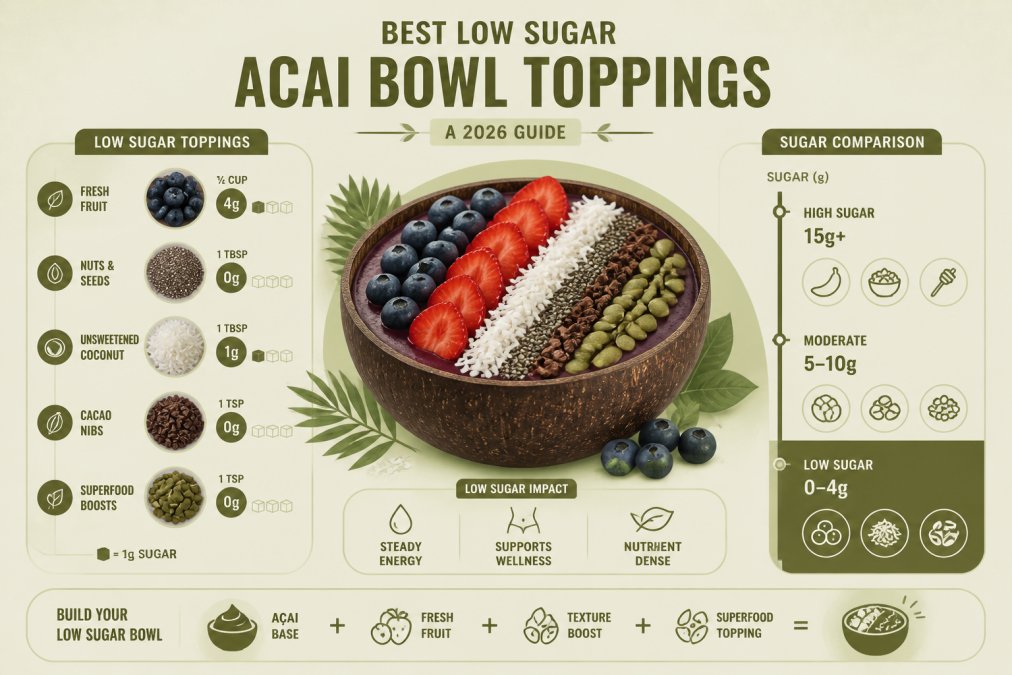
Best Low Sugar Acai Bowl Toppings: A 2026 Guide
Table of Contents
- Why Low Sugar Toppings Matter for Your Acai Bowl
- Seeds and Nuts: The Foundation of a Balanced Bowl
- Fresh Fruit Selection for Glycemic Control
- Healthy Fats and Satiety Boosters
- Building a Low Sugar Acai Bowl Recipe
- Keto Friendly Acai Bowl Toppings and Combinations
- Ingredients to Avoid: Hidden Sugars and Processed Toppings
- Frequently Asked Questions
Last Updated: September 18, 2026
Why Low Sugar Toppings Matter for Your Acai Bowl
Most commercial açai bowls are loaded with added sugars and sweetened granola that turn a healthy meal into dessert. The real issue isn't the açai itself, it's what goes on top.
When you swap high-sugar ingredients for thoughtfully selected low sugar acai bowl toppings, you get sustained energy instead of a blood sugar spike followed by a crash. You'll notice the difference in how you feel two hours after eating.
Low sugar acai bowl toppings add texture and flavor without derailing nutrition goals, keep you satisfied longer through healthy fats and protein, and let the tart açai flavor shine instead of getting buried under sweetened coconut and chocolate chips.
This guide covers the best low sugar acai bowl toppings, organized by function, whether you're building for post-workout recovery, sustained energy, or avoiding afternoon crashes.
Seeds and Nuts: The Foundation of a Balanced Bowl
Seeds and nuts form the backbone of a low sugar acai bowl, delivering protein, healthy fats, and fiber without the sugar crash from granola or dried fruit.
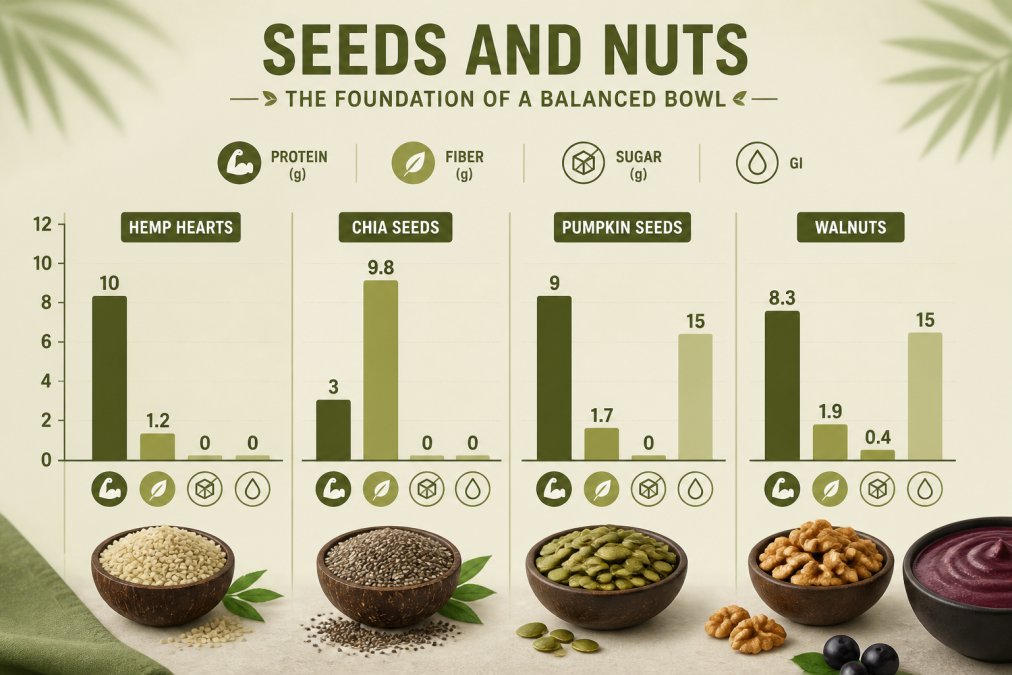
Hemp hearts contain all nine essential amino acids with a subtle, nutty flavor that complements açai. Chia seeds add a different texture and absorb liquid to extend satiety. Both are shelf-stable.
Hemp Hearts and Chia Seeds for Protein and Fiber
Hemp hearts deliver roughly 10 grams of protein per 3-tablespoon serving with zero sugar. Chia seeds offer similar protein plus exceptional fiber that slows glucose absorption.
Layer seeds directly onto your base for maximum crunch, or add just before eating if you prefer to avoid the gelatinous texture chia seeds develop over time.
Pumpkin Seeds and Walnuts for Crunch Without Sugar
Pumpkin seeds (pepitas) bring savory balance to açai and are mineral-dense in magnesium and zinc, with zero added sugar in raw, unsalted versions.
Walnuts provide heart-healthy omega-3 fatty acids and an earthy flavor that improves satiety signals through textural contrast.
Fresh Fruit Selection for Glycemic Control
Fresh fruit on a low-sugar bowl requires understanding how different fruits affect blood sugar beyond total sugar content, fiber, water content, and ripeness all matter.
Glycemic Index and Fiber Ratios: The Real Measure
Glycemic Load (GL) is a better metric than Glycemic Index alone because it accounts for portion size and fiber. Raspberries exemplify this: they contain roughly 5 grams of sugar per cup but deliver 8 grams of fiber, with a GI of around 25, meaning minimal blood sugar impact.
Blackberries perform similarly with a GI of 25 and are antioxidant-rich, complementing açai without sweetening.
Strawberries are acceptable in smaller quantities, roughly half a cup per bowl, with a GI of 40 and manageable fiber-to-sugar ratio.
Compare to common additions: a banana has a GI of 51 with only 3.1g fiber per 27g sugar; a date has a GI of 42 with 1.6g fiber per 16g sugar. This difference determines whether you get stable energy or a blood sugar spike and crash.
Portion Control and Ripeness Matter
A quarter cup of berries is the standard serving, providing antioxidant benefits without exceeding 2 grams of net carbs. Use fruit as a garnish rather than a base layer to limit portion creep.
Slightly underripe berries have lower sugar density than fully ripe ones.
What to Avoid
Dried fruit concentrates sugars dramatically: a quarter cup of dried mango contains roughly 25 grams of sugar versus 6 grams in fresh mango of equivalent weight. Avoid dried cranberries, raisins, and dried blueberries.
Avoid anything labeled "fruit-flavored" or "berry blend," plus fruit syrups and juice concentrates, all are pure sugar.
Healthy Fats and Satiety Boosters
Healthy fats slow gastric emptying, allowing gradual nutrient absorption for stable energy and fewer cravings. The type, amount, and pairing with protein and fiber determine satiety duration.
Macro-Nutrient Balancing for True Satiety
A truly low-sugar bowl requires roughly 25-35% protein, 40-50% fat, and 20-30% carbohydrate (from fiber and low-GI fruit) to prevent blood sugar crashes and hunger two hours later.
Raw almond butter is the standout choice: two tablespoons contain roughly 7 grams of protein, 9 grams of fat, and 3.5 grams of carbohydrate. Drizzle or swirl it for textural contrast and extended satiety.
Walnuts contain roughly 8.3 grams of protein and 18.5 grams of fat per ounce, plus alpha-linolenic acid (ALA), a plant-based omega-3 that enhances satiety hormones. Use one ounce (about 14 halves) per bowl.
Macadamia nuts are the most ketogenic option, delivering monounsaturated fats that support cardiovascular health, ideal for lower-carb approaches.
Medium-Chain Triglycerides and Metabolic Impact
Unsweetened shredded coconut contains medium-chain triglycerides (MCTs) that your body uses for energy rather than stores as fat. One tablespoon adds minimal calories while reducing cravings for added sugars.
Coconut oil follows the same MCT logic but is calorie-dense at 120 calories per tablespoon; use only a half-teaspoon if not already using nut butter.
Cacao Nibs: Flavor Without Sugar Crash
Cacao nibs satisfy chocolate cravings without sugar and pair beautifully with açai's tartness. One teaspoon contains zero grams of sugar and delivers 12 milligrams of flavonoids per gram.
Unlike chocolate chips, cacao nibs don't trigger blood sugar crashes and contain phenylethylamine and anandamide, compounds that enhance mood and reduce sweet cravings.
Building Your Fat Layer: Portion and Pairing
Don't treat fat toppings as an afterthought, they're the primary satiety driver. Include two fat sources: one creamy (nut butter) and one crunchy (nuts or seeds).
Example: one tablespoon raw almond butter plus one ounce walnuts equals 27.5 grams of fat and 15.3 grams of protein. Paired with a quarter cup of raspberries and açai base, this sustains energy for 4-5 hours.
Don't exceed two tablespoons of nut butter per bowl. The satiety response plateaus around 25-30 grams of fat per meal; beyond that you're adding calories without proportional fullness benefit.
Building a Low Sugar Acai Bowl Recipe
Start with unsweetened, organic açai from Northern Brazil with no added sugars or fillers. Blend about half a cup of frozen açai with unsweetened almond milk to soft-serve consistency.
| Component | Amount | Purpose | Sugar (g) |
|---|---|---|---|
| Unsweetened açai base | 0.5 cup | Foundation | 1-2 |
| Mixed nuts and seeds | 3 tbsp | Protein and crunch | 0-1 |
| Fresh raspberries | 0.25 cup | Antioxidants and fiber | 1.5 |
| Raw almond butter | 1 tbsp | Healthy fat and satiety | 0.3 |
| Cacao nibs | 1 tsp | Flavor and antioxidants | 0 |
| Total | , | , | 3-5g |
Keto Friendly Acai Bowl Toppings and Combinations
If you're following a ketogenic diet, traditional açai bowls are problematic because even unsweetened açai contains carbohydrates. The solution is using low sugar acai bowl toppings strategically and keeping portions controlled.
Ingredients to Avoid: Hidden Sugars and Processed Toppings
Most commercial açai bowl toppings are sugar traps. Granola, even "healthy" versions, typically contains 8-12 grams of sugar per quarter cup. Honey, agave, and maple syrup drizzles add another 15-20 grams of sugar per tablespoon.
Frequently Asked Questions
Are acai bowls too high in sugar?
Traditional acai bowls can be sugar-heavy, but low sugar acai bowl toppings change that equation entirely. The base açaí itself is naturally low in added sugar when unsweetened. The problem arises with toppings: granola, sweetened coconut, honey drizzles, and sugary yogurt add up quickly. By choosing toppings like hemp hearts, chia seeds, raw almonds, and fresh raspberries instead, you keep total sugar under control while maintaining nutrient density and satisfaction.
What is the healthiest acai bowl base?
An unsweetened, organic açaí base is your best starting point. Look for products with zero added sugar and certification (USDA Organic is ideal). The base should taste tart and earthy, not sweet. From there, your toppings determine the bowl's overall nutrition profile, so pair it with fiber-rich seeds, healthy fats like almond butter, and low-glycemic fresh berries.
Which fruits are lowest in sugar for acai bowls?
Raspberries and blackberries are your best bets, they contain roughly 5-7 grams of sugar per cup and deliver exceptional fiber. Strawberries come in around 7 grams per cup. Avoid high-glycemic tropical fruits like mango, pineapple, and banana, which spike blood sugar quickly. Blueberries fall in the middle at about 15 grams per cup but offer strong antioxidant value. When building your bowl, fresh raspberries should be your primary fruit topping, supplemented by a small handful of blueberries for flavor variety.
Can I have acai on a keto diet?
Yes, with careful topping choices. The unsweetened açaí base itself is keto-compatible, it's low in net carbs when you account for fiber. Pair it with keto friendly acai bowl toppings like cacao nibs (zero sugar), unsweetened shredded coconut, hemp hearts, pumpkin seeds, raw almond butter, and macadamia nuts. Skip fruit entirely or use a tiny amount of raspberries. This approach keeps you in ketosis while delivering the creamy, satisfying açaí experience.