 listicle
9 Plant Based Protein Sources for Muscle Repair
Last Updated: October 26, 2026
Quick Summary
Plant based protein sources for muscle repair work best when you choose leucine-rich options like soy foods and dose them high enough. Aim for 25 to 40 grams of plant protein per meal to reach roughly 2.5 to 3 grams of leucine, and spread that across the day.
- Soy foods are the strongest plant protein base because soy is a complete protein with a leucine profile closer to animal sources.
- Lentils and beans are lower in leucine per gram, so build meals around a full cup rather than a spoonful.
- You do not need to combine plant proteins at every meal; variety across the day covers amino acid gaps.
- Daily targets run about 0.7 to 1.0 grams of protein per pound of body weight.
- A vegan post-workout meal should pair a leucine-rich protein with carbohydrate and fluid within a couple of hours.
Table of Contents
- How Plant Based Protein Sources Support Muscle Repair
- 9 Vegan Foods High in Protein for Muscle Repair
- Complete Plant Proteins: Do You Need to Combine Them?
- Protein Powder and Dosing: Plant Protein for Muscle Recovery
- Vegan Post-Workout Meals: What to Eat After Training
- How Plant Protein Compares to Whey
- Order a Post-Workout Bowl at World Green Açai
- Frequently Asked Questions
How Plant Based Protein Sources Support Muscle Repair
Muscle repair after training depends on protein dose, amino acid quality, and timing, and plant based protein sources for muscle repair can deliver all three when you choose and dose them well. A 2025 systematic review of resistance-trained people found that plant proteins, particularly blends at appropriate doses, may support recovery, with interventions using soy, pea, rice, hemp, potato, and blends at 15 to 50 grams (systematic review on plant proteins and resistance exercise recovery(https://pmc.ncbi.nlm.nih.gov/articles/PMC12348865/)).
Here is the tension most guides skip. Plant proteins are not identical to whey. They differ in amino acid profile and digestibility, and a 2025 review led by R. J.
9 Vegan Foods High in Protein for Muscle Repair
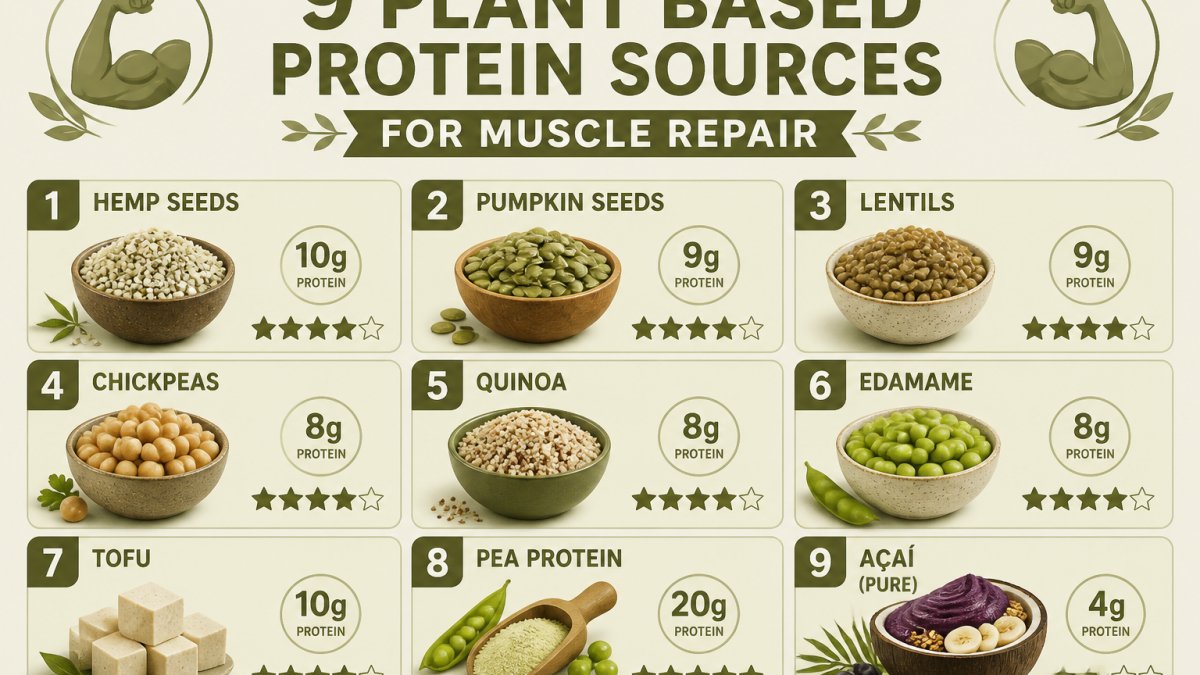
These are the vegan foods high in protein we reach for when repair is the goal. The list runs from soy foods through legumes to seeds and grains, and each entry earns its place for a different reason.
A quick note on the numbers: protein figures are approximate ranges for commonly available products, because brands and preparation methods vary. Use them to compare foods, not as lab-precise values.
Soy Foods: Tofu, Tempeh, and Edamame
Soy foods are the strongest plant protein base for muscle repair because soy is a complete protein with a leucine profile closer to animal sources than most plants.
- Firm tofu: about 15 to 20 grams of protein per half-cup, and it takes on whatever flavor you cook it with. Press it, cube it, and sear it for a bowl.
- Tempeh: about 15 to 20 grams per half-cup, fermented, and many people find it easier to digest than tofu. It holds its shape in wraps and stir-fries.
- Edamame: about 8 to 9 grams per half-cup shelled, which makes it an easy snack or bowl topper. A full cup gets you into the mid-teens.
Soy is also the plant protein with the most direct research support for muscle outcomes, which is why it anchors this list. The American Heart Association lists tofu, tempeh, and soy milk among its plant-protein serving examples (EXTERNAL_LINK: American Heart Association plant protein guidance | heart.org).
Legumes, Lentils, and Beans
Lentils and beans are the budget backbone of a plant based protein plan. They are not as leucine-dense as soy, so portion size carries more weight.
- Lentils: about 18 grams of protein per cooked cup. They cook fast, freeze well, and work as a base rather than a side.
- Black beans and chickpeas: about 14 to 15 grams per cooked cup. Chickpeas are the most versatile for bowls and salads.
- Peas: about 8 grams per cooked cup, but pea protein powder is a different story and appears in the powder section below.
Because legumes are lower in leucine per gram of protein than soy, a cup of lentils alone may not hit the threshold. Pair them with a soy food, a seed topping, or a plant protein powder to close the gap.
Seeds, Grains, and Extras: Hemp, Quinoa, and Nutritional Yeast
Hemp seeds, quinoa, and nutritional yeast add protein without much effort. They are supporting players, not the lead. Sprinkle hemp over oats, use quinoa as a bowl base, and stir nutritional yeast into savory dishes.
- Hemp seeds: about 10 grams of protein per 3 tablespoons, with a good amino acid spread. They are also a source of omega-3 fats, which matter for overall recovery.
- Quinoa: about 8 grams per cooked cup and a complete protein, though the portion needed for a full protein serving is large.
- Nutritional yeast: about 8 grams per quarter-cup, and it adds a savory flavor that makes plant meals easier to repeat.
These are the foods that turn a legume base into a meal that feels complete. If you want to apply these in a single meal, our guide to high protein açaí bowls shows how to build one at home.
Allergen-Aware and Budget Swaps
Not everyone can build a plan around soy, gluten, or every legume. Here are practical swaps that keep protein and leucine in range:
- Soy-free: replace tofu and tempeh with pea protein, hemp tofu, or a chickpea-flour-based protein source, and lean on lentils and seeds.
- Gluten-free: quinoa, rice, hemp, and most legumes are naturally gluten-free; check labels on seasoned or marinated products.
- Legume-sensitive: hemp seeds, pumpkin seeds, and pea protein isolate are often better tolerated than whole beans; introduce them gradually.
Complete Plant Proteins: Do You Need to Combine Them?
No, you do not need to combine plant proteins at every meal. A complete protein is a protein source that supplies all nine essential amino acids in adequate amounts. The old advice about pairing rice and beans in the same bite has been relaxed; eating a varied mix of plant proteins across the day covers the gaps. A 2025 review led by D. Ashtary-Larky found limited evidence that, when protein intake is matched, plant-based diets can support muscle hypertrophy similarly to omnivorous diets in untrained people. Variety across the day is the practical rule. If you want to see that idea applied to a real meal, our post on balancing macronutrients in açaí bowls walks through it.
Protein Powder and Dosing: Plant Protein for Muscle Recovery
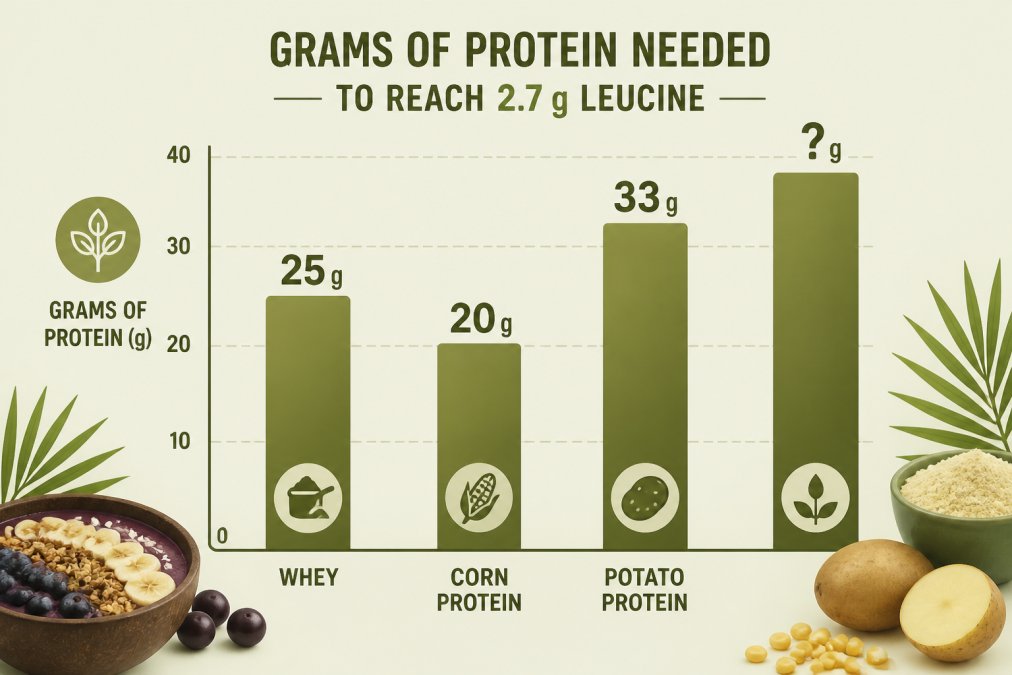
Plant protein for muscle recovery works when the dose is high enough to hit a leucine threshold. This is where serving size decides everything. According to a 2022 review in Applied Physiology, Nutrition, and Metabolism, you need 20 grams of corn protein or 33 grams of potato protein to supply the same 2.7 grams of leucine found in 25 grams of whey protein.
Daily Protein Targets by Body Weight
A common evidence-informed range for people doing resistance training is about 1.6 to 2.2 grams of protein per kilogram of body weight per day, which works out to roughly 0.7 to 1.0 grams per pound. The lower end is enough for many beginners; the higher end helps experienced lifters and people in a calorie deficit preserve muscle.
- Beginners: about 0.7 to 0.8 grams per pound per day is a reasonable starting point.
- Experienced lifters: about 0.8 to 1.0 grams per pound per day supports repair and adaptation over time.
- Calorie deficit: aim toward the higher end, about 0.9 to 1.0 grams per pound per day, to protect muscle while losing fat.
For a 150-pound person, that is roughly 105 to 150 grams of protein per day depending on context. Spread across three to four meals, that means about 25 to 40 grams per meal.
Per-Meal Targets and Leucine
Per-meal targets matter because muscle protein synthesis responds to individual doses, not just daily totals. A practical target is 25 to 40 grams of plant protein per meal, with the higher end for soy-free or grain-heavy sources. The goal is to reach roughly 2.5 to 3 grams of leucine per meal.
- Soy or pea protein isolate: about 25 to 30 grams of powder usually gets you into range.
- Rice or hemp protein: you may need 35 to 45 grams of powder to reach the same leucine dose.
- Blends: a pea-rice blend at 30 to 35 grams is a reliable middle path.
Timing Without the Hype
The "anabolic window" is wider than the old 30-minute rule suggests. A common pattern is to eat a protein-rich meal within a couple of hours after training, and to spread protein evenly across the day. Total daily intake and per-meal dose matter more than hitting an exact minute. If you train fasted or go long stretches without eating, getting a dose in soon after training is a sensible habit.
Choosing a Powder
Look at the protein per scoop, the leucine content if listed, and whether the product is a single source or a blend. Single-source powders are fine if you rotate them; blends reduce the risk of an amino acid gap. For help picking one, see our guide on how to choose the best recovery protein powder.
systematic review on plant proteins and resistance exercise recovery
Vegan Post-Workout Meals: What to Eat After Training
A vegan post-workout meal should combine a leucine-rich protein with carbohydrate and fluid within a couple of hours of training. Practical options:
- Tofu scramble with sweet potato and a side of edamame
- Lentil bowl with quinoa and hemp seeds
- Tempeh wrap with beans
- A protein smoothie with pea or soy powder and oats
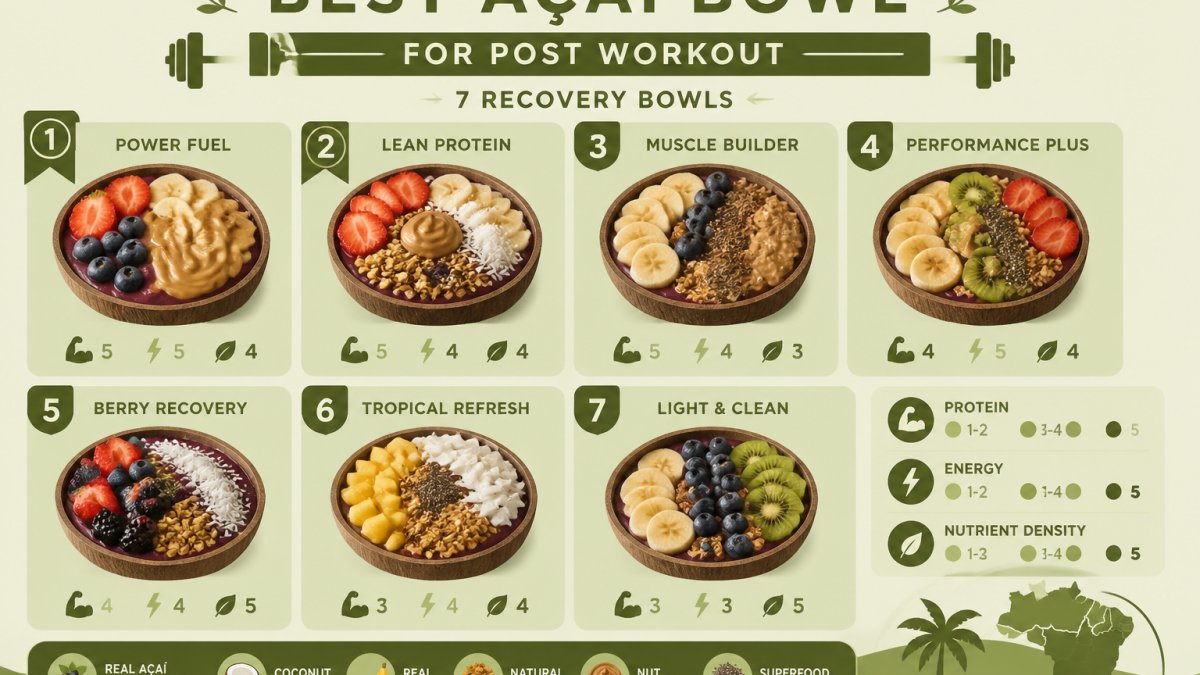
- An açaí bowl topped with hemp and nut butter, see our best açaí bowl for post workout options.
How Plant Protein Compares to Whey
Whey still holds a small edge for muscle mass, but the gap is smaller than the internet suggests. The 2025 Reid-McCann review found a small possible advantage for animal protein over non-soy plant protein, and it flagged that research on a wider range of plant proteins is still thin. When protein intake and leucine dose are matched, the difference narrows further.
| Factor | Whey Protein | Plant Protein |
|---|---|---|
| Leucine per 25 g | 2.7 g | Varies by source |
| Complete amino acid profile | Yes | Soy yes, others need variety |
| Typical dose for recovery | 25 g | 30 to 50 g depending on source |
| Digestibility | Generally high | Varies; blends help |
| Best for | Fast, low-volume dosing | Varied diets, dairy-free needs |
Order a Post-Workout Bowl at World Green Açai
The hard part of plant based protein sources for muscle repair is not knowing what to eat. It is making it happen on a busy day. We make organic açaí bowls, and you can order online to skip the line. Get started with World Green Açai.
Frequently Asked Questions
Can plant based protein support muscle repair as well as animal protein?
A 2025 systematic review found that plant proteins, particularly blends and appropriately dosed products, may support recovery in resistance-trained people. The interventions used soy, pea, rice, hemp, potato, and blended proteins at doses from 15 to 50 g. One 2025 review reported a small muscle-mass advantage for animal protein over non-soy plant protein, so the practical takeaway is to use larger doses and varied sources rather than to avoid plant protein.
Which vegan foods high in protein should I eat after a workout?
Build your meal around a soy food such as tofu, tempeh, or edamame, then add lentils, beans, or quinoa for extra protein and carbohydrates. A 2022 review in Applied Physiology, Nutrition, and Metabolism found that 20 g of corn protein or 33 g of potato protein matched the leucine in 25 g of whey, so portion size matters more than the label. Hemp seeds and nutritional yeast are easy add-ons that raise the total without much prep.
Do complete plant proteins matter for muscle repair?
Plant and animal proteins differ in amino-acid profiles and digestibility, which is why complete plant proteins get attention. The 2025 systematic review found that blends were among the interventions that may support recovery, and the American Heart Association recommends varied sources including beans, nut butter, tofu, tempeh, soy milk, lentils, and chickpeas. Eating a mix across the day covers the essential amino acids without needing to pair foods at every meal.
How much plant protein for muscle recovery do I need per serving?
The reviewed resistance-exercise interventions used 15 to 50 g of plant protein per dose. Because plant proteins are generally lower in leucine than whey, the 2022 review's comparison is useful: reaching 2.7 g of leucine took 20 g of corn protein or 33 g of potato protein versus 25 g of whey. A practical approach is to aim toward the higher end of that range and choose blends or soy when you want a closer match to whey.
What should a vegan post-workout meal look like?
Combine a soy or legume protein with a grain and something fresh. Tofu or tempeh with quinoa, a lentil bowl with brown rice, or an açai bowl topped with hemp seeds and nut butter all work. The 2025 review supports blends and appropriately dosed products for recovery, so keep portions generous. World Green Açai offers organic bowls you can order online.