 listicle
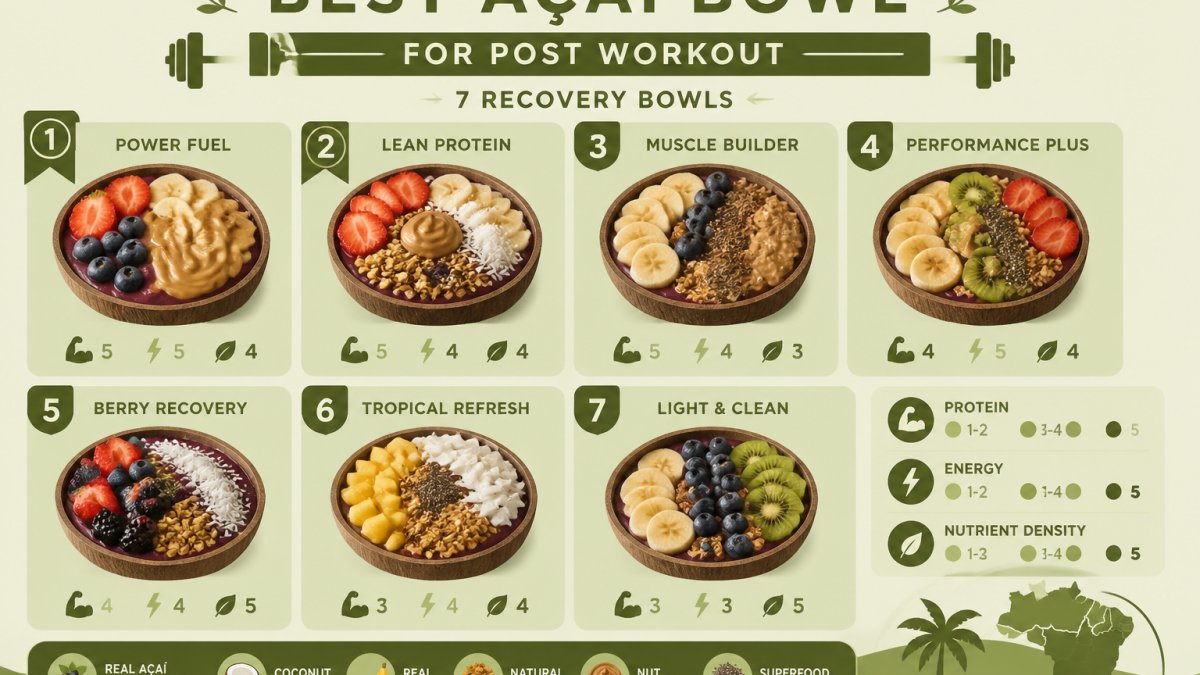
Best Açaí Bowl for Post Workout: 7 Recovery Bowls
Table of Contents
- Why an Açaí Bowl Works After Training
- 1. The Classic Recovery Bowl: Açaí Purée and Banana
- 2. High-Protein Açaí Bowl With Greek Yogurt and Whey
- 3. Post-Workout Açaí Bowl Recipe You Can Blend at Home
- 4. The Açaí Bowl After a Run: Endurance-Focused Build
- 5. Best Time to Eat an Açaí Bowl Around Exercise
- 6. Toppings, Substitutions, and Dietary Adaptations
- 7. Store-Bought vs Homemade: Which Fits Your Recovery
- Frequently Asked Questions
Last Updated: October 17, 2026
Why an Açaí Bowl Works After Training
A post workout bowl works because it delivers three things your muscles need at once: fast carbohydrates, fluid, and a hit of protein. Açaí itself brings natural sugars and fiber, and what you add on top decides whether the bowl rebuilds you or just fills you up.
At World Green Açai, we build bowls around that idea every day. The best açaí bowl for post workout recovery is not the sweetest one on the menu. It is the one with a real protein source, whole fruit, and a thick frozen açaí base instead of a sugary syrup.
Here is the part most guides skip: timing and portion matter as much as ingredients. Below, we break down seven bowls, from a simple purée-and-banana build to a full homemade recipe, plus how to time your bowl around exercise and how to adapt it for allergies. The best açaí bowl for post workout needs a clear job, and each of these has one.
1. The Classic Recovery Bowl: Açaí Purée and Banana
Start with frozen açaí purée and a ripe banana, blended thick with a splash of milk. This is the simplest post workout bowl you can make, and it covers carbohydrates and potassium without added sugar.
What Goes In and Why
- Frozen açaí purée: the base, providing natural sugars and fiber
- One ripe banana: carbohydrates and potassium
- A splash of milk: texture and a little protein
- Granola or oats: slow-release carbohydrates
Banana is the workhorse here. It blends into a creamy texture and adds flavor without syrup. Keep the blend cold and thick, and resist the urge to pour in juice, which thins the bowl and adds sugar you do not need.
This build suits a light training day or a snack-sized recovery. If you trained hard, move to bowl two.
2. High-Protein Açaí Bowl With Greek Yogurt and Whey
For a high-protein açaí bowl, blend Greek yogurt into the base and add a scoop of whey protein. This turns a fruit bowl into a genuine muscle recovery meal.
Hitting Your Protein Target
Protein is the piece most açaí bowls miss. A bowl of fruit and granola is a snack, not a recovery meal. Two easy upgrades fix that:
- Greek yogurt: thick, tangy, and protein-rich, blended right into the base
- Whey protein: a scoop adds protein without much flavor change
- Nut butter: healthy fats and a little extra protein
Blend the yogurt and whey with the frozen açaí purée first, then add fruit. If the mixture gets too thin, add frozen banana instead of liquid. The goal is a spoonable texture that holds its shape.
3. Post-Workout Açaí Bowl Recipe You Can Blend at Home
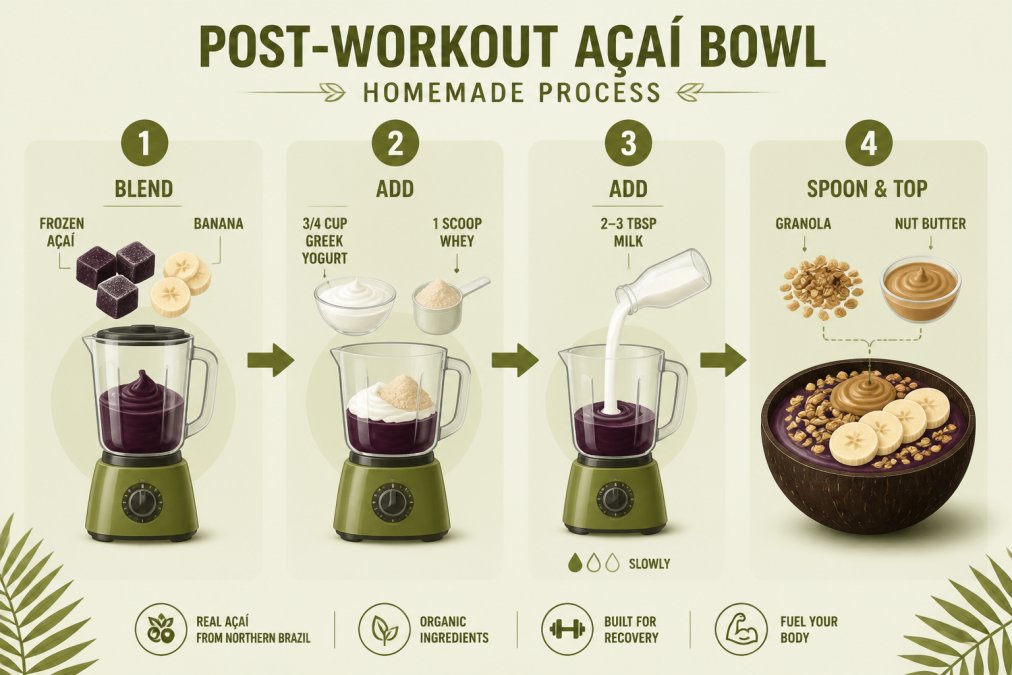
Here is a post-workout açaí bowl recipe you can make in about five minutes. It serves one and needs no special equipment beyond a blender.
What you need:
- 1 frozen açaí pack or about half a cup of frozen açaí purée
- 1 frozen banana, sliced before freezing
- 3/4 cup Greek yogurt
- 1 scoop whey protein (optional)
- 2 to 3 tablespoons milk, added slowly
- Toppings: granola, sliced banana, a spoon of nut butter
Steps:
- Break the frozen açaí into chunks and add it to the blender with the frozen banana.
- Add the Greek yogurt and whey.
- Pour in milk one tablespoon at a time and blend on low, scraping down the sides.
- Stop as soon as the mixture is smooth and thick. Over-blending warms it and thins it.
- Spoon into a bowl and add toppings.
Expected result: a thick, scoopable bowl that holds a spoon upright. If it slumps, add more frozen fruit, not more milk.
4. The Açaí Bowl After a Run: Endurance-Focused Build
An açaí bowl after a run should lean harder on carbohydrates, because endurance training drains glycogen. Build the base with açaí purée, banana, and frozen fruit, then add oats and a date or two for fast carbs.
Runners and triathletes often pair a bowl like this with protein to cover both refueling and repair. The sports nutrition guidance from the American College of Sports Medicine frames recovery around replacing fluids and carbohydrates after long efforts, with protein supporting muscle repair.
Keep the bowl cold and eat it within an hour of finishing if you can. A long run leaves you dehydrated too, so drink water alongside it rather than relying on the bowl alone.
5. Best Time to Eat an Açaí Bowl Around Exercise
The best time to eat an açaí bowl is within about an hour after training, when your muscles are most ready to take up carbohydrates and protein. Before exercise, a smaller bowl works better, eaten an hour or two ahead.
Serving Size and Portion Balance
Portion is where recovery bowls go wrong. A bowl loaded with granola, honey, and sweetened toppings can outweigh the benefit of the fruit.
- Snack-sized: a small bowl after a light session
- Meal-sized: a full bowl with protein after hard training
- Watch the toppings: granola and nut butter add calories fast, so measure rather than pour
Balance the bowl by keeping fruit as the bulk, protein as a clear component, and sweet toppings as a garnish.
6. Toppings, Substitutions, and Dietary Adaptations
Toppings make or break a recovery bowl. Choose granola, oats, nuts, and seeds for crunch and healthy fats, and use fresh or frozen fruit for natural sweetness.
Common substitutions:
- Dairy-free: swap Greek yogurt for a plant-based yogurt and use a plant milk
- Nut-free: replace nut butter with sunflower seed butter and skip the almonds
- Lower sugar: use unsweetened açaí purée and skip honey or sweetened granola
- More protein: add an extra half scoop of protein powder or a spoon of Greek yogurt
Check labels on granola and protein powders if you are managing an allergy. Added sugar hides in both.
7. Store-Bought vs Homemade: Which Fits Your Recovery
Store-bought wins on convenience and consistency; homemade wins on control. If you want a thick, creamy bowl without the trial and error, a shop that blends to order removes the guesswork.
Making bowls at home often ends in an icy or watery result, usually from too much liquid or under-ripe frozen fruit. A shop solves that, and online ordering means you can pick up a recovery bowl without waiting in line.
Here is how the two compare:
| Factor | Store-Bought | Homemade |
|---|---|---|
| Time | Minutes, especially with online ordering | 5-10 minutes plus cleanup |
| Texture consistency | Reliable, blended to order | Depends on liquid control |
| Ingredient control | Limited to the menu | Full control |
| Cost per bowl | Varies by shop and toppings | Lower per serving |
| Best for | Busy days, post-gym pickup | Custom macros and allergies |
At World Green Açai, we blend organic açaí bowls to order, and you can skip the line by ordering through our app or online. For a busy recovery day, that convenience is the whole point.
Frequently Asked Questions
Is an açaí bowl good to eat after a run?
Yes. An açaí bowl after a run delivers carbohydrates from açaí purée, banana, and granola plus fluid and potassium, which help replace what a long run depletes. The trick is building it with protein, such as Greek yogurt, whey protein, or nut butter, so it supports muscle repair rather than just topping up sugar. Keep added sweeteners low and watch portion size if you are watching total calories.
How much protein should a post-workout açaí bowl have?
Aim for roughly 20 to 30 grams of protein in your post-workout bowl. You can reach that with a scoop of whey protein, a thick layer of Greek yogurt, or a combination of nut butter and protein powder. A high-protein açaí bowl built this way supports muscle recovery while still giving you the carbohydrates your body needs to refill glycogen after training.
What is the best time to eat an açaí bowl after exercise?
The best time to eat an açaí bowl is within about 30 to 60 minutes after your workout, when your muscles are most ready to absorb carbohydrates and protein. If you cannot eat that soon, aim for within two hours. Eating a bowl before training also works if you leave one to two hours for digestion, so pick the window that fits your schedule and appetite.
Can an açaí bowl help with muscle recovery?
It can when you build it correctly. Açaí provides carbohydrates and antioxidants, banana adds potassium, and protein sources like Greek yogurt or whey supply the amino acids muscles use for repair. Pair those with healthy fats from nut butter or almonds and you get a balanced recovery meal. The bowl alone will not replace sleep or total daily protein, but it fits well into a recovery routine.
How can you make an açaí bowl higher in protein?
Blend a scoop of whey protein or unflavored protein powder into the base, use Greek yogurt instead of milk, and top with nut butter, almonds, or chia seeds. These additions push a standard bowl toward 25 to 30 grams of protein without wrecking the texture. Keep the açaí purée as the base and add protein gradually so the bowl stays thick rather than turning into a smoothie.
Recovery nutrition only works if you actually eat it, and the gap between a good bowl and a great one is usually protein and timing. World Green Açai makes that easy with organic açaí bowls, online ordering, and a mobile app so your post workout bowl is ready when you are. Order online and get a thick, fruit-forward bowl without the wait.