 how-to
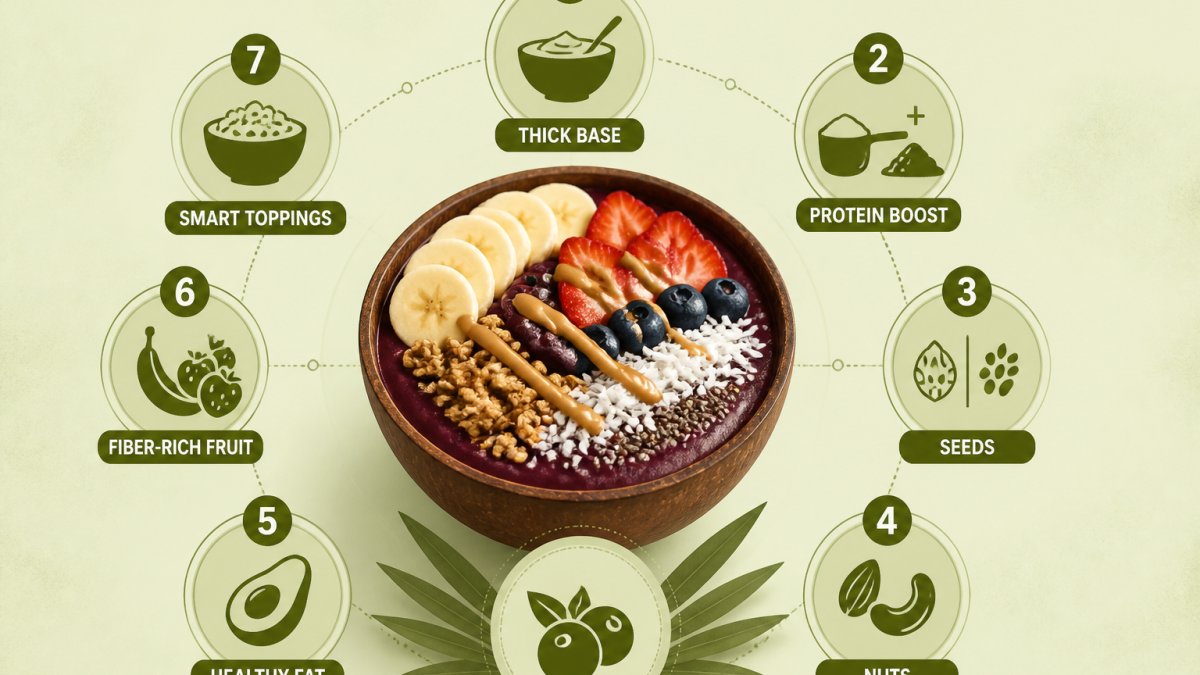
How to Make Açai Bowls More Filling: 7 Steps
Table of Contents
- Why Your Açai Bowl Leaves You Hungry
- Step 1: Build Your Base with Protein Powder
- Step 2: Choose High Protein Açai Bowl Toppings
- Step 3: Add Healthy Fats for Sustained Satiety
- Step 4: How to Make Açai Bowls Thicker and More Satisfying
- Step 5: Incorporate Fiber-Dense Additions
- Step 6: Control Portion Size and Macronutrient Balance
- Common Mistakes That Sabotage Satiety
- Frequently Asked Questions
Last Updated: September 29, 2026
Why Your Açai Bowl Leaves You Hungry
Most açai bowls feel more like a dessert than a meal, you're satisfied for 20 minutes, then hunger hits by mid-afternoon. Learning how to make acai bowls more filling transforms them from a snack into an actual lunch.
A filling açai bowl needs three things: protein to stabilize blood sugar, healthy fats to slow gastric emptying, and fiber to keep you satisfied longer. Understanding how to make açai bowls more filling transforms them from a snack into an actual lunch.
Step 1: Build Your Base with Protein Powder
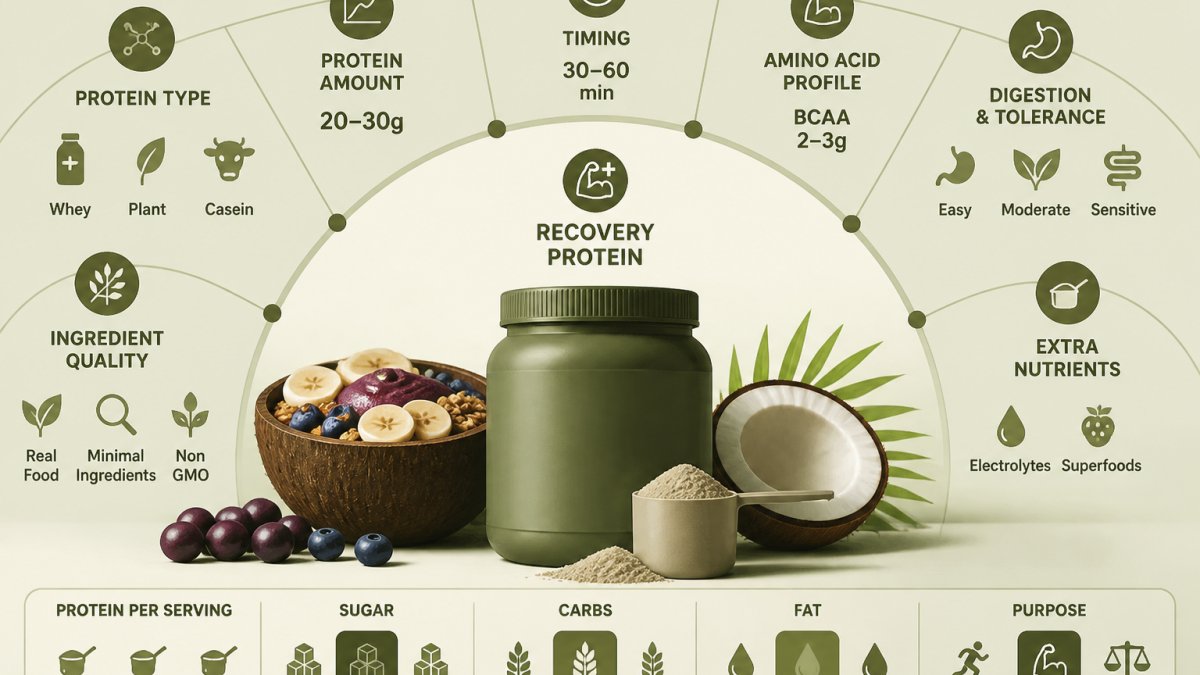
Mix protein powder directly into the base, this is non-negotiable for lasting satiety.
Protein slows digestion and triggers satiety signals in your brain. A single scoop (20-25g) fundamentally changes how your body responds to the bowl.
Best protein options for açai bowls:
- Greek yogurt powder (adds creaminess and tang)
- Plant-based protein (pea, hemp, or rice blend)
- Whey protein isolate (mixes smoothly, neutral flavor)
- Collagen peptides (supports satiety without strong taste)
Mix protein powder with the liquid base before blending in the açai to ensure even distribution and prevent clumping.
Step 2: Choose High Protein Açai Bowl Toppings
Toppings are where most people miss their satiety opportunity. The right toppings transform your bowl from a light breakfast into a satisfying meal.
High protein toppings include nuts, seeds, and Greek yogurt. A quarter cup of almonds delivers 6g protein plus healthy fats; hemp hearts add 10g per 3-tablespoon serving.
Strategic topping combinations:
- Almonds + chia seeds + Greek yogurt (18g protein, excellent satiety)
- Hemp hearts + walnuts + coconut flakes (15g protein, sustained energy)
- Granola with added protein + almond butter drizzle + pumpkin seeds (20g protein)
- Pecans + flax seeds + plain yogurt (16g protein, high fiber)
Layer toppings that combine protein, healthy fats, and fiber in the same bite to create nutrient density that keeps you full.
Step 3: Add Healthy Fats for Sustained Satiety
Healthy fats slow gastric emptying, the rate your stomach releases food into your intestines, which extends satiety significantly.
Nut butters, seeds, and coconut oil are your best allies. A tablespoon of almond butter adds 3-4g fat plus 4g protein; chia seeds deliver 3g fat plus fiber per tablespoon.
Healthy fat sources for filling bowls:
- Almond butter or peanut butter (swirl into the base or drizzle on top)
- Coconut oil (blend into the base for creaminess)
- Tahini (adds richness and sesame flavor)
- Avocado (slice and layer with toppings)
- Walnuts or pecans (crunch plus sustained energy)
Mix some healthy fat into the base for creaminess and distribution; layer the rest on top for texture contrast.
Step 4: How to Make Açai Bowls Thicker and More Satisfying
A thick bowl forces you to eat slower, giving your brain 15-20 minutes to register fullness signals. A thin bowl gets consumed in 3-4 minutes, before satiety hormones activate. However, thickness alone doesn't make acai bowls more filling; you need the right macronutrient foundation.
Balance textural thickness with nutritional density. A bowl can be thick but nutritionally empty, or thin but highly satiating if it contains 30g protein and 10g fiber, macronutrients slow gastric emptying regardless of texture.
The thickness-satiety framework:
Thickness comes from frozen fruit density, liquid-to-solid ratio, and binder ingredients. Start with one frozen açai packet (100g) to half a cup of liquid, then adjust.
- Frozen fruit as structure: Use frozen banana slices (adds creaminess and body without thinning), frozen berries beyond the açai (more fiber, more structure), or frozen coconut milk cubes (richness without excess liquid).
- Binders that add satiety: Greek yogurt as part of the liquid base (thickens significantly while adding 15-20g protein per half cup), nut butter blended directly into the base (increases viscosity and adds 4g fat + 4g protein per tablespoon), or oats blended into the base (creates viscosity while adding 4g fiber per half cup).
- Liquid ratios as the control variable: Too much liquid creates a thin bowl that's consumed quickly, defeating the eating-speed advantage. Too little makes blending impossible. The goal is a consistency you can eat with a spoon that requires 5-7 minutes to finish, giving satiety signals time to register.
Blending technique for optimal texture:
Pulse ingredients until combined but slightly chunky. Over-blending creates a thin texture you consume faster. Visible fruit pieces and nut chunks create micro-pauses that naturally slow consumption.
Keep your bowl base frozen solid until blending. Partially thawed bases blend too thin and lose structural integrity.
The texture-satiety trade-off:
The ideal consistency is spoonable but requires effort, thick enough that you can't drink it, but not so dense that eating becomes a chore. This takes 5-7 minutes to consume, aligning with satiety hormone activation.
Step 5: Incorporate Fiber-Dense Additions
Fiber extends satiety by slowing digestion. Strategic additions amplify this effect significantly.
Chia seeds deliver 10g fiber per ounce; flax seeds add 8g per ounce. These are satiety multipliers that work synergistically with protein and fat.
Fiber-dense additions:
- Chia seeds (10g fiber per ounce, absorbs liquid for thickness)
- Ground flax seeds (8g fiber, nutty flavor)
- Hemp hearts (10g fiber per 3 tablespoons, complete protein)
- Pumpkin seeds (2.7g fiber per ounce, mineral-rich)
- Coconut flakes (unsweetened, adds 2g fiber per tablespoon)
- Oats (4g fiber per half cup, creates body in the blend)
Mix fiber into the base and layer more on top for thickness and additional satiety signals.
Start with one tablespoon of chia or flax seeds and adjust based on how you feel. Too much fiber without adequate water intake can cause digestive discomfort. The goal is satiety, not bloating.
Step 6: Control Portion Size and Macronutrient Balance
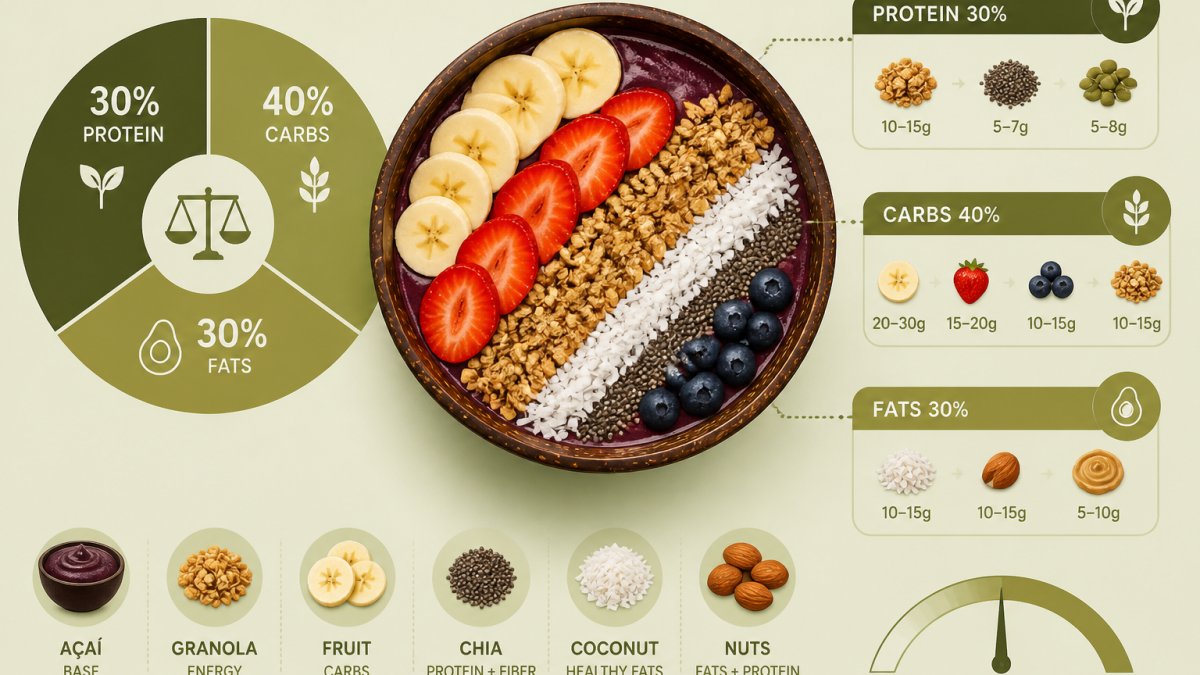
A filling açai bowl is about eating the right macronutrient combination. Protein and fiber slow gastric emptying; healthy fats trigger satiety hormones. When these three work together, you stay full for 3-4 hours.
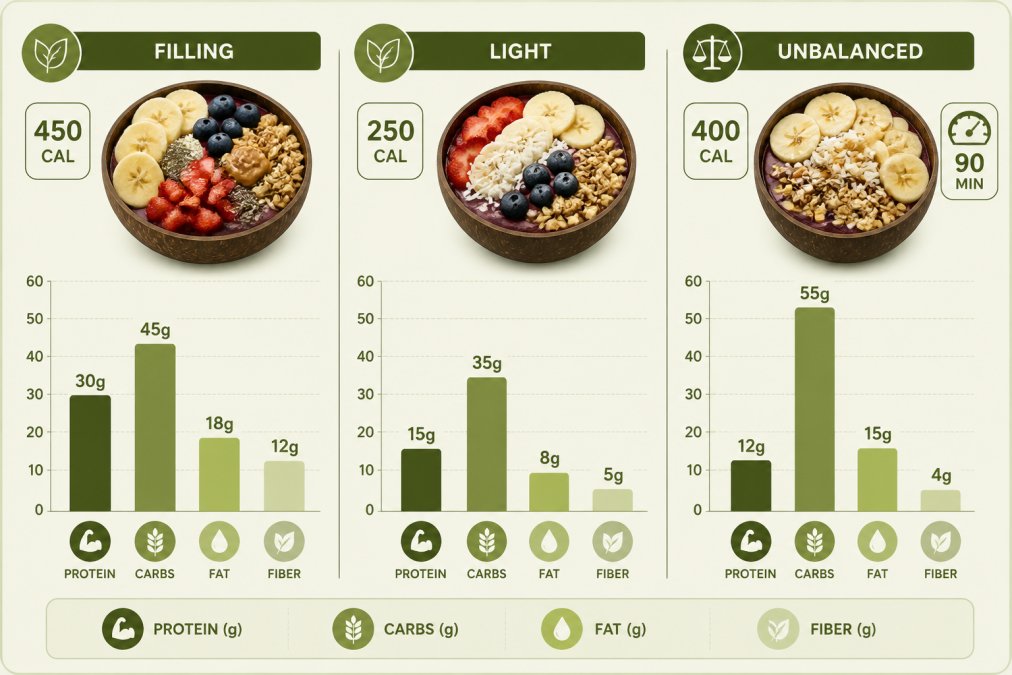
How macronutrients create lasting satiety:
Protein (25-35g): Triggers peptide YY and GLP-1, hormones that signal fullness. Has the highest thermic effect of food, extending satiety. Without adequate protein, blood sugar spikes and crashes, triggering hunger.
Healthy fats (12-18g): Slows gastric emptying by 30-40% and triggers CCK, a satiety hormone. Provides 9 calories per gram, so a small amount creates substantial fullness. However, fat alone without protein is insufficient.
Fiber (8-12g): Slows digestion, stabilizes blood sugar, and feeds beneficial gut bacteria.
Macronutrient targets for a filling bowl:
| Nutrient | Target Amount | Why It Matters | How to Hit It |
|---|---|---|---|
| Protein | 25-35g | Triggers satiety hormones (GLP-1, peptide YY); stabilizes blood sugar | 1 scoop protein powder (20-25g) + Greek yogurt topping (5-10g) or nut butter (4g) |
| Healthy Fats | 12-18g | Slows gastric emptying by 30-40%; triggers CCK hormone | 1 tbsp nut butter (4g) + 1 tbsp seeds (3g) + 1 tbsp nuts (3g) + optional avocado (3g) |
| Fiber | 8-12g | Slows digestion, stabilizes blood sugar, feeds gut bacteria | 1 tbsp chia seeds (5g) + 1 tbsp ground flax (3g) + oats in base (2g) |
| Carbs | 40-50g | Energy source; balances other macros for satiety | Açai base (15g) + fruit toppings (15g) + granola (10g) + additional berries (5g) |
Building your bowl by the numbers:
Troubleshooting the satiety gap:
Common Mistakes That Sabotage Satiety
Mistake 1: Skipping protein entirely. A bowl with just fruit and granola is a dessert. Without protein, hunger returns within an hour.
Frequently Asked Questions
What makes an açai bowl actually filling instead of just a sugary treat?
Satiety comes from three factors: protein slows gastric emptying and keeps you full longer, healthy fats trigger satiety hormones, and fiber creates bulk in your stomach. A truly filling açai bowl combines all three. Real, organic açai like ours provides antioxidants, but the toppings and macronutrient balance determine whether you're hungry again in an hour or satisfied for 3-4 hours. Aim for at least 15g protein, 8g fiber, and 5-10g healthy fat per bowl.
What are the best protein sources to add to an açai bowl?
Greek yogurt is the most accessible high protein topping, delivering 15-20g per serving. Protein powder (whey, plant-based, or collagen) blends directly into the base for 20-30g. Nuts and seeds like almonds, hemp hearts, and chia seeds add protein plus healthy fats. For a budget-friendly option, combine granola with Greek yogurt to hit your protein target without expensive supplements. The key is layering multiple protein sources, one alone won't keep you full.
How do healthy fats help make an açai bowl more filling?
Healthy fats slow digestion and trigger cholecystokinin (CCK), a hormone that signals fullness to your brain. Nut butters, coconut oil, avocado, and seeds create a thicker texture profile while extending satiety by 2-3 hours compared to a fat-free bowl. Aim for 5-10g of healthy fat per bowl, enough to feel satisfying without excessive calories. This is why bowls with nut butter and coconut toppings outperform those with only fruit.
Can I make a filling açai bowl on a budget?
Yes. Skip expensive superfoods and focus on staples: oatmeal (fiber and satiety), peanut butter (protein and fat), and bulk granola deliver filling power at a fraction of specialty topping costs. Greek yogurt is cheaper per gram of protein than protein powder. Frozen banana and berries cost less than fresh. The macronutrient balance matters far more than the ingredient names, a budget bowl with 15g protein, 8g fiber, and healthy fats will keep you full as long as one loaded with goji berries and hemp hearts.