 ultimate-guide
Post Workout Nutrition for Women Over Forty: A Practical Guide
Last Updated: October 29, 2026
Quick Summary
Post workout nutrition for women over forty means pairing protein and carbohydrates after training to support muscle repair, restore glycogen, and offset age-related muscle loss. Aim for roughly 20 grams of protein after exercise, and eat a well-considered meal within one to two hours.
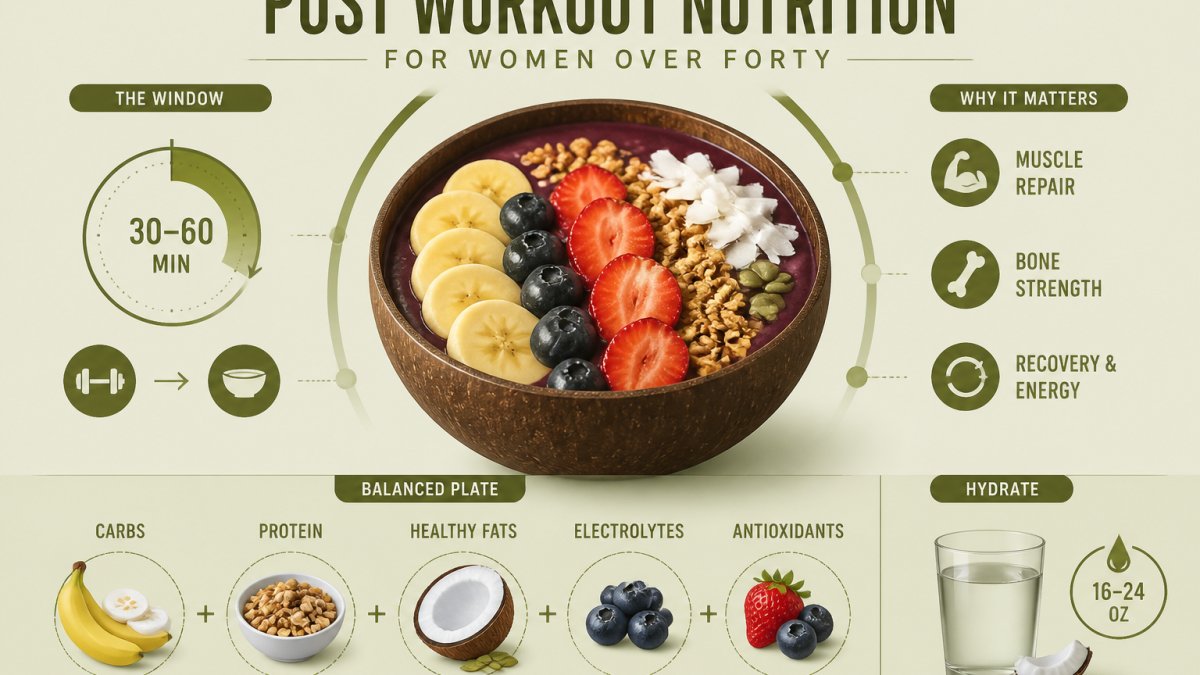
- A 2024 review describes the post-exercise window as 30 minutes to two hours.
- A daily protein intake of 1.2 to 1.6 grams per kilogram supports muscle maintenance.
- A practical pattern is 25 to 30 grams of protein at each main meal.
- Eating a well-considered meal one to two hours after exercise is enough for most people.
- For long endurance work of 90 minutes or more, carbohydrates become the priority.
Table of Contents
- Why Post Workout Nutrition Matters More After Forty
- What to Eat After a Workout for Women Over 40
- Post-Workout Protein for Women Over 40
- Carbohydrates, Hydration, and Glycogen Replenishment
- Post-Workout Meal Timing Without Overthinking the Anabolic Window
- Post-Workout Meals for Women: Practical Ideas and Prep Steps
- Adjusting Recovery Nutrition for Menopause, Workout Type, and Dietary Needs
- Ordering a Recovery Bowl Without the Line
- Frequently Asked Questions
Why Post Workout Nutrition Matters More After Forty
Post workout nutrition for women over forty is the practice of pairing protein and carbohydrates after training to support muscle repair, restore glycogen, and offset the natural loss of muscle mass that accelerates with age. The answer matters more now than it did at 25.
A 2024 review indexed by PubMed Central describes the post-exercise window as 30 minutes to two hours and reports that consuming protein and carbohydrates during this period can enhance muscle protein synthesis (Emerging Perspectives on Post-Exercise Recovery Nutrition(https://pmc.ncbi.nlm.nih.gov/articles/PMC11643565/)). That window is a useful anchor, not a stopwatch.
After forty, the goal shifts from chasing a deadline to hitting a daily protein target and training consistently. Below, we break down what to eat, how much, and how to make it fit a real schedule.
What to Eat After a Workout for Women Over 40
Start with protein and add carbohydrates. That combination supports muscle repair and replaces the energy you burned.
Post workout nutrition is the food and fluid you take in after training to help your body rebuild and refuel. Building a recovery plate is simpler than the supplement aisle suggests:
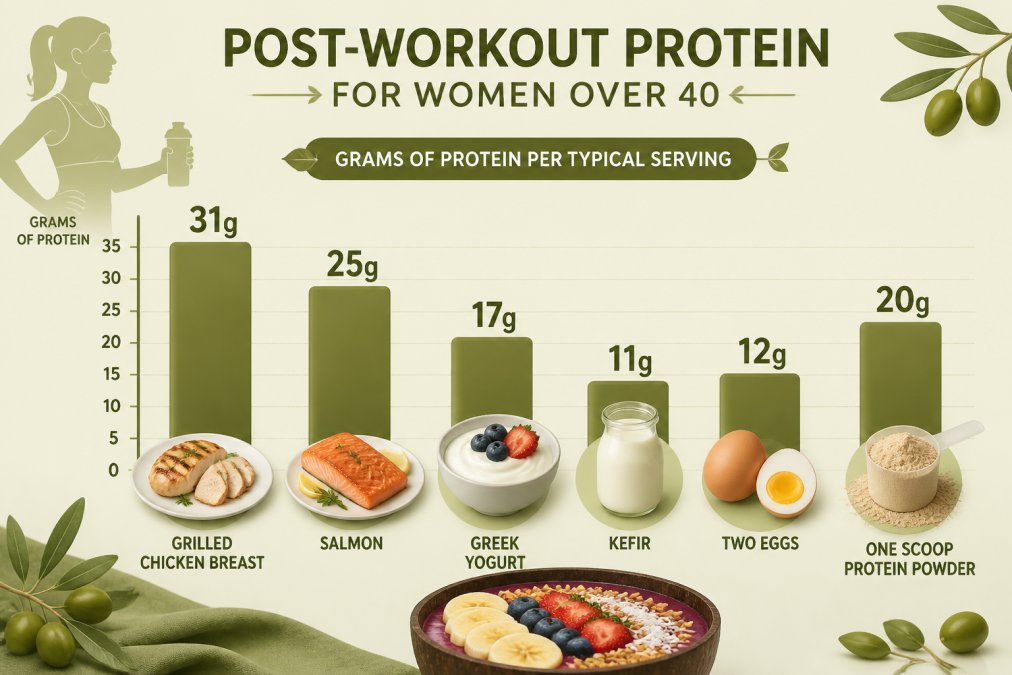
- Protein: chicken, salmon, Greek yogurt, kefir, eggs, or a plant-based option
- Complex carbohydrates: sweet potatoes, quinoa, whole grains, or fruit
- Color and fiber: vegetables and berries such as blueberries
- Healthy fats: almonds, avocado, or seeds
Pair a lean protein with complex carbohydrates and you cover both muscle repair and energy levels in one meal.
Building a Balanced Recovery Plate
A balanced recovery plate puts a palm-sized portion of protein next to a fist-sized portion of carbohydrates, then adds produce and a little fat. For guidance on balancing macronutrients in açai bowls, see our dedicated guide.
Plant-based eaters can build the same plate with lentils, tofu, or quinoa.
Post-Workout Protein for Women Over 40
Aim for roughly 20 grams of protein after exercise, and pair it with carbohydrates if your next full meal is more than a couple of hours away. Harvard Health offers that figure directly (Feeding Your Fitness(https://www.health.harvard.edu/diet-and-nutrition/feeding-your-fitness)).
That 20-gram anchor is a floor, not a ceiling.
How Much Protein and How Often
Most practitioners find that a daily protein intake in the range of 1.2 to 1.6 grams per kilogram of body weight supports muscle maintenance in active adults over forty, with the higher end favored during strength-training blocks or calorie deficits. For a 150-pound woman, that works out to roughly 82 to 109 grams per day. Use that range as a starting point and adjust based on hunger, training volume, and how recovery feels week to week.
Distribution matters as much as the total. A practical pattern is 25 to 30 grams at each main meal, plus a 15-to-20-gram snack, which spreads intake across four eating occasions and makes the post-workout meal less of a scramble. Here is what that looks like in practice:
- Breakfast: Greek yogurt with berries and almonds (about 20-25g)
- Lunch: chicken or salmon with quinoa and vegetables (about 30g)
- Post-workout snack: kefir with a scoop of protein powder (about 25-30g)
- Dinner: lentils, tofu, or lean beef with sweet potato (about 25-30g)
Protein Sources That Pull Their Weight
Whole foods should carry most of the load. Chicken breast, salmon, canned tuna, eggs, Greek yogurt, kefir, cottage cheese, lentils, tofu, and tempeh all deliver a meaningful dose per serving. Plant-based eaters can combine lentils with quinoa or pair tofu with whole grains to cover the amino acid profile.
Supplements are a convenience, not a requirement. If you do use one, here is how to choose the best recovery protein powder for your needs. A scoop of whey or plant protein is useful when time is short or appetite is low after a hard session, but it should fill gaps rather than replace meals.
Carbohydrates, Hydration, and Glycogen Replenishment
Carbs are not the enemy here. A 2020 review in the 4R's framework states that carbohydrate intake after exercise should be individualized according to personal characteristics and total daily energy expenditure (The 4R's Framework of Nutritional Strategies(https://pmc.ncbi.nlm.nih.gov/articles/PMC7796021/)).
That means no single number fits everyone. A long hike in Marin County calls for more than a 30-minute strength session.
Rehydration belongs in the same conversation. For practical options, see these natural electrolyte drinks for post workout recovery. Water covers most sessions; electrolytes help after heavy sweating.
Post-Workout Meal Timing Without Overthinking the Anabolic Window
For most people, eating a well-considered meal one to two hours after exercise is enough, according to Precision Nutrition. That is a calmer rule than the 30-minute panic you see online.
Use this simple framework:
- Short or light session: eat when you are hungry, within a couple of hours
- Long or intense session: get protein and carbs in sooner, ideally within the hour
- Training again within 24 hours: prioritize faster refueling
The window is real. The urgency is overstated.
Post-Workout Meals for Women: Practical Ideas and Prep Steps
Here is a prep routine that takes 15 minutes on a Sunday and covers the week:
- Cook a batch of quinoa and roast sweet potatoes
- Portion Greek yogurt or kefir into containers
- Wash and store blueberries and greens
- Keep almonds and a shaker bottle ready to grab
A protein smoothie with kefir, banana, and blueberries works when you have five minutes. If you would rather order out, these best açai bowls for post workout recovery are worth trying. A salmon and quinoa bowl works when you have twenty.
Adjusting Recovery Nutrition for Menopause, Workout Type, and Dietary Needs
Perimenopause and menopause change the math. Declining estrogen is associated with faster muscle loss, which makes consistent protein intake and strength training more important, not less. But the practical effects vary widely: some women notice appetite changes, sleep disruption, or shifts in how recovered they feel after the same workout they did at 35. A useful approach is to treat recovery nutrition as a feedback loop, track energy, soreness, and sleep for a couple of weeks, then adjust portions and timing rather than following a fixed plan.
A Decision Guide by Workout Type and Duration
Generic meal advice breaks down when your training varies. Use this guide to match the plate to the session:
- Short strength session (under 45 minutes): prioritize protein, around 25-30 grams, with a modest serving of carbohydrates. The goal is tissue repair, not a glycogen refill.
- Long strength session or heavy lifting: protein at the higher end of your range plus carbohydrates to support recovery and next-day performance.
- Steady cardio (30-60 minutes): a protein-and-carb combo works; water is usually enough for fluids.
- Long endurance work (90 minutes or more): carbohydrates become the priority for glycogen replenishment, paired with protein. Rehydration with electrolytes matters more after heavy sweating.
- Hot outdoor sessions: fluids and electrolytes first, then a normal recovery meal once appetite returns.
- Two sessions in 24 hours: refuel faster, get protein and carbs in within the hour and treat the next meal as part of the same recovery block.
Dietary Restrictions and Budget-Friendly Options
Budget and dietary restrictions do not have to derail recovery. Eggs, canned salmon, canned tuna, lentils, plain yogurt, cottage cheese, and tofu are inexpensive and effective.
Whole foods cover most needs; supplements fill gaps when time is short or appetite is low. A basic protein powder and a simple electrolyte tablet cover most convenience scenarios without a cabinet full of products.
Watch out: cutting carbohydrates too aggressively while training hard can leave you flat and slow to recover, and under-eating protein across the day is a more common problem than overdoing it after a workout.
Match your recovery plate to the session you actually did.
| Workout type | Priority | Key detail |
|---|---|---|
| Short strength session (under 45 minutes) | Protein, around 25-30 grams | Modest carbohydrates; goal is tissue repair |
| Long strength session or heavy lifting | Protein at higher end plus carbohydrates | Supports recovery and next-day performance |
| Steady cardio (30-60 minutes) | Protein-and-carb combo | Water is usually enough for fluids |
| Long endurance work (90 minutes or more) | Carbohydrates first, paired with protein | Electrolytes matter more after heavy sweating |
| Hot outdoor sessions | Fluids and electrolytes first | Normal recovery meal once appetite returns |
| Two sessions in 24 hours | Refuel faster | Protein and carbs within the hour |
Ordering a Recovery Bowl Without the Line
You do not always have time to cook.
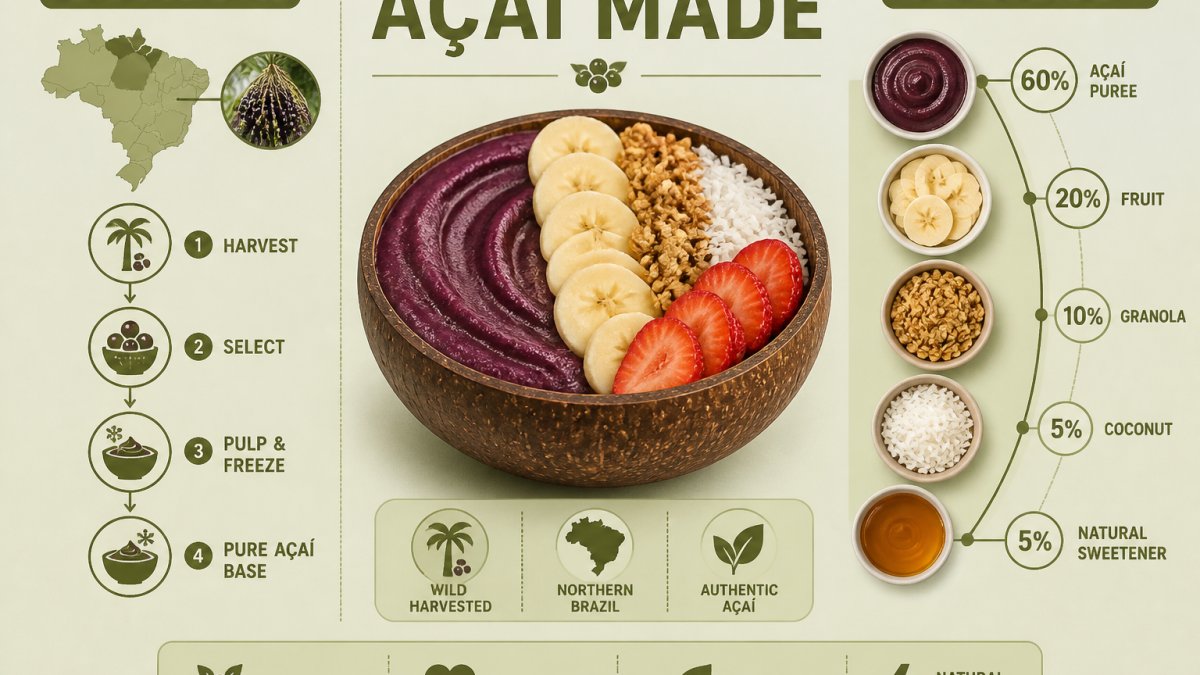
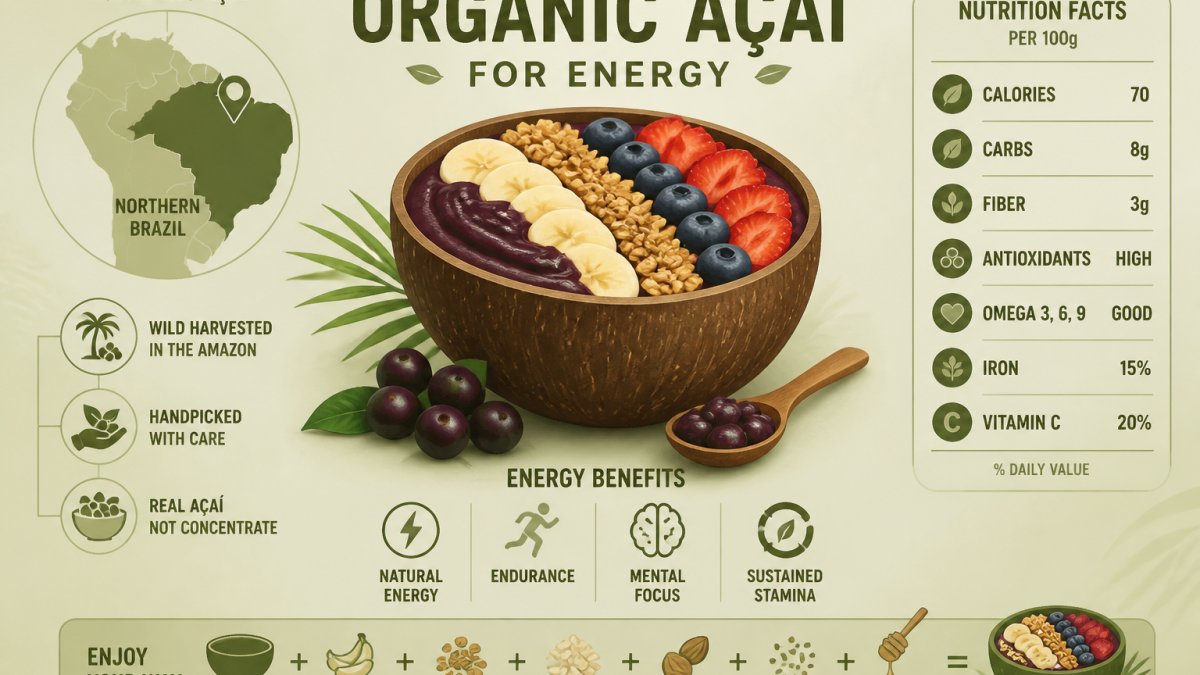
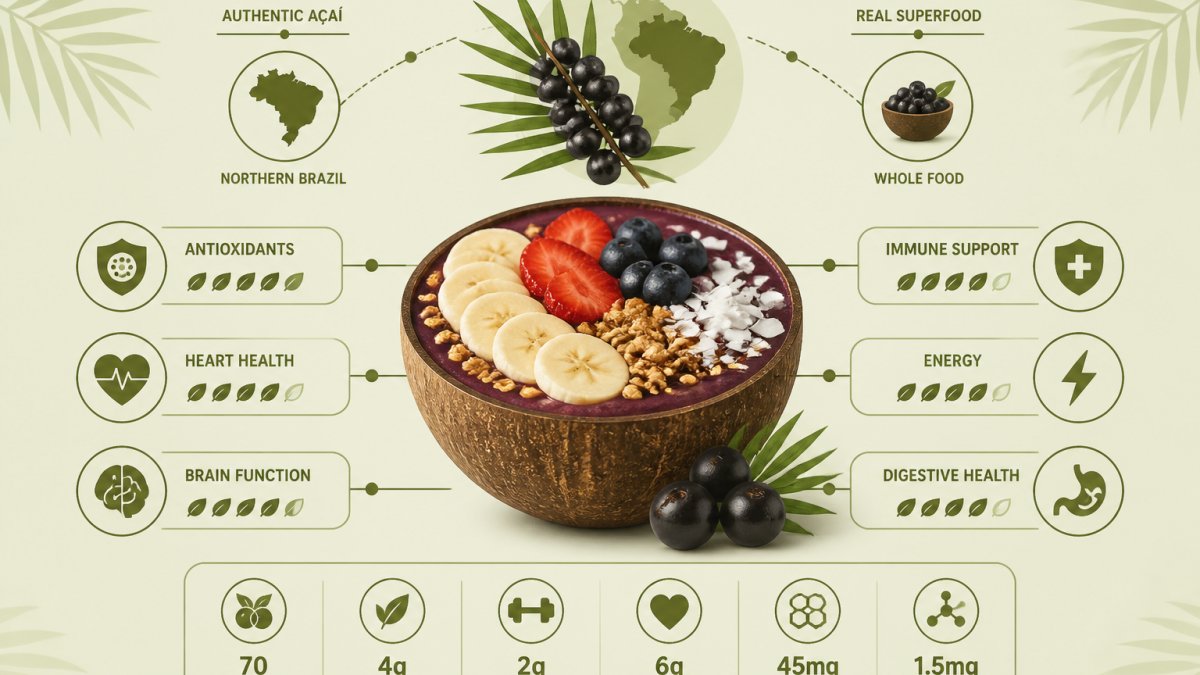
At World Green Açai, we offer organic açai bowls crafted with the finest berries available. Order online and skip the lines for a quick, healthy treat.
Frequently Asked Questions
What should women over 40 eat after a workout?
Aim for a mix of protein and carbohydrates. Harvard Health suggests about 20 grams of protein after exercise and pairing it with carbs if your next meal is not soon. A 2024 review notes protein and carbohydrate intake within a 30-minute to two-hour window can support muscle protein synthesis. Practical options include Greek yogurt with blueberries, salmon with sweet potatoes, or a protein smoothie with banana and kefir.
How much protein should a woman over 40 eat after exercise?
Harvard Health advises roughly 20 grams of protein after exercise. The 2020 review on recovery nutrition emphasizes tailoring intake to individual characteristics and total daily energy expenditure rather than a single fixed number. Spread protein across meals and snacks, and pair it with carbohydrates when your next full meal is more than a couple of hours away.
How soon should you eat after a workout?
A 2024 review describes a 30-minute to two-hour post-exercise window where protein and carbohydrate intake can enhance muscle protein synthesis. Precision Nutrition notes that for most people, a well-considered meal one to two hours after exercise is sufficient. If you are not hungry right away, a small snack like kefir with fruit bridges the gap.
Are carbohydrates important after a workout?
Yes. The 2020 review on post-exercise recovery notes carbohydrates support glycogen replenishment, and intake should be individualized based on personal characteristics and total daily energy expenditure. Choose complex carbohydrates like quinoa, sweet potatoes, whole grains, and fruits such as bananas and blueberries.
What is a good post-workout snack for women over 40?
Pair protein with carbohydrates: Greek yogurt with blueberries and almonds, kefir with a banana, an apple with a small handful of almonds, or a protein smoothie with fruit. Keep portions moderate and choose whole foods when possible rather than relying on supplements alone.
Should women in menopause change what they eat after exercise?
The 2020 recovery review stresses individualizing carbohydrate and protein intake based on personal characteristics and total daily energy expenditure. Menopause and perimenopause are individual experiences, so needs vary. If you have specific concerns, talk with a healthcare provider or registered dietitian about your situation.
Is a protein shake necessary after a workout?
Not necessarily. Harvard Health's guidance of about 20 grams of protein after exercise can come from a meal or snack. A shake is convenient when time is tight.
Recovery eating should not require a spreadsheet or a 30-minute countdown. It requires protein, carbohydrates, fluids, and a routine you can repeat. World Green Açai makes that easy with organic açai bowls, online ordering, and mobile app access so a post-workout meal never becomes the reason you skip one. Get started with World Green Açai and order online today.