 ultimate-guide
Acai Benefits: What Science Says (2026 Guide)
Table of Contents
- Acai Benefits: What the Evidence Actually Shows
- Acai Berry Nutrition: Antioxidants, Fiber, and Healthy Fats
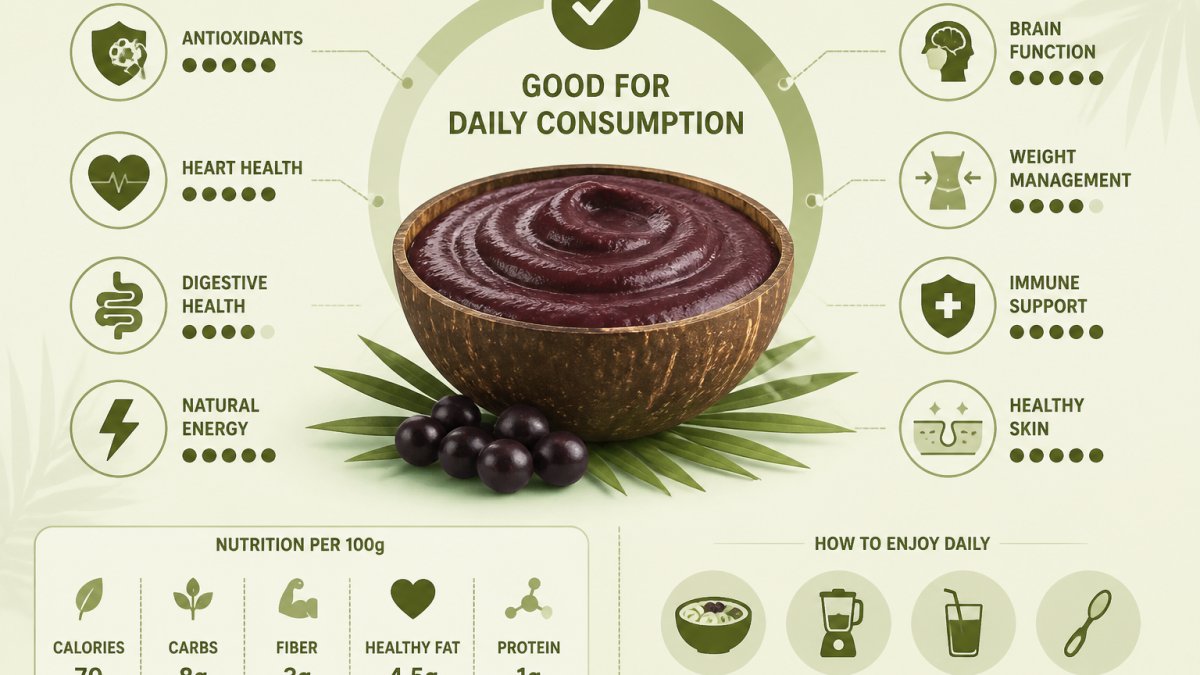
- Heart Health, Brain Function, and Skin: The Strongest Claims
- Acai Health Benefits and Side Effects: What to Watch For
- Acai Bowl Nutrition: Calories, Sugar, and Label Reading
- How to Eat Acai Berries: Bowls, Smoothies, and Beyond
- Weight Loss, Detox, and Other Claims That Don't Hold Up
- Conclusion: Getting Real Acai Benefits Without the Hype
- Frequently Asked Questions
Last Updated: October 4, 2026
Acai Benefits: What the Evidence Actually Shows
Acai benefits get oversold online, and that gap between marketing and evidence is exactly what this guide from World Green Açai sorts out. Acai is the small, dark purple fruit of the açaí palm, a tree native to the floodplains of northern South America, and it has become one of the most talked-about superfoods in the United States. The fruit itself is genuinely nutrient-dense. The claims built on top of it, though, range from well-supported to pure fiction.
Below, we break down what human research actually shows, what a serving really contains, and how to eat acai berries without turning them into dessert. We also flag the claims that do not hold up, so you can spend your money on real food instead of hype.
Acai Berry Nutrition: Antioxidants, Fiber, and Healthy Fats
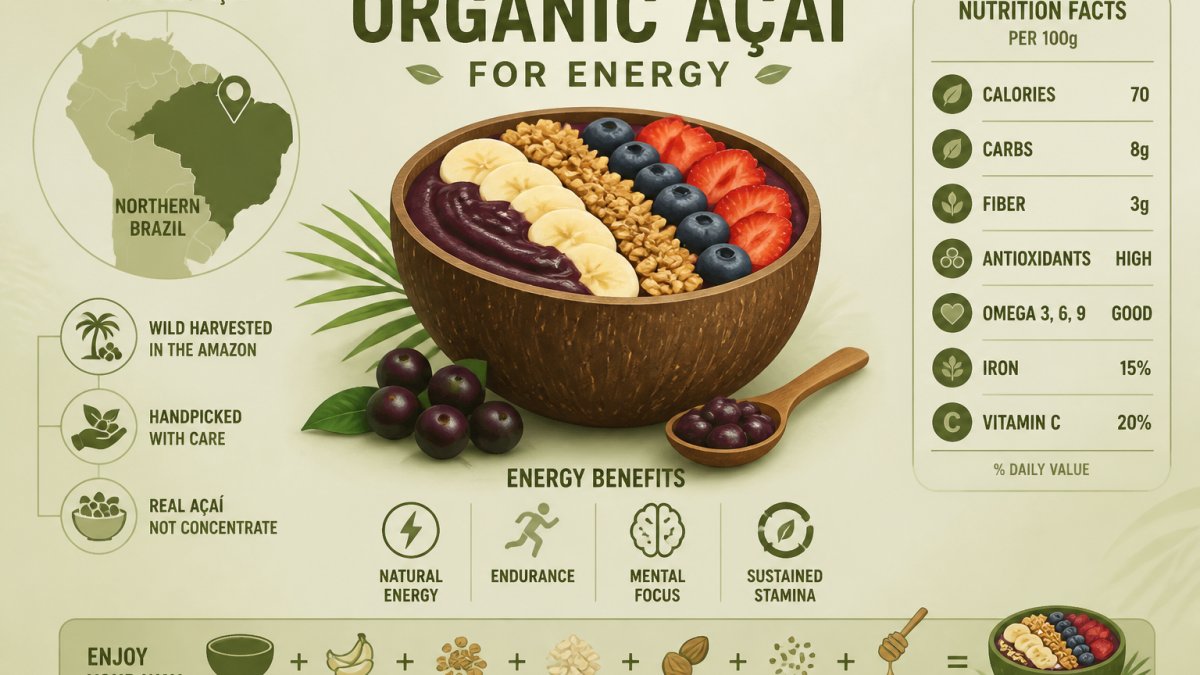
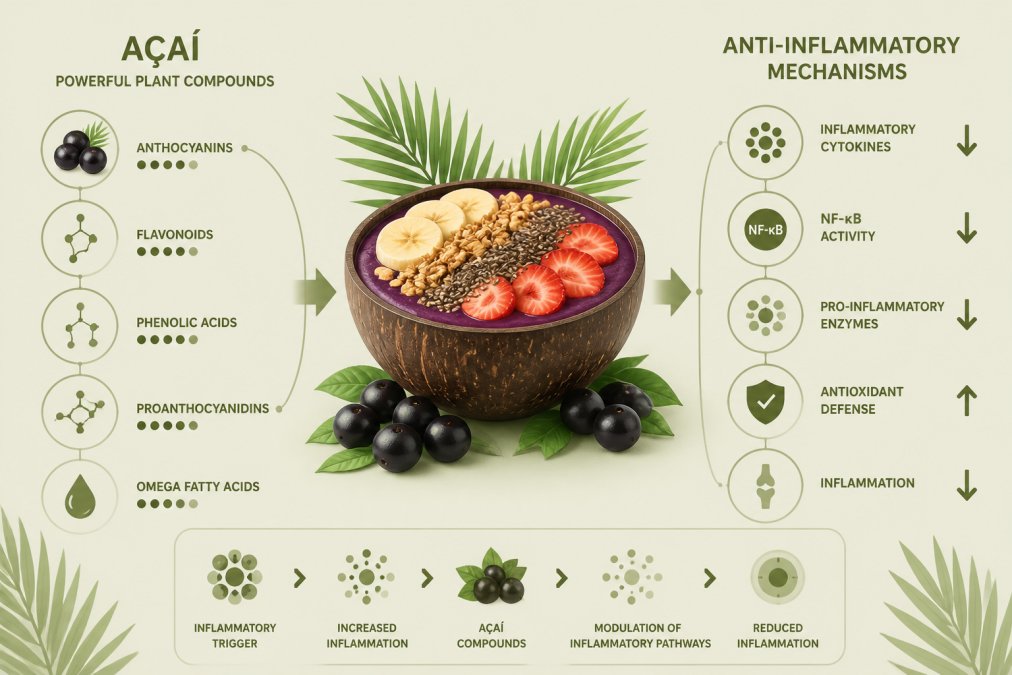
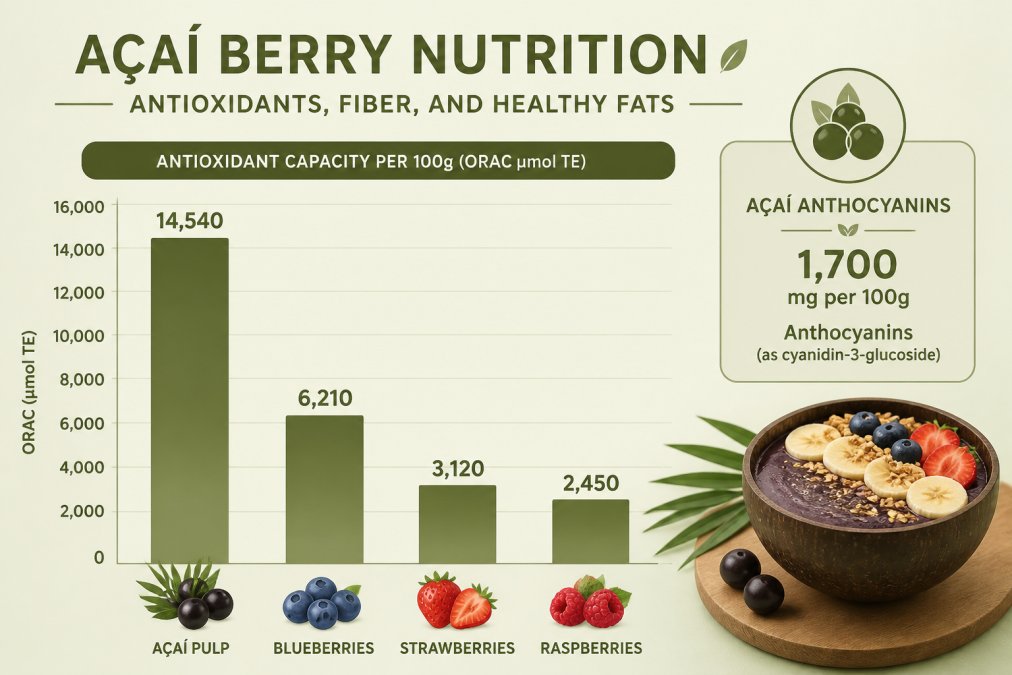
Acai berry nutrition centers on three things: antioxidants, dietary fiber, and healthy fats. The fruit's deep purple color comes from anthocyanins, the same class of pigments found in blueberries and blackberries. Those compounds are antioxidants, meaning they help neutralize free radicals, the unstable molecules linked to oxidative stress and cell damage.
According to the USDA FoodData Central nutrient database, acai pulp provides dietary fiber, healthy fats, and small amounts of vitamin A, vitamin C, vitamin E, and calcium. The fat content is unusual for a fruit, and it is mostly unsaturated fatty acids, which is part of why acai has a creamy texture rather than a watery one.
What a serving actually contains
Most benefit claims fall apart the moment you ask "per what?" A tablespoon of freeze-dried powder, a 100-gram scoop of frozen pulp, and an 8-ounce glass of sweetened juice are three different foods. Here is how the forms compare on the metrics that matter:
| Form | Typical serving | Fiber | Added sugar | Notes |
|---|---|---|---|---|
| Frozen unsweetened pulp | 100 g | Meaningful fiber contribution | None | Closest to the whole fruit; thick, tart, earthy |
| Freeze-dried powder | 1 tbsp (about 3 g) | Small | None if unsweetened | Concentrated anthocyanins by weight, tiny serving |
| Ready-to-drink juice | 8 fl oz | Low | Often present | Frequently blended with other juices and sweeteners |
| Sweetened sorbet base | 100 g | Low | Often present | What most bowls are built on |
Two things follow from that table. First, powder looks spectacular on a per-gram antioxidant chart because the water has been removed, that does not mean a tablespoon delivers more than a bowl of pulp. Second, the juice and sorbet rows are where added sugar enters, which is why the label matters more than the fruit.
Key vitamins and minerals in acai
The micronutrient list is modest but real: vitamin A, vitamin C, vitamin E, calcium, and dietary fiber. Acai is not a multivitamin in fruit form, and anyone selling it as one is overselling. What it does offer is a nutrient-dense package that fits easily into a meal.
Why processing changes the profile
Freezing preserves acai well because the fruit is harvested and frozen quickly, which is also why fresh acai is essentially unavailable outside the growing regions. Freeze-drying removes water and concentrates pigments by weight. Juicing adds water back and usually sugar. None of these are automatically bad, they are just different products, and a benefit claim written for one form does not transfer to the others.
Heart Health, Brain Function, and Skin: The Strongest Claims
The strongest acai claims involve heart health, brain function, and skin, but "strongest" is relative. Most of the dramatic findings come from laboratory studies on cells or animals, not from human clinical research. That distinction matters more than any headline.
Cardiovascular and cholesterol effects
Early-stage research suggests acai antioxidants may support cardiovascular health by reducing oxidative stress, which is one pathway involved in cholesterol oxidation and artery damage. The National Center for Complementary and Integrative Health notes that most acai research remains preliminary, and human trials are limited. We would treat heart health as a plausible, unproven benefit rather than a reason to buy.
Cognitive function and skin appearance
Similar caution applies to brain health and skin. Antioxidants in general are studied for their role in protecting cells from oxidative stress, and that mechanism is why acai gets linked to cognitive function and premature aging. No solid human evidence shows that eating acai improves memory or reverses skin aging. If you enjoy it, enjoy it for what it is.
Acai Health Benefits and Side Effects: What to Watch For
Acai health benefits and side effects deserve equal billing, because the risks are real even if they are uncommon. For most people, acai is safe in normal food amounts. The problems show up in three areas: allergies, medication interactions, and pregnancy, plus one practical issue most articles never mention, which is how concentrated extracts differ from food.
Allergies
Acai is a fruit, so fruit allergies are possible, though reported reactions are rare. People with known sensitivities to other berries or to palm-family plants are the ones most likely to notice something. Symptoms to watch for are the usual ones: itching or tingling in the mouth, hives, swelling, or digestive upset after eating. If a reaction is severe or involves breathing, that is a medical emergency, not a wait-and-see situation.
Medications and lab tests
The medication question is the one worth slowing down for. Acai may interact with blood thinners and other drugs that affect clotting or blood pressure. The mechanism is not fully pinned down, but the practical concern is that antioxidant-rich extracts can plausibly amplify or interfere with anticoagulant and antiplatelet effects. Acai has also been reported to interfere with certain lab tests, including some imaging and blood assays, which means a result that looks off could be a product of what you ate rather than a real finding. Tell your care team what you take and what you eat.
Pregnancy and breastfeeding
If you are pregnant or breastfeeding, treat acai as you would any new supplement and get medical guidance first. Food amounts of a fruit are one thing; a concentrated capsule is another, and the human safety data for concentrated acai during pregnancy is thin.
Food amounts versus concentrated extracts
This is the distinction that gets lost. A bowl of unsweetened pulp is food. A capsule or tincture marketed at many times the fruit's concentration is a supplement, and supplements are not held to the same pre-market standards as food ingredients. Most practitioners find that occasional food-amount acai is unremarkable, while daily high-dose extracts are where questions about interactions and lab interference actually come up.
When to talk to a professional
Talk to a healthcare professional before making acai a daily habit if you take prescription medication, have a bleeding or clotting disorder, are scheduled for surgery or lab work, are pregnant or breastfeeding, or have any history of food allergy. That list is short, and checking it takes less time than reading a supplement label.
Acai Bowl Nutrition: Calories, Sugar, and Label Reading
Acai bowl nutrition is where the health halo collapses fastest. The fruit is not the problem. The problem is everything piled on top of it. A bowl built on sweetened acai sorbet, granola, honey, and fruit can carry more added sugar than a can of soda.
Here is how to read a bowl or a packaged product before you buy:
| What to check | Red flag | Better choice |
|---|---|---|
| First ingredient | Sugar or syrup | Acai pulp or acai puree |
| Added sugar | More than 10g per serving | Under 5g per serving |
| Acai content | "Acai flavor" on the label | Acai listed as a main ingredient |
| Toppings | Candied granola, sweetened coconut | Nuts, seeds, fresh fruit |
The FDA guidance on added sugars on the Nutrition Facts label is the fastest way to separate a real acai bowl from a dessert in disguise. Look at added sugars, not total sugars, since the fruit's own sugar is not the issue.
How to Eat Acai Berries: Bowls, Smoothies, and Beyond
How to eat acai berries comes down to form: frozen pulp, powder, or juice. Fresh acai does not travel well and spoils within about a day of harvest, which is why nearly everything sold in the United States is frozen, freeze-dried, or powdered. Frozen pulp gives the thickest, creamiest result. Powder is the most convenient for smoothies and oatmeal. Juice is the least useful for texture and often the most heavily sweetened.
A few practical ways to use it:
- Blend frozen acai pulp with frozen banana and a splash of liquid for a thick bowl base
- Stir acai powder into yogurt, oatmeal, or a post-workout smoothie
- Skip the juice cleanse entirely; there is no detoxification benefit to liquid-only diets
At World Green Açai, we build bowls on real organic acai, and you can order online through our app to skip the line when your lunch break is short.
Weight Loss, Detox, and Other Claims That Don't Hold Up
Weight loss and detox claims for acai do not survive scrutiny. No credible human research shows that acai causes weight loss on its own. The fiber and healthy fats may help you feel full, which can support a sensible diet, but that is true of most whole fruits. Detoxification claims are worse: your liver and kidneys already handle that job, and no fruit accelerates it.
Two more claims worth naming. Acai does not cure or prevent cancer, and it does not treat erectile dysfunction. Those claims circulate widely and have no human evidence behind them. If a product markets acai on either promise, walk away.
Conclusion: Getting Real Acai Benefits Without the Hype
The honest version of acai benefits is this: a nutrient-dense fruit with antioxidants, fiber, and healthy fats that tastes good and fits into a real meal. The exaggerated version sells supplements and sugar-loaded bowls. Telling them apart takes about thirty seconds of label reading.
If you want acai without the guesswork, World Green Açai makes it simple. Our bowls start with high-quality organic acai, our online ordering and mobile app let you skip the lines, and our gift cards cover the colleague who deserves something better than a pastry. Order online and get a genuinely nutrient-packed lunch without the sugar bomb.
Frequently Asked Questions
Does acai have proven health benefits?
Lab studies show acai's anthocyanins and other antioxidants neutralize free radicals, and small human trials link acai pulp to improved cholesterol markers and antioxidant status. However, most acai benefits claims, including weight loss, detoxification, and cancer prevention, lack large human clinical trials. Treat acai as a nutrient-dense fruit that supports a healthy diet, not a cure-all.
Are acai bowls healthy?
An acai bowl is only as healthy as what goes into it. Plain acai pulp delivers antioxidants, dietary fiber, and healthy fats. But many commercial bowls load on added sugar through granola, honey, and sweetened juice, pushing one bowl past 50 grams of sugar. Check the label or ask what's in the base, and choose toppings like fresh fruit, nuts, and unsweetened coconut.
What nutrients are found in acai berries?
Acai berries provide vitamin A, vitamin C, vitamin E, calcium, and dietary fiber. They also contain healthy fats, including oleic acid, and a dense mix of anthocyanins and other polyphenol antioxidants. Because acai is usually eaten as pulp or powder rather than fresh, the exact nutrient profile depends on how it's processed and whether anything is added.
Is acai berry safe for pregnancy?
Acai fruit is generally considered safe in normal food amounts during pregnancy, and its vitamin C, fiber, and antioxidants can fit a prenatal diet. Avoid concentrated acai supplements, since high-dose extracts haven't been tested in pregnant women. If you take medication or have a health condition, check with your doctor before adding acai powder or capsules.