 Ultimate guide
Benefits of Açaí for Post-Workout Recovery Explained
Last Updated: November 9, 2026
Quick Summary
The benefits of açaí for post-workout recovery are promising but not yet proven. Small early studies link açaí to higher antioxidant capacity and possibly less post-exercise muscle damage, yet a 2015 pilot found no improvement in sprint performance. Pair a clean, low-sugar bowl with carbohydrates and protein for best results.
- A 2015 pilot study found six weeks of açaí raised total antioxidant capacity in the blood.
- The same study showed no effect on sprint performance, so açaí does not clearly boost athletic output.
- Unsweetened açaí purée is naturally low in sugar, but sweetened bowls can contain much more.
- Pair açaí with banana, oats, or rice to help replenish glycogen after intense exercise.
- Read ingredient labels, since sweeteners and syrups can turn a recovery snack into a dessert.
Table of Contents
- What Is Açaí and Why Athletes Look at It
- Nutritional Profile of Açaí and What It Contains
- What the Research Says About Muscle Recovery and Oxidative Stress
- Sugar Content, Glycemic Impact and Replenishing Glycogen
- Best Time to Drink Açaí Berry Juice After Exercise
- Açaí Berry Supplement Benefits Compared With Whole Bowls
- Building a Post-Workout Açaí Bowl That Supports Recovery
- Frequently Asked Questions
What Is Açaí and Why Athletes Look at It
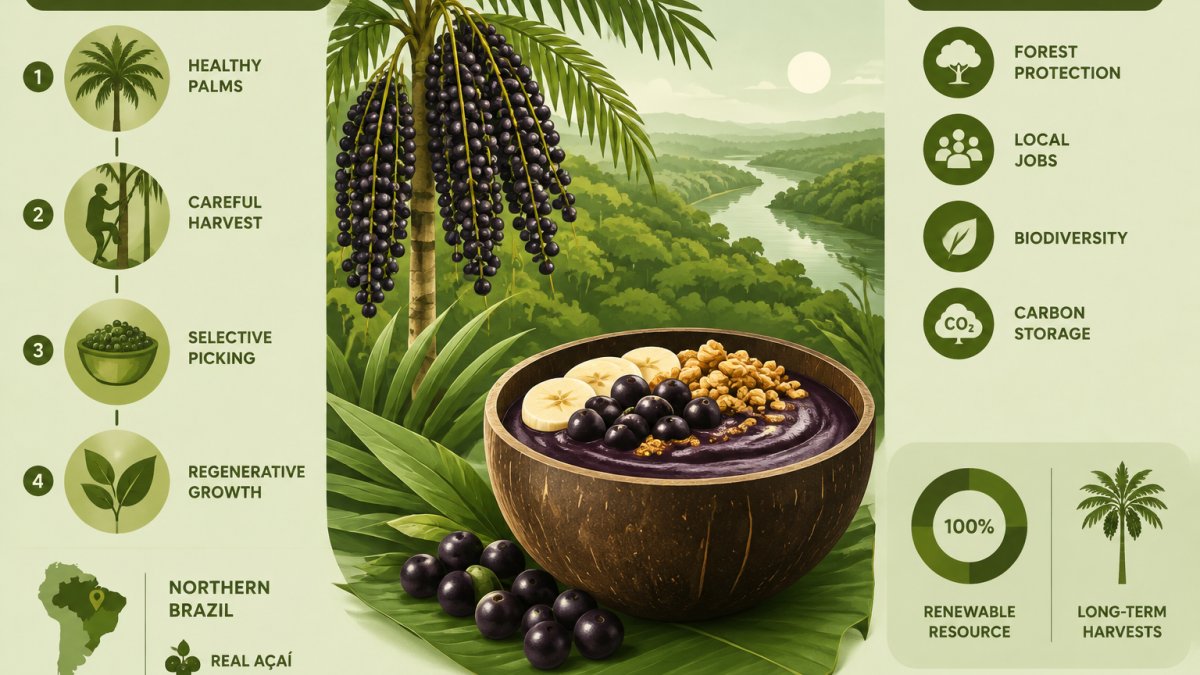
Açaí is a small, dark purple berry that grows on palm trees in the Amazon region of Northern Brazil. It has become one of the most talked-about foods in discussions of the benefits of açaí for post-workout recovery among people who train hard and want to recover well. The interest makes sense, but the evidence is more modest than the marketing suggests.
Athletes are drawn to açaí mainly because of its antioxidant content. Antioxidants are compounds that help counter oxidative stress, the cellular wear that builds up during intense exercise. The berry is also commonly described as a superfruit, a term that is popular in the wellness world but has no formal scientific definition. What matters is what the research actually shows, and that is what the sections below look at.
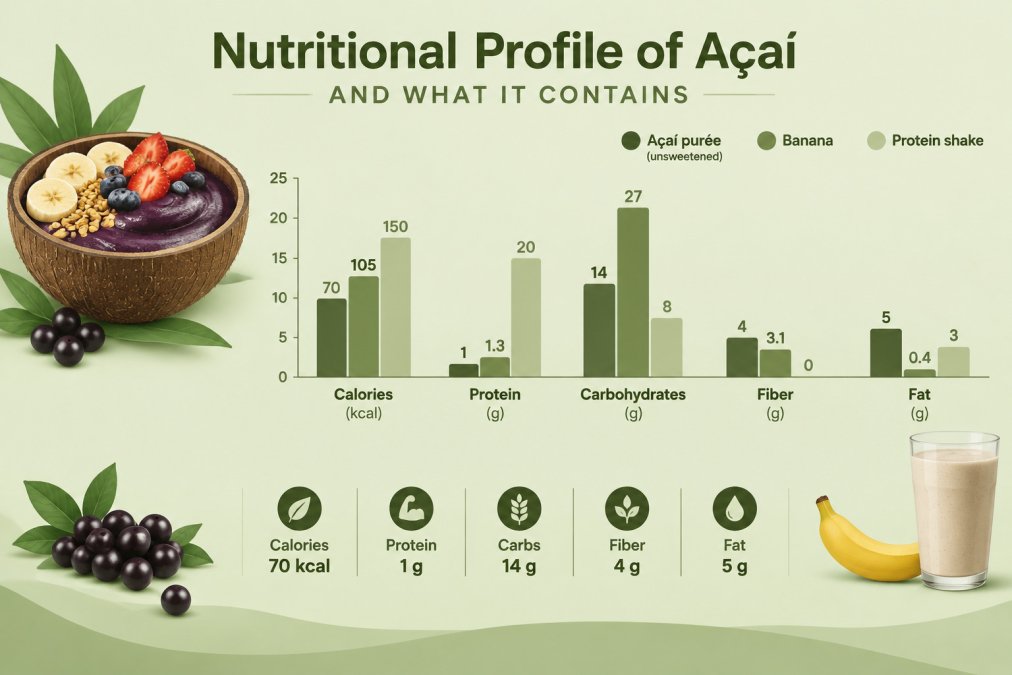
Nutritional Profile of Açaí and What It Contains
Açaí is rich in polyphenols and anthocyanins, the plant compounds responsible for its deep color. Unsweetened purée also contributes healthy fats, fiber, and a range of micronutrients. Its carbohydrate content is moderate, which is one reason it works better as part of a balanced snack than as a stand-alone energy source.
The exact nutrient numbers vary with the product, the processing method, and whether sweeteners or added fruit are included. That is why reading the label matters more than relying on a general figure.
What the Research Says About Muscle Recovery and Oxidative Stress
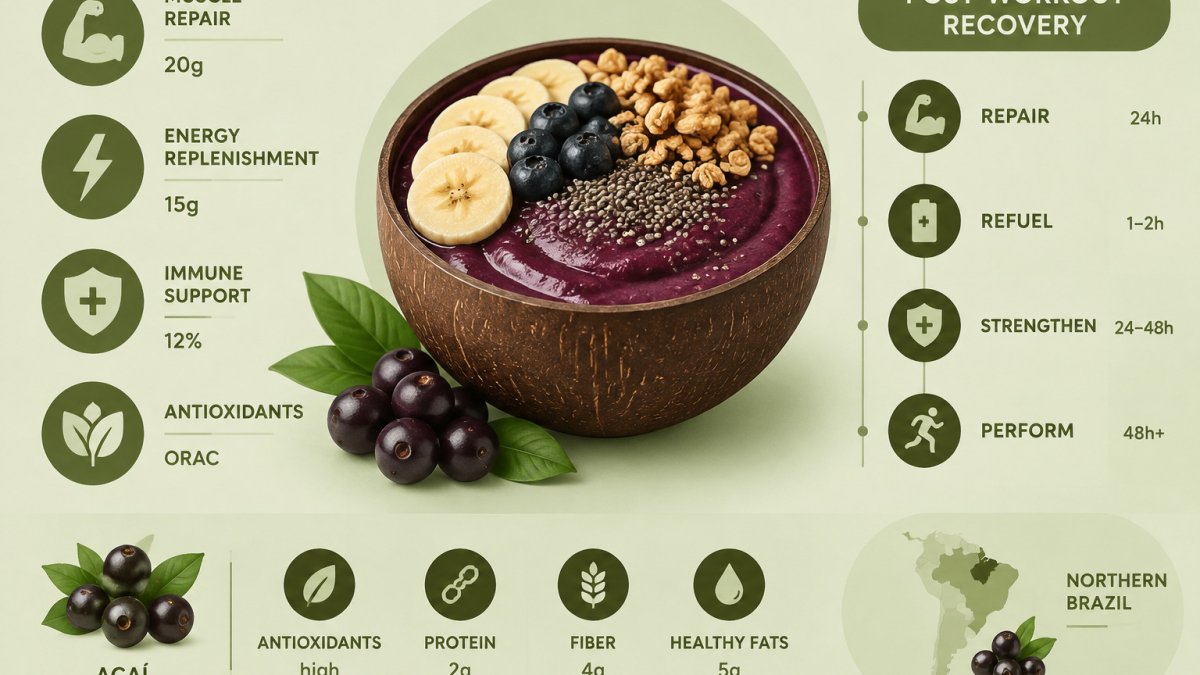
Most of the interest in açaí for recovery traces back to laboratory and small-scale human studies. One pilot study that examined an açaí berry-based juice blend found that six weeks of supplementation increased total antioxidant capacity in the blood. The same study found no effect on sprint performance, which is an important limit on how far the findings can be pushed. You can read the study directly in the 2015 pilot study on açaí supplementation and athlete performance.
A separate summary of research on the benefits of açaí for post-workout recovery reports that six weeks of açaí supplementation reduced markers of post-exercise muscle damage. The summary attributes this work to the journal Nutrients, though it does not give sample size or full citation details. Treat that claim as promising rather than settled until you can review the original paper, which you can look for through the Nutrients journal archive.
The 2015 Pilot Study on Sprint Performance
The 2015 study is the most cited piece of human research on açaí and athletic output. Its headline result is mixed. Antioxidant capacity rose over the six-week period, which supports the idea that açaí contributes to the body's antioxidant defenses. Sprint performance did not improve, which means the study does not show that açaí makes you faster or helps you push harder in a session.
That distinction matters for anyone choosing a post-workout snack. Recovery is not the same as performance, and a food that supports antioxidant status may still have no measurable effect on how you perform the next day.
Limits of the Current Evidence
The honest summary is that the research is small, early, and not conclusive. Pilot studies are designed to test feasibility, not to prove benefits. Sample sizes are often limited, study durations are short, and results from one population do not automatically apply to everyone else. A review of the current literature cannot yet say how much açaí helps recovery, for whom, or at what amount.
For a balanced view, it is worth asking the same questions you would ask about any food sold for health reasons: what the study measured, how many people took part, and whether the outcome matters in practice. Sometimes the answer is "not much yet," and that is a legitimate conclusion.
Sugar Content, Glycemic Impact and Replenishing Glycogen
Most açaí coverage skips the one variable that can quietly undo a recovery snack: sugar. Unsweetened açaí purée is naturally low in sugar, but the bowls most people actually buy are not. Sweetened blends, granola, honey, agave, and fruit toppings can push a single bowl past the added-sugar limits most health authorities recommend for a day. The glycemic impact of a bowl depends on what goes into it, not on the berry itself, so the difference between a clean bowl and a processed one is the difference between a recovery food and a dessert.
Here is the practical split. A clean bowl starts with unsweetened purée and gets its sweetness from whole fruit such as banana or berries. A processed bowl starts with a sweetened base, adds juice or syrup, and finishes with granola clusters and honey. The second version can deliver a large dose of fast sugar with little fiber to slow it down, which produces a sharp blood-glucose spike followed by a dip. For an athlete trying to recover, that pattern is the opposite of what you want.
After intense exercise, your muscles need carbohydrates to replenish glycogen, the stored form of energy. Açaí alone is not a major source of the fast carbohydrates that best support glycogen replacement, so it works best as part of a snack that includes a carbohydrate-dense whole food. Pair the bowl with banana, oats, or a small serving of rice or potato, and keep added sugar low. The combination gives your muscles the glucose they need without the spike-and-crash that comes from a heavily sweetened bowl.
Watch out: a bowl labeled 'açaí' can still be mostly sweetened base and toppings, so read the ingredient list rather than the front of the package. If sugar or a syrup appears in the first few ingredients, treat the product as a treat, not a recovery tool.
For anyone watching carbohydrate intake, the same logic applies in reverse. A low-sugar, high-fat bowl built on unsweetened purée with nuts and seeds fits a lower-carb approach, while a fruit-heavy bowl fits a higher-carb recovery day.
Best Time to Drink Açaí Berry Juice After Exercise
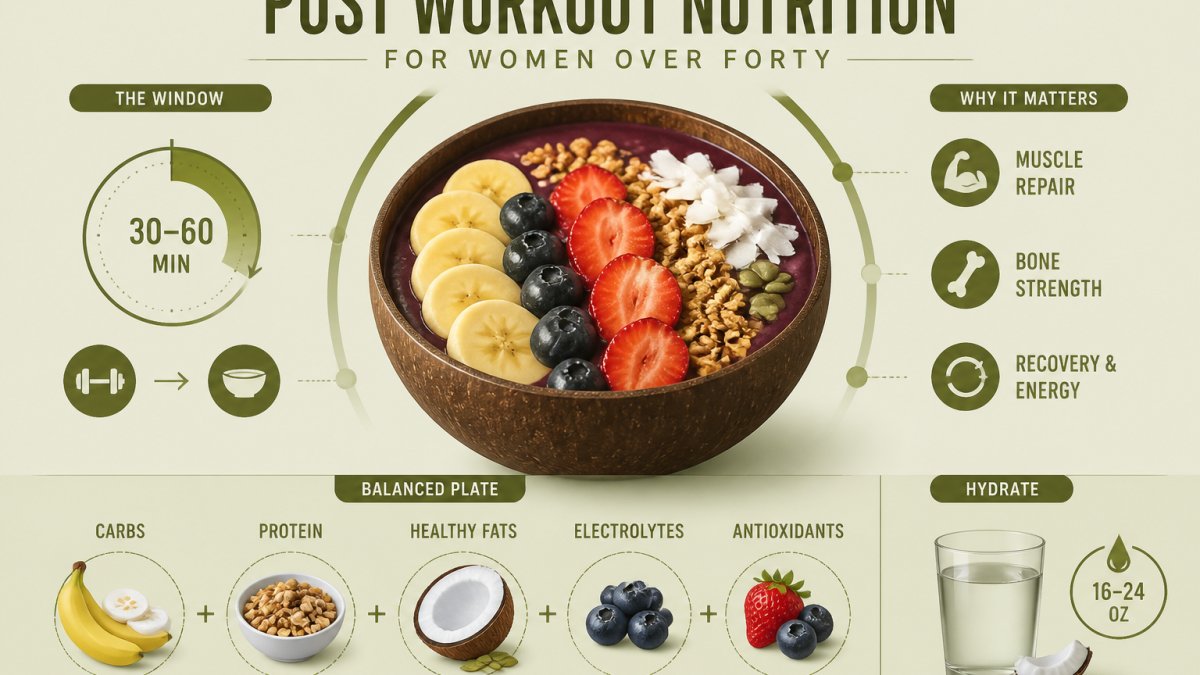
Timing and dosage are the two questions almost every açaí article leaves unanswered, so here is the most concrete guidance the evidence supports. The narrow 'anabolic window' promoted in fitness media is weaker than it sounds: most practitioners find that eating a balanced snack within a couple of hours of finishing a workout is a reasonable approach for most people, and total daily intake matters more than any single minute-by-minute schedule. For açaí specifically, there is no good evidence that a precise post-workout time produces better results than consistency across the week.
What the research does support is a sensible pattern. A serving of açaí in the hour or two after training fits the same window as any other recovery snack, and pairing it with protein and a carbohydrate-dense whole food addresses the needs açaí alone does not meet. A common pattern is one bowl or one juice serving per day on training days, built on unsweetened purée, with the carbohydrate and protein coming from the add-ins rather than the base.
Dosage is where labels matter. A typical serving of unsweetened purée is a few ounces, and that is the amount most of the human research has used as a starting point. More is not automatically better: açaí is low in calories but not free of sugar once toppings go on, and large sweetened servings can work against the glycogen and blood-sugar goals described above. Start with one standard serving and adjust based on how you feel and what the rest of your day looks like.
If you prefer açaí juice over a bowl, drinking it after a session fits the same pattern, but juice removes the fiber that slows sugar absorption, so keep the portion modest and pair it with a protein source. Whole-food bowls are generally the better default because the fiber and fats come along with the antioxidants.
Watch out: treating açaí as a pre-workout energy source is a common mistake. Its carbohydrate content is moderate and its sugar is low in the unsweetened form, so it is a recovery food, not a fast fuel. Eat it after training, not as a substitute for a proper pre-workout meal.
Açaí Berry Supplement Benefits Compared With Whole Bowls
Supplements and whole foods deliver açaí in very different ways. Capsules and concentrated extracts isolate specific compounds, while a bowl delivers the purée along with fiber, fats, and whatever else you add. Whole-food servings also make it easier to see exactly what you are consuming, which is useful when a supplement label is harder to verify.
Whichever form you choose, the research does not support treating açaí as a shortcut to recovery. A whole-food bowl is a practical way to include the berry in a diet built around protein, carbohydrates, and sleep.
Building a Post-Workout Açaí Bowl That Supports Recovery
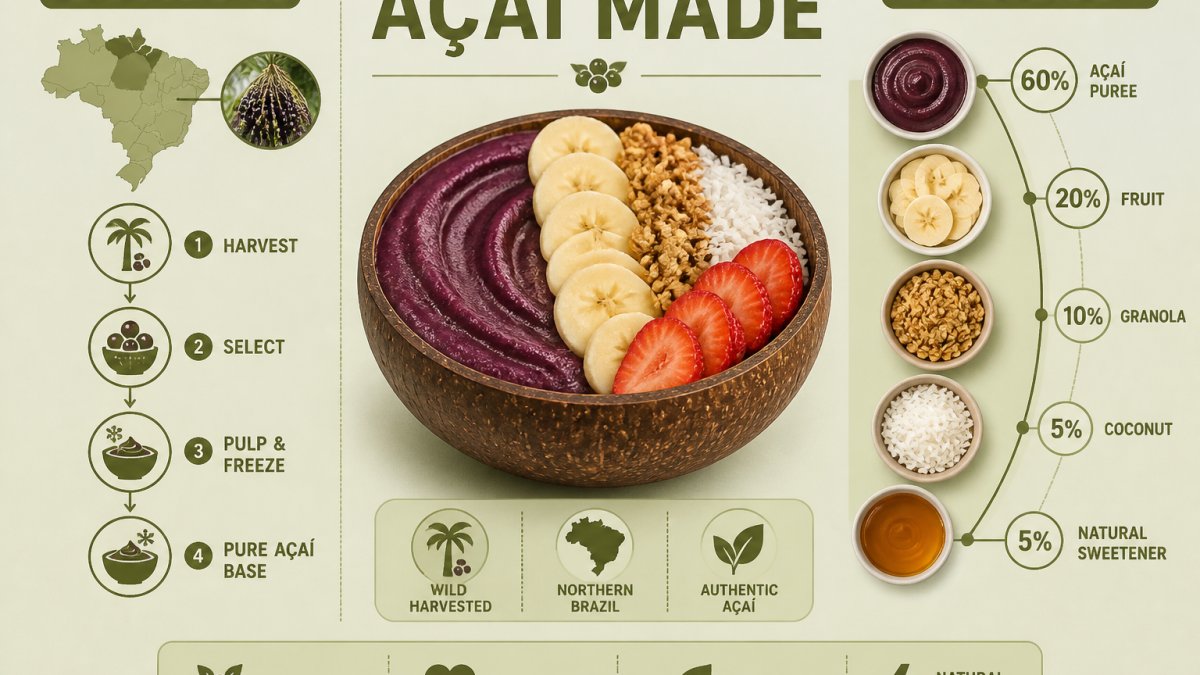
A bowl that supports recovery combines the antioxidant-rich base with ingredients that address the other needs of the body after training. Start with unsweetened açaí purée, add a banana or a handful of berries for carbohydrates, and include a protein source such as Greek yogurt or a plant-based powder. Finish with a small amount of granola or seeds for texture and healthy fats.
Here is a simple structure to follow:
- Base: unsweetened açaí purée
- Carbohydrates: banana, mango, or oats
- Protein: yogurt, protein powder, or a plant-based option
- Toppings: chia or hemp seeds, a light sprinkle of granola
You can also check out our post-workout recipe ideas for combinations that have already been worked out, or read more about plant-based protein sources that pair well with a recovery bowl. If you want to understand the evidence before you commit to a routine, the full review of whether açaí actually helps recovery is a good place to start.
For a quick, ready-to-eat option, easy homemade recovery snacks for athletes offer ideas that pair well with the same timing principles. And if you are deciding between a supplement and a whole bowl, our buying guide for finding real açaí explains what to look for.
Order online through the World Green Açai app to skip the line.
BUTTON: Order Your Açaí Bowl CARD_TITLE: Ready for a recovery bowl? CARD_TEXT: World Green Açai makes thick, unsweetened açaí bowls you can order online and pick up fast.
Frequently Asked Questions
Are açaí bowls good for recovery after a workout?
Açaí bowls can contribute to recovery mainly through carbohydrates and antioxidants, but the evidence is limited. A six-week pilot study found that açaí berry juice blend supplementation increased total antioxidant capacity without changing sprint performance. Whether a bowl helps depends heavily on its toppings and sugar content. A bowl loaded with granola, honey and sweetened juice can deliver far more sugar than the açaí itself, so choose unsweetened purée and add protein and fruit to round out the meal.
Does açaí help with muscle recovery?
Current research suggests açaí may influence markers of oxidative stress, but it has not been shown to improve athletic performance. One pilot study reported increased total antioxidant capacity after six weeks of supplementation, while sprint performance did not change. Treat açaí as a nutrient-dense food that fits a recovery routine, not as a proven recovery aid.
When should you eat an açaí bowl after exercising?
Eating within a couple of hours after training is a common approach because the body replenishes glycogen and repairs muscle during that window. An açaí bowl with banana, protein powder or Greek yogurt can work well as a recovery meal. Because açaí is naturally carbohydrate-rich, pairing it with protein helps balance the meal. Individual needs vary with training intensity, body size and total daily intake, so adjust timing and portions to fit your own routine.