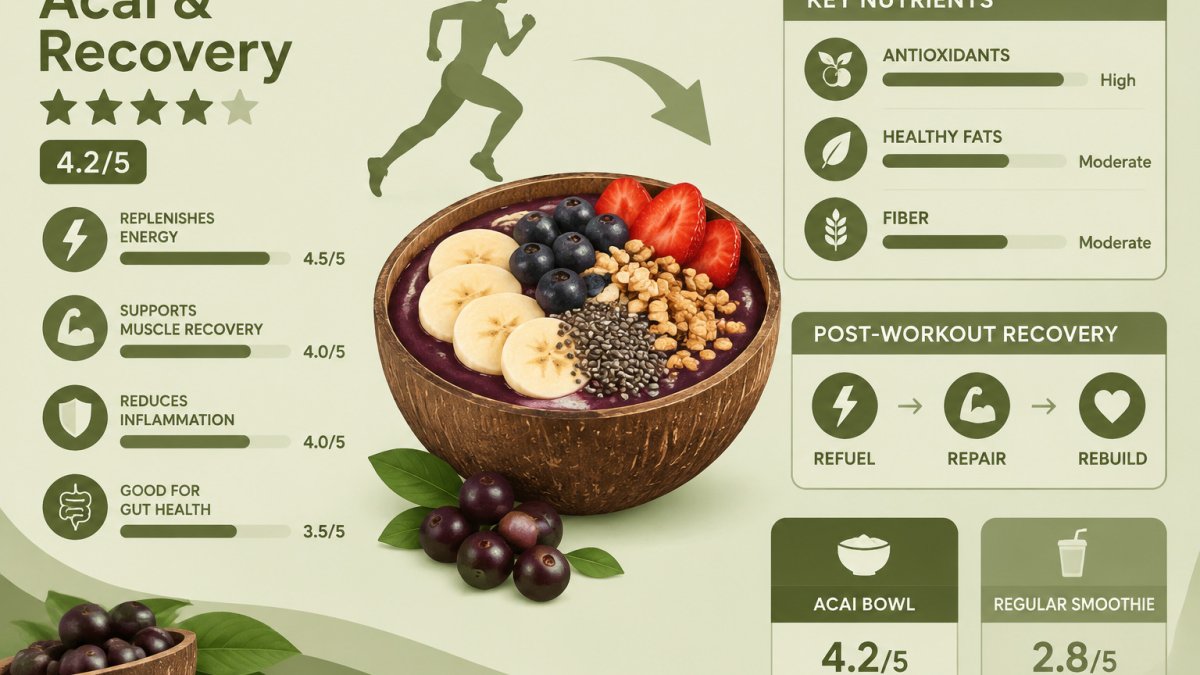
 listicle
Is Acai Actually Good for Post-Workout Recovery?
Last Updated: November 5, 2026
Quick Summary
Is acai actually good for post workout recovery? Partly. Acai has antioxidant potential and a six-week study found it reduced markers of exercise-induced muscle damage, but a single bowl is not a recovery food on its own. A bowl helps when it has an unsweetened base, a real protein source like Greek yogurt, and fresh fruit instead of sweetened sorbet or granola.
- A 2023 Nutrients study found six weeks of acai supplementation reduced markers of post-exercise muscle damage.
- Unsweetened acai is mostly carbohydrate and fat, with only a small amount of protein.
- Add Greek yogurt or protein powder to meet a post-workout protein target.
- Check labels and keep added sugar, such as sweetened sorbet, honey or syrups, close to zero.
- Eat the bowl within one to two hours after training, sized to how hard you trained.
Table of Contents
- What the Research Says About Acai and Muscle Recovery
- Antioxidant Benefits and Post-Exercise Muscle Damage
- Acai Bowl Nutrition Facts: Carbs, Protein, Fat and Sugar
- How to Customize Acai Bowls for Protein
- Acai Bowls Compared With Other Post-Workout Snacks
- Timing Your Acai Bowl Around Workout Intensity
- Deciding Whether an Acai Bowl Fits Your Recovery Routine
- Frequently Asked Questions
Is açaí actually good for post-workout recovery, or is it just a trendy bowl with a healthy reputation? This is a question many people who train hard ask before choosing a post-workout snack. The honest answer is that açaí has real potential, but the evidence is thinner than most social media posts suggest, and the bowl you order can make a big difference.
What the Research Says About Acai and Muscle Recovery
The research on açaí and recovery is promising but limited. A 2015 pilot study followed athletes who drank an açaí berry-based juice blend for six weeks. The blend did not measurably change sprint performance, but it did significantly increase total antioxidant capacity in the body (2015 pilot study on açaí juice blend and sprint performance).
A separate study published in Nutrients in 2023 found that six weeks of açaí supplementation significantly reduced markers of post-exercise muscle damage (2023 Nutrients study on açaí and exercise-induced muscle damage). That is a meaningful finding, but it tested supplementation over weeks, not a single bowl eaten after a workout.
So what does this mean for you? Açaí may support recovery over time as part of a consistent diet. A single bowl is unlikely to be a recovery food on its own.
Antioxidant Benefits and Post-Exercise Muscle Damage
Intense exercise creates oxidative stress, a buildup of unstable molecules that can contribute to muscle soreness. Antioxidants help neutralize those molecules, which is why researchers pay attention to foods like açaí that are rich in them.
The 2015 study's key result was the rise in antioxidant capacity, not a faster sprint time. That distinction matters. Athletes should not expect açaí to make them faster. They can reasonably expect it to add antioxidant support to a balanced diet, which is a more modest and accurate claim.
Blueberries and other berries also deliver antioxidants, so açaí is not the only option.
Acai Bowl Nutrition Facts: Carbs, Protein, Fat and Sugar
A plain, unsweetened açaí base is mostly carbohydrate and fat with only a small amount of protein. That macronutrient split is the single most important fact for recovery, because it tells you what the bowl does well and what you have to add yourself.
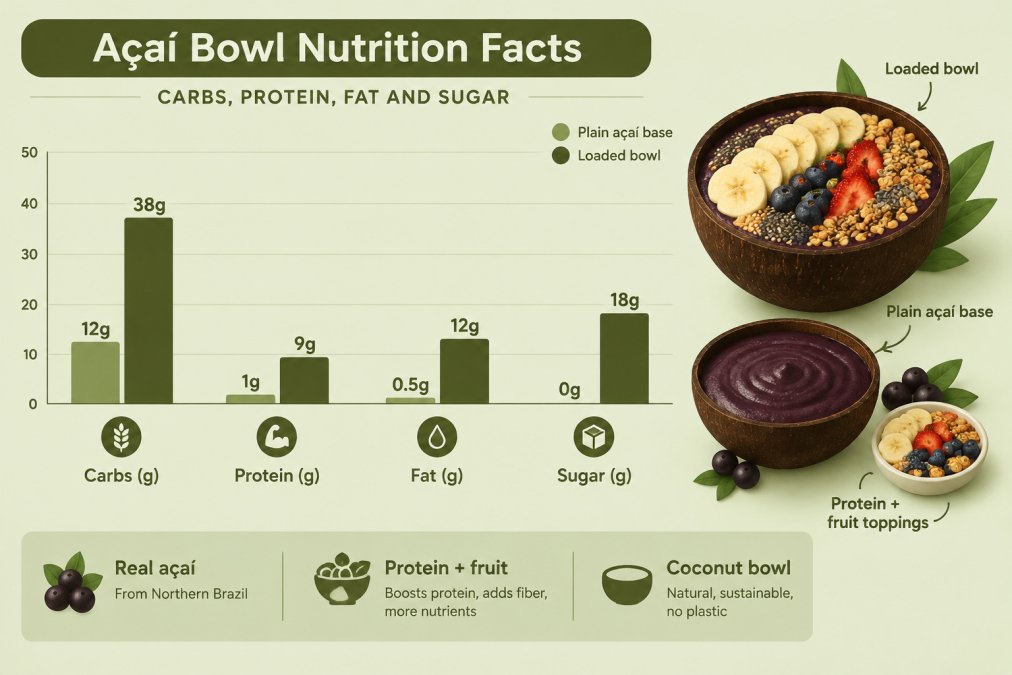
Here is the approximate profile to expect from an unsweetened base, per 100 grams:
The practical takeaway is that a base alone will not meet a post-workout protein target. Sports nutrition guidance generally emphasizes adding a meaningful protein source after resistance training, and a plain base delivers only a small amount.
Carbohydrates matter after exercise because they refill muscle glycogen, the stored fuel your muscles burn during training. A bowl contributes carbohydrate, but the amount depends heavily on the base and the fruit.
Fat is where açaí quietly earns its place. The fat is mostly unsaturated, and it slows gastric emptying, which can make a bowl feel more satiating than a piece of fruit. The trade-off is that fat also slows digestion, so a very fatty bowl right after hard training is not the fastest way to deliver carbohydrate to working muscles.
Sugar is the part most people get wrong. The natural sugars in the fruit are not the problem on their own. The problem is added sugar: sweetened sorbet bases, honey, agave, syrups, sweetened granola, and fruit purées with sugar added. Read the base label and look for added sugar close to zero. If the ingredient list includes cane sugar, glucose syrup, or a sweetened sorbet, the bowl is closer to dessert than recovery food.
Watch out: a bowl that tastes like dessert usually is one, and the added sugar can blunt the antioxidant benefit you came for by pushing a large insulin response alongside a big calorie load.
One more variable competitors rarely mention is glycemic index. Açaí itself is not a high-glycemic fruit, but the glycemic load of a finished bowl depends on the base, the fruit, and the toppings. Pairing the carbohydrate with protein, fat, and fiber slows the blood sugar rise and gives you a steadier insulin response than a sweetened base eaten alone. That is the mechanism behind the customization advice in the next section: the bowl is only as good as what you put around the base.
Here is a quick scan of the nutrition points the article covers for an acai bowl.
| Factor | What to know | Recovery implication |
|---|---|---|
| Base | Unsweetened acai is mostly carbohydrate and fat | Protein must come from added sources |
| Protein | Only a small amount in a plain base | Add Greek yogurt or protein powder |
| Fat | Mostly unsaturated | Slows digestion, can add satiety |
| Added sugar | Sweetened sorbet, honey, syrups, granola | Check labels; keep close to zero |
| Toppings | Nuts, seeds, fresh berries or banana | Add protein, fiber and healthy fat |
How to Customize Acai Bowls for Protein
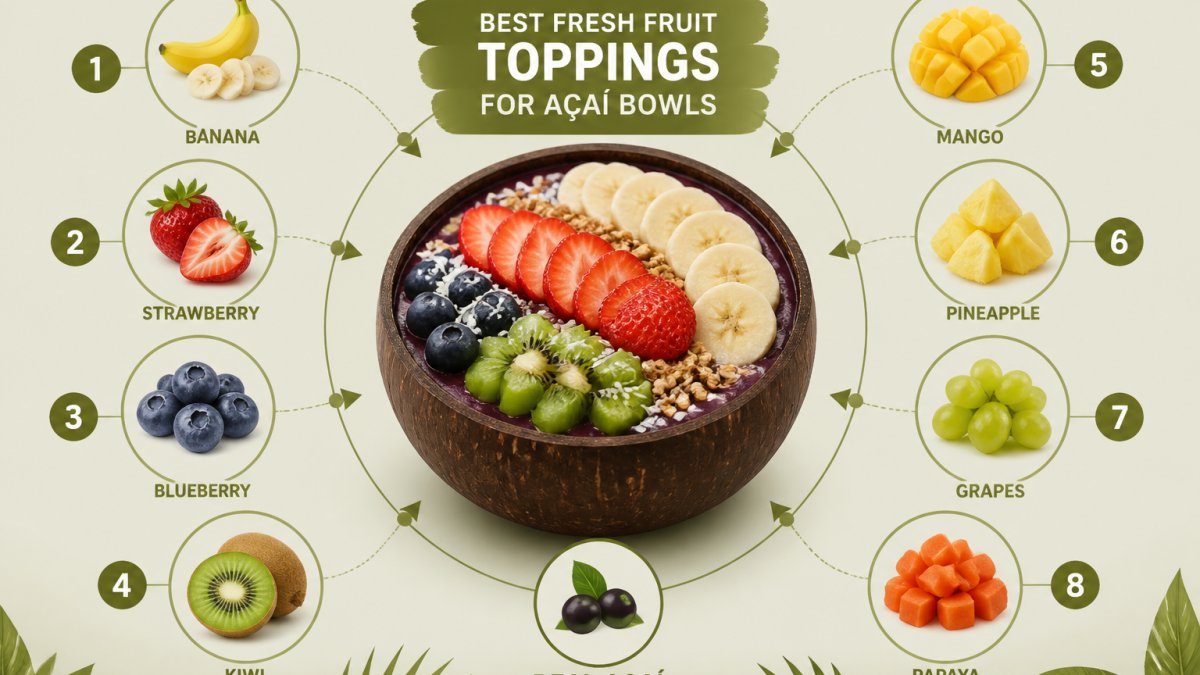
The simplest upgrade is adding a protein source. Options include a scoop of protein powder blended into the base, Greek yogurt or a skyr-style yogurt swirled on top, or a side of nuts or seeds for added protein and healthy fat.
Combining carbohydrates with protein is a common approach recommended in sports nutrition guidance after exercise. Ernie's Açaí, for example, suggests pairing açaí bowls with a meaningful protein source when using them for recovery (Ernie's Açaí guide to açaí bowls and protein).
Here is a practical template for a recovery-focused bowl:
Base: unsweetened açaí Protein: Greek yogurt or protein powder Fruit: fresh berries or banana Crunch: a small handful of nuts or seeds Skip or limit: granola, honey, and syrups
Acai Bowls Compared With Other Post-Workout Snacks
Most recovery advice compares foods on two numbers: protein per serving and carbohydrate per serving, plus how quickly they digest. Put an açaí bowl next to the snacks athletes actually reach for and the picture gets clearer.
Chocolate milk, whey protein shakes and Greek yogurt are all common post-workout options that differ in their protein and carbohydrate content.
A well-built açaí bowl sits in a different spot. A bowl built with an unsweetened base, a protein source and fresh fruit can be a reasonable recovery meal, while the same bowl with a sweetened base, honey and granola adds considerably more sugar.
The honest comparison comes down to what you need:
- Fastest carbohydrate and fluid after endurance work: chocolate milk or a sports drink with a protein source is hard to beat on speed and convenience.
- Highest protein per calorie after heavy resistance training: a whey shake or Greek yogurt wins on protein density.
- Most fiber and satiety per bowl: a properly built açaí bowl wins, because whole fruit and seeds add fiber that shakes and milk lack.
- Most added sugar risk: also the açaí bowl, if you do not control the base and toppings.
That last point is the unique angle most recovery guides skip. The açaí bowl is not automatically better or worse than a shake. It is a customizable meal whose recovery value is set entirely by the base and toppings you choose. Build it with an unsweetened base and a real protein source and it competes with a shake on protein while beating it on fiber. Build it with sweetened sorbet and syrup and it competes with dessert.
Watch out: do not assume a bowl labeled "protein" actually delivers a meaningful dose.
For most people, the practical rule is simple. If you want the fastest, most reliable recovery, a shake or chocolate milk is the benchmark. If you want a satisfying whole-food meal that can hit similar protein and carbohydrate targets when built well, an açaí bowl earns its place, provided you treat the base and toppings as the variables that decide whether it helps or hurts.
Timing Your Acai Bowl Around Workout Intensity
Timing depends on how hard you trained. After a light session, a regular meal is usually enough. After intense or long training, eating carbohydrates and protein within a reasonable window helps your body start recovery sooner.
For most people, eating a bowl within one to two hours after training makes sense. If you train very hard, a larger bowl with more protein is a reasonable choice. If your workout was short and gentle, a smaller bowl or a lighter snack will do.
A general approach is to match the bowl to the workout: a larger bowl after a long run, a smaller one after a casual gym session.
Deciding Whether an Acai Bowl Fits Your Recovery Routine
Açaí is a worthwhile part of a recovery routine when you build the bowl well. It offers antioxidants, carbohydrates, and a satisfying texture, and it can be a convenient post-workout option. It is not a standalone recovery treatment, and a bowl loaded with sugar works against your goals.
You can also order online through our app or website and skip the line, which is handy when you are coming straight from a workout. Our menu is built around organic açaí, and we are happy to explain what goes into each bowl so you can make the choice that fits your training.
Ready to build your own recovery bowl? Order online with World Green Açai.
Frequently Asked Questions
Are acai bowls good for recovery after a workout?
They can be, with conditions. Acai berries contain antioxidants and the bowl supplies carbohydrates to help replenish muscle glycogen after exercise. A clinical picture is still limited: a 2015 pilot study found six weeks of an acai-based juice raised total antioxidant capacity but did not change sprint performance, and a 2023 study in Nutrients reported reduced markers of post-exercise muscle damage with supplementation.
Is acai too high in sugar?
It depends on the base and toppings. Unsweetened acai pulp is naturally low in sugar, but many shop bowls use sweetened purees, juice, granola, honey and sugary fruit that raise the total considerably. Ordering a bowl with fewer sweet toppings and a protein add-in keeps the sugar load closer to what a recovery meal should carry.
How much protein is in a standard acai bowl?
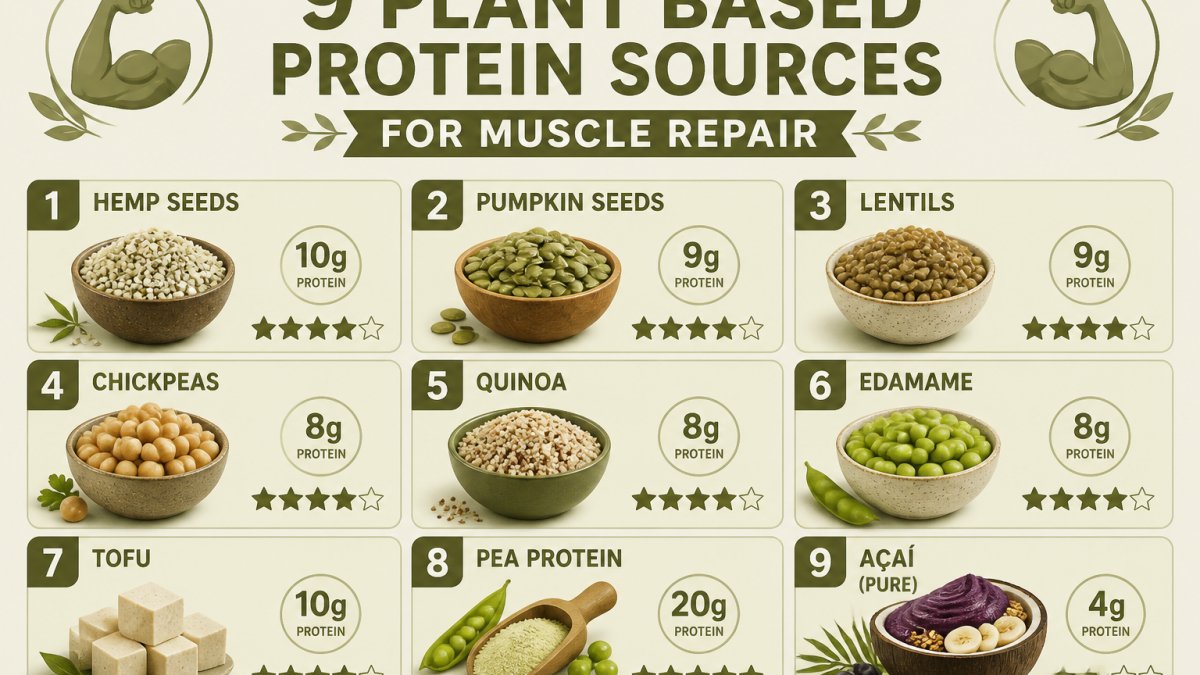
That is low for muscle repair, which is why recovery-focused guidance recommends adding a protein source such as Greek yogurt, a scoop of protein powder, or nut butter. Exact amounts vary widely by shop and recipe, so check the ingredient list or ask the shop for the protein content of your specific build.
What is the best recovery food after the gym?
Most sports nutrition guidance favors a meal that combines carbohydrates with a meaningful amount of protein, eaten within a few hours of training. Options such as Greek yogurt with fruit, eggs with rice, or salmon with potatoes all fit that pattern. An acai bowl can work as one of these options when it is built with protein, but it is usually not a complete recovery meal on its own.