 listicle
The Best Fresh Fruit Toppings for Açaí Bowls
Last Updated: November 3, 2026
Quick Summary
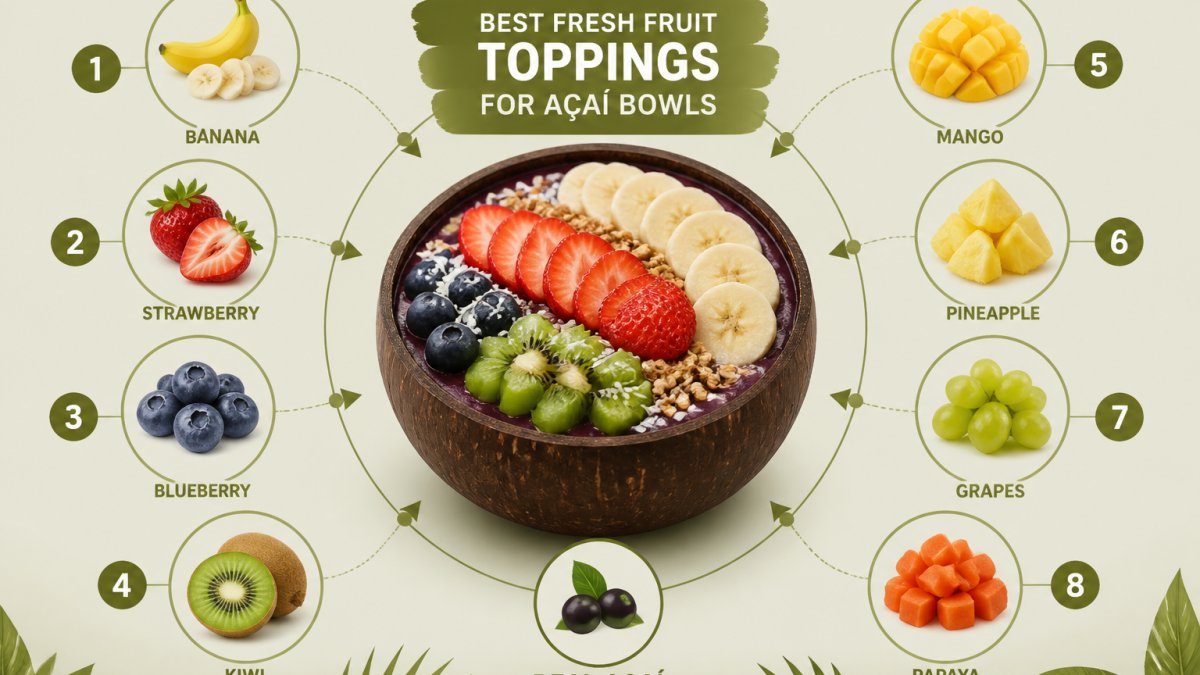
The best fresh fruit toppings for açaí bowls are bananas, strawberries, blueberries, mango, and pineapple, with raspberries, blackberries, and kiwi rounding out the list. Build each bowl with one creamy fruit, one tart fruit, one firm fruit, and one crunchy topping to keep it balanced.
- Bananas are the highest-margin fruit topping for açaí bowl shops, according to Patagonia Foods' 2024 analysis.
- Salgabom Snacks ranks fresh banana, strawberries, and blueberries as consistent top choices for consumer cravings.
- Raspberries are fragile and perishable, so add them last, right before serving.
- Rinse berries and pat them completely dry before they touch the açaí to avoid a watery bowl.
- Substitute by role rather than by name: swap one tart fruit for another, one firm for another, one soft sweet for another.
Table of Contents
- Açaí Bowl Toppings Ideas: What Goes Into a Great Bowl
- The Best Fresh Fruit Toppings for Açaí Bowls Healthy and Full of Flavor
- Bananas: The Creamy, High-Margin Classic
- Berries: Strawberries, Blueberries, Raspberries, and Blackberries
- Tropical Fruit: Mango, Pineapple, and Kiwi
- Açaí Bowl Flavors: Pairing Fruit by Taste and Texture
- Preventing Watery or Soggy Bowls With Smart Fruit Prep
- Ordering Your Bowl Without the Wait
- Frequently Asked Questions
Açaí Bowl Toppings Ideas: What Goes Into a Great Bowl
The best fresh fruit toppings for açaí bowls are the ones that balance the earthy, deep flavor of the açaí base with sweetness, tartness, and crunch. At World Green Açai, we build our bowls around real fruit. A standard menu set usually includes granola, sliced banana, strawberries, blueberries, coconut, honey, and a nut butter, according to Specialty Food Source's toppings guide. But the fruit is what separates a good bowl from a forgettable one. Below, we'll show you exactly which fruits to use, how to prep them, and how to keep your bowl from turning into soup.
The Best Fresh Fruit Toppings for Açaí Bowls Healthy and Full of Flavor
The best fresh fruit toppings for açaí bowls healthy and full of flavor start with what's in season and what holds up on a cold base. Bananas rank first for margin and creaminess, with strawberries, blueberries, mango, and pineapple close behind, according to Patagonia Foods' fruit margin analysis. That ranking matters if you run a shop, but it also tells you something as a customer: these are the fruits that taste best against açaí.
A fruit-first bowl uses whole fruit, not syrups or sweetened compotes. For a wider list of authentic topping ideas to cross-check your choices, see our guide to the best toppings for authentic açaí bowls.
Bananas: The Creamy, High-Margin Classic
Bananas are the highest-margin fruit topping for açaí bowl shops, according to Patagonia Foods' 2024 analysis, and they earn that spot for good reason. A sliced banana adds natural sweetness and a soft, creamy texture that mimics the richness of the açaí itself. It also carries potassium and fiber, which makes it a smarter pick than a sugary drizzle for anyone watching what they eat.
The one drawback is sugar content compared with berries. If you want the creaminess without the sweetness, use half a banana and load the rest of the bowl with berries.
Berries: Strawberries, Blueberries, Raspberries, and Blackberries
Berries are the second, third, and premium tier of fruit toppings all at once. Strawberries bring a tart contrast and bright red color, blueberries add a bite-sized pop with minimal prep, and raspberries deliver a delicate, sophisticated tartness. Blackberries round out the group with a deep, jammy sweetness.
Salgabom Snacks ranks fresh banana, strawberries, and blueberries as consistent top choices for consumer cravings, according to Salgabom Snacks' topping guide. Blueberries hold their structure well in a cold bowl, which is why they show up in almost every build. Raspberries are fragile and perishable, so add them last, right before serving.
Tropical Fruit: Mango, Pineapple, and Kiwi
Mango, pineapple, and kiwi turn a standard bowl into something that tastes like a vacation. Mango is soft and juicy, with a sweetness that blends into the açaí base. Pineapple is sharp and acidic, and it cuts through the richness of the berry in a way few other fruits can. Kiwi sits in between, tart and bright with a firm texture.
Pineapple's acidity is the reason it works: it balances a very sweet bowl base. The trade-off is that not every palate wants that tang. Pair mango with shredded coconut for a tropical build, and keep pineapple for anyone who asks for a brighter, sharper bowl.
Açaí Bowl Flavors: Pairing Fruit by Taste and Texture
Açaí bowl flavors come down to two questions: is the fruit sweet or tart, and is it soft or firm? Match one from each column and the bowl stays balanced. Load up on soft, sweet fruit only, and the bowl turns mushy and one-note.
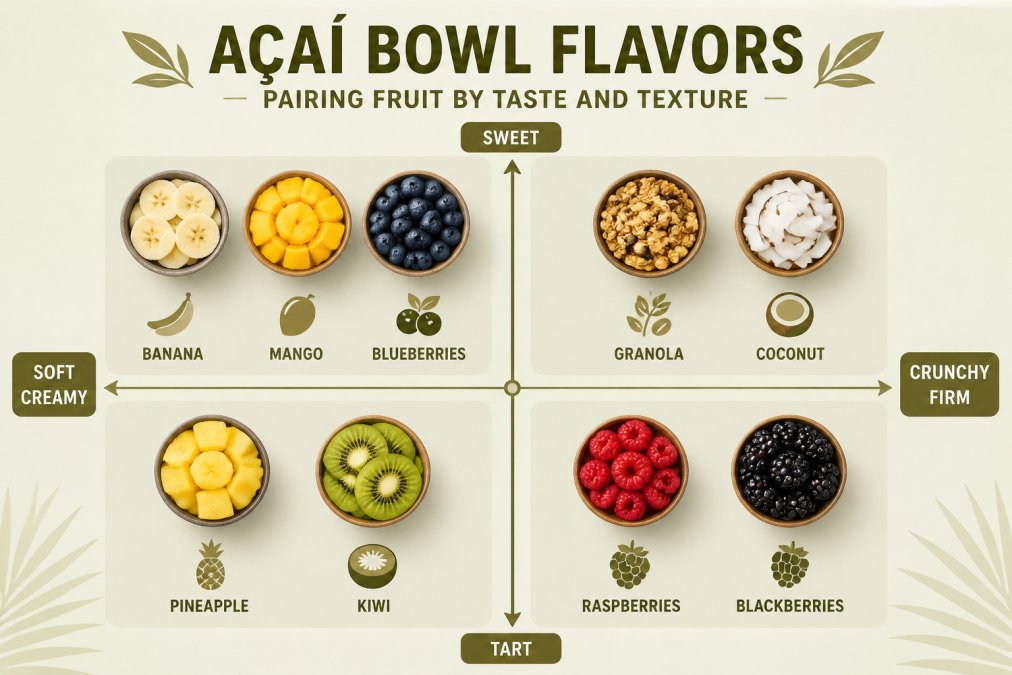
The pairing rule we use: one creamy fruit, one tart fruit, one firm fruit, and one crunchy topping. Banana plus raspberries plus kiwi plus granola hits all four. If you're watching sugar, our guide to low-sugar açaí bowl toppings covers the swaps that keep flavor without the sweetness.
Here is how the main fruits actually behave against a cold, earthy açaí base, so you can swap without guessing:
- Banana (sweet, soft): Rounds off açaí's natural bitterness and adds body. Best paired with something tart so the bowl does not read as flat. Half a banana is usually enough when berries are also in the bowl.
- Strawberry (tart-sweet, firm): Cuts richness and adds color contrast. Holds up well against granola because it does not collapse under weight.
- Blueberry (sweet, firm): A neutral sweetener that keeps its shape. Works as the "safe" fruit when you are building for a crowd with mixed tastes.
- Raspberry (tart, soft): The most acidic of the berries, so it brightens a heavy bowl. Fragile, add it on top, not underneath.
- Blackberry (sweet-tart, soft): Deeper and jammier than raspberry. Pairs well with coconut and nut butter because it needs a rich counterpoint.
- Mango (sweet, soft): Blends into the base flavor and pushes the bowl tropical. Best with something firm so the texture does not disappear.
- Pineapple (tart, firm): The strongest acid in the fruit set. Use it when the base tastes too sweet or when you want a sharper, cleaner finish.
- Kiwi (tart, firm): Sits between pineapple and strawberry, bright but not aggressive. Good bridge fruit when you cannot decide between tropical and berry.
A common pattern among experienced bowl builders is to taste the base first, then choose fruit to correct it. If the açaí tastes flat, lead with pineapple or raspberry. If it tastes too sharp, lead with banana or mango. If it tastes too soft, lead with kiwi, strawberry, or blueberries. That single habit, correcting the base rather than following a fixed recipe, is what separates a balanced bowl from a random pile of fruit.
Watch out: pairing two soft, sweet fruits (banana plus mango, for example) without a firm or tart counterpoint is the most common reason a bowl turns mushy before the last bite.
Preventing Watery or Soggy Bowls With Smart Fruit Prep
A watery bowl almost always starts with wet fruit. Rinse berries and pat them completely dry before they touch the açaí. Slice bananas fresh, not hours ahead, because cut banana releases moisture and browns. Frozen fruit works well in the blend but should be drained before it becomes a topping.
Layer in the right order, too: a thick açaí base first, then granola, then fruit, then anything wet like honey or nut butter last. For the full method behind a thick, creamy base, see our steps for getting a thick açaí texture.
| Problem | Fix | Why It Works |
|---|---|---|
| Watery base | Drain frozen fruit before blending | Removes excess liquid before it thins the açaí |
| Soggy granola | Add granola just before serving | Keeps crunch instead of soaking up moisture |
| Browning banana | Slice fresh, top last | Limits exposure to air and cold |
| Mushy bowl | Balance soft fruit with firm fruit | Texture contrast holds the build together |
Cut and arrange fruit so it sheds less water. Most of the moisture problem is a knife problem. Cut strawberries lengthwise into quarters rather than thin rounds, fewer cut faces means less surface area weeping juice onto the base. Halve blueberries only if you want them to bleed color; otherwise leave them whole. Cut pineapple and mango into bite-size cubes and blot them on a paper towel for a minute before they go on the bowl. Kiwi should be peeled and sliced just before serving, because it softens fast once cut.
Use seasonal fruit and substitute without losing the balance. Fresh fruit quality swings hard with the season, and the best bowl is the one built from what is actually ripe. A practical season-by-season approach:
- Spring: strawberries and blueberries at peak. Raspberries start strong late in the season. Substitute frozen mango for fresh if tropical fruit looks pale.
- Summer: the widest window, berries, cherries, peaches, and melon all work. Peaches and nectarines are soft and sweet, so pair them with kiwi or pineapple for contrast.
- Fall: apples and pears take over. Slice them thin and firm; their crunch stands in for granola when you want a lighter bowl. Late-season raspberries and blackberries are still worth using.
- Winter: citrus and frozen fruit carry the bowl. Orange and grapefruit segments add tartness and juice, so drain them well; frozen berries thawed and patted dry are more reliable than out-of-season fresh ones.
When a fruit is unavailable or expensive, substitute by role rather than by name: swap one tart fruit for another (raspberry for pineapple), one firm fruit for another (kiwi for strawberry), and one soft sweet fruit for another (mango for banana). The bowl stays balanced even when the exact fruit changes.
Prep fruit for allergies and dietary needs. Fruit toppings are naturally friendly to most diets, but a few swaps matter. People avoiding banana for latex-fruit cross-reactivity can use mango or extra blueberries for creaminess. Anyone watching added sugar should lean on berries and skip honey and sweetened nut butter. For vegan bowls, confirm that granola and any drizzle are plant-based, since honey and some granolas are not.
Watch out: adding honey, nut butter, or thawed frozen fruit more than a few minutes before serving is the fastest way to undo good prep, the bowl looks fine at assembly and turns soupy by the time it reaches the table.
Ordering Your Bowl Without the Wait
The fastest way to get the best fresh fruit toppings for açaí bowls is to order ahead. Online ordering lets you skip the line entirely. You can order an authentic bowl for pickup through our site, or check our address, phone, and hours if you'd rather stop in.
Frequently Asked Questions
What fruit pairs well with açaí?
Banana, strawberries, blueberries, mango, and pineapple are the most dependable pairings. Banana adds creaminess and natural sweetness that softens açaí's earthy edge. Berries bring tartness and color. Tropical fruits like mango and pineapple add bright, juicy contrast. Raspberries and blackberries work well when you want a sharper, more sophisticated flavor. A shop that uses real, undiluted açaí needs less sweetener because the fruit does more of the work.
Which fresh fruits make a healthy açaí bowl topping?
Whole fruits with minimal added sugar are the healthiest picks: fresh banana, strawberries, blueberries, raspberries, blackberries, kiwi, mango, and pineapple. They add fiber, vitamins, and antioxidants without syrups. Watch for sweetened coconut, honey-heavy drizzles, and granola with lots of added sugar, which can turn a fruit-first bowl into a dessert. Ask for unsweetened coconut and let the fruit's natural sweetness carry the bowl.
Should fruit on an açaí bowl be fresh or frozen?
Both work, but they serve different purposes. Frozen fruit blends into the base for a thick, creamy texture, while fresh fruit goes on top for color, bite, and aroma. Frozen berries are picked at peak ripeness and hold up well out of season. Fresh fruit shines when it is in season and locally ripe. Many bowls combine the two: frozen banana or mango blended in, fresh strawberries and blueberries layered on top.
Can you mix different fruits on an açaí bowl?
Yes, and mixing is where flavor gets interesting. Pair one creamy fruit (banana or mango) with one tart fruit (raspberries or kiwi) and one crunchy element (granola or cacao nibs) for balance. Strawberry plus banana is the classic starter combination. Mango plus pineapple leans tropical. Blueberry plus raspberry plus blackberry gives a deep, tart berry profile. Keep portions modest so the açaí base stays the star.
Building a bowl that tastes as good as it looks takes the right fruit, the right prep, and a base worth topping. World Green Açai makes that easy with organic açaí, convenient online ordering, and mobile app access so your bowl is ready when you are. Get started with World Green Açai and skip the line for a fresh, fruit-first bowl today.