 comparison
Açai vs Blueberries: Antioxidant Comparison
Table of Contents
- Açai vs Blueberries: Antioxidant Comparison at a Glance
- Antioxidant Content: ORAC Values and Polyphenol Profiles
- Nutritional Profile of Açai Bowls vs Raw Blueberries
- Health Benefits: Heart, Arteries, and Oxidative Stress
- How to Choose High-Quality Açai
- Cost-Per-Serving and Sustainability Considerations
- Freshness, Preparation, and Storage Best Practices
- Conclusion
- Frequently Asked Questions
Last Updated: September 25, 2026
Açai vs Blueberries: Antioxidant Comparison at a Glance
Açai and blueberries both deliver impressive antioxidant profiles, but differ in sourcing, preparation, and consumption. Understanding the açai vs blueberries antioxidant comparison helps you choose which berry best fits your health goals and lifestyle.
Açai is typically consumed frozen or freeze-dried due to perishability, while blueberries thrive fresh or frozen. This affects antioxidant bioavailability and nutrient absorption.
Antioxidant Content: ORAC Values and Polyphenol Profiles
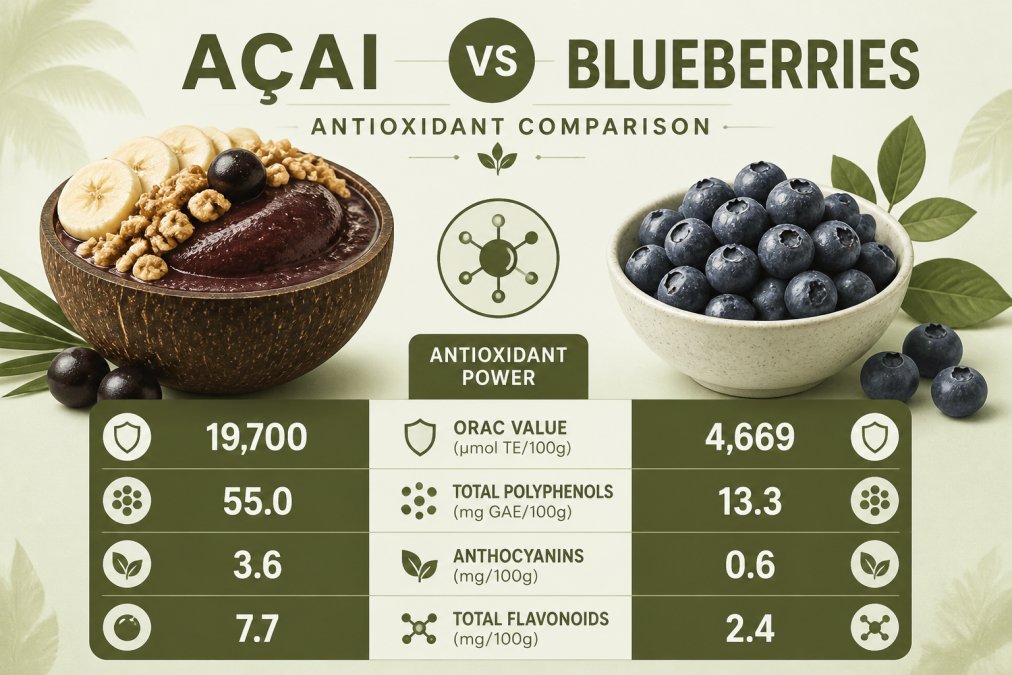
The açai vs blueberries antioxidant comparison comes down to measurable compounds: ORAC (Oxygen Radical Absorbance Capacity) values, anthocyanins, and polyphenols. These molecules neutralize free radicals and reduce oxidative stress.
Açai berries contain significantly higher concentrations of anthocyanins and polyphenols per gram than blueberries. This density matters because it means fewer berries deliver comparable antioxidant impact. However, the total antioxidant benefit depends on how much you actually consume and whether the processing method preserves these delicate compounds.
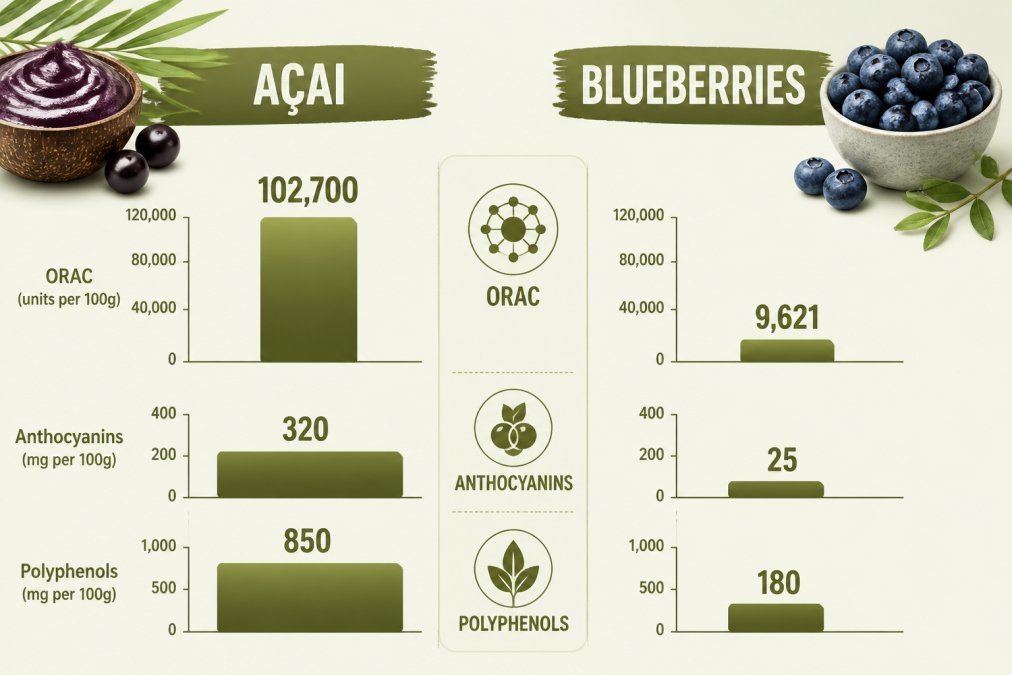
Blueberries, while lower in raw ORAC values, remain exceptional antioxidant sources due to accessibility and consistency. Authentic açai from Northern Brazil retains superior polyphenol profiles.
A single serving of authentic açai delivers antioxidant benefits comparable to a much larger portion of blueberries.
Freeze-dried açai retains more anthocyanins than fresh-frozen blueberries stored for extended periods. If you're buying blueberries, opt for flash-frozen varieties picked at peak ripeness, they preserve antioxidants better than berries sitting in the produce section for days.
Nutritional Profile of Açai Bowls vs Raw Blueberries
Açai bowls combine the base berry with toppings like granola and coconut, while raw blueberries are eaten plain or mixed into yogurt and smoothies. This preparation difference affects total nutrient intake.
Authentic açai bowls deliver antioxidant power in their purest form. The coconut bowl adds to the experience. Blueberries offer simpler nutrient delivery with less added sugar.
Fiber, Carbohydrates, and Glycemic Index
Açai contains approximately 10 grams of fiber per 100 grams, while blueberries offer roughly 3.6 grams per 100 grams.
Açai's higher fiber and fat content create a lower glycemic response than blueberries, meaning slower glucose absorption.
Healthy Fats and Omega Fatty Acids
Açai contains approximately 8.7 grams of fat per 100 grams, primarily monounsaturated and polyunsaturated fats that support cardiovascular health, reduce inflammation, and improve absorption of fat-soluble vitamins.
Health Benefits: Heart, Arteries, and Oxidative Stress
Açai's polyphenols and healthy fats improve artery function and reduce lipid oxidation. The anthocyanins support endothelial function, the inner lining of blood vessels that controls blood flow and pressure.
How to Choose High-Quality Açai
Not all açai is created equal. The source, harvest timing, and processing method determine whether you're getting authentic antioxidant benefits or a diluted product.
Watch for these quality indicators:
- Origin verification: Authentic açai comes from Northern Brazil
- Freeze timing: Berries frozen immediately after harvest retain antioxidants; delayed freezing causes degradation
- Preparation method: Freeze-dried or frozen-then-blended preserves nutrients better than powdered or heavily processed forms
- Organic certification: Organic açai avoids pesticide residues that can interfere with antioxidant absorption
- Coconut bowl presentation: Traditional coconut bowls indicate respect for the berry's authenticity and cultural origin
Cost-Per-Serving and Sustainability Considerations
When comparing açai and blueberries on true cost-per-antioxidant-benefit, the math is more nuanced than upfront price alone suggests. Understanding both the economic and environmental trade-offs helps you align your choice with your budget and values.
Cost-Per-Serving Analysis
Blueberries appear cheaper at first glance. However, antioxidant density changes the equation.
Direct sourcing eliminates middleman markups.
Environmental Impact and Sourcing Sustainability
Commercial blueberries require pesticide applications, irrigation water, and refrigerated transportation, carrying measurable carbon and water footprints.
Making the Economic and Values-Based Choice
Frozen blueberries in bulk offer lowest cost. Authentic açai wins on antioxidant density per serving. Responsibly sourced açai aligns food choices with rainforest preservation.
Freshness, Preparation, and Storage Best Practices
How you store, prepare, and consume açai and blueberries directly impacts the antioxidants you actually absorb. Both fruits are vulnerable to degradation, but through different mechanisms and timelines. Understanding these vulnerabilities helps you maximize the nutritional benefit you get from every serving.
Storage Conditions and Antioxidant Retention
Blueberries maintain antioxidant stability across multiple storage forms. Fresh blueberries kept at 32-40°F retain 85-95% of anthocyanin content for 10-14 days. Store in breathable containers to prevent mold growth.
Preparation Methods and Antioxidant Degradation
How you prepare these fruits matters as much as how you store them. Blending, heating, and exposure to air all degrade antioxidants at measurable rates.
Optimal Preparation Practices
For blueberries:
- Consume fresh or thawed blueberries within 24 hours of thawing to minimize enzymatic degradation
- If blending, use immediately and consume within 5 minutes
- Add blueberries to yogurt or oatmeal raw rather than cooking them; heat destroys anthocyanins
- Store in the refrigerator in breathable containers, not sealed plastic
For authentic açai:
- Order fresh-prepared bowls that are blended and served immediately
- If preparing at home, blend frozen pulp with minimal liquid (just enough to achieve desired consistency) to reduce oxidation exposure
- Never add hot liquid to açai; blend with cold or room-temperature liquid only
- Consume within 10 minutes of preparation for maximum antioxidant benefit
- Store frozen pulp in opaque, airtight containers at 0°F or below; avoid any temperature fluctuation
The Refreeze Rule
Never refreeze thawed açai or blueberries. The freeze-thaw cycle damages cell walls, releasing antioxidants into liquid. If you thaw berries and don't consume them immediately, the antioxidants you paid for begin degrading into that liquid. Once thawed, you have two options: consume within 24 hours or plan to use in smoothies where the liquid is retained and consumed.
Freshness Indicators
For blueberries, freshness is visual. Firm, deeply colored berries indicate recent harvest and peak antioxidant content. Soft, dull-colored, or moldy berries have already begun polyphenol degradation. Frozen blueberries should show no ice crystals larger than grains of salt; large crystals indicate temperature fluctuation during storage.
For maximum antioxidant benefit, consume blueberries raw and fresh-prepared açai immediately after blending. If convenience matters more than peak antioxidant density, frozen blueberries stored properly retain 90%+ of their antioxidant content for months, making them a practical year-round option that doesn't require the timing precision that fresh-prepared açai demands.
Conclusion
Açai and blueberries both deliver powerful antioxidant benefits, but authentic açai from Northern Brazil offers superior antioxidant density and cardiovascular support through its healthy fat profile. Blueberries remain an accessible, affordable option that achieves similar health outcomes through consistent consumption.
Frequently Asked Questions
Which is healthier, blueberries or açai?
Both are nutrient-dense superfruits with different strengths. Açai contains higher ORAC values and polyphenol content, making it superior for antioxidant intake per serving. Blueberries offer better fiber density and are more accessible year-round. The healthier choice depends on your specific health goal: choose açai for maximum antioxidant protection and cardiovascular support, or blueberries for consistent fiber intake and easier daily access. Neither is universally 'healthier', they complement each other in a balanced diet.
What does the ORAC value tell you about açai berry quality?
ORAC (Oxygen Radical Absorbance Capacity) measures how well a food neutralizes free radicals. Açai berries typically score 15,400+ ORAC units per 100g, significantly higher than blueberries at 4,600 units. A higher ORAC value indicates stronger antioxidant capacity and better potential to reduce oxidative stress. When choosing high-quality açai, look for ORAC certifications or sourcing from regions like Northern Brazil, where environmental conditions produce berries with dense polyphenol and anthocyanin profiles. Frozen açai retains ORAC values better than processed powders.
How does the nutritional profile of açai bowls compare to eating fresh blueberries?
Authentic açai bowls deliver concentrated antioxidants, healthy fats (omega-3 and omega-6), and minimal added sugars when prepared with real açai. Fresh blueberries offer higher fiber per serving and naturally lower calories. The key difference: a quality açai bowl (made with real berries from Northern Brazil and served in traditional coconut bowls) provides superior micronutrient density, while blueberries are easier to consume in bulk without preparation. Açai bowls topped with nuts and seeds add protein and sustained energy; plain blueberries are lighter but less satiating.
Is açai worth the higher cost compared to blueberries?
Cost-effectiveness depends on your health priorities and budget. Blueberries are available year-round at most grocery stores. Açai berries are pricier due to sourcing, processing, and short shelf life, but deliver 3-4x the antioxidant concentration per ounce. For those prioritizing maximum antioxidant intake for heart health or oxidative stress reduction, açai offers better value per nutrient. For daily fiber intake and general health, blueberries are more economical. Many find authentic açai bowls a worthwhile investment for occasional meals or post-workout recovery rather than daily replacement for blueberries.
Does processing affect the antioxidant content of açai?
Yes, processing significantly impacts antioxidant retention. Frozen whole açai berries preserve 90%+ of original polyphenols and anthocyanins when flash-frozen immediately after harvest. Powdered açai loses 20-30% of antioxidant capacity due to heat exposure and oxidation during drying. Açai in traditional bowls made with frozen pulp (not powder) maintains superior antioxidant profiles compared to processed drinks or supplements. Açai sourced from Northern Brazil and frozen within hours of harvest retains the highest ORAC values. Always verify sourcing and processing methods when selecting high-quality açai products.
For busy professionals seeking authentic, nutrient-dense meals without the wait, World Green Açai delivers premium organic açai bowls prepared fresh to order. Skip the lines with our online ordering system and access high-quality organic ingredients sourced directly from Northern Brazil. Order online today and experience the difference authentic açai makes.