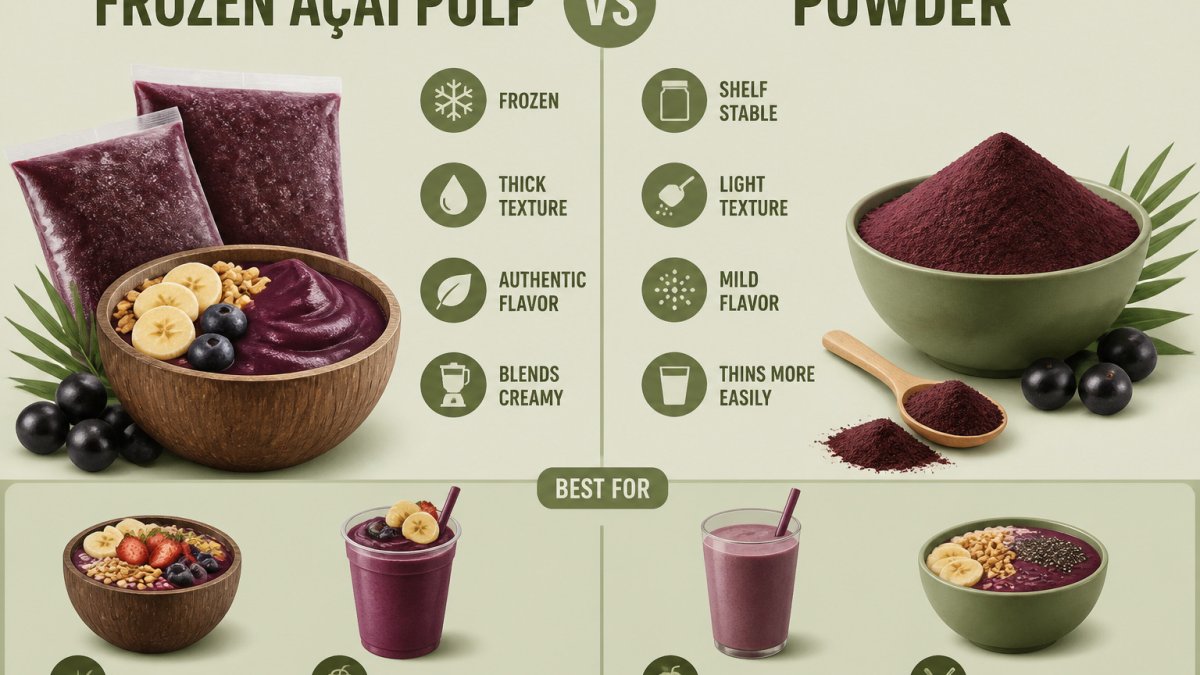
 comparison
Frozen Açaí Pulp vs Powder for Bowls and Smoothies
Quick Summary
Frozen açaí pulp is usually better for a thick, spoonable bowl, while powder suits smoothies and recipes where you stir it into liquid or dry mix. Both come from the same berry, so the best choice depends on how you plan to use it, how you will store it, and what you pay per serving.
- Frozen açaí pulp is processed by pulping and freezing, with little other handling.
- Powder is dried, often by freeze-drying, then ground, which keeps it shelf-stable.
- Compare labels by realistic serving size, not by 100 grams, since pulp is mostly water.
- Choose unsweetened products and check powders for carriers or fillers like maltodextrin.
- Judge value by cost per usable serving, not by package price or weight.
Table of Contents
- Frozen Açaí Pulp vs Powder at a Glance
- How Frozen Pulp and Powder Are Processed
- Nutrition Per Serving: Comparing Pulp and Powder Side by Side
- Texture, Flavor, and Color in Bowls and Smoothies
- How to Make an Açaí Bowl With Frozen Pulp
- How to Use Açaí Powder in Smoothies
- Choosing Between Unsweetened Açaí Pulp and Powder for Your Kitchen
- Frequently Asked Questions
Frozen açaí pulp is usually the better choice for a thick, smooth bowl, while powder is easier to use in smoothies and recipes where you want to stir it into liquid or dry mix. Both come from the same berry, so the real question is how you plan to use it, how you will store it, and what you are paying per serving.
At World Green Açai, we make bowls from real açaí served in coconut bowls. Below, we compare the two forms on processing, nutrition, texture, and cost, and we point out where the evidence is thin. Below, we compare them on processing, nutrition, texture, and cost, and we point out where the evidence is thin.
Frozen Açaí Pulp vs Powder at a Glance
Frozen pulp is the closest thing to fresh açaí you can buy in a store. Powder is pulp that has had its moisture removed, most often by freeze-drying, so it keeps longer and takes up less space.
The practical split is simple. Pulp gives you a thicker, creamier texture and a more pronounced berry flavor. Powder mixes into liquids quickly and needs no freezer. The rest of this article explains why, and which one suits your kitchen.
How Frozen Pulp and Powder Are Processed
Frozen pulp is produced by pulping the berries and freezing the result, with little other handling. Powder requires more steps: the pulp is dried, commonly by freeze-drying, and then ground into a fine powder.
That extra processing is why powder usually costs more per ounce. It also explains why the two forms can differ in flavor and texture even though they start from the same fruit.
Nutrition Per Serving: Comparing Pulp and Powder Side by Side
Most comparisons of frozen pulp and powder get this wrong by comparing them by weight. A gram of powder contains more solids than a gram of pulp because the water has been removed, so ounce-for-ounce the powder will always look more concentrated. That is a processing fact, not a nutritional advantage. The only fair comparison is by realistic serving: what you actually scoop into a bowl or a blender.
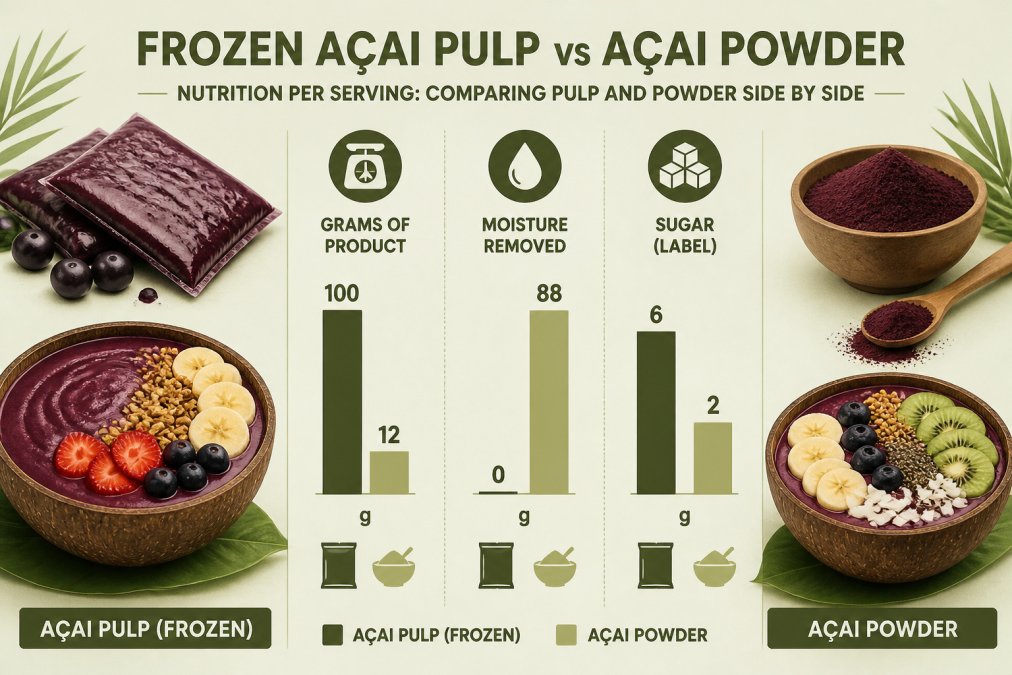
Why label values are hard to compare directly
Frozen pulp is sold in packs that are often 100 grams, and a typical bowl uses one pack. Powder is sold in tubs or pouches, and a typical smoothie uses one to two tablespoons. Because one form is mostly water and the other is mostly solids, the numbers on the two labels describe very different amounts of food. A pulp label listing a nutrient per 100 grams is telling you about a wet product; a powder label listing the same nutrient per 100 grams is telling you about a dry concentrate. Reading them side by side without adjusting for serving size will mislead you in either direction.
A practical approach is to compare what lands in the bowl. If your bowl uses one 100-gram pack of pulp, look at the nutrients in that pack. If your smoothie uses two tablespoons of powder, look at the nutrients in that scoop, not in 100 grams of powder. Only then are you comparing like with like.
The label-checking checklist
Use the same four checks on both forms:
- Serving size. Note whether the label is per serving, per pack, or per 100 grams. Convert to your actual portion before comparing.
- Added sugar. Sweetened frozen packs and flavored powders often list sugar or a syrup early in the ingredients. Unsweetened versions list açaí first with little else.
- Carriers and fillers. Some powders include maltodextrin, rice fiber, or other carriers to keep the powder free-flowing or to stretch the volume. Those add weight and calories without adding açaí. Frozen pulp is less likely to contain carriers, though some packs include guar gum or citric acid.
- Ingredient count. The shortest ingredient list is usually the closest to whole fruit. If açaí is not the first ingredient, you are paying for something else.
What the research does and does not show
Açaí pulp and açaí extracts have been studied for antioxidant content and for markers of oxidative stress, but most of the human evidence comes from small or short-term studies, and much of the laboratory work uses extracts rather than commercial powders. It also does not tell you anything about a specific brand's powder, which may be diluted with carriers.
Treat any claim that one form is clearly healthier as unproven. The honest position is that both forms can contribute antioxidants and anthocyanins, and the size of that contribution depends on how much açaí is actually in your serving, not on which form you bought.
When you compare labels, check the serving size, the added sugar, and whether the product lists only açaí. Unsweetened pulp and unsweetened powder are the cleanest comparison.
Texture, Flavor, and Color in Bowls and Smoothies
Pulp gives a thick, spoonable base that holds toppings well. This is the texture most people expect from an açaí bowl.
Powder dissolves into liquid easily, so it suits smoothies and drinks where you want a smooth blend. It can taste lighter and less berry-forward, and it often makes a thinner bowl unless you add frozen fruit or ice to thicken it.
Both forms keep the deep purple color, though a bowl made with pulp usually looks richer.
How to Make an Açaí Bowl With Frozen Pulp
Use frozen unsweetened pulp for the most authentic bowl. Here is a simple method:
- Thaw the pulp for 5 to 10 minutes at room temperature, or until it can be broken apart with a spoon.
- Add a small splash of liquid, such as unsweetened almond milk or coconut water, to the blender first.
- Add the pulp and blend in short pulses, stopping to scrape down the sides.
- Pour the thick mixture into a coconut bowl.
- Top with sliced banana, granola, and fresh fruit.
Watch out: blending pulp too long warms it and turns the bowl thin and icy. Pulse, stop, and check the texture.
How to Use Açaí Powder in Smoothies
Powder works well in smoothies because it blends into liquid without much effort. Add one to two tablespoons of powder to a cup of liquid, blend, then add frozen banana or other frozen fruit for body.
Powder also mixes into oatmeal, yogurt, and dry blends. Because it is shelf-stable compared with pulp, it is a good choice if your freezer space is limited. Check the package for storage instructions, since they vary by brand.
Choosing Between Unsweetened Açaí Pulp and Powder for Your Kitchen
Most buyers do not need a winner; they need the right form for how they actually eat açaí. Use this decision guide by use case, then check the cost per serving rather than the sticker price.
Decision guide by use case
- Thick bowls with toppings. Choose frozen pulp. It gives the spoonable base that holds granola and fruit, and it tastes closer to fresh açaí. Powder makes a thinner bowl unless you add frozen fruit or ice.
- Smoothies and drinks. Powder is the easier choice. It disperses into liquid without thawing, and you can adjust the scoop to taste.
- Travel and small kitchens. Powder wins on convenience. It is shelf-stable before opening, needs no freezer space, and packs light.
- Baking and dry mixes. Powder stirs into dry ingredients and batters without adding water. Pulp adds moisture and needs recipe adjustment.
- Ingredient simplicity. Unsweetened frozen pulp usually has the shortest ingredient list. Check powder labels for carriers and fillers.
- Taste first. Pulp is more berry-forward. Powder can taste lighter and less fruity, especially if it contains carriers.
Cost per usable serving, not per package
Package price is a poor guide because the two forms concentrate differently. Compare the cost of the amount you actually use per bowl or smoothie. A pulp pack that makes one bowl should be compared with the scoop of powder that makes one smoothie, not with the whole tub.
Factor in what you throw away. Frozen pulp that thaws and is not used promptly may be wasted, and freezer burn ruins packs left open too long. Powder can clump or absorb moisture if stored carelessly, but it generally keeps longer after opening. frozen pulp usually ships with cold packs and costs more to deliver, while powder ships dry. If you buy infrequently, those shipping and storage costs can outweigh a lower per-ounce price.
Food safety, thawing, and storage
Frozen pulp should stay frozen until you are ready to use it. Keep opened packs sealed to prevent freezer burn.
A quick recommendation
If you want the most authentic bowl and you have freezer space, buy unsweetened frozen pulp. If you mainly blend smoothies, travel, or bake, buy unsweetened powder and read the label for carriers. If you would rather skip the prep, you can order a ready-made açaí bowl for pickup. Visit contact us for pickup and bowl orders at our Larkspur shop, or learn how to identify organic açaí before you choose a product. For a deeper look at whether pulp is a good everyday food, read our guide to acai berry pulp for daily consumption.
Frequently Asked Questions
Is frozen açaí pulp better than açaí powder?
Neither form is better in every case. Frozen pulp usually gives a thicker, smoother bowl and a stronger açaí flavor, which is why many people prefer it for bowls. Powder is more concentrated by weight because its moisture has been removed, and it is easier to stir into liquids or dry mixes. Choose pulp for texture and flavor, and powder for convenience and shelf storage. Check each product's label for added sugar, since sweetened versions of either form change the comparison.
Does açaí powder taste like frozen açaí?
Powder tastes different from frozen pulp. Processing changes flavor and color, so powder usually tastes milder and less like fresh açaí than frozen puree does. In smoothies with banana, fruit juice, or other strong ingredients, the difference is harder to notice. If taste is your main goal, frozen pulp is the closer match to the fresh fruit.
Which is better for a thick açaí bowl, pulp or powder?
Frozen pulp is the better choice for a thick bowl. Blended from frozen, it holds a spoonable, creamy texture without much added liquid. Powder can make a bowl thick too, but it needs careful mixing with a frozen base such as banana or ice, and too much liquid makes the bowl runny. For a classic bowl with a thick, scoopable base, start with frozen pulp.
Is açaí powder as nutritious as frozen açaí pulp?
The answer depends on how you measure it. Because powder has had its moisture removed, a gram of powder contains more solids than a gram of pulp, so it can look more concentrated by weight. Measured by serving size, though, the two forms differ in amount of product used and in any added ingredients. Compare labels for sugar and serving size before deciding.
How much açaí powder replaces frozen açaí pulp?
No single conversion applies to every brand, because the amount of pulp in a packet and the amount of powder in a scoop vary by product. Follow the directions printed on your package and adjust by taste and texture. Start with a smaller amount of powder than the pulp you would normally use, add liquid gradually, and increase only if the flavor is too weak.