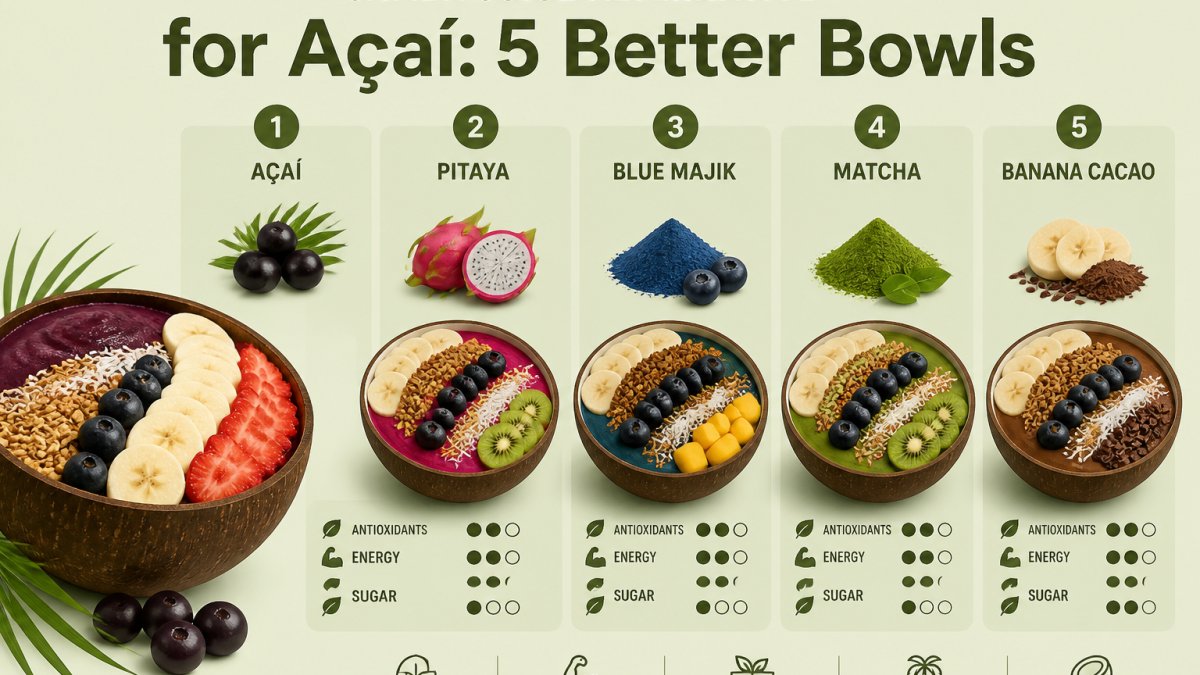
 comparison
Jamba Juice Alternative for Açaí: 5 Better Bowls
Table of Contents
- Why Look for a Jamba Juice Alternative for Açaí?
- Jamba Juice Açaí Bowl Ingredients: What's Actually in the Cup
- Açaí Bowl Alternatives Worth Ordering Instead
- Açaí Bowl Added Sugar: How to Spot It Before You Order
- Nutrition, Price, and Serving Size Compared
- Texture Test: Thick, Creamy, or Icy and Thin
- How to Customize Your Bowl With Toppings and Mix-Ins
- Conclusion
- Frequently Asked Questions
Last Updated: October 17, 2026
Why Look for a Jamba Juice Alternative for Açaí?
If you have ordered an açaí bowl at a smoothie chain and tasted mostly sweetened purple sherbet, you know why so many people search for an açaí alternative to Jamba Juice.
At World Green Açai, we build bowls around organic açaí berries rather than a sweetened base, and we hear the same question weekly: how do I tell the difference?
Jamba Juice Açaí Bowl Ingredients: What's Actually in the Cup
Most chain açaí bowls start with a sweetened blend, not pure fruit. A typical base combines açaí puree with juice, banana, and often sherbet or frozen yogurt, the source of the sugar and soft-serve texture.
Three things are worth checking on any ingredients list:
- The base: açaí puree or açaí powder blended with juice and fruit, versus a scoop of sherbet.
- The sweetener: agave syrup, added sugar, or sweetened juice concentrate.
- The thickener: banana and frozen fruit are normal; dairy or sherbet changes the drink entirely.
The U.S. Food and Drug Administration's added sugars guidance is a useful reference here. Added sugars must be declared on packaged labels, and the same principle helps you read a menu: if the shop cannot tell you what sweetens the base, assume something does.
Açaí Bowl Alternatives Worth Ordering Instead
The best açaí alternative bowls share one trait: a base built from real fruit, not sherbet. Here is a practical comparison of the four routes most people choose between, judged on base, texture, dietary fit, and ordering.
Local Açaí Shops With Real Fruit Bases
Independent açaí shops are usually the closest thing to an authentic Brazilian-style bowl. They blend frozen açaí packets with banana and a little liquid, then finish with fruit, granola, and toppings. The base is thicker and more fruit-forward than a chain blend because there is less incentive to stretch the açaí with juice or sherbet.
What to ask before you order:
- Is the base açaí puree or a sweetened blend?
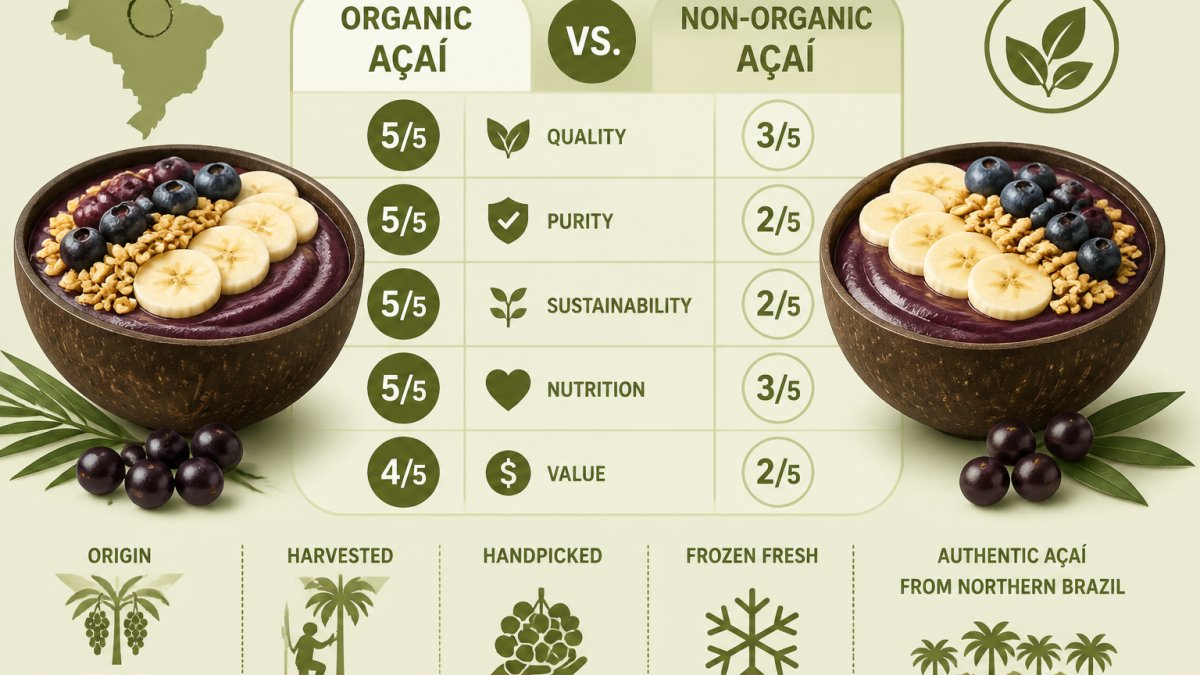
- Is the açaí organic, and where is it sourced from?
- Is the fruit frozen at peak ripeness or thawed from syrup?
Trade-offs: Quality varies widely by shop, hours can be limited, and online ordering is often phone-only or walk-in. Toppings and açaí availability change by season and location.
Smoothie Chains With Açaí on the Menu
Larger chains do carry açaí, but availability varies by location and season, and the base often leans on juice and sherbet for speed and consistency.
If you order at a chain, ask for the base without added sweetener and check whether the açaí is a puree or a flavored blend.
Trade-offs: Higher added sugar in many builds, sherbet or frozen yogurt in some bases, and less control over ingredient sourcing.
Grocery and Make-It-Home Options
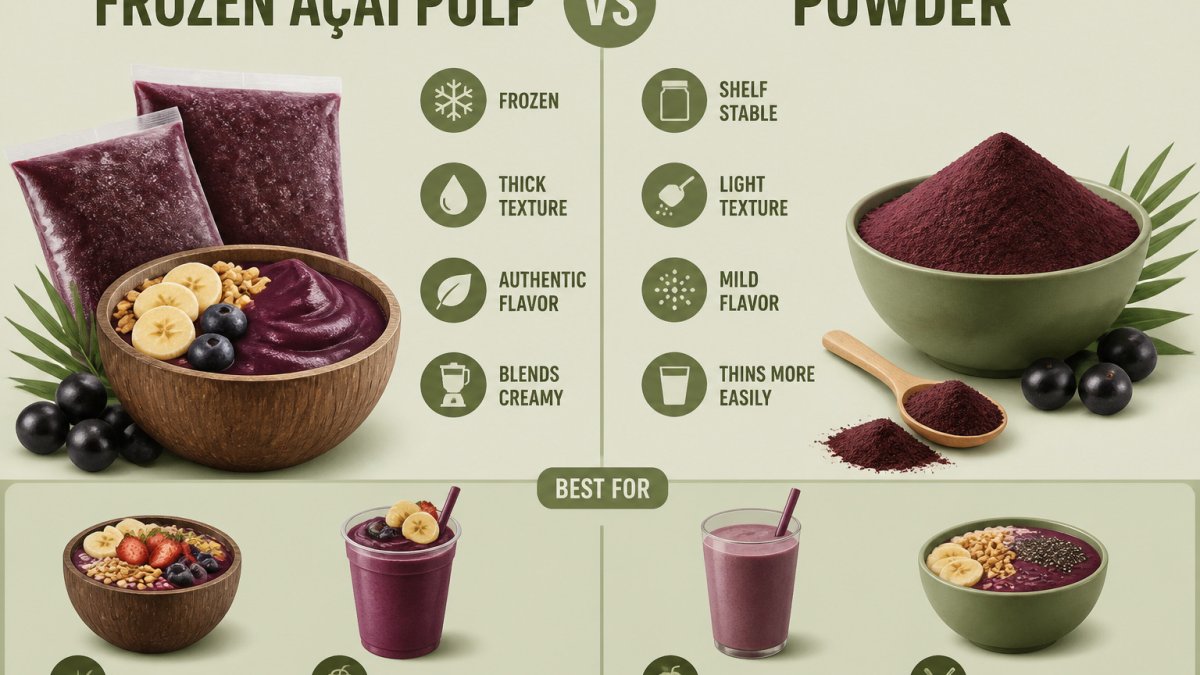
Frozen açaí packets and açaí powder are widely sold, and a homemade bowl gives you full control over sweetness, texture, and toppings, unsweetened puree, your own protein, no syrups.
Trade-offs: Time. Thawing, blending, and cleanup turn a five-minute purchase into a fifteen-to-twenty-minute project, and texture is harder to nail without a high-powered blender. For a short lunch break, a shop that lets you order ahead is more practical; for a weekend breakfast, homemade wins on control and cost per serving.
Build-Your-Own at a Shop That Lets You Customize
A fourth route sits between the chain and the homemade bowl: a shop that builds the base from real fruit but lets you choose protein and toppings.
Trade-offs: Customization adds decision time, and not every shop publishes full ingredient lists. The upside is matching the bowl to a dietary goal, higher protein, lower sugar, dairy-free, without giving up the fruit-forward texture.
Quick Comparison of the Four Routes
| Route | Base Type | Texture | Dietary Control | Ordering |
|---|---|---|---|---|
| Local açaí shops | Frozen açaí puree | Thick, fruit-forward | Ask about dairy-free, vegan, sweetener | Often phone or walk-in |
| Smoothie chains | Puree with juice or sherbet | Softer, sweeter | Limited; ask for no added sweetener | App or online at most locations |
| Grocery kits | Frozen packets or powder | You control it | Full control | In-store |
| Homemade | Puree or powder | You control it | Full control | At home |
| Build-your-own shop | Real fruit base | Thick, customizable | Strong if ingredients are published | App or in-person |
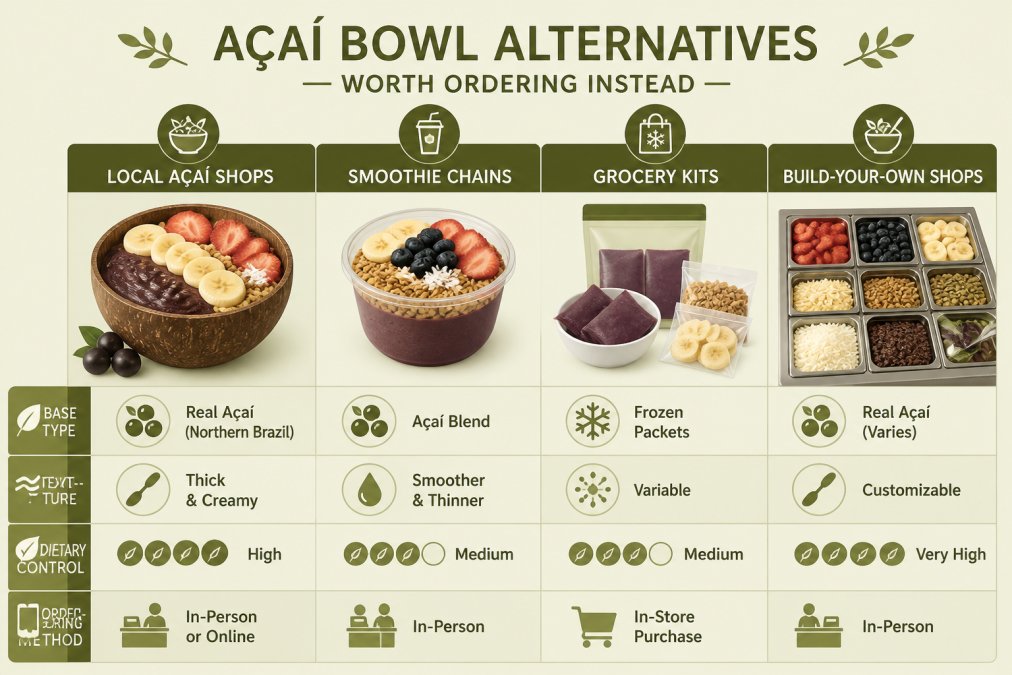
The practical takeaway: if texture and fruit flavor matter most, start with a local shop or build-your-own option. If speed and predictability matter most, a chain with a no-sweetener request can work.
Açaí Bowl Added Sugar: How to Spot It Before You Order
Added sugar hides in three places: the base, the juice, and the toppings. A bowl can look healthy and still carry more sugar than a dessert.
Use this quick checklist before you order:
- Ask whether the base is açaí puree or a sweetened blend
- Ask what liquid goes in (juice adds sugar; almond milk or water does not)
- Check whether sherbet or frozen yogurt is part of the base
Nutrition, Price, and Serving Size Compared
The biggest differences between açaí bowl options come down to base type, protein sources, serving size, and whether you can order ahead. Price and serving size vary by shop and location, so confirm current details before you go, but you can still compare options on the factors that drive nutrition and cost per serving.
What Drives the Nutrition Numbers
Three variables move the nutrition profile of any açaí bowl most:
- The base. A pure fruit base (frozen açaí plus banana) carries natural sugar and fiber. A base built on juice, sherbet, or frozen yogurt adds sugar and, in the case of sherbet or yogurt, dairy and extra calories.
- The protein source. Plain Greek yogurt and protein powder add protein with little added sugar. Sweetened yogurt, honey drizzle, and granola clusters add sugar alongside any protein.
- The toppings. Granola, honey, agave, sweetened coconut, and chocolate chips are where a bowl can quietly pass dessert-level sugar. Fresh fruit and unsweetened nut butter add volume and nutrients without the same sugar load.
A bowl with a real fruit base, a clear protein source, and unsweetened toppings serves better as a meal; a sherbet-based bowl with sweetened toppings behaves more like a dessert. That distinction matters more than any single calorie count, because portion sizes vary widely.
Serving Size: Why the Bowl You Order Matters
Serving sizes for açaí bowls are not standardized. A small bowl at one shop can equal a large at another, and topping load changes the effective portion. Two rules:
- Compare by weight or volume when a shop publishes it, not by cup name.
- Treat a large bowl with a sherbet base as a dessert portion, and a smaller bowl with a real fruit base as a meal portion.
If nutrition information is available, compare the base and protein first, then the toppings. The base and protein drive most of the difference; toppings decide whether the bowl crosses into dessert territory.
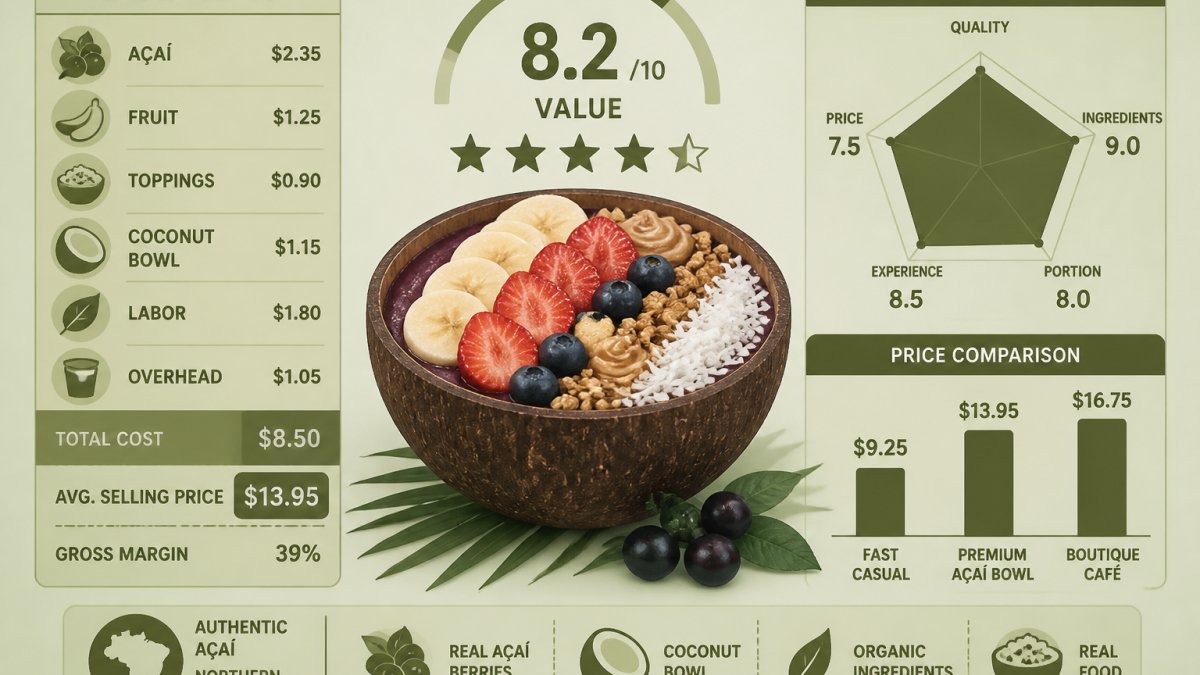
Price and Cost per Serving
Prices vary by shop, location, and build, so the useful comparison is cost per serving relative to what you get: base quality, protein, and topping volume. A few patterns hold:
- Chains tend to price by cup size and charge extra for add-ons like protein or premium toppings, which can push the effective cost per serving above the menu price.
- Local shops often price by bowl size with toppings included, so the menu price is closer to the real cost.
- Grocery kits and homemade have a higher upfront cost for ingredients but a lower cost per serving across multiple bowls, especially if you already own a blender.
Dietary Filters to Check Before You Order
If you are choosing an alternative based on a dietary goal, these are the filters that matter most:
- Dairy-free and vegan: confirm the base has no sherbet, frozen yogurt, or milk, and that the protein is plant-based or omitted.
- Lower sugar: ask for no added sweetener in the base, skip juice in favor of almond milk or water, and choose unsweetened toppings.
- Higher protein: plain Greek yogurt, protein powder, or unsweetened nut butter.
Comparison at a Glance
| Option | Base Type | Added Sugar Level | Protein Sources | Serving Size Control | Online Ordering |
|---|---|---|---|---|---|
| World Green Açai | Organic açaí berries | Lower, built on fruit | Greek yogurt, protein powder | Choose your build | Yes, via app |
| Local açaí shops | Frozen açaí puree | Varies by shop | Yogurt, nut butters | Varies by shop | Often phone or walk-in |
| Smoothie chains | Puree with juice or sherbet | Medium to higher | Sherbet, some yogurt | Cup size only | Yes, at most locations |
| Grocery kits | Frozen packets or powder | You control it | Whatever you add | You control it | No |
| Homemade | Puree or powder | You control it | Your choice | You control it | No |
Texture Test: Thick, Creamy, or Icy and Thin
Texture tells you almost everything about how a bowl was made. A thick, creamy açaí bowl comes from frozen fruit blended with just enough liquid to keep the blades moving.
The test is simple: turn the spoon upside down. A well-made bowl holds its shape for a moment before sliding off.
At home, start with frozen açaí and frozen banana, add liquid a tablespoon at a time, and stop blending the moment it turns smooth. Over-blending warms and thins the mixture.
How to Customize Your Bowl With Toppings and Mix-Ins
Customization is where a good bowl becomes a great one, and where added sugar sneaks back in.
Base: açaí puree with banana, plus a splash of almond milk or pineapple juice for blending.
Protein: Greek yogurt, protein powder, or a spoon of peanut butter.
Toppings: fresh berries, sliced banana, mango, granola, oats, and a light drizzle of agave syrup if you want sweetness.
Flavor combinations that work well:
- Açaí, banana, and peanut butter for a filling lunch
- Açaí, mango, and passion fruit for a brighter, tropical taste
- Açaí, berries, and Greek yogurt for a higher-protein bowl
Conclusion
Finding a Jamba Juice alternative for açaí comes down to one question: does the base taste like fruit or like dessert? Check the ingredients, ask about added sugar, and test the texture before you commit.
World Green Açai builds bowls on organic açaí berries, offers online ordering through our app so you can skip the line, and lets you customize toppings and protein to fit your day.
Frequently Asked Questions
What are the ingredients in the Jamba Juice açaí bowl?
Chain açaí bowls typically layer an açaí blend with banana, other frozen fruit, and a juice or milk base, then finish with granola and fruit toppings. Exact ingredient lists vary by menu item and season, and some blends include sherbet or sweetened fruit juice that raises the sugar count. If you want full transparency, ask for the ingredient list at the counter or check the chain's published nutrition page before ordering, and compare it against a shop that lists its base ingredients openly.
Are açaí bowls high in added sugar?
They can be. The açaí berry itself is low in sugar, but açaí bowl added sugar often comes from the base: sweetened juice, sherbet, agave syrup, or sweetened granola. A bowl with a fruit-only base and unsweetened toppings can stay modest, while one built on sherbet and syrup can rival a dessert. Read the ingredient list, ask whether the base is sweetened, and request toppings like nuts or unsweetened coconut instead of honey-drizzled granola.
What can I use instead of açaí?
If you want a similar thick, spoonable texture without açaí, frozen banana, frozen mango, or a berry blend blended with a little plant-based milk gets close. Greek yogurt adds protein and body. These swaps change the flavor and nutrition profile, though, so they are not a true açaí bowl. If authentic açaí flavor is the goal, look for a shop that uses frozen açaí puree or packets rather than a powder blend, since puree keeps the characteristic taste and color.
How is a local açaí bowl different from a chain smoothie bowl?
Local açaí shops usually build bowls from frozen açaí puree or packets and list their base ingredients, while chain smoothie bowls may rely on blends that include sherbet, sweetened juice, or powder. That difference shows up in texture and sweetness: puree-based bowls tend to be thicker and less sugary. Local shops also tend to offer more customization, from toppings to base thickness.
Can I customize an açaí bowl with different toppings?
Yes, at most shops. Common customizations include swapping granola for nuts or oats, adding peanut butter or protein powder, choosing between berry blends and tropical fruit like mango or passion fruit, and adjusting the liquid so the bowl is thicker or thinner. Ask what is included versus extra, and whether the base itself can be made unsweetened. Ordering online or through an app often lets you set these preferences before you arrive.