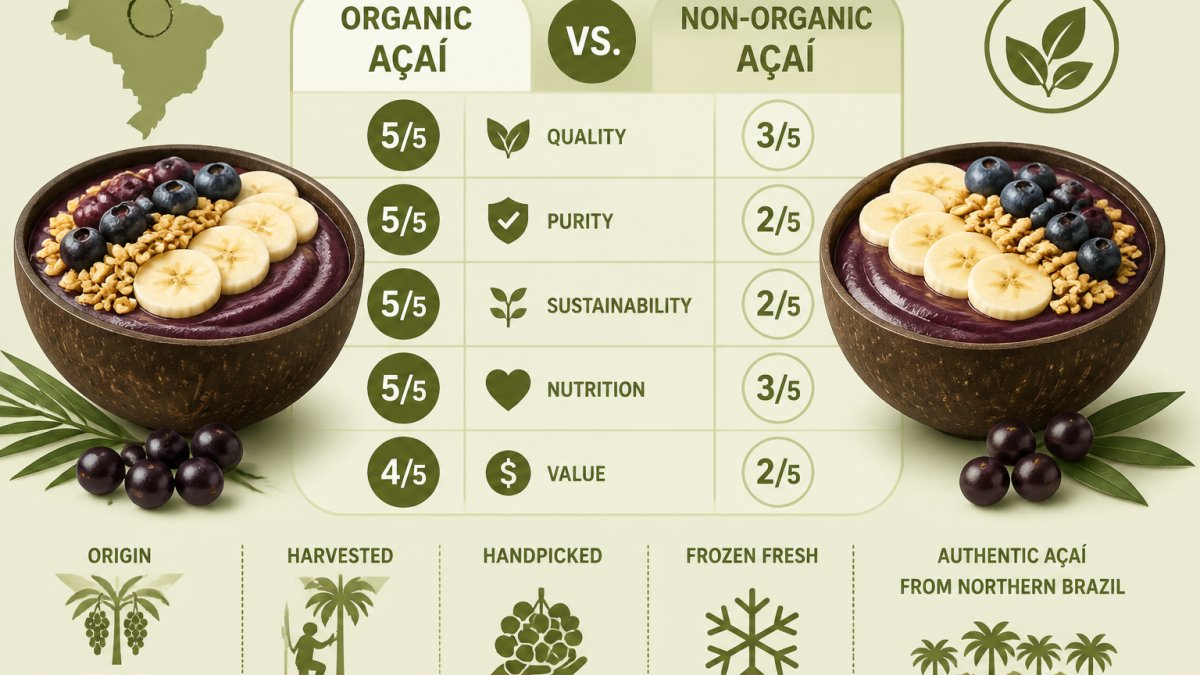
 comparison
Is It Worth Paying More for Organic Açaí?
Last Updated: October 25, 2026
Quick Summary
Pay more for organic açaí when you want documented farming practices, not a nutrient boost. Certification verifies restricted synthetic pesticide inputs, third-party inspection, and a traceable supply chain, while research shows no clear nutritional advantage over conventional açaí. Compare formats on cost per serving, since processing and freshness affect quality more than the seal.
- Organic certification guarantees a documented process, not a superior berry or higher nutrient content.
- The organic premium is smallest on freeze-dried powder and largest on ready-to-eat bowls.
- Ask about processing time and storage before certification if nutrients are your priority.
- Only 100% organic requires all ingredients to be organic; organic requires at least 95%.
- A conventional unsweetened base with nuts and fresh fruit beats an organic bowl buried in sweetened toppings.
Table of Contents
- The Real Price Gap: Organic vs Conventional Açaí
- Does Organic Açaí Have More Nutrients?
- Organic Certification: What It Does and Doesn't Guarantee
- How to Choose Açaí: A Buyer's Checklist
- Real Açaí Bowl Ingredients vs Sugar Bombs
- Environmental and Labor Trade-Offs of Organic Açaí
- Taste, Texture, and What You're Actually Paying For
- Ordering a Bowl You Can Verify
- Frequently Asked Questions
The Real Price Gap: Organic vs Conventional Açaí
Organic açaí costs more than conventional açaí, and the gap is real: expect a meaningful premium per serving for certified organic pulp, powder, or a finished bowl.
Here's the uncomfortable part. The global organic açaí juice market is estimated at USD 763.1 million in 2026, growing at a 10.0% compound annual rate through 2036, according to Future Market Insights' organic açaí juice forecast.
What Drives the Cost Difference
Four things separate organic from conventional açaí at the register:
- Certification and inspection fees. Organic growers pay for annual third-party audits and keep detailed records of inputs and handling.
- Lower yields and hand harvesting. Açaí is hand-picked in the Amazon regardless of farming system, but organic plots typically produce less per acre.
- Smaller, slower supply chains. Organic pulp often moves through dedicated facilities to avoid cross-contact, which adds handling cost.
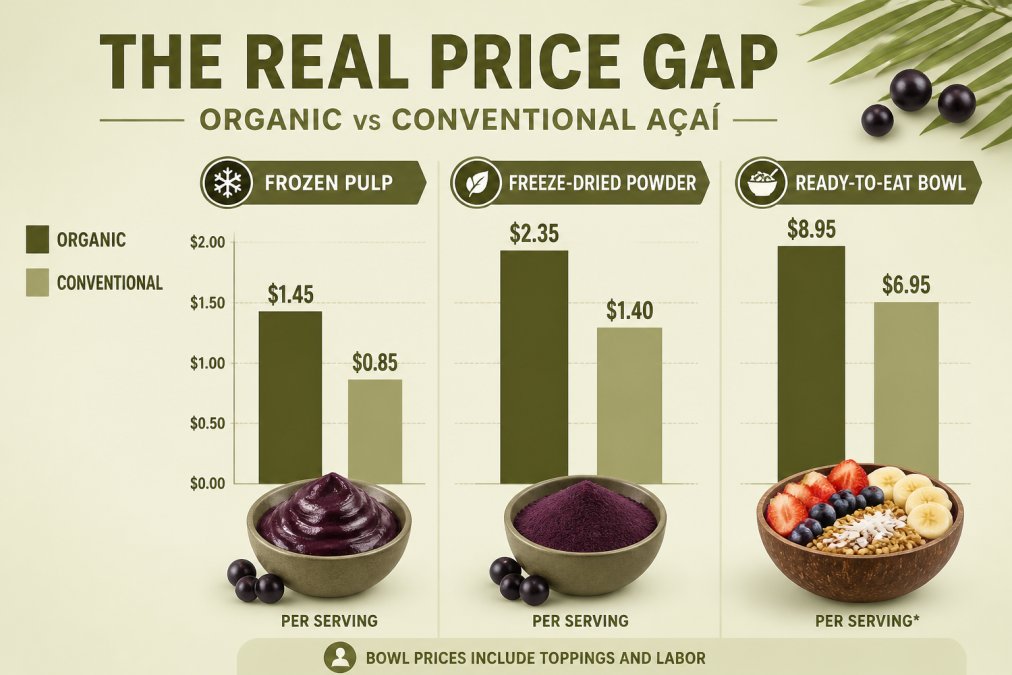
A Like-for-Like Cost Comparison (Per Ounce and Per Serving)
Most comparisons fail because they pit a 1-kilogram bag of pulp against a ready-made bowl. Compare the same format, same açaí content, and same serving size. Pricing depends on quantity, dates, and delivery.
| Format | Typical Package Size | Typical Conventional Price | Typical Organic Price | Conventional Cost per Serving | Organic Cost per Serving | Premium per Serving |
|---|---|---|---|---|---|---|
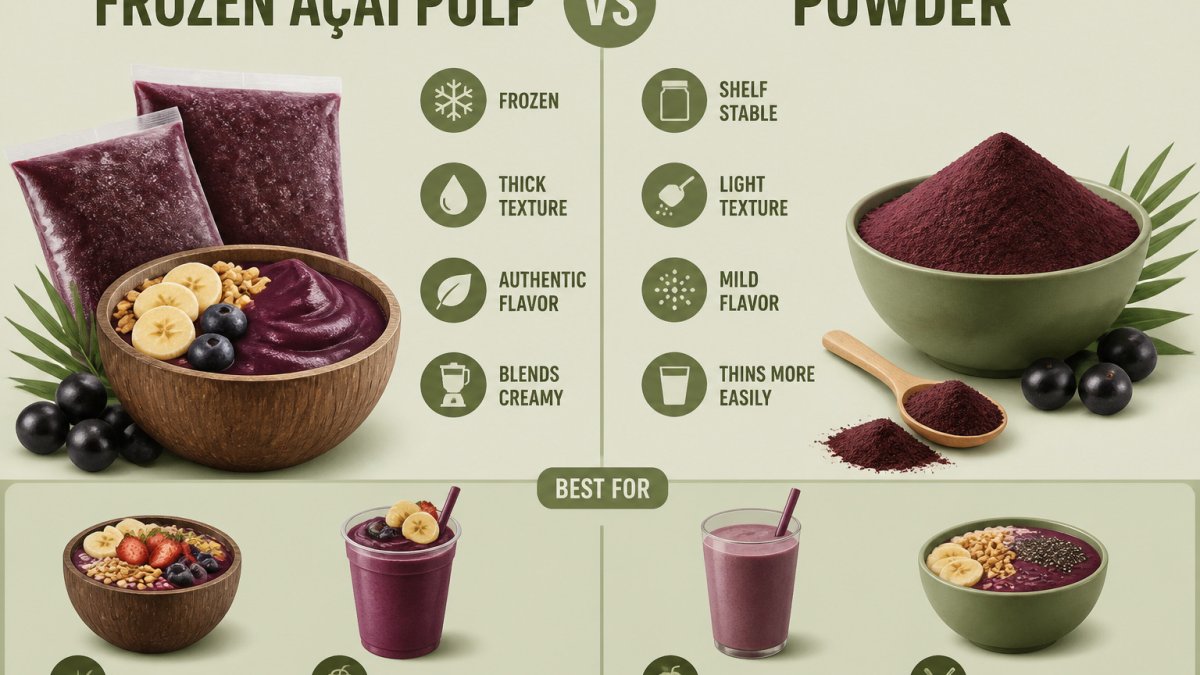
| Frozen unsweetened pulp | 1 kg (35.3 oz) | $9-$14 | $14-$22 | $1.80-$2.80 (at 100 g serving) | $2.80-$4.40 (at 100 g serving) | About $1.00-$1.60 |
| Freeze-dried powder | 100 g (3.5 oz) | $18-$28 | $26-$40 | $0.90-$1.40 (at 5 g serving) | $1.30-$2.00 (at 5 g serving) | About $0.40-$0.60 |
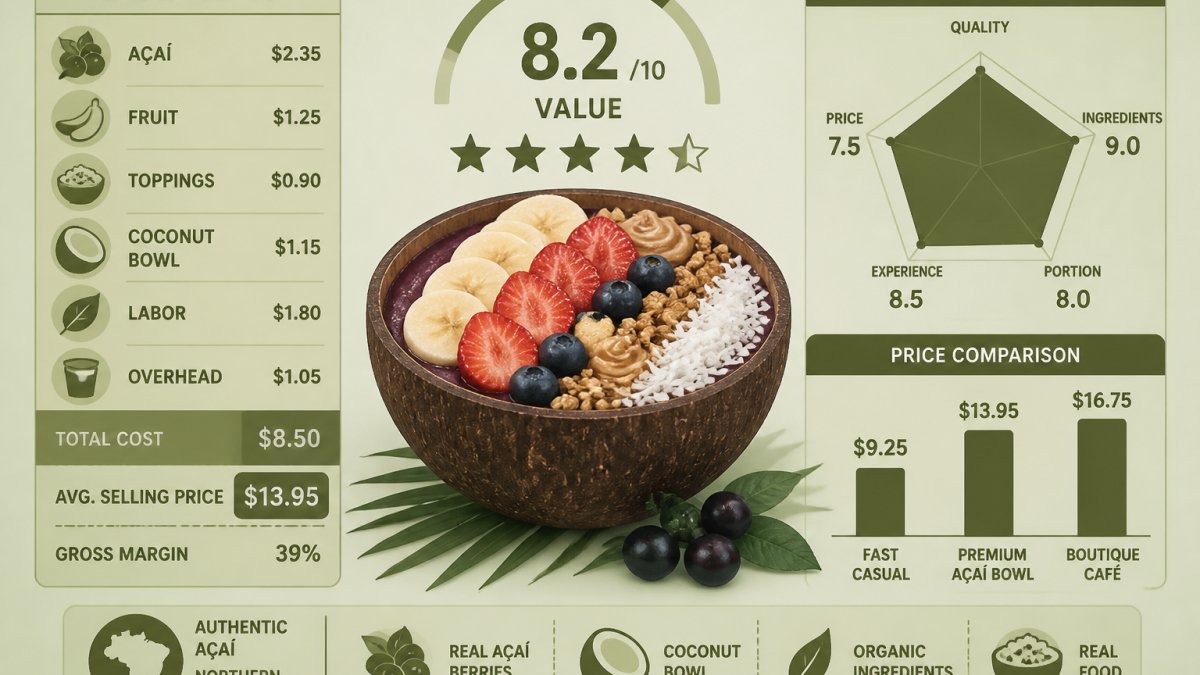
| Ready-to-eat bowl | 12-16 oz | $8-$12 | $11-$16 | $8-$12 per bowl | $11-$16 per bowl | About $3-$4 |
Assumptions behind the table:
- A standard bowl uses 100 to 200 grams of pulp; the table uses 100 g so the math is conservative.
- Powder servings assume 5 g per smoothie or bowl, a common label serving.
- Bowl prices include labor, toppings, and rent, which is why the per-serving premium looks larger than for pulp.
Why the Premium Shrinks or Grows
The premium is not fixed. It narrows when you buy powder instead of pulp (the concentrated format spreads certification cost over more servings), buy in bulk or via subscription, or compare unsweetened pulp to unsweetened pulp rather than to a sweetened sorbet. It grows when you compare a ready-to-eat organic bowl to a bag of conventional pulp, when the product stacks additional claims (fair trade, single-origin), or when you shop in premium retail channels.
The Takeaway
Compare formats on cost per serving, not sticker price. The organic premium varies depending on the product and format. For current pricing, please visit our website.
Does Organic Açaí Have More Nutrients?
No strong evidence shows organic açaí is nutritionally superior to conventional açaí. The research does not compare organic and conventional fruit head to head, so anyone claiming a clear nutrient advantage is going beyond the data.
What the Research Actually Shows
Açaí pulp contains antioxidants, including anthocyanins, along with healthy fats. The National Center for Complementary and Integrative Health's açaí summary reports that açaí pulp has been used safely for up to 3 months in clinical research, while noting that little research has been done on açaí safety overall.
Read that carefully. The same source that supports açaí's general safety does not establish that organic açaí is safer or more beneficial than conventional açaí.
Where the Nutrient Gap Really Comes From
Processing and freshness matter more than the organic seal. Açaí degrades quickly after harvest, and how fast the fruit is processed into pulp or powder affects what survives. A conventional pulp processed within hours of harvest can easily outperform an organic product that sat in transit. For a deeper look, see our guide to the benefits of organic acai berries.
Organic Certification: What It Does and Doesn't Guarantee
Organic certification guarantees a documented process, not a superior berry. In the United States, the USDA organic seal means the product meets federal standards for how it was grown, handled, and processed, and that the operation was inspected by a certified agent. It guarantees no synthetic pesticides on the approved list, no genetically engineered ingredients, and a paper trail from farm to packager.
The Evidence for Organic-Specific Benefits
It helps to separate two questions that get blurred together:
- Does açaí itself have nutritional value? The National Center for Complementary and Integrative Health's açaí summary notes that açaí pulp contains antioxidants including anthocyanins and has been used safely for up to 3 months in clinical research, while cautioning that little research exists on açaí safety overall.
- Does organic certification add a measurable benefit on top of that? The research does not compare organic and conventional açaí head to head on nutrient content. What organic certification does verifiably change is farming practice: restricted synthetic pesticide and fertilizer inputs, documented handling, and third-party inspection.
So the honest framing is this: pay for organic açaí because you want documented farming practices, not because you expect a nutrient boost the data doesn't show.
A Label and Certification Checklist
Use this checklist when comparing products:
- USDA organic seal present. Look for the seal itself, not just the word "organic" in the brand name.
- Certifier named. The package should identify the certifying agent. A leaf graphic alone is not proof.
- "100% organic" vs "organic" vs "made with organic ingredients." Only "100% organic" requires all ingredients to be organic. "Organic" requires at least 95% organic ingredients by weight. "Made with organic ingredients" requires at least 70% and cannot carry the seal.
Our breakdown of organic açaí certification standards walks through what auditors actually check.
How to Choose Açaí: A Buyer's Checklist
Choosing açaí comes down to four checks: the ingredient label, the supply chain, the format, and the serving math.
Read the Ingredient Label First
- Açaí is the first ingredient, not sugar or syrup
- No added sugar, or a clearly small amount
- Short ingredient list with recognizable items
A product labeled "açaí sorbet" is usually a sweetened blend, not pure pulp. That's not automatically bad, but you should know what you're buying.
Verify the Supply Chain
- Country of origin stated on the package
- Processing method named (frozen pulp, freeze-dried, spray-dried)
- Certification body identifiable, not just a leaf graphic
If a brand can't tell you where the fruit came from and how fast it was processed, the organic seal is doing less work than you think. For a step-by-step walkthrough, read our guide to identifying organic açaí.
Real Açaí Bowl Ingredients vs Sugar Bombs
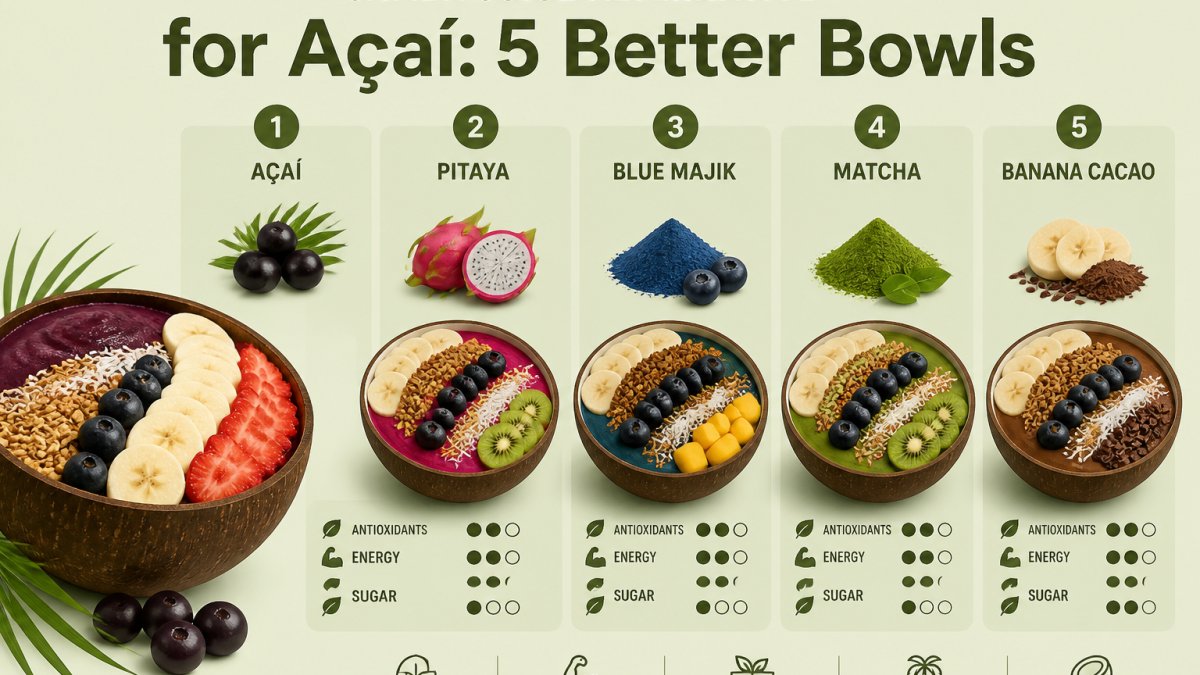
The sugar in an açaí bowl usually comes from the toppings, not the fruit. Pure açaí is naturally low in sugar and distinctly tart, and commercial preparations commonly sweeten it and pile on toppings that contribute far more sugar than the base ever did.
What a real bowl looks like:
- Unsweetened or lightly sweetened açaí base
- Fresh banana or berries rather than syrups
- Granola you can read the label on
To see what authentic Brazilian-style bowls actually contain, our guide to authentic Brazilian açaí bowl ingredients breaks down the traditional build.
Environmental and Labor Trade-Offs of Organic Açaí
Organic açaí carries genuine environmental benefits, but the picture is more complicated than the label suggests. Organic standards restrict synthetic pesticides and fertilizers, which reduces chemical runoff in growing regions. The labor story is murkier: açaí harvesting is physically demanding work, and certification does not address wages or working conditions, because organic standards govern farming inputs, not labor practices. If sustainability is part of why you're paying more, read our full analysis of whether açaí is actually sustainable.
Taste, Texture, and What You're Actually Paying For
Texture is where the money shows up most clearly. A thick, creamy bowl depends on pulp quality, fat content, and how the base is blended, not on the organic seal. A watery, icy bowl usually signals a low-pulp ratio or a base stretched with juice and ice, a formulation problem no certification fixes.
What you're actually paying for with a premium product:
- Higher pulp content and less filler
- Faster processing after harvest
- Better texture control during freezing
A side-by-side taste test between organic and conventional unsweetened pulp is the fastest way to learn whether you can detect a difference. Many people can't.
| Decision Factor | Organic Worth It? | Why |
|---|---|---|
| Avoiding synthetic pesticides | Yes | Certification enforces documented limits |
| Better nutrition | Not proven | No research shows a clear advantage |
| Better taste or texture | Depends on processing | Freshness matters more than the seal |
| Lower sugar bowl | No | Sweeteners and toppings drive sugar content |
| Environmental concerns | Partly | Helps on inputs, silent on labor |
Ordering a Bowl You Can Verify
You can verify a bowl by asking three questions: what's in the base, where the açaí came from, and how it was processed. A shop that answers all three clearly is telling you more than any seal on the wall.
At World Green Açai, we build our bowls on organic açaí and keep the focus on the fruit rather than the sugar. If you're buying for a team, a gift card covers the colleague who wants something lighter than a sandwich.
The premium for organic açaí is worth paying when you're buying it for the right reasons: fewer synthetic inputs, a documented supply chain, and a product that hasn't been sweetened into dessert.
Frequently Asked Questions
Is organic açaí better than conventional açaí?
Organic açaí is grown without synthetic pesticides and must meet USDA organic standards, which many shoppers value for environmental and farming reasons. But the research does not show that organic açaí is nutritionally superior or safer than conventional açaí. The National Center for Complementary and Integrative Health notes that little research has been done on açaí safety overall. Whether organic is better for you depends on your priorities: certification, sourcing transparency, and how the fruit is processed may matter more than the organic label alone.
Does organic açaí have more nutrients?
There is no strong evidence that organic açaí has more nutrients than conventional açaí. Açaí pulp naturally contains antioxidants, anthocyanins, and healthy fats, but these depend more on how ripe the berries are, how quickly they are processed, and whether the final product is diluted with sweeteners or fillers. The organic label certifies farming practices, not nutrient density. If nutrient retention matters to you, look for unsweetened frozen pulp or freeze-dried powder processed within hours of harvest rather than assuming organic equals more nutrients.
Is açaí worth paying more for?
Açaí costs more than many fruits because it is hand-picked in the Amazon, highly perishable, and must be processed quickly to preserve freshness. Whether the premium is worth it depends on the product. A clean, unsweetened organic açaí base with verified sourcing justifies a higher price more than a sweetened sorbet with added sugar and little actual açaí. Compare cost per serving, check the ingredient label, and ask how the açaí was processed. A higher price only means value when the product delivers purity, texture, and traceability.
How can I tell whether an açaí bowl uses real açaí?
Ask what form of açaí the shop uses: frozen pulp, freeze-dried powder, or a pre-sweetened sorbet. Real açaí bowls list açaí as the first ingredient, often with guarana or banana for texture, and avoid long lists of syrups and stabilizers. A bowl made from real açaí should taste tart and earthy, not like sugary frozen yogurt. You can also ask whether the açaí is organic and where it is sourced. Shops that can answer these questions clearly are more likely to serve authentic açaí.
What ingredients should I check in an açaí bowl?
Start with the açaí base: it should be unsweetened or lightly sweetened, with açaí as the primary ingredient. Watch for added sugar, corn syrup, or fruit juice concentrates that turn a bowl into dessert. Toppings matter too: fresh fruit, nuts, and seeds add nutrients, while granola with added sugar and sweetened nut butters raise the sugar count. If you want a lower-sugar bowl, ask for unsweetened açaí and choose toppings like berries, almond butter, and coconut flakes instead of honey or sweetened granola.
Deciding whether organic açaí earns its price starts with knowing what's in the bowl in front of you. World Green Açai builds every bowl on organic açaí berries with online ordering through our app, so you can get a thick, unsweetened base without the line. Order online with World Green Açai and taste the difference a real açaí base makes.