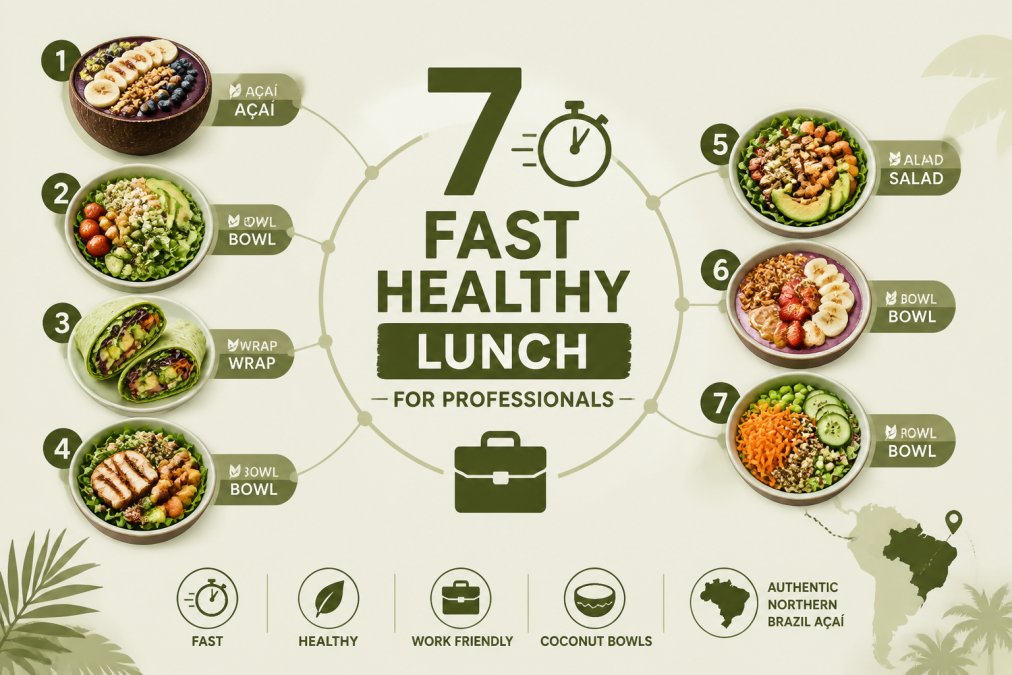
 listicle
Fast Healthy Lunch for Professionals: 7 Ideas
Table of Contents
- Why Fast Healthy Lunch Matters for Your Workday
- Quick Lunch Ideas for Busy Schedules
- Healthy Meal Prep for Office Workers
- Best Organic Açai in Marin for Quick Nutrition
- Budget-Friendly Protein-Packed Lunches
- Portable Containers and Storage Solutions
- Common Mistakes That Derail Healthy Lunch Plans
- Conclusion
Last Updated: August 18, 2026
Why Fast Healthy Lunch Matters for Your Workday
A fast healthy lunch for professionals is essential infrastructure for sustained productivity. When you eat well at midday, your energy, focus, and decision-making stay sharp through the afternoon slump. The alternative is the 3 p.m. crash: that moment when your concentration dissolves and you're reaching for whatever's closest.
World Green Açai has spent years helping busy professionals solve this exact problem. The challenge isn't that healthy options don't exist, it's that most require significant prep time, advance planning, or compromise on ingredient quality. This guide covers practical strategies for building a sustainable lunch system that works for your schedule: no-cook assembly options, batch-cooking methods, and how to structure meals so your energy stays stable all day.
Quick Lunch Ideas for Busy Schedules
When you have fifteen minutes or less, your options narrow fast. The lunches that work are the ones you've prepared ahead or can assemble without cooking.
No-Cook Assembly Bowls
A no-cook assembly bowl combines prepped components without any heating or additional cooking. The speed comes from doing the work on Sunday, not Monday through Friday.
Start with a base: leafy greens, cooked whole grains (quinoa, farro, brown rice), or a combination. Add a shelf-stable or refrigerated protein: canned beans, shredded rotisserie chicken, hard-boiled eggs, or nuts. Layer in vegetables that hold up well: roasted vegetables or raw vegetables like carrots or bell peppers. Finish with a healthy fat and portioned dressing so nothing gets soggy.
Assembly takes three minutes. Open your container, dump components into a bowl, shake the dressing, eat. No microwave required, no decisions beyond "do I want this today or tomorrow?"
Portion control built into the system is key. When you prep on Sunday, you decide portion sizes once, not every day. Smaller, intentional portions work better than oversized ones that lead to waste or overeating.
15-Minute Grain Bowls
If you have access to a microwave at work, grain bowls expand your options significantly. Combine cooked grains, protein, vegetables, and a sauce into something satisfying in about fifteen minutes total.
Cook grains ahead on Sunday and portion into containers. At lunch, reheat for two to three minutes. While heating, prep your other components: already-cooked protein or something fast like canned beans, fresh or roasted vegetables, and a sauce.
The sauce matters more than people realize. A grain bowl with plain components tastes boring. The same bowl with tahini dressing, peanut sauce, or ginger-lime vinaigrette tastes intentional. Make sauces on Sunday in small jars, two tablespoons usually flavors an entire bowl without making it soggy.
Aim for roughly a quarter of your bowl to be protein, a quarter to be healthy fats (from nuts, seeds, or oil in the dressing), and the rest split between grains and vegetables. This ratio keeps your blood sugar stable and your energy consistent through the afternoon.
Organic Açai Bowls for Recovery
An açai bowl serves a specific purpose: post-workout recovery or a breakfast-lunch hybrid when you need something nutrient-dense but light. Real açai, not the frozen yogurt version, is fiber-rich and packed with antioxidants.
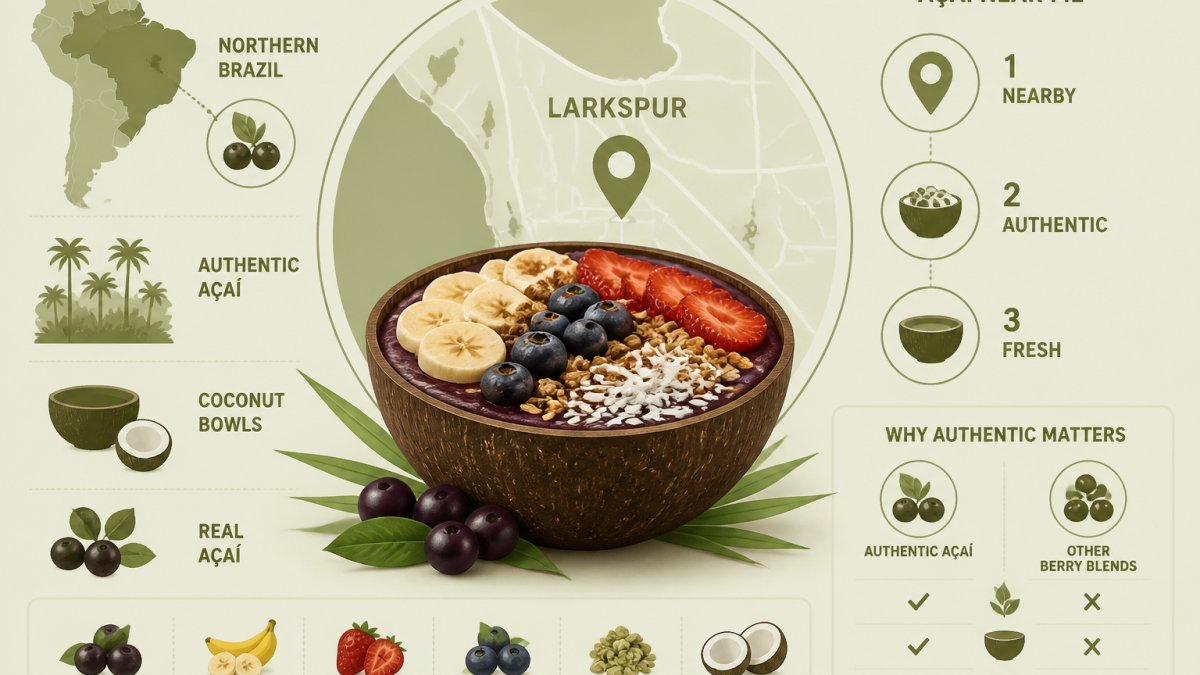
World Green Açai sources authentic açai from Northern Brazil. The difference is noticeable: real açai has a dense, creamy texture and a genuine berry flavor. When you add granola, fresh fruit, nuts, and honey, you get something that tastes indulgent but is built on whole-food nutrition.
Order online through the World Green Açai app or website, skip the line, and pick it up ready to eat. No prep required. For professionals with unpredictable schedules, this removes the friction of "I need something healthy right now."
Açai bowls work best as a lunch option when you've had a substantial breakfast and don't need a full meal. They're portable, don't require refrigeration for more than a few hours, and satisfy both the need for something sweet and actual nutrition.
Healthy Meal Prep for Office Workers
The professionals who eat well consistently have built a system. That system usually centers on one afternoon a week, Sunday for most people, where you do batch cooking, portioning, and container prep. This removes the daily decision of "what should I eat?" and replaces it with "which container do I grab?"
Sunday Batch Cooking Strategy
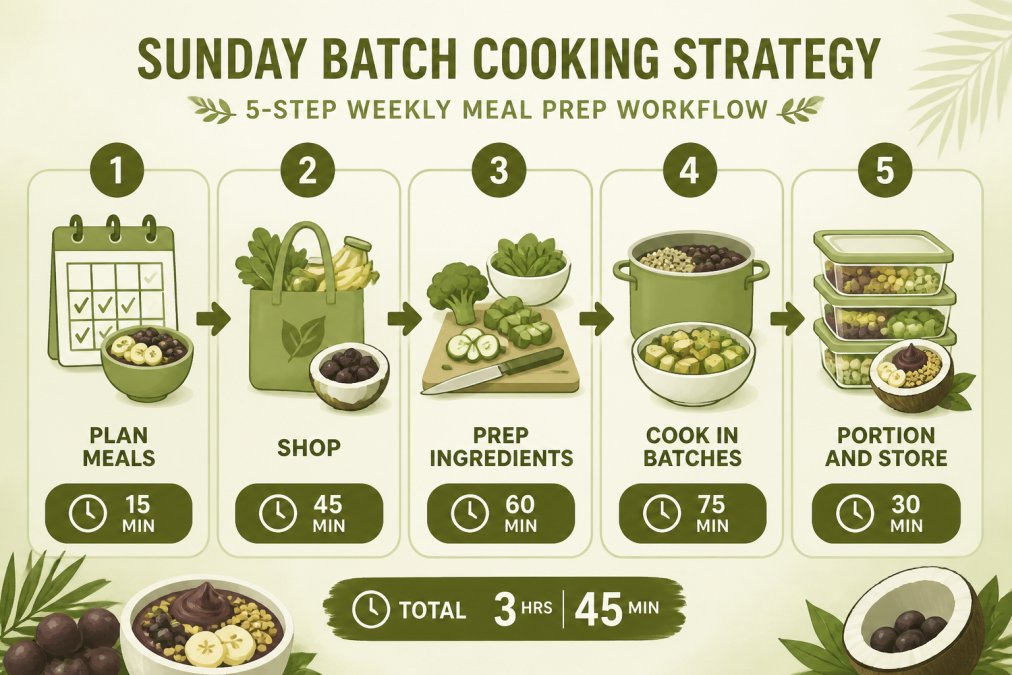
Sunday batch cooking works because cooking in volume is time-efficient. A single large pot of rice takes almost the same time as three small pots. Roasting a sheet pan of vegetables at 425°F takes thirty minutes whether you're roasting for two meals or five. The time investment per meal drops dramatically.
Choose three to four recipes you'll actually eat. A meal you don't eat is worse than a less-optimal meal you do eat. Pick one grain-based bowl, one protein-focused option, and one vegetable-forward dish for variety without overwhelming yourself.
Shop with an organized list: produce, proteins, pantry items. Batch your prep: wash all vegetables at once, chop them together, store in containers. Cook grains in a large pot. Roast vegetables on sheet pans. Cook proteins in one or two batches.
Use uniform containers so you can stack them and see what you have. A two-cup container is a good standard size for lunch. Fill each with the right ratio of grain, protein, and vegetables. Label with date and contents. Stack them in your refrigerator in a visible spot.
The time investment is usually three to four hours total, including shopping and cleanup, roughly thirty minutes per meal for five lunches. Compare that to fifteen minutes per day during the week if you're cooking fresh each day.
Macro-Balanced Containers for Sustained Energy
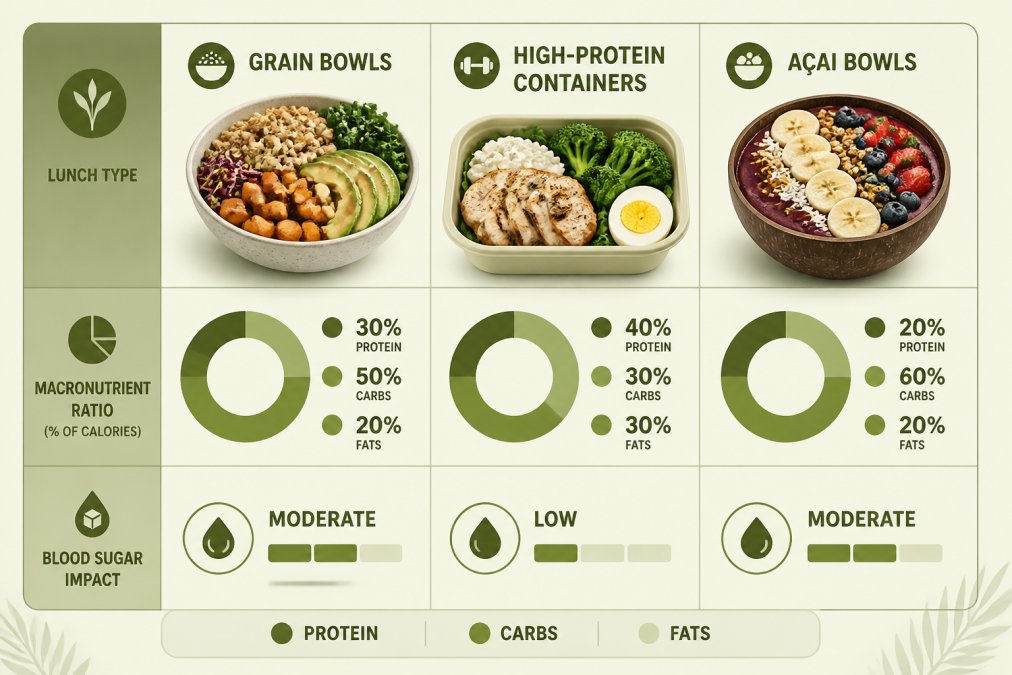
Energy crashes in the afternoon usually come from macronutrient imbalance at lunch. A meal that's mostly carbohydrates, even healthy ones, spikes your blood sugar, which then crashes a few hours later. The solution isn't to avoid carbs, it's to pair them with protein and fat, which slow digestion and keep your blood sugar stable.
A balanced lunch container typically looks like this: forty percent carbohydrates (grains, starchy vegetables), thirty percent protein (meat, fish, beans, tofu), and thirty percent fat (nuts, seeds, oil, avocado). Protein is the most important variable for satiety. A container with adequate protein keeps you satisfied for four to five hours. Aim for twenty to thirty grams of protein per lunch.
Fiber matters for the same reason: it slows digestion and keeps blood sugar stable. Whole grains, legumes, and vegetables all contribute. A lunch with at least five grams of fiber performs significantly better than one without it.
When portioning on Sunday, use your palm as a rough guide: a palm-sized portion of protein, a fist-sized portion of carbohydrates, and a thumb-sized portion of fat. This scales to your body size automatically.
Food Safety and Storage Life
Lunch containers stored in the refrigerator stay safe for four to five days. Most people prep on Sunday and eat through Thursday. Freeze two containers on Sunday if you want to extend to Friday, then thaw Thursday night.
Cool food quickly before refrigerating. Don't put hot containers directly into the refrigerator. Spread them on a counter for thirty minutes, then refrigerate. Use airtight containers and label everything with the date.
Separate wet components from dry ones if possible. A grain and sauce mixed together will get soggy by Thursday. Keep sauce in a small jar and add it at lunch. Same with nuts and seeds, add them at the last moment if they're sitting in dressing.
Best Organic Açai in Marin for Quick Nutrition
When you're looking for a fast healthy lunch that requires zero prep, an authentic açai bowl is one of your best options. The challenge is finding real açai, not the frozen yogurt version or powdered substitute, but actual berries prepared properly.
World Green Açai sources authentic açai from Northern Brazil. This matters because the quality difference is substantial. Real açai has a dense, creamy texture and a genuine berry flavor. The frozen yogurt versions elsewhere taste like sweetened ice cream.
Order through the World Green Açai app or website, skip the line, and pick up your bowl ready to eat. The convenience is real: order on your phone, walk in when it's ready, grab your bowl, and you're back at your desk in five minutes. For professionals with tight schedules, this removes a major friction point.
An organic açai bowl from World Green Açai works as a standalone lunch when you've had a substantial breakfast, or as a post-workout recovery option when you've trained in the morning. The nutrient density, antioxidants from the berries, healthy fats from nuts and seeds, and carbohydrates from granola and fruit make it a legitimate nutrition choice.
Budget-Friendly Protein-Packed Lunches
The assumption that healthy eating is expensive is mostly wrong. The expensive approach is buying prepared meals daily. The cheap approach is batch cooking on Sunday and portioning your own containers.
A grain bowl built from bulk ingredients, rice, dried beans, seasonal vegetables, eggs, costs roughly three to four dollars per serving. Compare that to a prepared meal service, and the savings are obvious.
Buy proteins in bulk and cook them all at once. A dozen eggs, hard-boiled on Sunday, cost less than two dollars and provide twelve lunches' worth of protein. A pound of dried beans costs about a dollar and yields eight servings. Ground turkey or chicken thighs, bought on sale and cooked in large batches, cost two to three dollars per pound.
Buy vegetables in season and on sale. Carrots, bell peppers, broccoli, and sweet potatoes are cheap year-round. Whole grains in bulk cost pennies per serving. Cook a large batch on Sunday and you've got your base for five lunches.
The mistake people make is buying pre-cut vegetables, pre-cooked grains, and prepared proteins. Each step of convenience adds cost. If you're willing to spend one Sunday afternoon chopping and cooking, you cut your lunch budget in half.
Portable Containers and Storage Solutions
The container you use determines whether your lunch stays fresh, whether it's convenient to eat, and whether you'll actually use it consistently.
Glass containers with locking lids are the gold standard. They don't absorb odors, last for years, and are microwave-safe. A set of six containers costs about thirty dollars and will last five years or more.
Bento-style boxes with compartments work well if you prefer keeping components separate. This prevents flavors from mixing and keeps textures intact. At lunch, you assemble and eat.
Insulated lunch bags keep food at the right temperature if you're eating several hours after you leave home. A simple soft-sided cooler with an ice pack keeps containers cold for six to eight hours.
Wide-mouth containers are easier to eat from than narrow ones. A container roughly four inches in diameter and three inches deep holds a full lunch and is easy to eat from at your desk.
Label your containers with a permanent marker: date and contents. This takes thirty seconds and prevents mystery containers.
Common Mistakes That Derail Healthy Lunch Plans
Most people who fail at eating well during the week make the same mistakes.
Overestimating how much you'll eat. Portion sizes that felt reasonable on Sunday feel too large by midweek. Start with smaller portions. You can always eat a snack if you're still hungry.
Choosing meals you don't actually like. Healthy eating is only sustainable if you enjoy what you're eating. If you hate quinoa, don't force it. If you love rice, use rice.
Forgetting to prep your sauce. A grain bowl without sauce tastes bland. Make your sauces on Sunday: tahini dressing, peanut sauce, or ginger-lime vinaigrette. Two tablespoons at lunch makes the difference between "I have to eat this" and "I want to eat this."
Not separating wet and dry components. Nuts and seeds sitting in dressing for five days get soggy. Keep them separate until lunch. Same with lettuce and dressing.
Skipping the protein. A lunch that's mostly vegetables and grains leaves you hungry by 3 p.m. Protein creates satiety. Aim for twenty to thirty grams per lunch.
Making too many different meals. Three to four recipes is the sweet spot. You get variety without overwhelming yourself.
Building a sustainable lunch system means removing friction from the decision. The professionals who eat well consistently aren't relying on willpower, they're relying on a system where the healthy choice is also the convenient choice.
World Green Açai simplifies this for the days when you don't have time to assemble a container. Order online through their app, skip the line, and pick up an authentic organic açai bowl made with real berries from Northern Brazil. The convenience is real, the nutrition is solid, and it takes five minutes from order to eating. For busy professionals, that's the kind of option that actually gets used.
Frequently Asked Questions
What is a quick healthy lunch for work that I can prep in advance?
Grain bowls with whole grains, lean protein, and fresh vegetables are ideal for advance prep. Cook grains and protein on Sunday, store in airtight containers, and assemble with fresh produce each morning. Organic açai bowls topped with nuts, seeds, and berries offer a nutrient-dense option ready in minutes. Both approaches deliver sustained energy without office microwave dependency.
How can I prep healthy lunches for the work week without spending hours cooking?
Batch cooking on Sunday cuts prep time dramatically. Cook a large batch of brown rice or quinoa, grill several chicken breasts, and roast vegetables. Portion into airtight containers, each lunch takes 2 minutes to assemble. Legumes like lentils and chickpeas require minimal active time. Aim for 1-2 hours total Sunday prep to cover five workday lunches. This approach saves time and ensures portion control.
Why does my homemade açai bowl texture never match what I get at restaurants?
Authentic açai requires fresh, organic berries blended to a specific consistency, too thin and it separates, too thick and it becomes icy. Most restaurants use high-powered commercial blenders and freeze berries at peak ripeness. Home versions often rely on freeze-dried powder or lower-quality frozen pulp, which creates a different texture. For that thick, creamy consistency, sourcing genuine organic açai from trusted local sources makes the difference.
How do I balance macros in my lunch to avoid the 2 p.m. energy crash?
Combine protein (20-30g), complex carbohydrates (35-50g), and healthy fats (10-15g) to stabilize blood sugar. A grain bowl with lean protein, whole grains, and olive oil-dressed vegetables hits this balance. Avoid high-sugar toppings and refined carbs that spike then crash your energy. Fiber-rich vegetables and legumes add satiety, preventing mid-afternoon hunger that derails focus.
This article was written using GrandRanker