 listicle
Are Açai Bowls Healthy for Weight Loss? A Realistic Review
Table of Contents
- What Is an Açai Bowl?
- Nutritional Profile: Why Açai Bowls Seem Healthy (But Aren't Always)
- The Sugar Content Trap in Store-Bought Bowls
- Acai Bowl Calories: Why Caloric Density Matters for Weight Loss
- Healthy Acai Bowl Toppings and Ingredient Swaps
- Portion Control for Acai Bowls: The Real Weight-Loss Strategy
- Is an Açai Bowl a Meal or a Dessert? What the Evidence Shows
- How to Make Açai Bowls Work for Weight Loss
- Frequently Asked Questions
Last Updated: September 17, 2026
What Is an Açai Bowl?
An açai bowl is a nutrient-dense breakfast or snack made from frozen açai berries blended into a thick base, topped with granola, fresh fruit, nuts, and other add-ons, and when prepared correctly, an açai bowl healthy weight loss strategy that actually works. World Green Açai sources authentic açai directly from Northern Brazil, ensuring you're getting real fruit. The açai berry itself is small, dark purple, and packed with antioxidants, healthy fats, and fiber, but the bowl's reputation as a "superfood" often masks a nutritional reality that catches dieters off guard.
Nutritional Profile: Why Açai Bowls Seem Healthy (But Aren't Always)
Açai berries contain polyphenols and anthocyanins, antioxidants that combat oxidative stress, plus dietary fiber that supports digestive health and satiety, the feeling of fullness that helps you eat less overall.
Antioxidants and Micronutrients in Açai Berries
A serving of unsweetened açai contains vitamin C, manganese, and potassium, which support immune function, bone health, and metabolic processes. The antioxidants have been studied for their potential to reduce inflammation and support cardiovascular health.
Healthy Fats and Dietary Fiber
Açai contains omega-3 and omega-6 fatty acids that support brain health and reduce inflammation, plus 3-5 grams of dietary fiber that slows digestion and increases satiety without adding many calories.
The Sugar Content Trap in Store-Bought Bowls
A typical store-bought bowl starts with sweetened açai puree or a base mixed with honey or fruit juice (15-25g sugar), then adds granola (30-40% sugar by weight), honey drizzle, chocolate chips, and coconut flakes. A single bowl can exceed 50 grams of sugar, more than most people should consume in an entire day.
Acai Bowl Calories: Why Caloric Density Matters for Weight Loss
An açai bowl's caloric density, the number of calories packed into a small volume, makes it easy to exceed your daily target without feeling full.
Glycemic Index Impact and Blood Sugar Regulation
Most commercial açai bowls have a high glycemic load because of added sugars and refined toppings like processed granola.
Hidden Calories in Toppings and Bases
Toppings hide calories: 1/4 cup granola (150-200 cal), 1 tbsp honey (60 cal with no fiber or protein), plus coconut flakes, chocolate chips, and nut butters. It's easy to add 200-300 calories in toppings alone.
Healthy Acai Bowl Toppings and Ingredient Swaps
Strategic ingredient substitution is key. A single topping choice can add or subtract 100-150 calories and 10-20 grams of sugar.
Granola and Grain Swaps
| Instead of... | Swap for... | Calorie savings | Sugar reduction | Why it works |
|---|---|---|---|---|
| 1/4 cup processed granola (180 cal, 18g sugar) | 1/2 cup rolled oats (150 cal, 1g sugar) | 30 cal | 17g | Oats deliver fiber and satiety without added sugars; you can eat more volume for fewer calories |
| 1/4 cup granola clusters (200 cal, 22g sugar) | 2 tbsp raw almonds + 2 tbsp chia seeds (160 cal, 2g sugar) | 40 cal | 20g | Nuts and seeds provide protein and healthy fat, keeping you full 4-5 hours vs. 2-3 hours with granola |
| 2 tbsp honey drizzle (120 cal, 32g sugar) | 1 tbsp raw almond butter (95 cal, 1g sugar) | 25 cal | 31g | Almond butter adds 3g protein and 3g fiber per tablespoon; honey adds neither |
| 1/4 cup coconut flakes (100 cal, 9g sugar) | 1 tbsp unsweetened coconut flakes (30 cal, 0g sugar) | 70 cal | 9g | Unsweetened coconut has the same flavor profile with a fraction of the calories and no added sugar |
Protein Boosters (Essential for Satiety)
| Add this... | Amount | Calories | Protein | Satiety benefit |
|---|---|---|---|---|
| Greek yogurt | 1/2 cup | 65 | 12g | Extends fullness by 2-3 hours; adds creaminess without sugar |
| Protein powder (unflavored whey) | 1 scoop (25g) | 100 | 20g | Increases protein without changing taste; supports muscle recovery |
| Raw almonds | 1 oz (23 nuts) | 160 | 6g | Healthy fat + protein; satisfies cravings for 4+ hours |
| Hemp seeds | 2 tbsp | 110 | 10g | Complete protein (all 9 amino acids); adds nutty flavor |
| Cottage cheese | 1/4 cup | 55 | 7g | High protein, low sugar; works as a creamy base layer |
Fruit and Topping Swaps
| Instead of... | Swap for... | Calorie savings | Why it works |
|---|---|---|---|
| 1/4 cup dried fruit (100 cal, 20g sugar) | 1/2 cup fresh berries (40 cal, 8g sugar) | 60 cal | Fresh fruit has more water and fiber; you get more volume for fewer calories and less sugar |
| 1 tbsp chocolate chips (50 cal, 6g sugar) | 1 tbsp unsweetened cacao nibs (40 cal, 0g sugar) | 10 cal | Cacao nibs deliver the chocolate flavor and antioxidants without added sugar |
| 2 tbsp sweetened coconut yogurt (60 cal, 8g sugar) | 2 tbsp plain Greek yogurt (20 cal, 1g sugar) | 40 cal | Plain yogurt is protein-rich; sweetened versions are dessert disguised as breakfast |
Building Your Custom Bowl: The Formula
Use this framework to assemble a weight-loss-friendly bowl:
-
Base (100-120 calories): 1 cup unsweetened açai blended with 1/4 cup unsweetened almond milk or water. This is your foundation, it's where you save the most sugar compared to commercial bowls.
-
Protein layer (60-100 calories): 1/2 cup Greek yogurt OR 1 scoop protein powder mixed into the base OR 1/4 cup cottage cheese. Pick one. This is non-negotiable for satiety.
-
Grain/texture (80-120 calories): 1/2 cup rolled oats OR 2 tbsp raw almonds + 1 tbsp chia seeds OR 1/4 cup granola (if you must). The nut-and-seed combo delivers the most protein per calorie.
-
Fresh fruit (30-50 calories): 1/2 cup fresh berries (blueberries, strawberries, raspberries). This adds volume, fiber, and natural sweetness without spiking blood sugar.
-
Optional flavor boost (0-30 calories): 1 tbsp raw almond butter, 1 tbsp unsweetened cacao nibs, or a pinch of cinnamon. Skip honey, agave, and chocolate chips, they add calories and sugar without satiety.
Total: 270-420 calories, 12-18g protein, 8-12g fiber, 15-25g sugar.
This is the profile that supports weight loss: high protein and fiber for satiety, low sugar for stable blood glucose, and controlled calories that fit into a deficit without leaving you hungry.
Why These Swaps Work Better Than Generic Advice
Most articles say "choose whole foods" or "add protein." That's true but vague. The swaps above show you exactly what to replace and why, the mechanism. When you swap granola for oats, you're not just cutting calories; you're trading a refined carb that spikes blood sugar for a whole grain that stabilizes it. When you add Greek yogurt, you're not just hitting a protein target; you're extending satiety by 2-3 hours, which means you eat less overall without feeling deprived.
Portion Control for Acai Bowls: The Real Weight-Loss Strategy
Portion control is the unglamorous truth behind sustainable weight loss. An açai bowl doesn't have to be massive to be satisfying.
Serving Size Recommendations and Meal Replacement Reality
A reasonable serving size is 8-10 ounces of base with 1/2 to 1 ounce of toppings, delivering 250-350 calories if you choose unsweetened base and whole-food toppings.
Is an Açai Bowl a Meal or a Dessert? What the Evidence Shows
If you treat an açai bowl as dessert, you're adding calories on top of your regular meals. If you treat it as a meal, you're replacing those calories.
How to Make Açai Bowls Work for Weight Loss
The strategy is threefold: choose unsweetened bases, control portions, and build macronutrient balance.
Building a Nutrient-Dense, Lower-Calorie Bowl
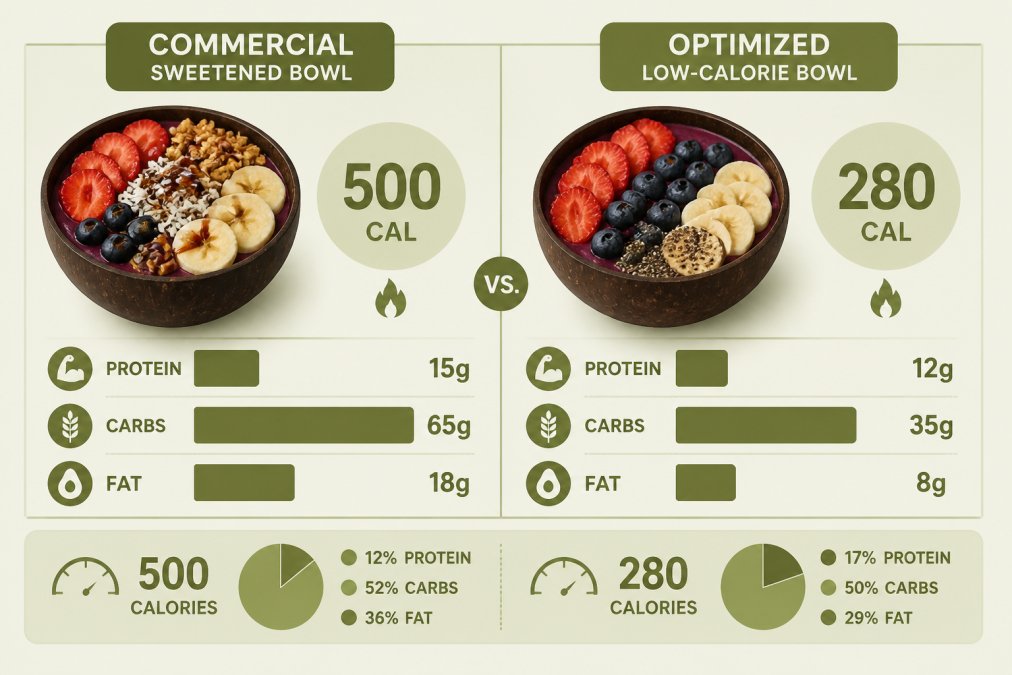
Start with 1 cup unsweetened açai base blended with 1/4 cup liquid. Add 1/2 cup Greek yogurt, 1/4 cup rolled oats, 1 tbsp raw almond butter, 1/4 cup fresh berries, and 1 tbsp chia seeds. This delivers roughly 300 calories, 15g protein, 35g carbs, and 10g fat, a balanced profile that supports satiety and weight loss.
Timing and Frequency for Sustainable Weight Management
Eat an açai bowl when it fits your caloric budget. Timing matters less than total daily intake, but many people find that eating a protein-rich bowl in the morning or post-workout supports energy and recovery.
| Component | Standard Commercial Bowl | Optimized for Weight Loss |
|---|---|---|
| Base | Sweetened açai puree | Unsweetened açai |
| Protein | 5-8g | 12-15g |
| Sugar | 40-55g | 15-20g |
| Calories | 450-550 | 280-350 |
| Fiber | 3-4g | 8-10g |
| Satiety | 2-3 hours | 4-5 hours |
Frequently Asked Questions
How many calories are typically in an açai bowl?
A standard commercial açai bowl ranges from 400 to 600 calories, though some reach 800+ when granola, honey, and sweetened bases are included. The base itself (açai puree blended with juice or yogurt) accounts for 200-300 calories. Toppings like granola, honey drizzle, and coconut add 200-400 calories. To control caloric density, choose unsweetened açai, measure toppings, and prioritize protein-rich additions like Greek yogurt or nuts for satiety.
Is açai naturally high in sugar, and how does it affect weight loss?
Unsweetened açai berries contain natural sugars but are nutrient-dense and high in dietary fiber and antioxidants. The problem is that commercial bowls often add sweetened bases (juice, sweetened yogurt) and toppings like honey and granola, which spike blood sugar and insulin response. This glycemic load can undermine weight loss by increasing hunger and energy crashes. Choosing unsweetened açai bases and whole-food toppings keeps blood sugar stable and supports metabolic health.
Can I eat an açai bowl regularly and still lose weight?
Yes, but frequency and composition matter. Eating an açai bowl 2-3 times per week is sustainable if you control portions and toppings. The key is treating it as a balanced meal (not dessert) by ensuring adequate protein and healthy fats for satiety, limiting added sugars to under 15 grams, and staying within your daily caloric surplus for weight loss. Tracking the exact calories and macronutrients using tools like MyFitnessPal helps ensure consistency.
What are the best toppings for a weight-loss-friendly açai bowl?
Focus on whole foods that boost satiety: unsweetened nuts (almonds, walnuts), seeds (chia, flax), Greek yogurt for protein, fresh berries for fiber, and a small drizzle of raw honey or almond butter. Avoid processed granola, chocolate chips, and sweetened coconut. A balanced bowl should deliver 8-12 grams of protein, 5+ grams of fiber, and healthy fats to keep you full for 3-4 hours, making it a genuine meal rather than a calorie-dense snack.