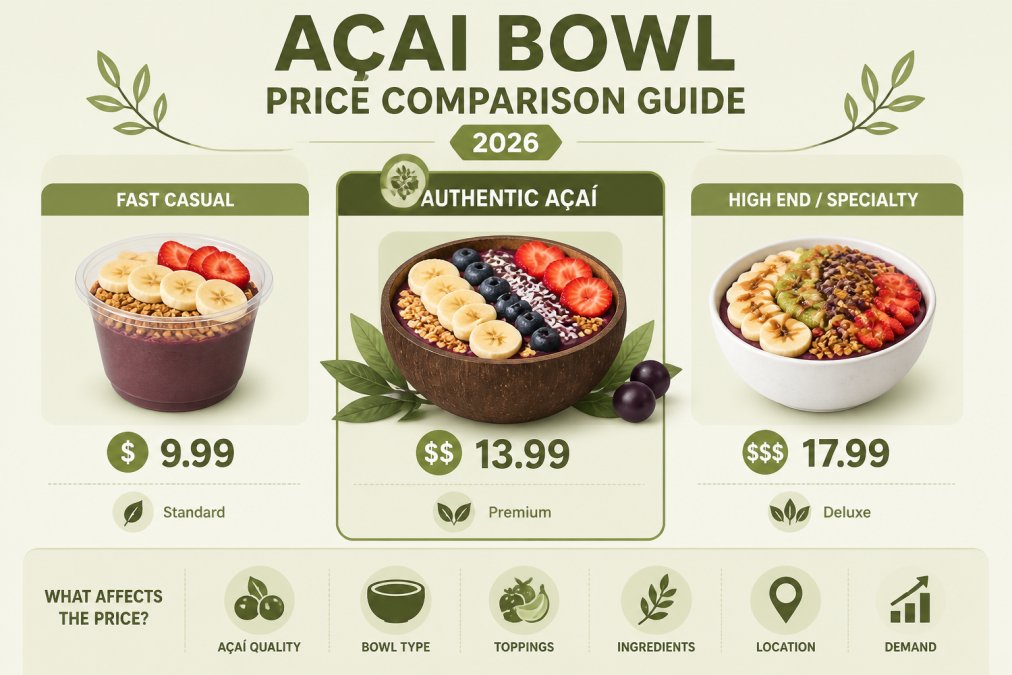
 comparison
Açai Bowl Price Comparison Guide 2026
Table of Contents
- Average Açai Bowl Pricing Across Options
- Comparison Table: Retail vs. DIY vs. Restaurant Bowls
- What Makes the Best Açai Bowls Worth the Price
- Factors Influencing Açai Bowl Pricing
- DIY vs. Store-Bought: A Cost Breakdown
- How to Price Smoothie Bowls for Profit
- Premium Ingredients and Nutritional Value Per Dollar
- Conclusion
Last Updated: August 27, 2026
Average Açai Bowl Pricing Across Options
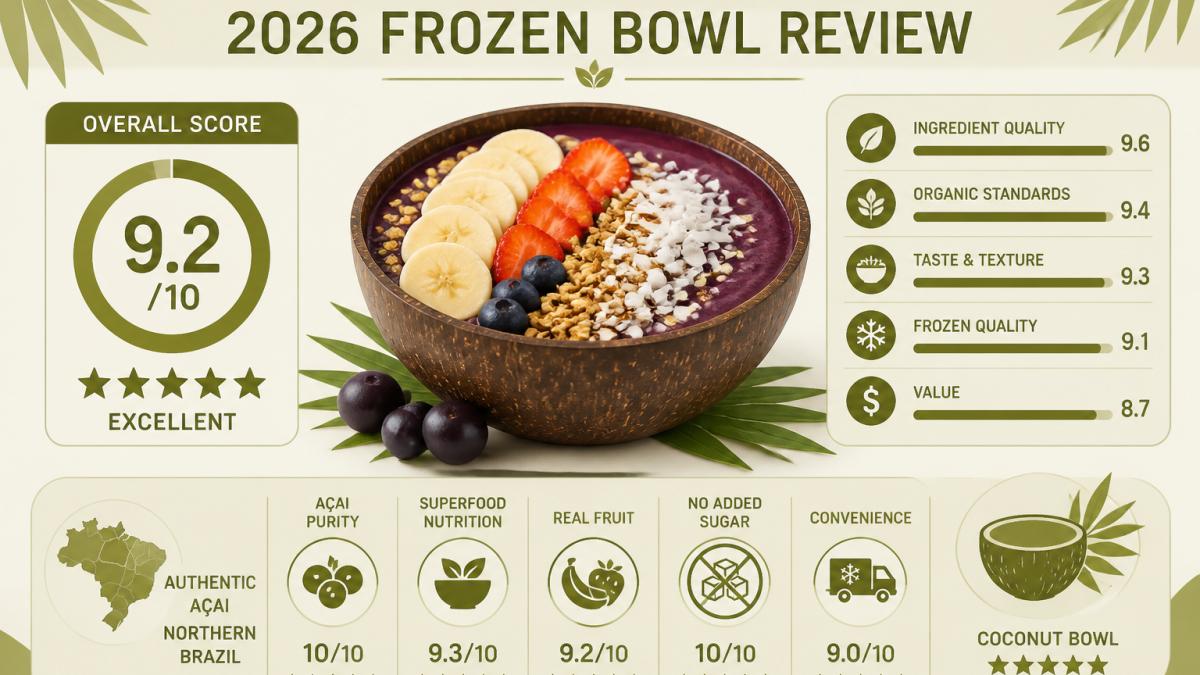
Açai bowl prices vary dramatically depending on where you source it, what goes into it, and how much you value convenience versus customization. At a typical café or juice bar, prepared açai bowls come ready-to-eat with pre-selected toppings like granola, fresh fruit, and coconut. World Green Açai specializes in authentic Brazilian-style bowls made with real, fresh açai in coconut bowls, we are the only place in California selling authentic açaí from Northern Brazil, which affects both the final product and the price you pay.
If you're buying frozen açai packets to make at home, the per-serving cost drops significantly. A four-pack of unsweetened organic açai typically costs between $4 and $6, bringing your cost per serving to around $1 to $1.50 before toppings. Once you factor in granola, fresh berries, nuts, and other toppings, your DIY bowl might land between $6 and $10 per serving, still less than a café but requiring your time and effort.
Comparison Table: Retail vs. DIY vs. Restaurant Bowls
| Option | Cost Per Serving | Prep Time | Ingredient Quality | Customization | Best For |
|---|---|---|---|---|---|
| Restaurant/Café Bowl | Varies | 0 minutes | Premium (fresh or high-quality frozen) | Limited to menu options | Convenience, consistent quality, authentic preparation |
| Retail Frozen Packets | $1-$1.50 (açai only) | 5-10 minutes | Good (organic certified options available) | Full control over toppings | Budget-conscious, home enthusiasts, bulk prep |
| DIY with Toppings | $6-$10 total | 10-15 minutes | Depends on your choices | Complete customization | Health-focused, dietary restrictions, experimentation |
| Wholesale Bulk Purchase | $0.80-$1.20 per serving | Varies | High (commercial-grade quality) | Depends on supplier | Restaurants, cafés, high-volume home use |
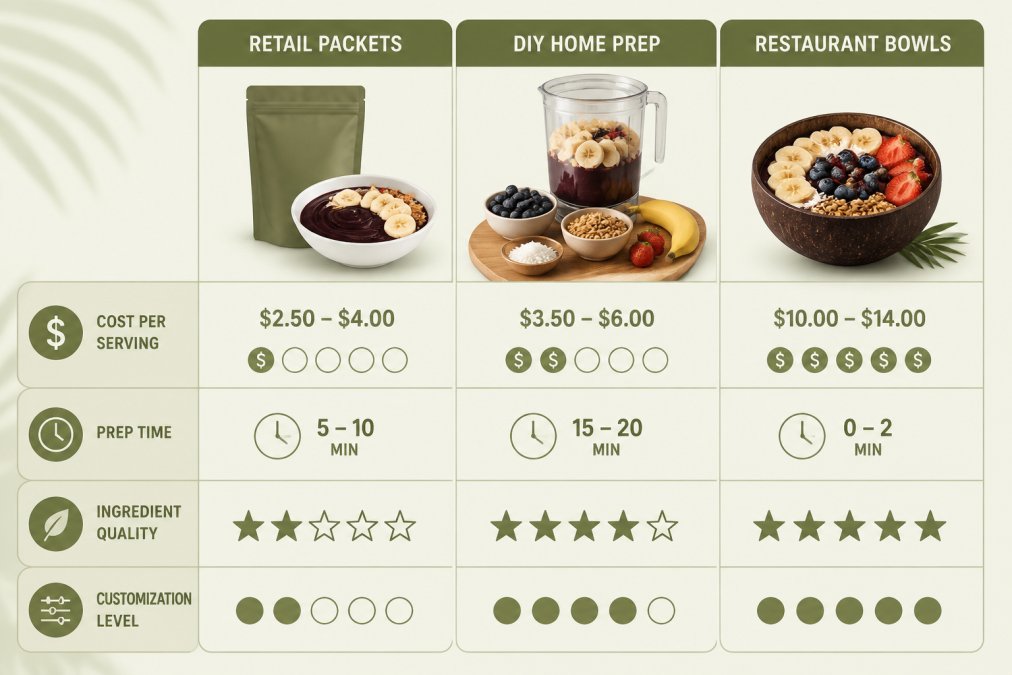
Restaurant bowls aren't just paying for açai, you're paying for convenience, professional preparation, and consistency. DIY options make sense if you have time and want to control every ingredient, especially if you're making multiple bowls weekly or have specific dietary needs.
What Makes the Best Açai Bowls Worth the Price
Not all açai is created equal, and understanding the differences explains why some bowls cost more and why that premium can be justified.
Organic Certification and Ingredient Quality
Organic certification means the açai was grown without synthetic pesticides, herbicides, or fertilizers, with supply chain verification. For a product from the Amazon region, that certification provides real assurance. Premium suppliers source directly from specific regions in Northern Brazil, which affects flavor profile and environmental impact. This direct sourcing often means higher costs because berries are fresher, the supply chain is shorter, and growers are paid fairly for quality fruit.
The taste difference is real. Organic, freshly-sourced açai has deeper berry flavor with subtle earthiness. Conventional or lower-quality frozen açai can taste flat or overly sweet, especially if blended with added sugars or stored for extended periods.
Fresh vs. Freeze-Dried Açai Puree
Fresh-frozen açai puree costs more than freeze-dried powder for good reasons (peer-reviewed research). Fresh-frozen açai is harvested, processed quickly to preserve nutrients, and frozen at peak ripeness. When blended, it creates naturally thick, creamy texture requiring minimal added liquid. Freeze-dried powder, by contrast, concentrates some flavors but can taste more intense or artificial. Reconstituting freeze-dried powder often requires added sweeteners or thickeners.
A restaurant using freeze-dried powder might spend $0.50 to $0.80 per bowl on the açai base. A café using fresh-frozen puree might spend $1.50 to $2.50 for the same portion. That difference gets passed to you in the menu price.
Factors Influencing Açai Bowl Pricing
Regional Variation and Labor Costs
Geography shapes acai bowl price in ways unrelated to bowl quality. Labor costs in different regions vary significantly. A café in a high-rent area with higher wage requirements will charge more for the same product than one in a lower-cost region. Transportation and supply chain efficiency also matter, areas with strong local food distribution networks tend to have more competitive pricing. Remote areas may see markups of 30% to 50% above urban centers simply because the supply chain is less developed.
Toppings and Ingredient Markup
The açai itself is only part of the bowl. Toppings, granola, fresh berries, nuts, and seeds add both cost and value. Premium, small-batch granola costs $8 to $12 per pound wholesale. A typical bowl uses 2 to 3 ounces, working out to $1 to $2.25 per bowl just for granola. Fresh berries add another $0.75 to $1.50, depending on season and sourcing. Nuts and seeds add $0.50 to $1.00.
This is why restaurants can't compete on price if using premium toppings. Total ingredient cost for a high-quality bowl can easily reach $4 to $6 before labor, overhead, and profit margin. A budget-conscious café using cheaper granola and frozen berries might hit $2.50 to $3.00 in ingredient cost, which is why their bowls are cheaper but taste different.
DIY vs. Store-Bought: A Cost Breakdown
Making your own açai bowls at home reveals exactly where the money goes in a prepared bowl.
DIY Cost Breakdown (per bowl):
- Frozen açai puree: $1.00-$1.50
- Granola: $0.50-$1.00
- Fresh berries: $1.00-$1.50
- Nuts and seeds: $0.50-$0.75
- Honey or sweetener: $0.25
- Milk or alternative liquid: $0.25
- Total: $4.00-$6.50 per bowl
Store-Bought Cost Breakdown (estimated):
- Ingredients: $4.00-$5.00
- Labor (5-10 minutes): Varies
- Overhead (rent, utilities, equipment): Varies
- Profit margin: Varies
- Total: Pricing depends on quantity, dates, and delivery. Check World Green Açai's website for current prices.
When you buy a bowl, you're paying for labor, overhead, and profit on top of ingredients. Whether that's worth it depends on your situation. If buying one bowl during a workday, convenience justifies the premium. If making three bowls weekly, DIY saves significant money.
The hidden cost of DIY is time and consistency. You need to plan ahead, keep frozen açai in stock, and develop blending technique. Many home cooks struggle with texture, the bowl turns out too icy or too thin. Professional setups have optimized equipment and technique, which is part of what you're paying for.
How to Price Smoothie Bowls for Profit
If running a café, restaurant, or food business considering adding açai bowls to your menu, pricing strategy determines whether they're a profit driver or money-loser.
Food Cost Percentage and Markup Strategy
The food service industry targets a food cost percentage between 28% and 35%, with 30% being the sweet spot (sba.gov). For an açai bowl, if your total ingredient cost is $4.50, your menu price should be around $13 to $16 to hit that 30% target. Pricing below that margin eats into your ability to cover labor and overhead.
If your ingredient cost is $5.00 and you want a 30% food cost:
- Menu price = $5.00 ÷ 0.30 = $16.67
At that price, you have $11.67 left to cover labor, rent, equipment, utilities, packaging, credit card fees, and profit. For a small café, that's tight. For a high-volume operation, it works.
Overhead and Labor Cost Recovery
Beyond food cost, you need to recover overhead: rent, utilities, equipment, packaging, credit card processing fees (2-3% of sales), staff wages, insurance, and permits. A typical café might allocate $3 to $5 of overhead cost per bowl sold. In high-rent locations or with high labor costs, that number climbs to $5 to $7.
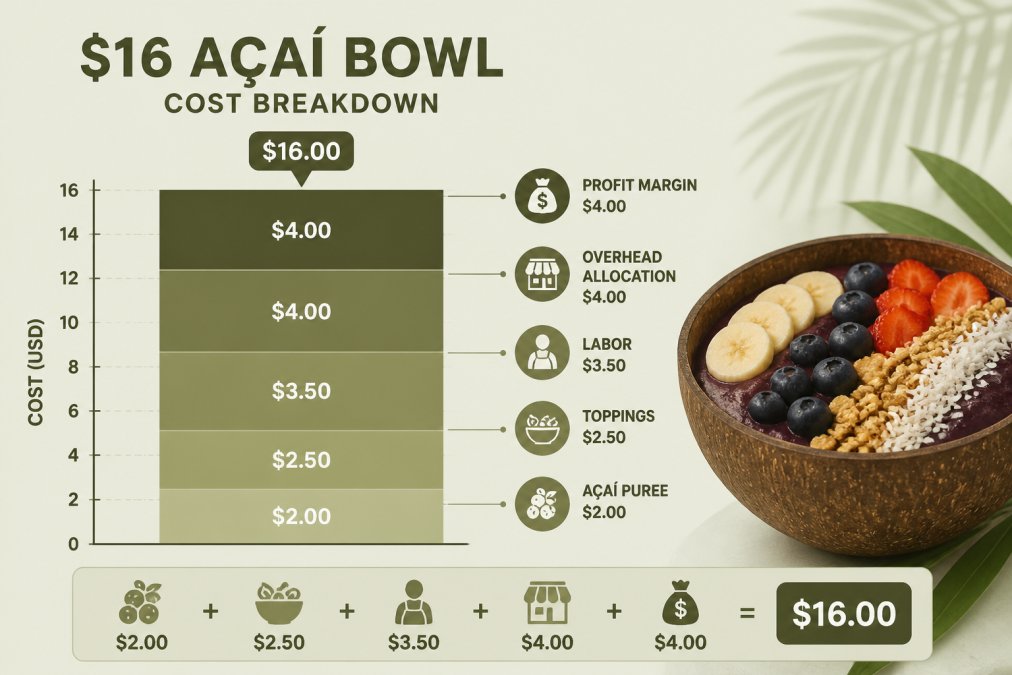
A healthy profit margin for food service is 10-15% of menu price. On a $16 bowl, you're aiming for $1.60 to $2.40 in actual profit. High-volume operations make money through volume, not per-unit margin.
Premium Ingredients and Nutritional Value Per Dollar
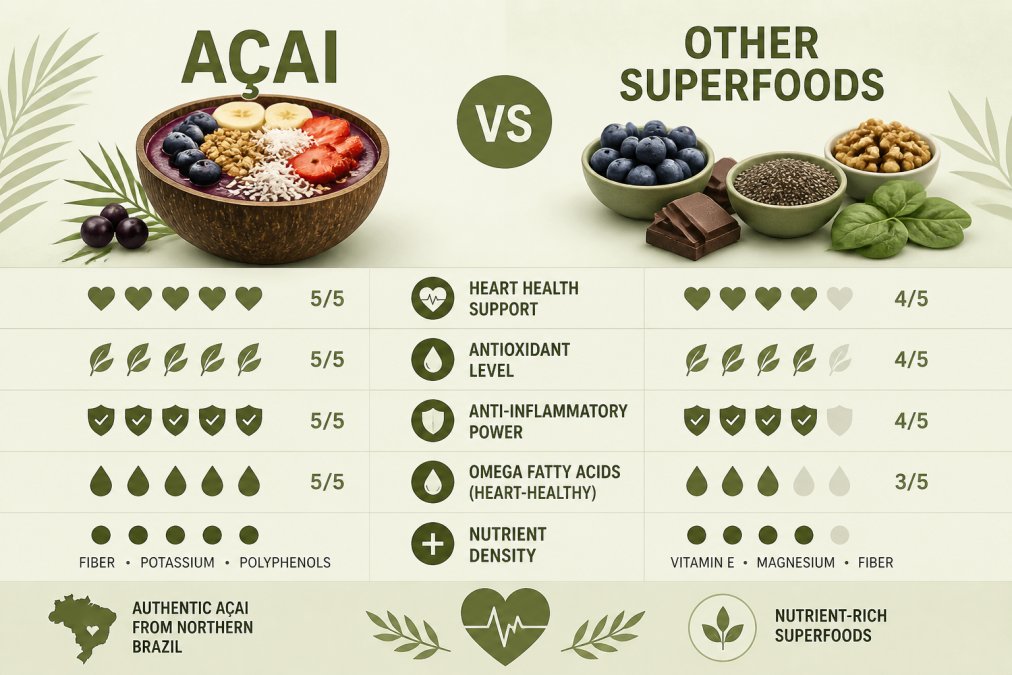
The açai bowl market has fractured into budget and premium segments solving different problems. Budget bowls use freeze-dried açai powder, bulk granola, and whatever fruit is cheapest. Premium bowls prioritize ingredient quality and authenticity. Fresh-frozen açai from specific Brazilian regions tastes and performs differently than freeze-dried powder. Premium granola uses real nuts and seeds. Fresh, often local berries replace frozen or canned options. Nutritional density is higher, with more antioxidants and better fat profiles.
A professional athlete or someone focused on recovery might find that superior nutrient profile justifies paying more. Someone grabbing quick lunch might reasonably choose the budget option. Neither choice is wrong, they reflect different priorities.
When evaluating acai bowl price and value, look at actual ingredients, not just appearance. A bowl that looks full but contains cheap granola and canned fruit isn't a bargain. A smaller-looking bowl with premium ingredients might deliver more nutritional value per dollar.
Conclusion
The acai bowl price you pay reflects real differences in sourcing, preparation, ingredient quality, and business economics. Budget bowls offer convenient, adequate nutrition at accessible prices. Premium bowls deliver superior flavor, texture, and nutritional density if you're willing to pay for it.
For busy professionals seeking authentic, high-quality bowls without the prep work, World Green Açai offers the best of both worlds: genuine Brazilian-style açai bowls made with fresh, organic berries in coconut bowls, we are the only place in California selling authentic açaí from Northern Brazil, available for quick online ordering through the mobile app. Skip the lines, get premium quality, and support a local business committed to real ingredients over shortcuts. Order online today and experience the difference that authentic açai makes.
Frequently Asked Questions
Q: What is the average cost of an açai bowl at a restaurant?
Restaurant-prepared açai bowls vary in price depending on location, ingredient quality, and topping selections. Authentic bowls made with fresh organic açai puree cost more than those using freeze-dried powder. Pricing varies by region and the establishment's overhead costs. Check local menus or order online to see current pricing in your area.
Q: Why do açai bowl prices vary so much between places?
Açai bowl pricing depends on several factors: the quality and source of the açai (fresh versus freeze-dried), whether ingredients are organic certified, regional labor costs, overhead expenses, and the variety and premium level of toppings offered. Restaurants in higher-cost areas charge more, and those using authentic Brazilian açai puree command premium prices compared to budget alternatives using powder-based products.
Q: How much does it cost to make an açai bowl at home?
Making açai bowls at home costs significantly less per serving than restaurant options. Retail frozen açai packets range from $4 to $6 per pack (serving 2-4 people), while organic bulk açai puree costs around $14 to $26 for multiple servings. Add toppings like granola, fresh fruit, and nuts, and your total cost per bowl typically falls between $3 and $8, depending on ingredient choices and whether you buy premium or budget-friendly toppings.
Q: Are organic açai bowls worth the higher price point?
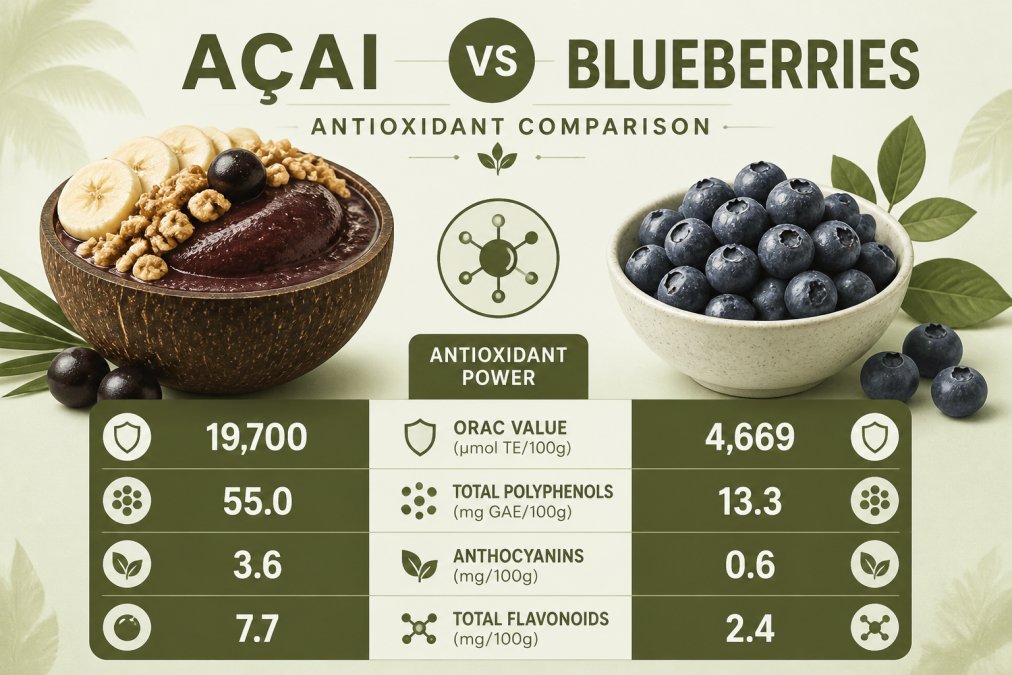
Organic açai bowls offer genuine nutritional and flavor advantages. Organic certification ensures no synthetic pesticides or additives, and fresh organic açai puree delivers superior taste and texture compared to freeze-dried alternatives. If you consume açai regularly or prioritize ingredient quality, the higher cost per serving justifies the investment in authentic, certified organic options that support sustainable sourcing practices.
This article was written using GrandRanker