 comparison
Açai vs Other Superfoods for Heart Health
Table of Contents
- Açai Versus Other Superfoods: A Heart-Health Comparison
- Nutritional Profiles Side by Side
- Antioxidant Content of Açai vs Blueberries
- Cardiovascular Benefits: Where Each Superfood Wins
- Best Superfoods for Cardiovascular Wellness
- How to Choose High-Quality Açai Bowls
- Preparation Methods and Heart Health Impact
- Frequently Asked Questions
Last Updated: September 26, 2026
Açai Versus Other Superfoods: A Heart-Health Comparison
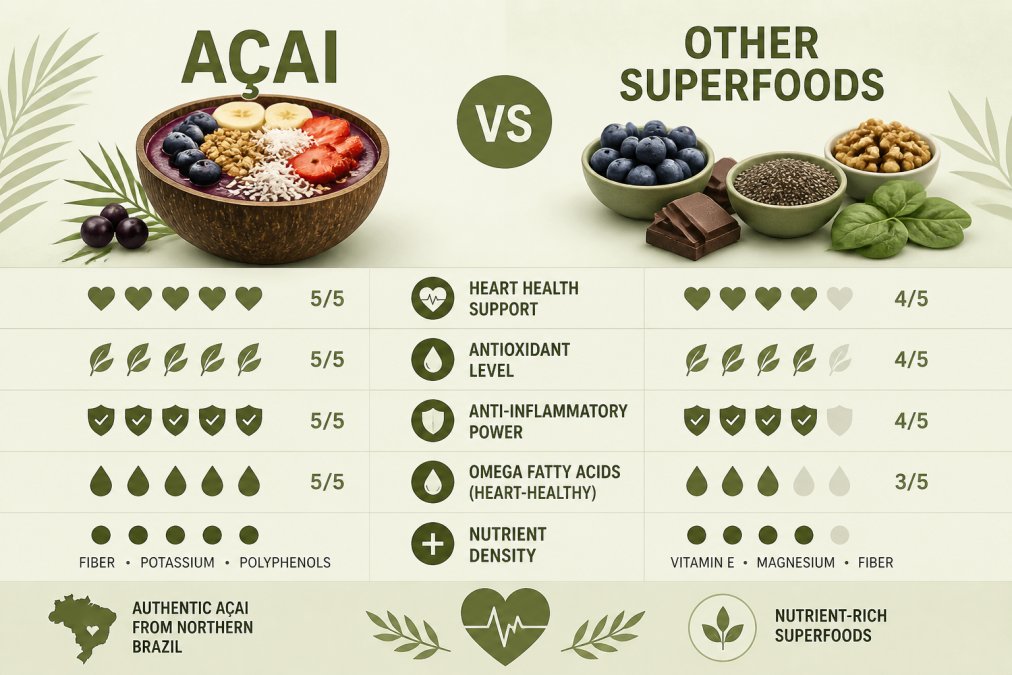
Açai stands out for cardiovascular wellness, but it's not the only player worth considering. Açai is rich in polyphenols and anthocyanins, but blueberries, pomegranates, and olive oil each bring distinct strengths. The question isn't which superfood is universally best, but which fits your specific health goals.
Nutritional Profiles Side by Side
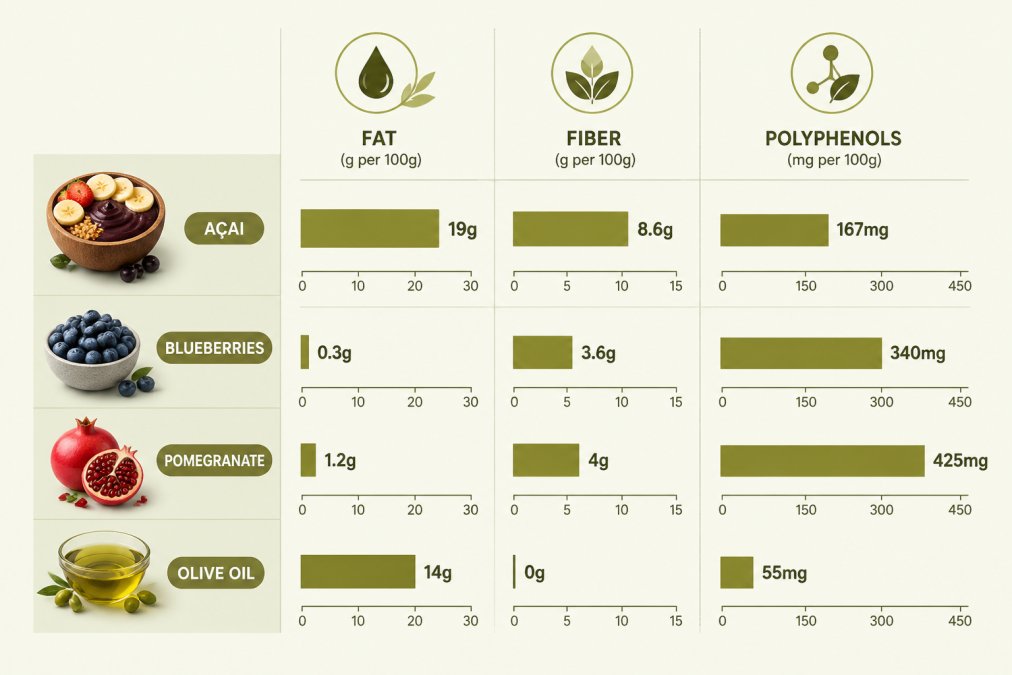
| Superfood | Fat (g/100g) | Fiber (g/100g) | Polyphenols (mg/100g) | Key Benefit |
|---|---|---|---|---|
| Açai | 19 | 8.6 | 167 | Balanced healthy fats + antioxidants |
| Blueberries | 0.3 | 3.6 | 340 | Anthocyanin density |
| Pomegranate | 1.2 | 4 | 425 | Highest polyphenol content |
| Olive Oil | 14 | 0 | 55 | Oleic acid (monounsaturated) |
| Leafy Greens | 0.4 | 2.2 | 180 | Nitrates + polyphenols |
Antioxidant Content of Açai vs Blueberries
Absorption and bioavailability differences:
Blueberries deliver faster, concentrated antioxidant activity; açai provides longer-lasting coverage. Neither is objectively superior, they work on different timescales.
The fat-soluble antioxidant advantage:
Why ORAC scores mislead:
ORAC (Oxygen Radical Absorbance Capacity) measures how well a food neutralizes free radicals in a test tube.
Cardiovascular Benefits: Where Each Superfood Wins
Açai excels at supporting healthy lipid profiles. The oleic acid and linoleic acid content work to maintain balanced cholesterol levels. Research from Harvard Health Publishing's guidance on heart-healthy superfoods emphasizes the role of monounsaturated and polyunsaturated fats in cardiovascular disease reduction. Açai's fat composition aligns with this evidence.
Blueberries target inflammation and blood pressure. Anthocyanins improve vascular function and endothelial health, with regular consumption associated with systolic blood pressure improvements and arterial flexibility.
Pomegranates focus on oxidative stress reduction. Their high polyphenol content, particularly punicalagins, addresses oxidative stress, a root driver of atherosclerosis.
Olive oil provides sustained monounsaturated fat intake. It delivers oleic acid consistently, supporting healthy cholesterol ratios and reducing serum lipid inflammation.
Leafy greens deliver nitrates for vascular health. Spinach and kale contain bioavailable nitrates that convert to nitric oxide, improving vascular function and blood pressure regulation.
If your cardiovascular concern is cholesterol management, açai versus other superfoods positions it as a strong choice. For blood pressure, blueberries or leafy greens are more targeted. For oxidative stress, pomegranate leads.
Best Superfoods for Cardiovascular Wellness
For daily consumption: Leafy greens form the foundation. Their nitrate content, low calorie density, and broad nutrient profile make them ideal for daily intake. Aim for 1-2 cups most days.
For antioxidant density: Blueberries and pomegranate take priority. A half-cup of blueberries or quarter-cup of pomegranate seeds delivers substantial anthocyanin or polyphenol intake without excess calories.
For balanced nutrition plus convenience: A properly prepared açai bowl, made with authentic berries from Northern Brazil and topped with nuts, seeds, and fresh fruit, combines healthy fats, fiber, and polyphenols in a single meal. You can order authentic açai bowls through the World Green Açai app, Square, or Kyoo for consistent quality without preparation hassle.
For cooking and sustained intake: Olive oil should be your default cooking fat for dressings, low-heat cooking, and finishing dishes. Its oleic acid supports cardiovascular health.
According to AARP's heart-healthy food guide, the most effective cardiovascular diet combines diverse superfoods rather than relying on a single "miracle" option. This aligns with the evidence: açai versus other superfoods isn't a zero-sum choice. The goal is strategic combination.
How to Choose High-Quality Açai Bowls
If you incorporate açai into your heart-health strategy, quality matters enormously. Many commercial versions undermine cardiovascular benefits by adding excess sugars and processed toppings.
Look for authentic sourcing. Authentic açai comes from Northern Brazil. World Green Açai sources directly from this region, ensuring real fruit rather than blends or reconstituted powders.
Check the base ingredients. A quality bowl starts with pure frozen açai puree. Avoid products listing "açai concentrate," "açai blend," or added sugars. Sweetness should come from fresh fruit toppings and minimal honey, not the açai itself.
Evaluate the toppings strategically. Most commercial bowls sabotage cardiovascular benefits with granola, chocolate chips, and sweetened coconut. Instead, prioritize:
- Nuts and seeds (almonds, walnuts, chia seeds) for omega-3 and omega-6 fatty acids
- Fresh berries for additional anthocyanins and polyphenols
- Unsweetened coconut for fiber
- Minimal honey or maple syrup if needed
Verify preparation methods. A properly made bowl has sorbet-like consistency, thick enough to eat with a spoon, not thin like a smoothie. This indicates proper fruit-to-liquid ratio and provides sustained satiety and steady nutrient absorption.
Preparation Methods and Heart Health Impact
Preparation method affects cardiovascular impact far more than most guides acknowledge. For açai, it determines whether you're eating a heart-health tool or a sugar-laden dessert.
The sugar trap: why most commercial açai bowls undermine cardiovascular benefits
Sourcing and processing: how authenticity affects nutrient retention
Authentic açai from Northern Brazil is harvested, processed into frozen pulp within hours, and shipped frozen to preserve polyphenol and anthocyanin content.
Authentic frozen açai pulp from Northern Brazil undergoes minimal processing and retains maximum polyphenol density.
Fresh versus frozen: no meaningful difference in cardiovascular impact
Frozen açai retains polyphenol and anthocyanin content as effectively as fresh versions. Frozen authentic bowls deliver the same benefits as fresh berries, with year-round availability and consistency.
Texture and consumption rate: how preparation affects nutrient absorption
Topping strategy: how to maximize cardiovascular benefit
Toppings determine whether your bowl delivers cardiovascular protection or undermines it. Prioritize toppings that reinforce heart-health:
- Nuts and seeds (almonds, walnuts, chia seeds, flaxseeds) deliver omega-3 and omega-6 fatty acids, fiber, and polyphenols.
- Fresh berries add anthocyanins and polyphenols without added sugar.
- Unsweetened coconut provides fiber and medium-chain triglycerides.
- Honey or maple syrup (minimal, 1 teaspoon or less) if needed.
This topping strategy transforms your bowl from a sugar-laden treat into a nutrient-dense meal that delivers measurable cardiovascular benefits.
Consistency of intake: how frequency determines real-world cardiovascular impact
Frequently Asked Questions
Is açai actually better for your heart than blueberries?
Açai and blueberries both support heart health, but through different mechanisms. Açai contains oleic acid, a monounsaturated fat. Blueberries excel in anthocyanins. Neither is universally 'better', both belong in a heart-healthy diet.
What makes high-quality açai bowls different from frozen yogurt cups?
Authentic açai bowls start with real açai puree, sourced from Northern Brazil, which delivers genuine polyphenols. Quality matters: real organic açai contains no added sugars and preserves phytonutrients. Check ingredient lists, genuine bowls list 'açai puree' as the primary ingredient, not yogurt or sweeteners. Authentic preparations maintain the thick, creamy texture without ice or fillers.
Can eating açai regularly improve my cardiovascular markers?
Regular açai consumption may support heart health through multiple pathways: polyphenols reduce free radicals and oxidative stress, healthy fats improve lipid profiles, and fiber supports metabolic health. Consistency matters more than frequency, incorporating açai 2-3 times weekly as part of a broader heart-healthy diet yields better results than occasional consumption. Pair it with other superfoods like leafy greens and olive oil for synergistic cardiovascular benefits.
Are there superfoods that work better than açai for lowering cholesterol?
Olive oil and nuts deliver plant sterols for cholesterol regulation, while leafy greens like spinach provide lutein for arterial health. Açai contains oleic acid and omega-9 fatty acids. For cholesterol specifically, combine açai with olive oil-based dressings and leafy greens. Açai's strength lies in antioxidant density and inflammation reduction, which indirectly support cardiovascular health by protecting against arterial damage.