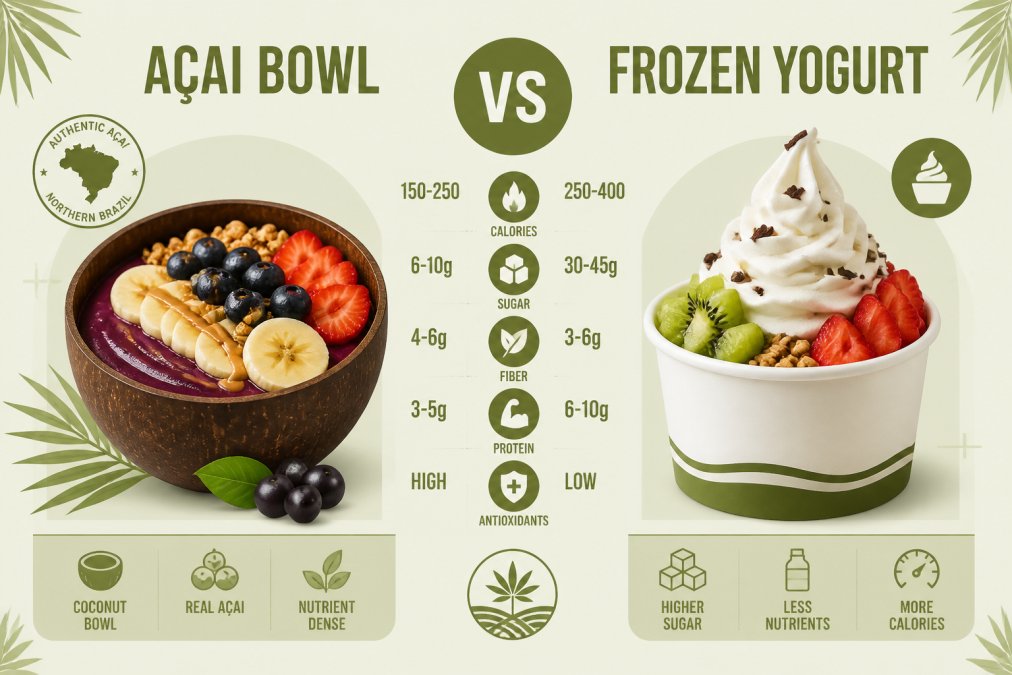
 comparison
Acai Bowl vs Frozen Yogurt: Which Is Healthier?
Table of Contents
- Acai Bowl vs Frozen Yogurt: What You're Actually Eating
- Acai Bowl Nutritional Benefits: A Closer Look
- Frozen Yogurt Sugar Content: What the Numbers Show
- Head-to-Head Comparison: Acai Bowl vs Frozen Yogurt
- How to Make an Acai Bowl at Home
- Which One Should You Choose?
- Conclusion
Last Updated: August 7, 2026
Acai Bowl vs Frozen Yogurt: What You're Actually Eating
The acai bowl vs frozen yogurt debate comes up constantly among health-conscious eaters, and the answer is rarely as simple as "one is healthy and one isn't." Both options look similar on the surface, cold, creamy, topped with fruit and granola, but their base ingredients, macronutrients, and impact on your body tell very different stories. Below, we break down exactly what goes into each and how to choose based on your actual health goals.
What Goes Into an Acai Bowl
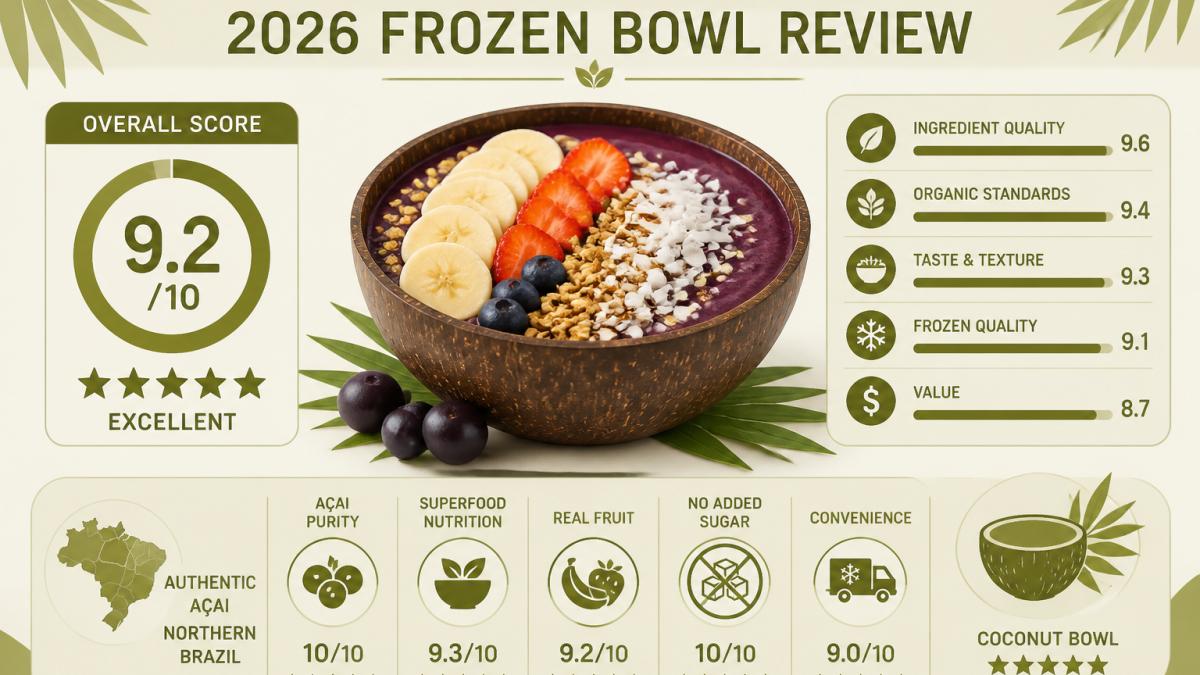
An acai bowl starts with a base of blended frozen açaí berries, a fruit native to the Amazon rainforest in Brazil. The berries are blended into a thick, smooth consistency, often with a small amount of liquid to aid blending. Authentic açaí uses the whole berry, preserving its natural antioxidants, fiber content, and healthy fats. Some commercial versions use freeze-dried powder or heavily sweetened purees, which significantly reduces nutritional value and increases added sugar.
Common toppings include fresh fruit, granola, honey or agave, nut butters, coconut flakes, chia seeds, and hemp hearts. The toppings significantly affect caloric density and sugar content.
What Goes Into Frozen Yogurt
Frozen yogurt is a frozen dessert made from cultured dairy milk with lower fat content than ice cream but often higher sugar to compensate. The nutritional profile varies widely depending on format. Self-serve froyo is priced by weight, and toppings can easily double the sugar content. Nonfat and low-fat versions often contain more added sugar than full-fat counterparts. At home, you have more control: the Cuisinart ICE-21 frozen yogurt maker lets you make froyo with plain Greek yogurt and minimal added sugar.
The key variables are fat content, type and quantity of sweetener, whether live cultures survive freezing, and topping choices.
Acai Bowl Nutritional Benefits: A Closer Look
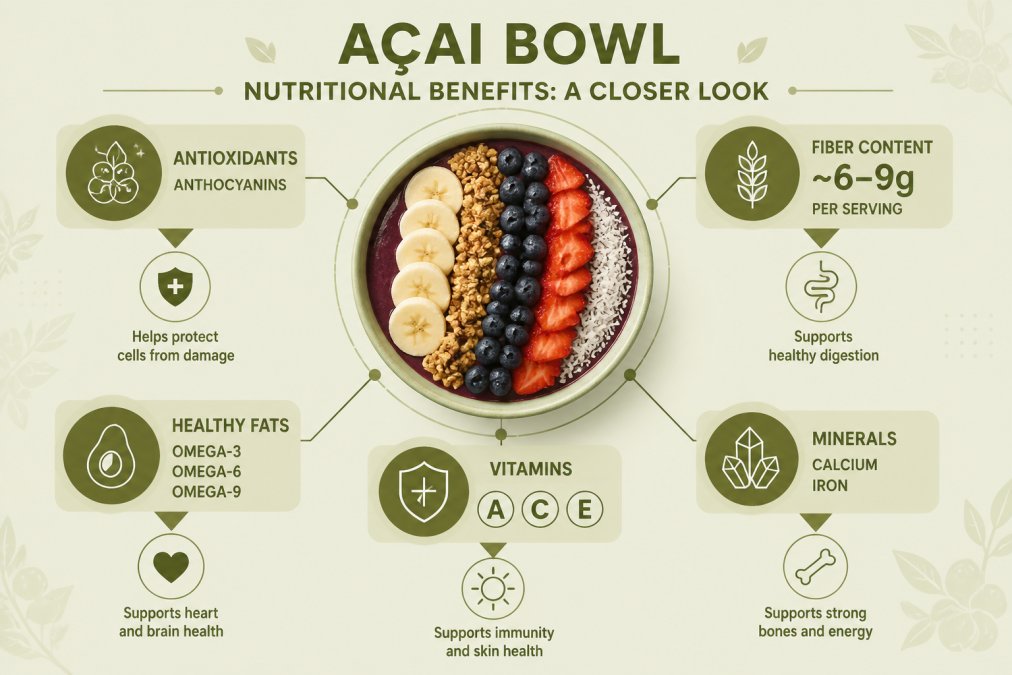
An acai bowl built on a quality base is one of the most nutrient-dense breakfast options available, combining antioxidants, fiber, healthy fats, and micronutrients in a single serving.
Antioxidants, Fiber, and Healthy Fats
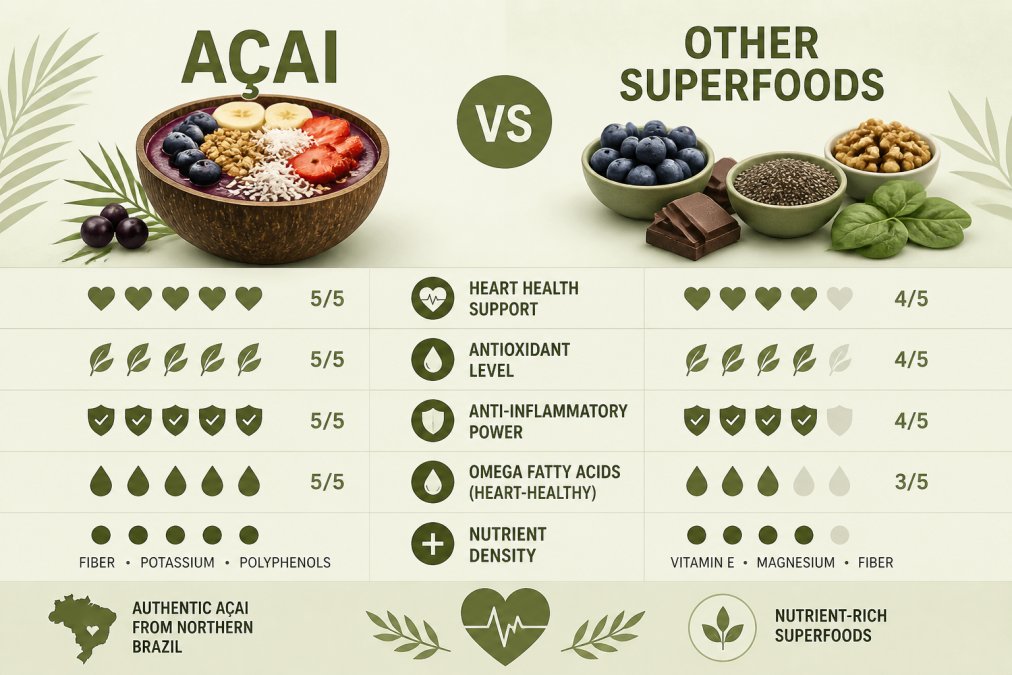
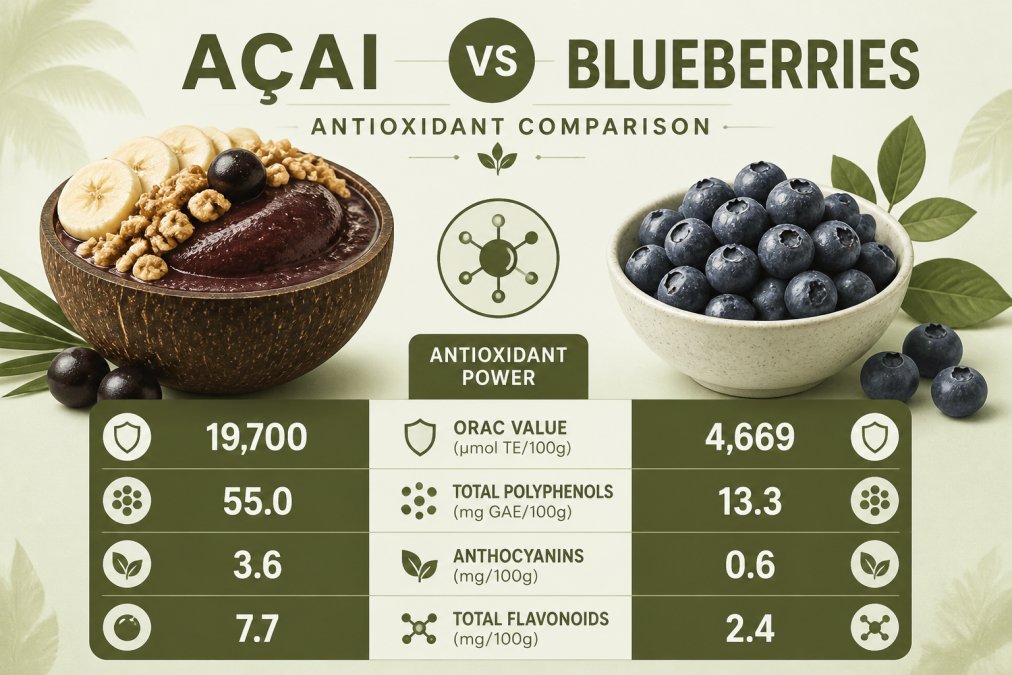
The açaí berry's most well-documented property is its antioxidant concentration. Açaí contains anthocyanins, the same compounds found in blueberries and red wine, associated with reducing oxidative stress and supporting cardiovascular health. According to the USDA Agricultural Research Service's phytochemical database, açaí berries rank among the highest in antioxidant content of commonly consumed fruits.
The fiber content in a well-constructed acai bowl is meaningful. The açaí base and toppings like granola and chia seeds contribute significantly. The Dietary Guidelines for Americans recommend 25-38 grams of fiber per day for adults, and a well-topped acai bowl can contribute a substantial portion.
Açaí contains omega-3, omega-6, and omega-9 fatty acids, which support brain function and help reduce LDL cholesterol. This fat content gives açaí a lower glycemic index than many fruit-based options: the fats slow glucose absorption and prevent rapid sugar spikes.
Caloric Density and Satiety
A fully loaded acai bowl can range from moderate to high in calories depending on portion size and toppings. The key distinction is the satiety index: because the açaí base contains fiber and fat, the calories come with a fullness signal that many lighter foods don't provide. Frozen yogurt tends to have a lower caloric density but a weaker satiety response. The high sugar content triggers an insulin response, and many people find themselves hungry within an hour or two. A quality acai bowl keeps you satisfied longer, which matters if you're using it as a lunch replacement or post-workout meal.
Frozen Yogurt Sugar Content: What the Numbers Show
Most commercial frozen yogurt contains substantial added sugar beyond the naturally occurring lactose from the dairy base. The glycemic index of sweetened frozen yogurt is meaningfully higher than that of a quality açaí base, causing a rapid sugar spike followed by a crash.
Frozen yogurt that contains live and active cultures provides probiotics, which support gut microbiome health. The National Institutes of Health Office of Dietary Supplements notes that probiotics may help maintain digestive health and immune function. Not all frozen yogurts retain viable cultures after freezing. Look for products with the National Yogurt Association's "Live and Active Cultures" seal to confirm the probiotics survived.
The self-serve froyo model is where sugar content most easily spirals. Toppings like sweetened syrups and gummy candies can add 20-30 grams of sugar on top of the base. A plain nonfat froyo with fresh fruit is a genuinely different product from a loaded self-serve cup.
Head-to-Head Comparison: Acai Bowl vs Frozen Yogurt
A quality açaí bowl made with authentic, non-freeze-dried berries and balanced toppings is nutritionally superior to commercial froyo loaded with added sugar. A plain, probiotic-rich frozen yogurt with fresh fruit is a reasonable choice in its own right.
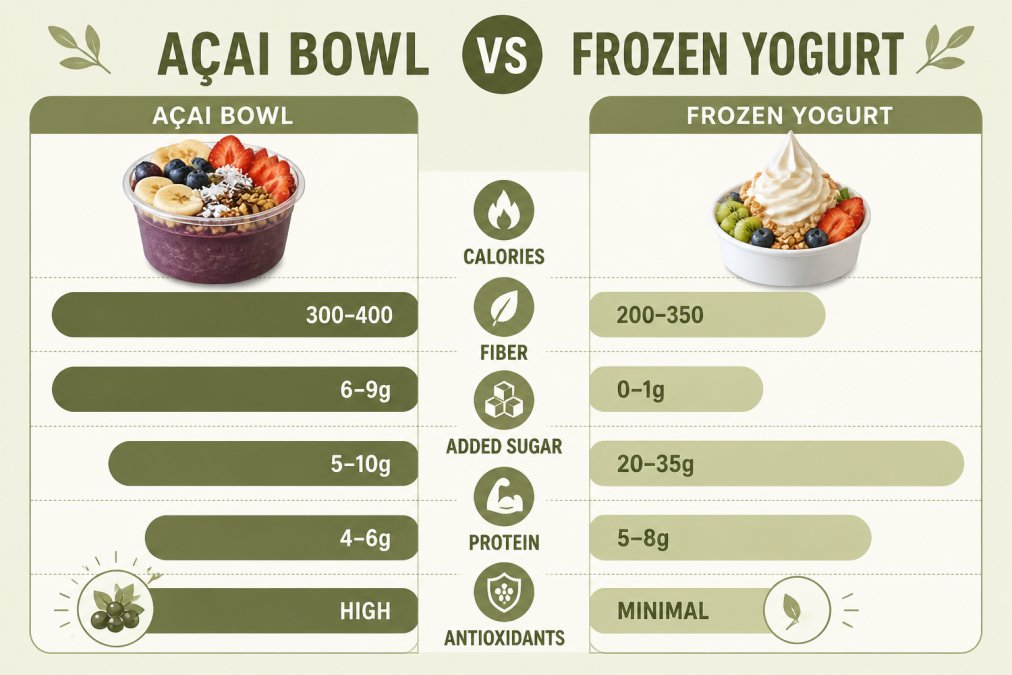
| Category | Acai Bowl | Frozen Yogurt | Advantage |
|---|---|---|---|
| Antioxidant content | High (anthocyanins) | Minimal | Acai Bowl |
| Fiber content | 6-9g per serving | 0-1g per serving | Acai Bowl |
| Added sugar | 5-10g (base only) | 20-35g typical | Acai Bowl |
| Probiotics | None in base | Present (if active cultures) | Frozen Yogurt |
| Healthy fats | Omega-3, 6, 9 | Low | Acai Bowl |
| LDL cholesterol impact | May reduce | Neutral to negative | Acai Bowl |
| Glycemic index | Lower | Higher | Acai Bowl |
| Dairy-free/vegan | Yes (typically) | No (dairy base) | Acai Bowl |
| Protein content | 4-6g | 5-8g | Frozen Yogurt |
| Satiety | High | Moderate | Acai Bowl |
Texture, Toppings, and Customization
A properly made acai bowl has a thick, dense consistency closer to soft-serve ice cream than a smoothie. Frozen yogurt has a lighter, airier texture due to the churning process. An acai bowl with granola, fresh fruit, and nut butter is a complete meal. Frozen yogurt with the same toppings is a dessert with extras.
For vegan-friendly and dairy-free eaters, acai bowls are the clear choice. Authentic açaí is naturally plant-based, and most toppings can be made vegan without compromise.
Cost-Per-Serving and Preparation Time
Making an acai bowl at home takes roughly 5-10 minutes with a high-powered blender and frozen açaí packs. Brands like Sambazon offer certified organic and fair-trade açaí frozen packs widely available in US grocery stores.
Homemade frozen yogurt requires more planning. A machine like the Cuisinart ICE-21 produces quality results, but the freezer bowl needs 16-24 hours of pre-freezing before each batch. Self-serve froyo shops solve the convenience problem but add back the added sugar and topping temptation.
Environmental Impact and Sourcing
Açaí production, when done responsibly, is one of the more sustainable fruit industries. The açaí palm grows naturally in the Amazon floodplain and is harvested without clearing forest. Ethical sourcing practices support Amazonian communities while preserving the ecosystem.
Dairy production carries a higher environmental footprint per serving. Greenhouse gas emissions, water usage, and land use for dairy farming are all meaningfully higher than for plant-based alternatives. Non-GMO and organic certification is more common in the acai bowl category, partly because of the smaller-scale, specialty nature of quality açaí sourcing.
How to Make an Acai Bowl at Home
Making an acai bowl at home is straightforward once you understand the two variables that most people get wrong: liquid ratio and blending technique.
What you'll need:
- 2 frozen açaí packs (100g each), preferably unsweetened and organic
- 2-3 tablespoons of liquid (almond milk, coconut water, or oat milk)
- A high-powered blender or food processor
- Toppings of your choice
Step 1: Freeze your açaí packs solid. Run the sealed pack under warm water for 10-15 seconds to crack the frozen block into pieces.
Step 2: Use as little liquid as possible. Too much liquid turns your bowl into a smoothie. Start with 2 tablespoons and add more only if the blender stalls. The goal is a thick, spoonable consistency.
Step 3: Blend in short pulses. Use a tamper if your blender has one. Blend until smooth but stop before the mixture warms up and loses its thick consistency.
Step 4: Pour immediately and add toppings. The base will soften quickly at room temperature. Add granola first, then fresh fruit, seeds, and any drizzle last.
Topping combinations that work:
- Classic: banana, strawberry, granola, honey
- Recovery: banana, peanut butter, hemp seeds, granola
- Tropical: mango, pineapple, coconut flakes, lime zest
- Antioxidant boost: blueberries, goji berries, chia seeds, almond butter
The entire process takes under 10 minutes. According to the Academy of Nutrition and Dietetics, whole food-based breakfasts that combine fiber, healthy fats, and moderate protein are associated with better sustained energy and reduced mid-morning hunger.
Which One Should You Choose?
Choose an acai bowl if your priority is antioxidant intake, fiber content, sustained energy, or a dairy-free option. The nutritional profile of a quality açaí base is stronger across most metrics: lower glycemic index, higher fiber, meaningful healthy fats, and a satiety index that keeps you full longer.
Choose frozen yogurt if your priority is probiotic content and you're selecting a product with verified live and active cultures. Plain, low-sugar frozen yogurt is a legitimate source of gut-supporting bacteria and a reasonable choice as a light dessert for those who tolerate dairy well.
The scenario where frozen yogurt loses most clearly: the self-serve model with unlimited toppings. The combination of high added sugar in the base and calorie-dense toppings makes it hard to call a health food.
A quick decision framework:
| Your Goal | Better Choice |
|---|---|
| Post-workout recovery | Acai Bowl |
| Gut health / probiotics | Frozen Yogurt (with live cultures) |
| Dairy-free / vegan | Acai Bowl |
| Lower added sugar | Acai Bowl |
| Quick dessert | Frozen Yogurt |
| Sustained energy / satiety | Acai Bowl |
| Antioxidant intake | Acai Bowl |
The acai bowl vs frozen yogurt comparison ultimately comes down to what you're optimizing for. If you want a nutrient-dense, satisfying option that delivers genuine superfood benefits, a quality acai bowl made with authentic açaí is the stronger choice by most measures. If you want a light, probiotic-rich dessert and you're choosing carefully, frozen yogurt has its place.
What matters most is ingredient quality. A bowl made with real, fresh açaí from Northern Brazil is a fundamentally different product from one made with sweetened freeze-dried powder.
World Green Açai is Larkspur’s premier destination for high-quality, organic açai bowls crafted with the finest berries available. We are dedicated to providing a convenient and delicious experience, allowing you to order online and skip the lines for a quick, healthy treat. Whether you are looking for the perfect gift or a refreshing snack, our shop brings the best açai directly to your fingertips. Order online through the World Green Açai app to skip the line and have your bowl ready when you arrive. Visit WWW.WORLDGREENACAI.COMapp to place your order.
Frequently Asked Questions
What is healthier, an acai bowl or frozen yogurt?
Acai bowls generally offer more nutritional value for health-conscious eaters. They deliver antioxidants, fiber, and healthy fats from real acai berries, while frozen yogurt typically contains higher added sugar and fewer micronutrients. That said, both options vary widely depending on toppings and preparation. An acai bowl made with organic, authentic acai and fresh fruit toppings is a stronger choice for anyone prioritizing nutrient density over a lower-calorie frozen dessert.
How does the sugar content compare between acai bowls and frozen yogurt?
Frozen yogurt sugar content tends to run significantly higher than that of a well-made acai bowl. A typical froyo serving can contain 20-35 grams of added sugar, especially at self-serve shops where toppings pile on quickly. A properly made acai bowl using unsweetened acai base keeps added sugar much lower, relying on natural fruit sugars and fiber to moderate the glycemic index impact. Always check whether your acai base is sweetened or unsweetened.
Are acai bowls and frozen yogurt the same type of food?
They are not the same. Frozen yogurt is a dairy-based frozen dessert made with cultured milk, offering probiotics and live and active cultures. An acai bowl uses blended frozen acai berries as its base, making it dairy-free and vegan-friendly by default. The thick, creamy texture may look similar, but the base ingredients, macronutrients, and health profiles are quite different. Acai bowls function more as a nutrient-dense breakfast bowl or post-workout snack than a dessert.
Is an acai bowl a meal or a dessert?
An acai bowl sits comfortably in both categories depending on how it's built. Topped with granola, fresh fruit, nut butter, and seeds, it delivers enough fiber, healthy fats, and sustained energy to serve as a satisfying breakfast or post-workout recovery meal. Stripped down with just fruit and a drizzle of honey, it works as a lighter snack or dessert. The caloric density and satiety level make it far more meal-like than frozen yogurt.
Can you customize acai bowls the same way you can with frozen yogurt?
Yes, and acai bowls often offer more nutritionally meaningful customization. You can adjust the base thickness, choose between sweetened or unsweetened acai, and build toppings from granola, fresh fruit, coconut flakes, nut butters, and seeds. Frozen yogurt customization focuses mainly on flavor and sweet toppings. For anyone managing sugar intake or building a balanced meal, the topping variety on an acai bowl gives more control over the final nutritional profile.
This article was written using GrandRanker