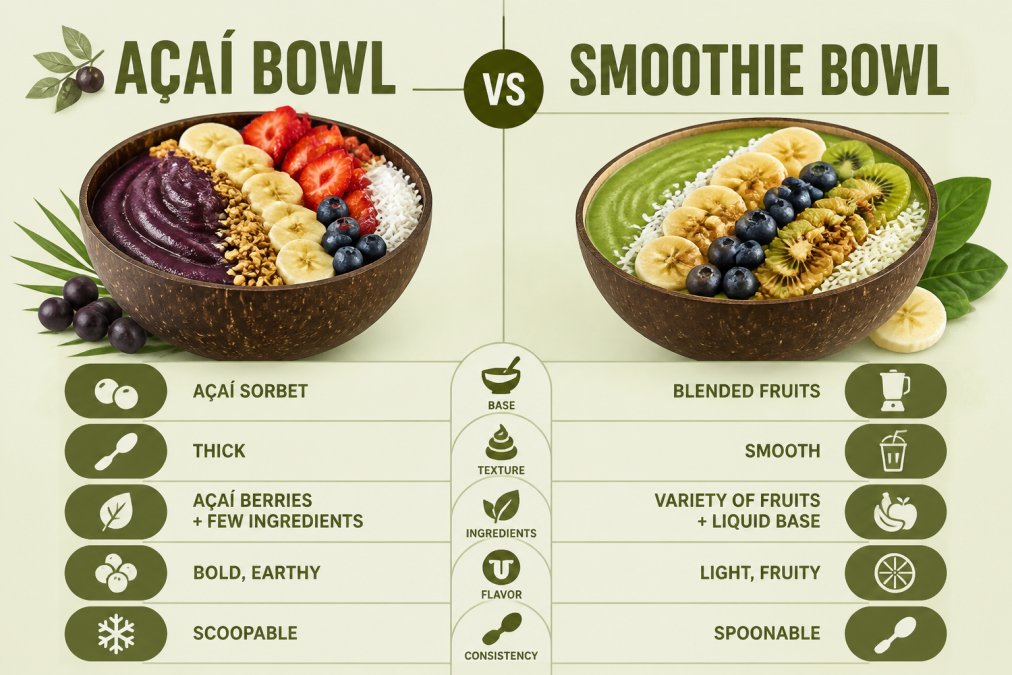
 comparison
Açaí Bowl vs Smoothie Bowl: Key Differences
Table of Contents
- Açaí Bowl vs Smoothie Bowl: What's the Real Difference?
- Quick Comparison Table
- Texture, Consistency, and Mouthfeel
- Acai Bowl Nutrition Facts and Health Benefits
- Acai Bowl Toppings Ideas and Customization
- How to Make the Perfect Base: Equipment and Technique
- Best Acai Bowls: Cost, Prep Time, and Storage Considerations
- Which Should You Choose?
Last Updated: August 28, 2026
Açaí Bowl vs Smoothie Bowl: What's the Real Difference?
The difference between an açaí bowl and a smoothie bowl comes down to texture, preparation method, and liquid-to-fruit ratio. An açaí bowl vs smoothie bowl comparison reveals two distinct experiences: one is a spoonable, soft-serve consistency, while the other is a drinkable blend. Understanding these differences matters because they affect taste, texture, nutrition, prep time, and whether you can achieve that signature creamy mouthfeel at home.
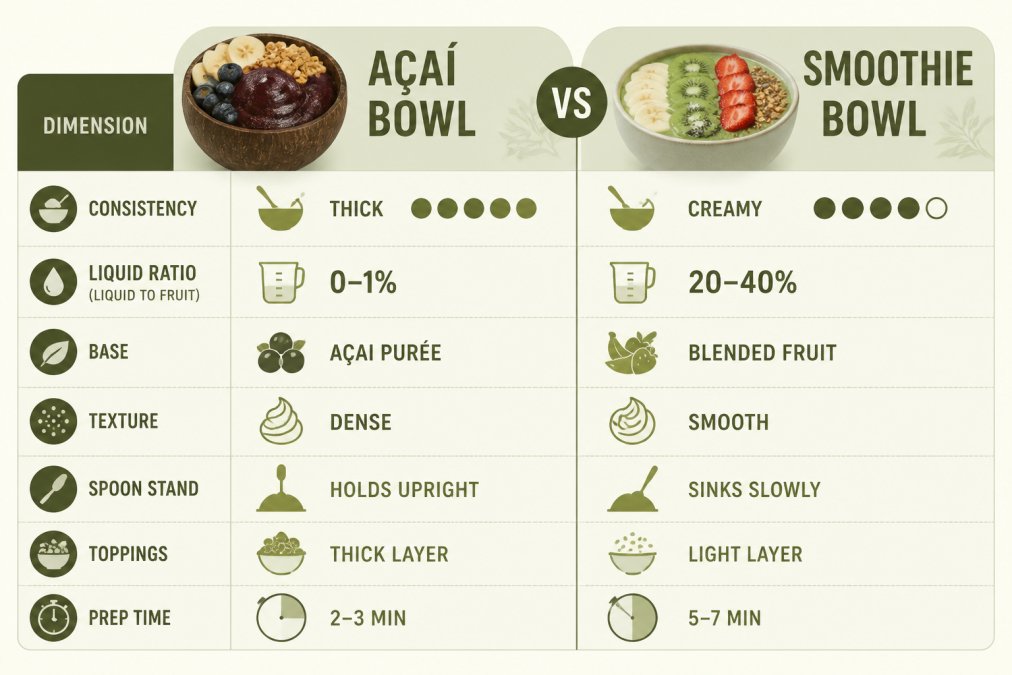
Quick Comparison Table
| Feature | Açaí Bowl | Smoothie Bowl |
|---|---|---|
| Base Consistency | Thick, spoonable puree | Drinkable blend |
| Primary Ingredient | Frozen açaí puree | Mixed frozen fruits |
| Liquid Ratio | Minimal (1:4 to 1:6) | Higher (1:2 to 1:3) |
| Texture Profile | Soft-serve, velvety | Creamy, pourable |
| Prep Time | 3-5 minutes | 2-3 minutes |
| Equipment Needed | High-power blender with tamper | Standard blender |
| Cost Per Serving | Higher (specialty ingredient) | Lower (common fruits) |
| Nutritional Focus | Antioxidant-rich, superfood base | Balanced macronutrient blend |
Texture, Consistency, and Mouthfeel
Açaí bowls deliver a soft-serve consistency, dense, velvety, and thick enough to hold the shape of your spoon. This texture comes from the frozen açaí puree itself, which is naturally dense with emulsification properties that create that signature mouthfeel without requiring excessive thickening agents.
Smoothie bowls are thicker than drinkable smoothies but maintain a pourable quality. The texture depends entirely on your liquid-to-solid ratio and blending technique. Many smoothie bowl recipes use frozen banana as a base, which naturally thickens the blend while adding creaminess.
The key difference: açaí bowl density comes from the fruit itself, while smoothie bowl thickness comes from technique and ratios. With pure frozen açaí puree, you need minimal added liquid, typically just a splash of coconut water or milk. Mixed frozen berries need more liquid because they have different water content and density profiles.
The mouthfeel difference matters for satisfaction. Açaí bowls feel indulgent and complete. Smoothie bowls feel lighter and more refreshing, closer to drinking a smoothie while eating from a bowl.
Acai Bowl Nutrition Facts and Health Benefits
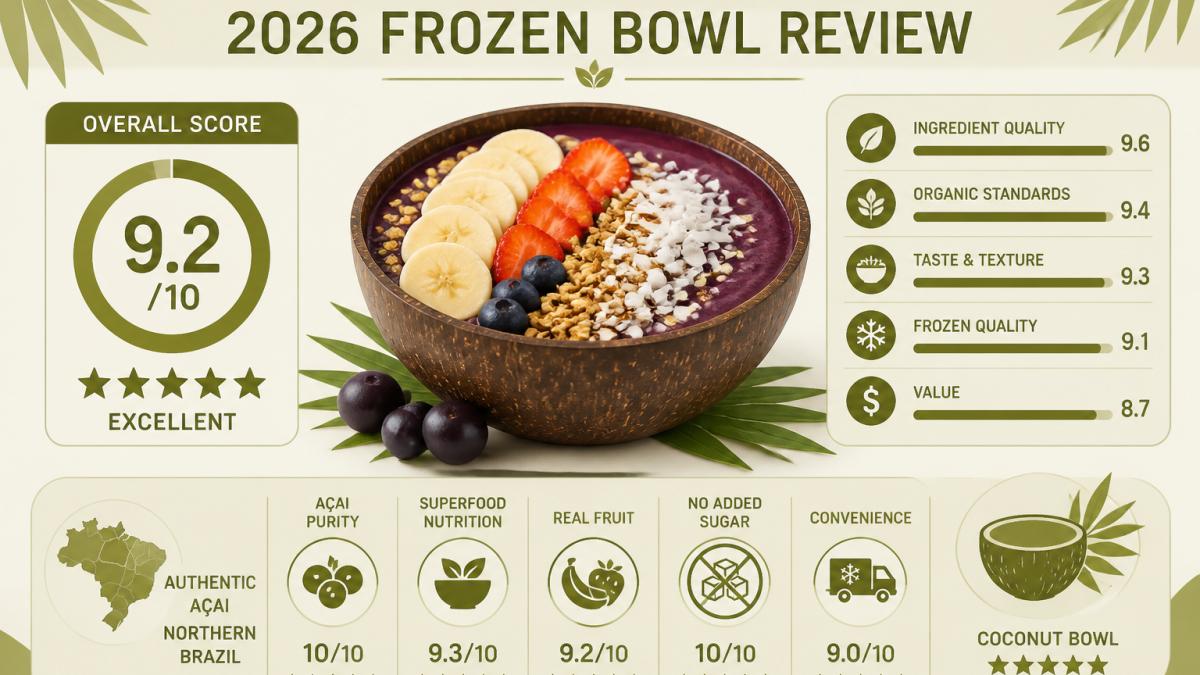
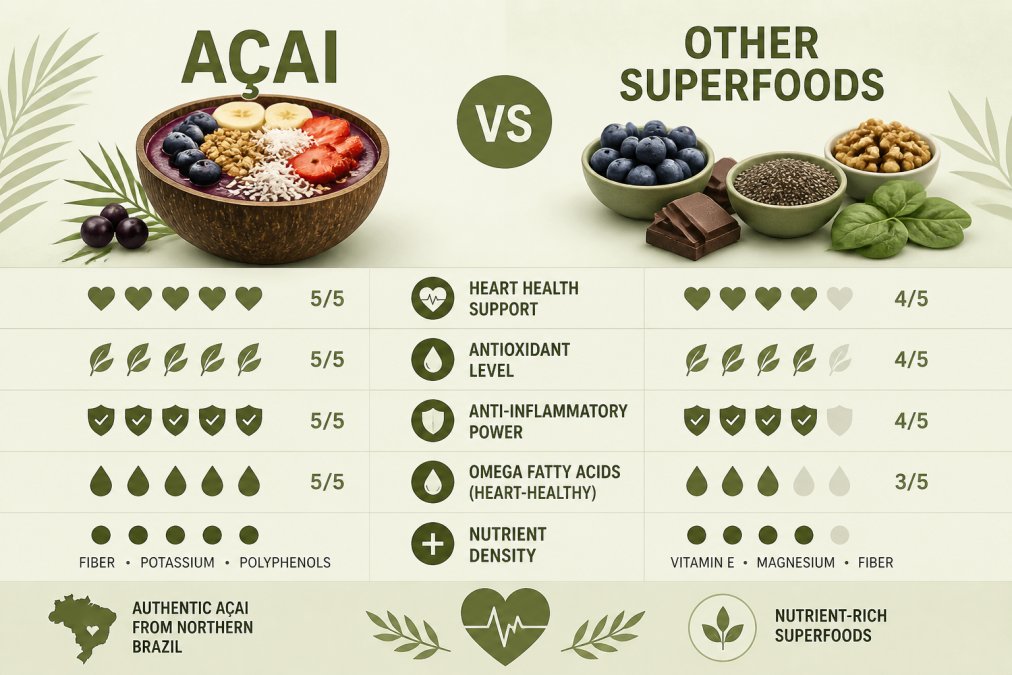
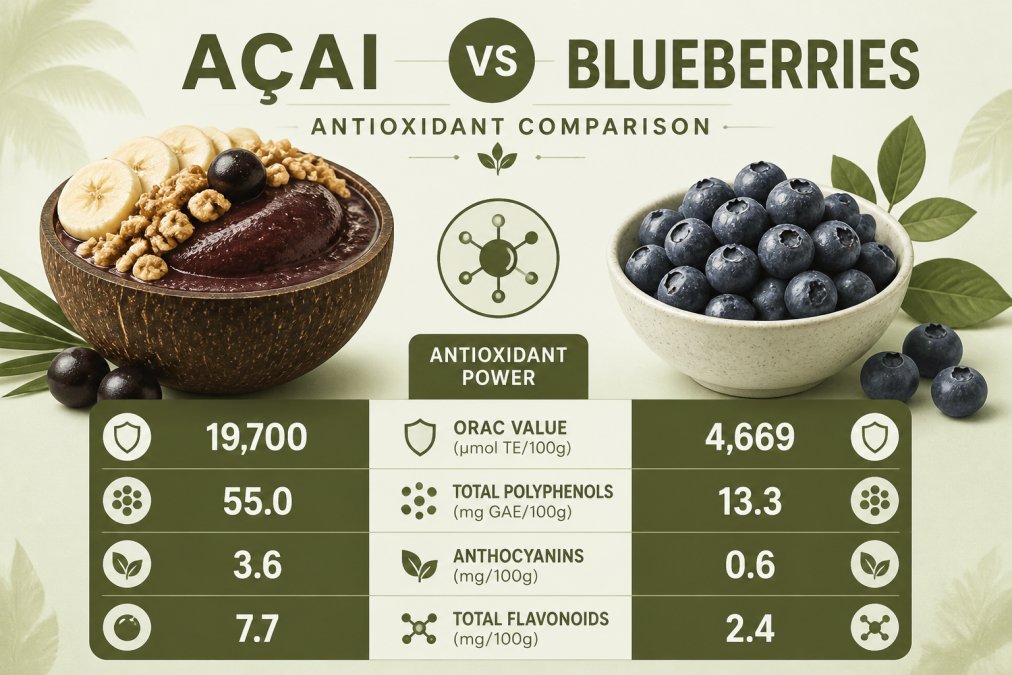
Açaí bowls center on the superfruit base itself. Açaí berries are antioxidant-rich, containing anthocyanins that give them their deep purple color and reputation as a nutrient-dense superfood (peer-reviewed research). A typical serving of unsweetened açaí puree contains roughly 70 calories and zero grams of added sugar, along with omega-3, omega-6, and omega-9 fatty acids that support cardiovascular health (usda.gov).
The nutritional advantage comes from using pure, unsweetened açaí puree rather than açaí blends or syrups that contain added sugars and fillers. We use real açaí from Northern Brazil, not sweetened concentrates that mask the true flavor and nutrient profile. This matters because many commercial açaí products add sugar, guarana, or other ingredients that inflate calorie and sugar content without adding nutritional value.
Smoothie bowls offer more flexibility because you control the ingredients. A smoothie bowl made with mixed frozen berries, banana, and Greek yogurt delivers fiber, probiotics, and balanced macronutrients. The glycemic impact depends on your fruit selection and whether you add sweeteners.
The key difference: açaí bowls deliver concentrated antioxidant value from a single superfruit source, while smoothie bowls offer nutritional variety through ingredient mixing.
Acai Bowl Toppings Ideas and Customization
Toppings transform an açaí bowl into a complete meal. The best toppings complement the soft-serve consistency and add textural contrast: crispy granola against velvety açaí, fresh fruit against dense puree, and crunchy nuts against smooth berry flavor.
Granola is the classic choice because it stays crisp longer against the cold, thick base. Coconut flakes add tropical flavor and crunch. Fresh berries provide tartness that balances richness. Sliced banana adds sweetness and soft texture. Nut butters contribute healthy fats and protein, while whole nuts add satisfying crunch.
For nutrient density, layer in superfood powders: cacao nibs for antioxidants, chia seeds for omega-3s and fiber, or hemp seeds for complete plant-based protein. Honey drizzled lightly adds sweetness. Coconut yogurt creates pockets of creaminess that extend the eating experience.
The customization advantage of açaí bowls lies in how toppings interact with the thick base. Because the base is spoonable and dense, toppings stay in place and don't sink into a drinkable blend. You get distinct bites of each topping mixed with pure açaí.
Smoothie bowls invite different topping strategies because the base is thinner. Toppings can be layered deliberately, and heavier items will sink slightly into the blend, creating a different eating experience where toppings gradually incorporate as you eat.
How to Make the Perfect Base: Equipment and Technique
Creating the ideal base consistency separates casual smoothie makers from people who can replicate professional bowls. The equipment you use directly determines whether your base will be thick and spoonable or thin and drinkable.
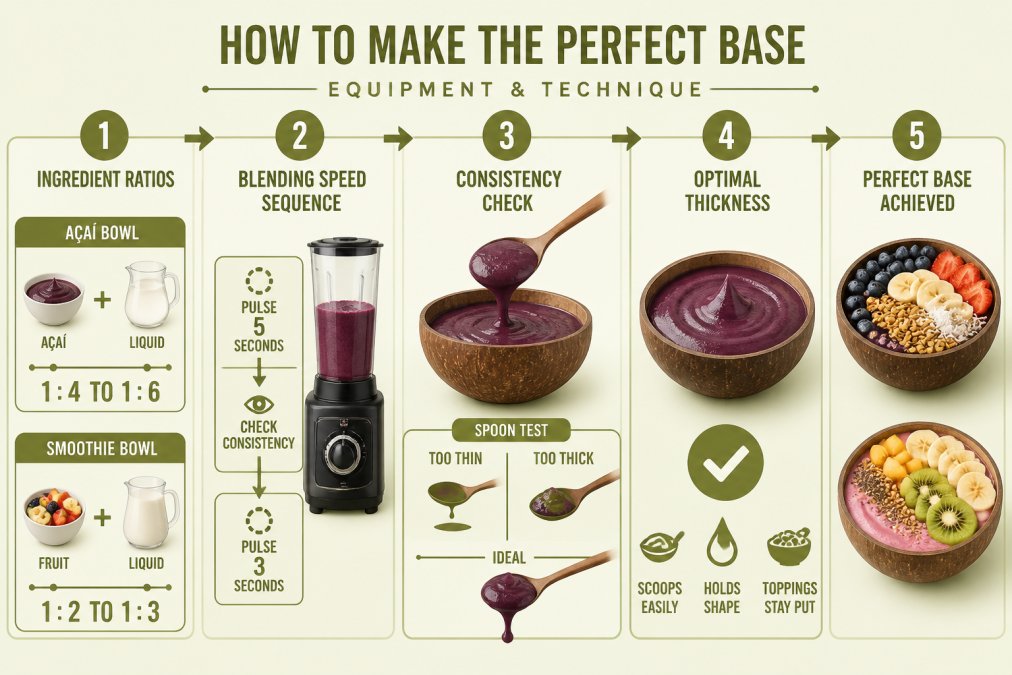
A high-powered blender is essential for authentic açaí bowls. Standard blenders struggle with frozen açaí puree because the fruit is dense and requires significant motor power to break down without adding excessive liquid. High-powered models with tamper technology prevent the common problem of frozen fruit jamming the blender.
The technique matters as much as equipment. Start with your frozen açaí puree and add liquid in small increments, a splash of coconut water or almond milk at a time. Use the tamper to push ingredients toward the blade, working in short pulses rather than running continuously. This gives you control over consistency and prevents over-blending, which can warm the base and compromise texture.
For açaí bowls, the ideal liquid-to-solid ratio is roughly 1 part liquid to 4-6 parts frozen fruit (peer-reviewed research). For smoothie bowls, expect closer to 1 part liquid to 2-3 parts frozen fruit. Adjust based on how thick your frozen fruit is and your blender's power.
Temperature control matters too. Blend quickly to minimize heat generation, which can melt frozen fruit and create a thinner base. Chill your bowl before serving to extend the cold, creamy texture. Many professionals pre-freeze serving bowls for 10-15 minutes before plating.
Best Acai Bowls: Cost, Prep Time, and Storage Considerations
Making açaí bowls at home costs less than ordering professionally, but ingredient quality and convenience matter. Add toppings, granola, fruit, coconut, and nuts, and your total cost per bowl reaches mid-range for a homemade meal.
Ordering from World Green Açai eliminates prep time and equipment investment. You skip the line with online ordering through our mobile app, and your order is ready when you arrive. This convenience appeals to busy professionals who value time. The organic açaí we source from Northern Brazil delivers authenticity and quality that home preparation struggles to match.
Prep time for homemade açaí bowls ranges from 3-5 minutes once ingredients are ready. Smoothie bowls are slightly faster at 2-3 minutes. The real time investment comes from shopping, storing, and managing multiple ingredients.
Storage considerations differ between bowl types. Frozen açaí puree keeps for months in a standard freezer. Fresh fruit toppings stay fresh for 3-5 days refrigerated. Store the base separately from toppings; combining them hours in advance results in a soggy, separated base as the fruit thaws.
For gift-givers seeking premium options, World Green Açai offers gift cards that let recipients choose their perfect bowl. Bulk orders for teams or offices are available through our ordering system.
Which Should You Choose?
Pick an açaí bowl if you want a nutrient-dense, antioxidant-rich base with superfood credentials. The thick, spoonable consistency and concentrated açaí flavor appeal to people prioritizing health benefits and authentic Brazilian-style preparation. Açaí bowls work best when you source quality açaí, because fruit quality directly impacts the final bowl.
Pick a smoothie bowl if you prefer flexibility, variety, and a lighter eating experience. Smoothie bowls accommodate dietary preferences easily because you're blending multiple ingredients rather than centering a single superfruit. They're faster to make at home and require less specialized equipment.
The honest truth: if you have limited time and want consistency, order from World Green Açai. Our online ordering system lets you skip the lines, and we handle the sourcing and technique so you don't have to. We use real, organic açaí from Northern Brazil, not sweetened concentrates or fillers, which is why our bowls taste and feel different from mass-produced alternatives.
If you enjoy cooking and want to experiment, making smoothie bowls at home is more forgiving. Making authentic açaí bowls at home requires more precision and better equipment, and honestly, it's hard to match what professionals deliver without investing in a high-powered blender.
The best choice depends on your priorities: convenience and quality point toward World Green Açai, while cost savings and customization point toward homemade smoothie bowls. Many people do both, ordering from us during busy work weeks and making smoothie bowls on weekends.
Frequently Asked Questions
Q: Which is healthier: an açaí bowl or a smoothie bowl?
A: Both can be nutritious, but the difference lies in how they're built. Açaí bowls are thicker and typically topped with granola, nuts, and fresh fruit, giving you fiber and whole-food texture. Smoothie bowls are blended thinner and often contain added liquids like milk or juice. Açaí itself is antioxidant-rich and nutrient-dense, but health depends on your toppings and added sugars. Real, organic açaí from Northern Brazil, like what World Green Açai uses, provides superior nutrient density compared to sweetened or diluted versions.
Q: What are the main differences in acai bowl nutrition facts compared to smoothie bowls?
A: Açaí bowls typically contain calories from the base alone, with high omega-3 and omega-6 content, plus fiber from the berry puree. Smoothie bowls vary widely depending on liquid ratios; a thinner smoothie bowl might be fewer calories, while a thicker version can match an açaí bowl. Açaí has a higher macronutrient density per ounce, meaning you get more antioxidants and healthy fats in a smaller serving. The key is controlling toppings and avoiding added sugars in either option.
Q: Can açaí bowls support weight loss goals?
A: Açaí bowls can fit into a weight-loss plan if prepared mindfully. The base is low in sugar (0 grams in unsweetened açaí) and high in fiber, which promotes satiety. However, toppings like granola, honey, and nut butters add calories quickly. Focus on protein-rich toppings, whole grains, and limit sugary add-ons. Portion control and skipping the lines with convenient online ordering, as World Green Açai offers, helps you stick to consistent, healthy choices without impulse add-ons.
Q: What equipment do I need to make authentic acai bowl toppings ideas work at home?
A: You'll need a high-powered blender to achieve the thick, soft-serve consistency that defines an açaí bowl. A basic blender struggles with frozen açaí puree and will produce an icy texture. Optional but helpful: a smoothie bowl maker cup to portion correctly and a rubber spatula for scraping. For toppings, a simple cutting board, knife, and small bowls suffice. If making from frozen açaí packets, ensure your blender has a built-in tamper or pulse function to prevent stalling.
Choosing between an açaí bowl and a smoothie bowl doesn't have to mean compromising on quality or convenience. If you're seeking authentic açaí bowls made with real, organic fruit from Northern Brazil and the speed of online ordering, World Green Açai delivers both. Order through our mobile app, skip the lines, and enjoy a premium, nutrient-packed bowl crafted with the finest berries available, perfectly fitted into your busy lifestyle.
This article was written using GrandRanker