 blog
blog
Are Organic Food Gifts Worth the Cost?
Table of Contents
- Are Organic Food Gifts Worth the Cost?
- Organic Food vs. Conventional Food: What the Difference Actually Means
- Why Organic Food Costs More: Breaking Down the Price Premium
- What the USDA Organic Label Meaning Really Tells You
- Health, Taste, and Quality: What You Actually Get
- Choosing the Right Organic Food Gift Baskets for Your Recipient
- Making the Decision: Is the Investment Worth It?
- Frequently Asked Questions
Last Updated: October 10, 2026
Are Organic Food Gifts Worth the Cost?
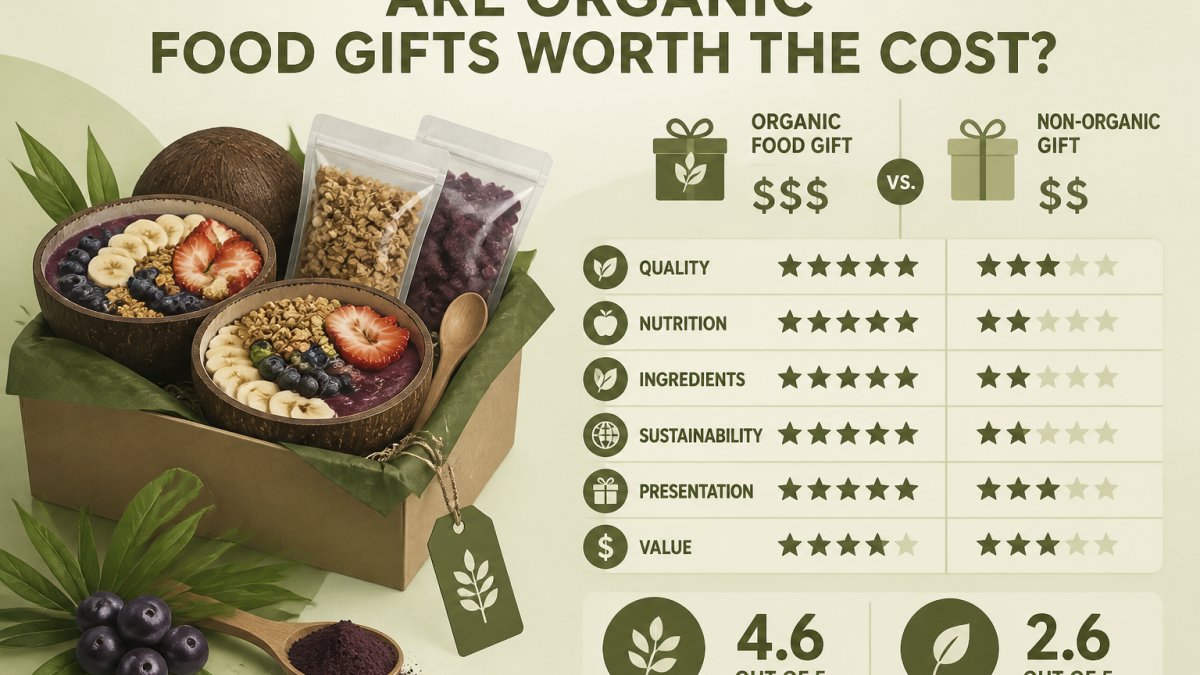
When you're shopping for a gift, organic food can feel like a premium choice. The price tag is higher. The packaging looks nicer. But is the extra cost actually justified? At World Green Açai, we've helped customers navigate this exact question. The answer depends on what matters most to your recipient and what you're comparing. Below, we'll break down the real differences between organic and conventional food, explain why organic costs more, and help you decide if an organic food gift makes sense for your situation.
Organic Food vs. Conventional Food: What the Difference Actually Means
Organic food is grown without synthetic pesticides, artificial fertilizers, or genetically modified organisms. Farmers use natural methods like crop rotation and compost to manage soil health. Conventional food relies on approved synthetic chemicals to increase yields and reduce pest damage.
The practical difference matters more than the label. Organic produce often comes from smaller farms with stricter growing practices. Conventional produce comes from operations optimized for volume and cost.
Some organic products taste noticeably different. Others feel nearly identical to their conventional counterparts. A gift of organic coffee, for example, often delivers a more complex flavor because smaller roasters prioritize quality over efficiency.
The real distinction is in what wasn't used during growth. Organic farming eliminates synthetic pesticide exposure during production. That's the core claim, not that organic is automatically more nutritious or delicious, but that it follows a different production method.
Why Organic Food Costs More: Breaking Down the Price Premium
Organic certification requires paperwork, testing, and compliance. Farmers must document their practices and have their land inspected annually by third-party certifiers.
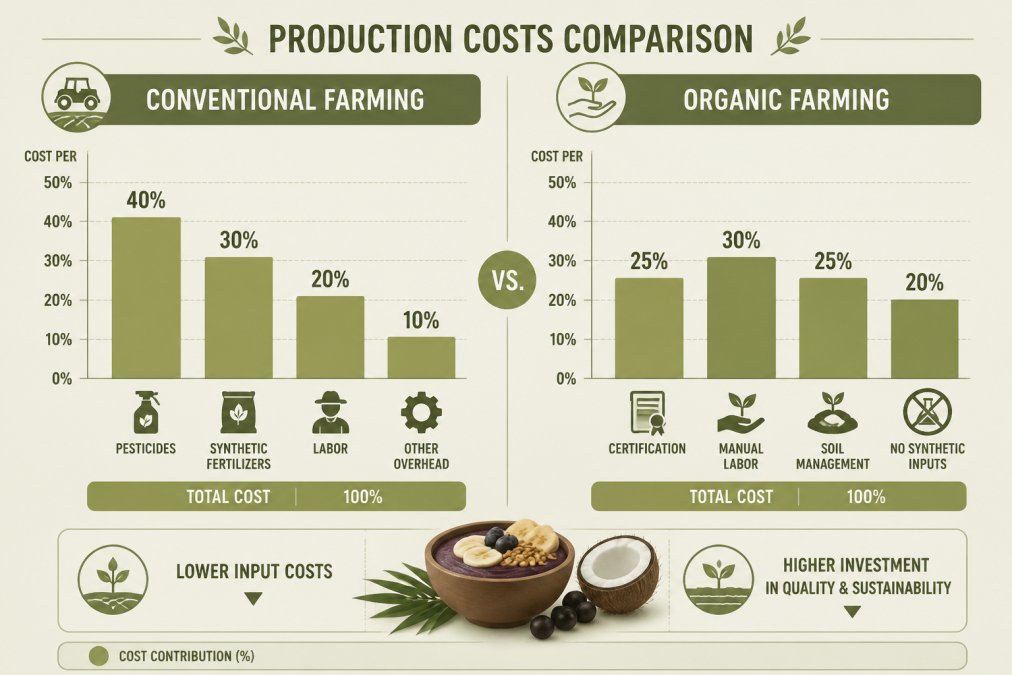
Labor is another major factor. Organic farms typically cannot use synthetic herbicides to control weeds, so manual labor replaces chemicals. Picking vegetables by hand costs significantly more than spraying and harvesting mechanically.
Yields are usually lower on organic farms. A conventional farm can produce more food per acre because synthetic inputs are designed to maximize output. Organic farms produce less volume from the same land, so the cost per unit rises.
Distribution and storage add to the cost. Organic products often have shorter shelf lives because they lack synthetic preservatives. This means faster turnover, which requires more frequent shipments, temperature-controlled transport, and careful handling to prevent spoilage.
Real-world price comparisons for common organic gifts:
- Organic coffee: Conventional ground coffee typically costs $8-12 per pound; organic specialty roasts range from $14-22 per pound, a 50-85% premium.
- Organic tea assortments: A conventional tea sampler box runs $15-25; organic loose-leaf or premium tea gift sets cost $30-50, reflecting both certification and sourcing costs.
- Organic snack boxes: A conventional mixed-snack gift box costs $25-40; curated organic snack baskets range from $45-80, depending on item selection and packaging.
- Organic produce baskets: Conventional seasonal fruit baskets cost $35-60; organic produce baskets with similar items cost $60-100, partly because organic berries and stone fruits spoil faster and require premium packaging.
- Organic chocolate: Conventional chocolate bars cost $2-4 each; certified organic, fair-trade chocolate bars range from $4-8, reflecting both certification and ethical sourcing.
Understanding these costs helps you evaluate whether the premium aligns with your recipient's values and your budget.
What the USDA Organic Label Meaning Really Tells You
The USDA Organic label is a legal certification, not a marketing claim. It means the product meets federal standards set by the Department of Agriculture. USDA organic standards require that farmers avoid synthetic pesticides, antibiotics, and artificial hormones.
The label doesn't guarantee superior nutrition or taste. It certifies production method only. An organic apple isn't automatically more vitamins than a conventional one, it just followed different farming rules.
Certified organic products display the USDA seal. If you don't see it, the product isn't legally organic, even if the packaging says "natural" or "pesticide-free." Those terms have no regulatory definition.
Third-party certifiers verify farms annually. They inspect fields, review records, and test soil and water. This verification system is what makes the label trustworthy. You're not taking the farmer's word for it, an independent auditor confirmed the practices.
Health, Taste, and Quality: What You Actually Get
Many people assume organic means healthier. The research is more nuanced. Organic produce contains fewer synthetic pesticide residues, which appeals to people concerned about chemical exposure. Whether that translates to better health outcomes depends on your baseline diet and exposure levels.
Taste is subjective but often noticeable. Organic produce from local farms tends to taste fresher because it travels shorter distances. Organic coffee and tea frequently taste more complex because smaller roasters prioritize flavor over volume.
Quality in organic products often reflects the producer's philosophy. A small organic farm prioritizing sustainability usually cares deeply about the final product. That care translates to better handling, fresher delivery, and attention to detail.
The shelf life difference is real. Organic products without preservatives spoil faster. This matters if you're buying a gift box that won't be consumed immediately. Check expiration dates on organic gift baskets carefully.
Choosing the Right Organic Food Gift Baskets for Your Recipient
Assessing your recipient's values and needs
Start by considering what your recipient actually eats and whether they prioritize organic. A gift basket of organic snacks won't land well with someone who doesn't value organic certification or has never bought organic products. If they're already buying organic, they'll appreciate a premium selection and will notice quality differences. If they're price-conscious or skeptical about organic premiums, an expensive organic gift might feel wasteful or preachy to them.
Think about dietary restrictions and preferences. Does your recipient follow a specific diet (vegan, gluten-free, keto, paleo)? Organic certification doesn't guarantee compatibility with these diets, you still need to check ingredient lists. A recipient with nut allergies won't benefit from an organic nut assortment, no matter how premium. Clarify dietary needs before selecting a basket.
Verifying organic claims and avoiding greenwashing
Not all products labeled "natural," "pesticide-free," or "sustainable" are certified organic. These terms have no regulatory definition and are marketing language only. To confirm a product is genuinely organic:
- Look for the USDA Organic seal: A circular seal with "USDA Organic" printed on it indicates third-party certification. If you don't see this seal, the product is not legally certified organic, regardless of other claims on the packaging.
- Check the ingredient list: Certified organic products list ingredients and note which are organic. If a multi-ingredient product says "made with organic ingredients" rather than "certified organic," it contains less than 95% organic ingredients.
- Verify on the USDA database: The USDA maintains a searchable organic integrity database at USDA Organic Integrity Database where you can confirm a producer's certification status.
- Beware of "natural" and "sustainable" labels: These terms are unregulated. A product can be labeled natural or sustainable without any third-party verification. Many conventional products use these terms to appeal to health-conscious buyers without meeting organic standards.
Shipping, freshness, and shelf-life considerations
Organic perishables are more vulnerable during shipping than conventional items because they lack synthetic preservatives. Consider these factors:
- Perishable items (berries, fresh fruit, leafy greens): These spoil within 3-7 days and are risky for gifts unless you're delivering in person or the recipient will consume them immediately. If shipping, choose items with longer shelf lives or insulated packaging with ice packs. Even then, arrival condition is not guaranteed.
- Shelf-stable items (coffee, tea, nuts, chocolate, dried fruit): These survive shipping well and remain fresh for 2-12 months depending on the product. These are safer choices for mail or courier delivery.
- Combination baskets: Mix perishable and shelf-stable items strategically. Include fresh organic berries or produce alongside organic nuts, chocolate, or tea so the recipient has immediate-use items and longer-term options.
- Check expiration dates: Organic products without preservatives have shorter shelf lives. When ordering a gift basket, confirm the expiration date is at least 4-6 weeks away to account for shipping and storage time before consumption.
- Shipping costs and timing: Organic perishables often require expedited, temperature-controlled shipping. Plan ahead; don't order perishable baskets expecting next-day delivery unless the retailer explicitly guarantees freshness on arrival.
Budget-based recommendations and alternatives
If a full organic gift basket exceeds your budget, consider these lower-cost approaches:
- Curated small-box option: Instead of a $60-80 basket, select 3-4 premium organic items (one specialty coffee, one chocolate bar, one tea blend, one snack) and arrange them thoughtfully in a smaller box. Cost: $25-40. The recipient perceives intentionality and quality over quantity.
- Hybrid approach: Pair one premium organic item (organic coffee or chocolate) with conventional items the recipient enjoys. This introduces them to organic quality without overcommitting financially.
- Organic gift card or subscription: If you're unsure about preferences, an organic grocery store gift card or a monthly organic tea or coffee subscription ($20-40 per month) lets the recipient choose what matters to them.
- Seasonal and local organic options: Organic farmers' market produce or local organic bakery items often cost less than mail-order baskets and support local producers. This works well if you're near the recipient or can deliver in person.
| Gift Type | Best For | Shelf Life | Shipping Risk | Approximate Price Range |
|---|---|---|---|---|
| Organic coffee or tea | Coffee/tea lovers | 6-12 months | Low | $20-35 |
| Organic berries or fresh fruit | Health-conscious eaters | 3-7 days | High | $40-70 |
| Organic nuts and seeds | Snackers | 2-3 months | Low | $20-40 |
| Organic chocolate | Chocolate enthusiasts | 6-12 months | Low | $15-35 |
| Organic snack box (mixed) | Mixed preferences | 2-4 weeks | Moderate | $35-65 |
| Organic produce basket | Cooking enthusiasts | 5-10 days | High | $50-90 |
The key is matching the gift type to your recipient's actual habits, dietary needs, and values, and choosing items that will arrive in good condition and align with your budget.
Making the Decision: Is the Investment Worth It?
The answer depends on three factors: your budget, the recipient's values, and what you're comparing.
If budget is tight, organic gifts make less sense. The price premium is real, and the recipient might not notice or care about the difference.
If your recipient actively buys organic, the investment pays off. They've already decided organic matters to them. A premium organic gift aligns with their values and preferences.
If you're unsure about the recipient's stance on organic, ask indirectly or choose a hybrid approach. Include one premium organic item alongside conventional items.
The real value of organic gifts isn't the label, it's what it represents. Choosing organic signals that you care about quality, sustainability, or health. That intention matters more than the certification itself.
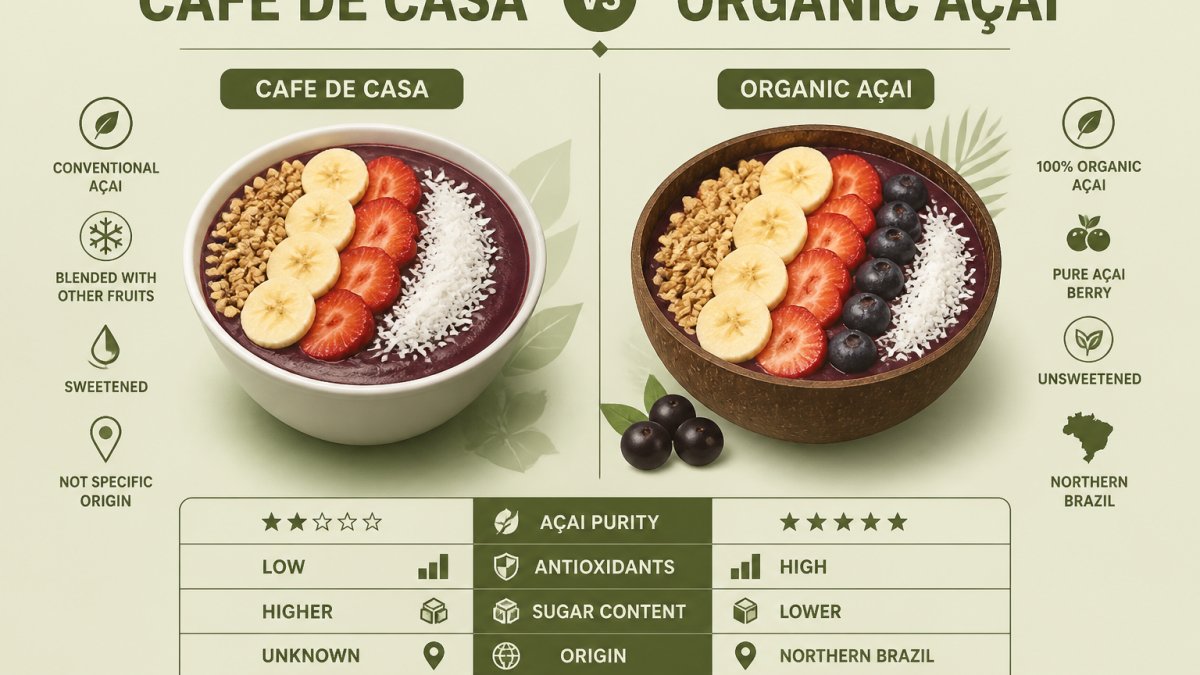
For those seeking authentic, high-quality options, World Green Açai offers premium organic açai bowls that make exceptional gifts or personal treats.
Frequently Asked Questions
Are organic food gifts actually worth the higher price?
Organic food gifts justify their cost when the recipient values certified quality, ingredient authenticity, and reduced pesticide exposure. For health-conscious professionals or those with dietary sensitivities, the premium delivers measurable value. The decision depends on your recipient's priorities and your budget. If affordability matters most, consider hybrid gifting: a smaller organic food gift paired with complementary items, or focusing on organic products where the quality difference is most noticeable.
What does the USDA organic label meaning tell you about certification?
The USDA organic label means the product meets strict federal standards: no synthetic pesticides, no artificial fertilizers, no GMOs, and verified through third-party inspection. This certification provides assurance that organic claims are backed by law, not marketing. When you see the USDA seal, you know the producer has undergone audits and maintains detailed records. This verification is what justifies much of the organic food price premium.
How do organic food vs. conventional food compare in terms of health benefits?
Organic food vs. conventional food differs primarily in pesticide residue levels and production methods, not necessarily nutritional content. Organic produce contains lower pesticide residues and no synthetic fertilizers. Both types provide vitamins and minerals, but organic products appeal to those minimizing chemical exposure. For certain recipients, pregnant individuals, children, or those with chemical sensitivities, organic food gifts reduce exposure concerns that conventional options don't address.
What should I look for when selecting organic food gift baskets?
When choosing organic food gift baskets, verify USDA certification on the label, check shelf life and shipping conditions, and match contents to your recipient's dietary preferences and restrictions. Consider whether they prefer sweet items (dried fruit, organic chocolate), savory options (nuts, organic coffee), or a mix. Authentic organic food gift baskets from trusted sources ensure your recipient receives genuinely certified products, not items falsely marketed as organic.
Deciding whether organic food gifts are worth the cost comes down to your recipient and your values. If they prioritize organic products or you want to introduce them to higher-quality options, the investment makes sense. If budget is your primary concern, focus on conventional items presented thoughtfully instead. Either way, the thought behind the gift matters more than whether it carries an organic label. Choose what aligns with both your budget and your recipient's actual preferences.