 blog
blog
Cafe de Casa vs Organic Acai: Which Bowl Wins?
Table of Contents
- Cafe de Casa vs Organic Acai: How the Bowls Actually Compare
- Açai Bowl Ingredients That Separate Real Fruit From Sugar Bombs
- How to Spot Real Açai Berries in a Bowl
- Açai Bowl Toppings: Fresh Fruit, Baked Goods, and Texture
- Why an Açai Bowl Works as a Healthy Quick Lunch
- Menu Variety, Portions, and Value at a Glance
- Verdict: Which Bowl Fits Your Lunch Routine
- Frequently Asked Questions
Last Updated: October 13, 2026
Cafe de Casa vs Organic Acai: How the Bowls Actually Compare
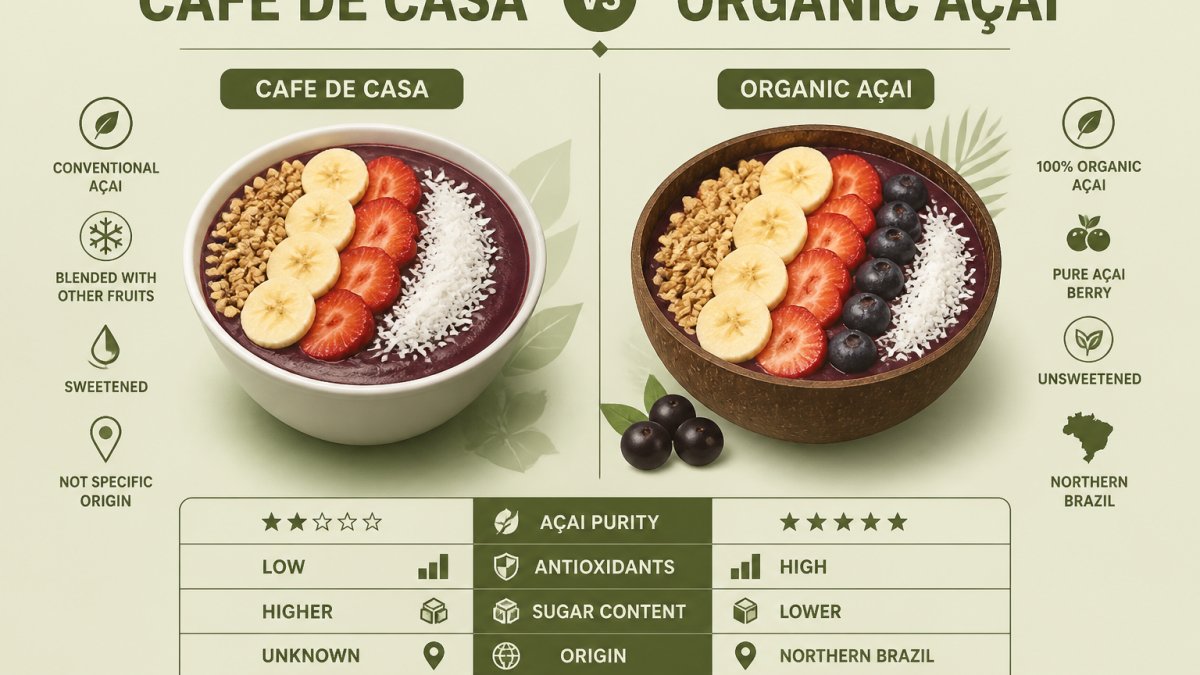
Cafe de Casa and organic acai bowls represent two different lunch philosophies, and the gap between them comes down to what is actually in the bowl. At World Green Açai, we build every bowl around real, organic açaí berries rather than a sweetened base, which changes the taste, the texture, and how you feel an hour later. This comparison breaks down the cafe de casa vs organic acai question by ingredients, toppings, portion, and value so you can pick the right lunch for your day.
The short answer: a traditional cafe plate leans savory and heavier, while an organic acai bowl leans cold, fruit-forward, and lighter. Neither is automatically "better." What matters is whether the açaí in the bowl is real fruit or a sugar-forward blend.
What Each Spot Does Best
A cafe-style kitchen wins on hot, savory food: eggs, sandwiches, and coffee that anchor a sit-down meal. An organic açaí shop wins on speed and cold, nutrient-dense fruit. If you want a fork-and-knife lunch, a cafe fits. If you want something you can eat at your desk or after a workout, an açaí bowl fits better.
The catch is that not every "açaí bowl" is built the same. Some are thick with real fruit; others are thin, icy, and sweetened heavily. That difference decides whether you are eating lunch or dessert.
Açai Bowl Ingredients That Separate Real Fruit From Sugar Bombs
Açai bowl ingredients are the single clearest signal of quality. A real bowl starts with frozen açaí fruit or açaí purée and holds its shape when scooped. A lesser bowl starts with a sweetened base, then adds more sugar through toppings.
Here is how to read an ingredient list before you order:
- Real açaí appears as fruit, purée, or "organic açaí" near the top of the list
- Concentrated juice and cane sugar near the top signal a sweeter, thinner base
- Powder can be fine, but it often replaces fruit rather than adding to it
- Natural ingredients and all-natural labels mean little on their own; check what is actually listed
Cane Sugar, Concentrated Juice, and Powder: What to Watch For
Cane sugar, concentrated juice, and açaí powder are the three most common shortcuts in a bowl. Each one changes texture and sweetness, and each one can hide a weak fruit base.
Cane sugar adds sweetness without fruit. Concentrated juice adds liquid and sugar at once, which is why some bowls turn thin and melt fast. Powder is the trickiest: it can be a legitimate add-in, but when it is the only açaí source, the bowl loses the deep, creamy body that real berries give. If you want the real thing, ask what the base is made from before you order.
How to Spot Real Açai Berries in a Bowl
Real açaí berries show up as a deep purple-black color, a thick spoonable texture, and a flavor that is earthy and lightly sweet rather than candy-sweet. The color is your fastest check: genuine açaí is dark and rich, not pale purple or pink.
Three quick tests when the bowl arrives:
- Color: deep purple-black, not pastel
- Texture: thick enough to hold a spoon upright, not soupy
- Taste: earthy and tart with mild sweetness, not sugary
If a bowl is pale, thin, and very sweet, the fruit content is likely low. That is the opposite of what most people are paying for.
Açai Bowl Toppings: Fresh Fruit, Baked Goods, and Texture
Açai bowl toppings are where a bowl goes from good to great, or from healthy to heavy. Fresh fruit, seasonal fruit, and nuts keep a bowl light and add texture. Baked goods and pastries add contrast but also add sugar and density.
What most topping guides skip is the part that actually changes how a bowl eats: the vessel and the temperature of the toppings. A bowl served in a coconut bowl stays colder longer than one served in a paper or plastic cup, because the shell insulates the base instead of conducting room heat into it. That single choice keeps the açaí thick and spoonable to the last bite rather than melting into a smoothie by the halfway point. It is also why a real fruit base matters here, a sweetened, thin base collapses under warm toppings in minutes, while a dense, fruit-forward base holds its structure.
A balanced bowl usually pairs two or three fresh toppings with one crunchy element:
- Fresh fruit: banana, berries, mango, kiwi
- Crunch: granola, coconut, nuts, seeds
- Contrast: a drizzle of nut butter or honey
- Occasional treat: a pastry or baked good on the side, not piled on top
The mistake most people make is stacking sweet on sweet. If the base is already fruit-forward, a couple of fresh toppings and one crunch is plenty. The second mistake is ordering a bowl that has been pre-built and sitting in a display case, toppings applied in advance bleed moisture into the base and soften the crunch before you ever pick up a spoon. Build-to-order is the tell that a shop is treating the bowl as food, not as a photo.
Why an Açai Bowl Works as a Healthy Quick Lunch
A healthy quick lunch has to do two things: fill you up and not slow you down. An açaí bowl does both when it is built on real fruit, because the base is cold, dense, and naturally satisfying without a heavy, greasy finish.
That makes it a strong fit for a short lunch break. You can eat it one-handed, it travels well, and it does not leave you sluggish for an afternoon of work. For anyone squeezing lunch into fifteen minutes, that matters more than a long menu.
The key is portion and balance. A bowl loaded with sweetened base and pastries is a treat. A bowl built on organic açaí with fresh fruit and a little crunch is a genuine meal.
Menu Variety, Portions, and Value at a Glance
Menu variety, portion size, and value are where the two lunch styles split most clearly. A cafe menu is broad and savory, with hot food, coffee, and tea. An açaí menu is narrower but deeper on fruit, smoothies, and juice. The useful comparison is not which menu is longer, it is what you actually get per order and how long it keeps you full.
Here is how the two compare on the factors that decide value:
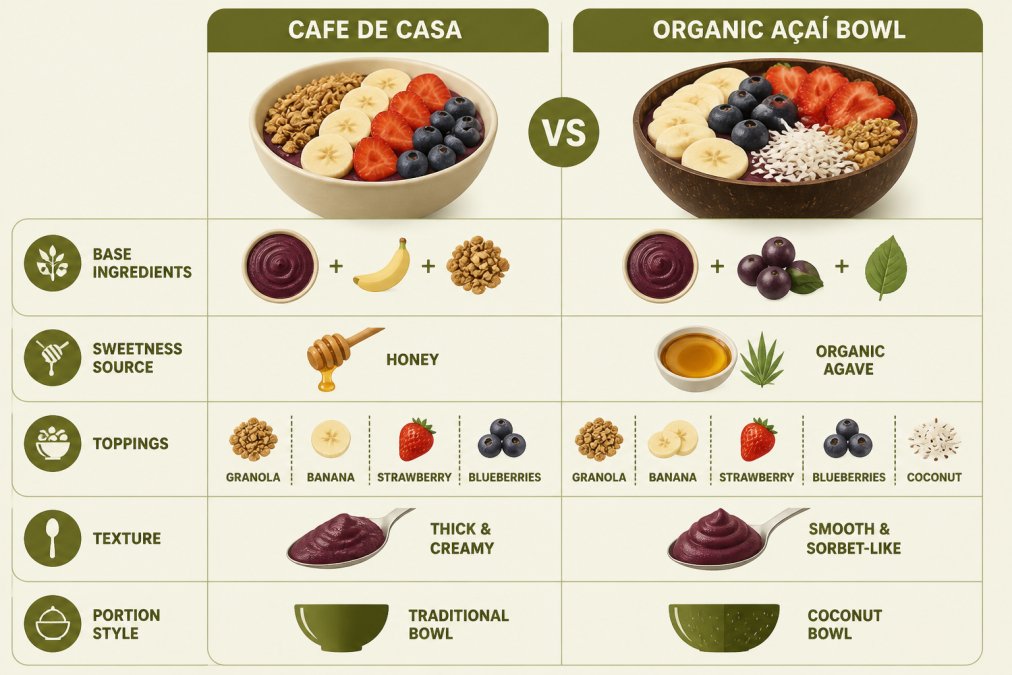
| Factor | Cafe-Style Lunch | Organic Açaí Bowl |
|---|---|---|
| Base | Savory, cooked | Cold fruit |
| Sweetness source | Added sugar, sauces | Fruit, then toppings |
| Toppings | Sides, garnishes | Fresh fruit, crunch |
| Portion style | Plate or sandwich | Single bowl |
| Serving vessel | Ceramic or disposable | Coconut bowl at our shop |
| Best for | Sit-down meal | Grab-and-go lunch |
Portion and price vary by shop, so check the current menu before you go. A bigger bowl is not automatically better value if the base is mostly sweetener. Judge value by how much real fruit you get per bowl, not by how tall it is. A practical way to do that: ask what the base is made from, then compare the number of fruit-forward toppings you get for the same order. Two shops can charge the same and deliver very different amounts of actual fruit.
Nutrition and Dietary Fit
This is the part most comparisons leave out, and it is usually the deciding factor. A savory cafe plate tends to run higher in sodium and added fat; a fruit-based bowl tends to run higher in natural sugar and fiber. Neither is automatically the better lunch, it depends on what you need that day.
A few things worth checking before you order:
- Added sugar: ask whether the base is sweetened or built on fruit alone. This is the single biggest swing factor in a bowl's sugar content.
- Allergens: granola commonly contains oats, nuts, and sometimes honey; nut butters and coconut are frequent cross-contact points. If you have a tree nut or gluten sensitivity, ask what the granola and the base contain.
- Dietary accommodations: a fruit-and-juice base can often be made dairy-free and vegan, but toppings like honey or a yogurt drizzle are not. Ask for the base and toppings separately if you are managing a restriction.
- Fiber and satiety: fruit-based bowls carry fiber from the fruit itself, which is part of why a real-fruit bowl holds you longer than a sweetened one of the same size.
If you are choosing between the two for a specific goal, lighter afternoon, post-workout refuel, or a sit-down meal, match the format to the goal rather than to the menu length. A bowl built on real fruit with fresh toppings fits the light, fast, fruit-forward slot. A cafe plate fits the hot, savory, slow slot. The value question only makes sense once you have picked which of those you actually want.
Verdict: Which Bowl Fits Your Lunch Routine
The verdict depends on your routine, not on a winner-takes-all ranking. If you want a hot, savory, sit-down lunch, a cafe fits. If you want a cold, fruit-forward meal you can eat fast, an organic açaí bowl fits, provided it is built on real fruit.
At World Green Açai, we built our Larkspur shop around that second option. Every bowl starts with organic açaí berries, and you can skip the lines with online ordering or our mobile app when your lunch break is short. If you are not sure where to start, our menu walks you through the bases and toppings so you can build a bowl that fits your day.
Frequently Asked Questions
What is the difference between Cafe de Casa and an organic açai bowl?
Cafe de Casa leans savory, with cafe-style plates and baked goods, while an organic açai bowl is built on frozen açai blended thick and topped with fresh fruit. The bigger split is in the base: an organic acai bowl uses real açai berries rather than syrups or concentrated juice. If you want a lighter, fruit-forward lunch, the bowl usually wins on ingredient transparency.
How can I tell whether an açai bowl uses real açai?
Ask what goes into the base. A bowl made from real açai berries is thick, deep purple, and tastes tart before the toppings hit. If the first ingredient is cane sugar, concentrated juice, or powder, you are mostly eating sweetener. Texture is the tell: real açai holds a scoop shape and does not melt into a thin smoothie within minutes.
Are açai bowls filling enough for lunch?
They can be, depending on what you add. A base of real açai berries plus granola, nut butter, and fresh fruit delivers fiber, fat, and protein that carry you past the afternoon slump. A bowl that is mostly sweetened base and candy toppings will not. Portion style matters too: a 16-ounce bowl with dense toppings eats like a meal, while a small cup is closer to a snack.
What toppings go well with an açai bowl?
Fresh fruit like banana, strawberry, and mango pair naturally with the tart base. Granola adds crunch, coconut adds richness, and a drizzle of nut butter or honey rounds it out. Keep an eye on added cane sugar in syrups and chocolate. If you want a healthier quick lunch, lean on seasonal fruit and nuts rather than candy-style toppings.
Choosing a quick lunch usually means trading speed against quality. World Green Açai removes that trade-off with organic açaí bowls made from real berries, online ordering that skips the line, and a mobile app that puts your usual order a few taps away. Order online with World Green Açai and get a fast, fruit-forward lunch that fits a busy schedule.