 how-to
How to Build a Balanced Breakfast Bowl for Busy Mornings
Last Updated: October 24, 2026
Quick Summary
Build a balanced breakfast bowl from four parts: half produce, one quarter protein, one quarter whole-grain base, plus a thumb of healthy fat and a spoon of topping. Aim for 15 to 20 grams of protein and 5 to 8 grams of fiber so it holds you until lunch.
- Use a 3-cup container and portion about 1 to 1 1/2 cups of produce per bowl.
- Greek yogurt, eggs, beans, tofu, and chicken each help reach the protein target.
- Build in order: base first, then protein, then produce, then fat and toppings.
- Batch four weekday bowls in one prep session and label containers with the date.
- Keep wet and dry components apart until you eat to avoid soggy bowls.
Table of Contents
- The Bowl-Building Formula That Works Every Time
- How to Make a High-Protein Breakfast Bowl That Keeps You Full
- Healthy Breakfast Bowl Ideas for Sweet and Savory Cravings
- Quick Healthy Breakfast Ideas for 10-Minute Mornings
- Make-Ahead Breakfast Bowls: A Weekday Meal-Prep Workflow
- Common Breakfast Bowl Mistakes and How to Fix Them
- Order Your Bowl Online and Skip the Line
- Frequently Asked Questions
The Bowl-Building Formula That Works Every Time
A balanced breakfast bowl is a single meal built from four parts: a whole-grain or fruit base, a protein, a healthy fat, and produce, assembled in portions that keep you full past 10 a.m. At World Green Açai, we build ours around organic açaí.
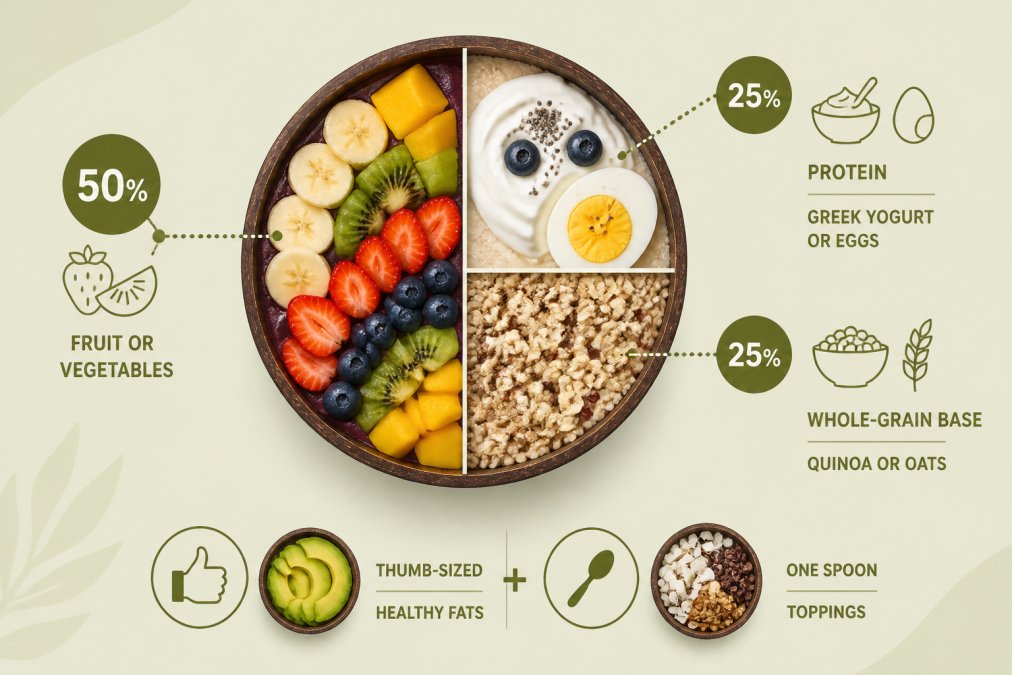
Here is the formula we use behind the counter, and it works at home too. For a deeper guide, see how to balance macronutrients in açaí bowls.
The 50/25/25 plate, in a bowl:
- Half: fruit or vegetables (berries, banana, cucumber, tomatoes)
- One quarter: protein (Greek yogurt, eggs, tofu, ground chicken, black beans)
- One quarter: whole-grain base (quinoa, oats, brown rice)
That ratio is the whole game. Get it right and the bowl holds you until lunch. Get it wrong and you are hungry by 9:30.
Turn the ratio into real portions
Percentages are easy to picture and hard to scoop. Here is how the formula translates into a standard bowl that fits a 3-cup container, which is the size most people already own.
| Component | Share of bowl | Approximate portion | Everyday examples |
|---|---|---|---|
| Produce | Half | About 1 to 1 1/2 cups | Berries, sliced banana, cucumber, cherry tomatoes, spinach |
| Protein | One quarter | About 3/4 cup, or 15 to 20 grams of protein | Greek yogurt, 2 eggs, 1/2 cup beans, 3 ounces tofu or chicken |
| Whole-grain base | One quarter | About 1/2 to 3/4 cup cooked | Quinoa, oats, brown rice |
| Healthy fat | Thumb-sized | 1 to 2 tablespoons | Nut butter, avocado, seeds |
| Topping | One spoon | 1 to 2 tablespoons | Nuts, raisins, cinnamon, coconut |
Those portions are a starting point, not a rule. A larger appetite or a longer morning calls for a bigger bowl; the ratio stays the same and every number scales together.
The two numbers worth remembering
If you track nothing else, track protein and fiber. Most practitioners find that a breakfast bowl lands well when it carries roughly 15 to 20 grams of protein and 5 to 8 grams of fiber.
Use the table above as a checklist. Greek yogurt, eggs, beans, tofu, and chicken all get you to the protein target. Berries, oats, quinoa, beans, and vegetables carry the fiber.
Two worked examples
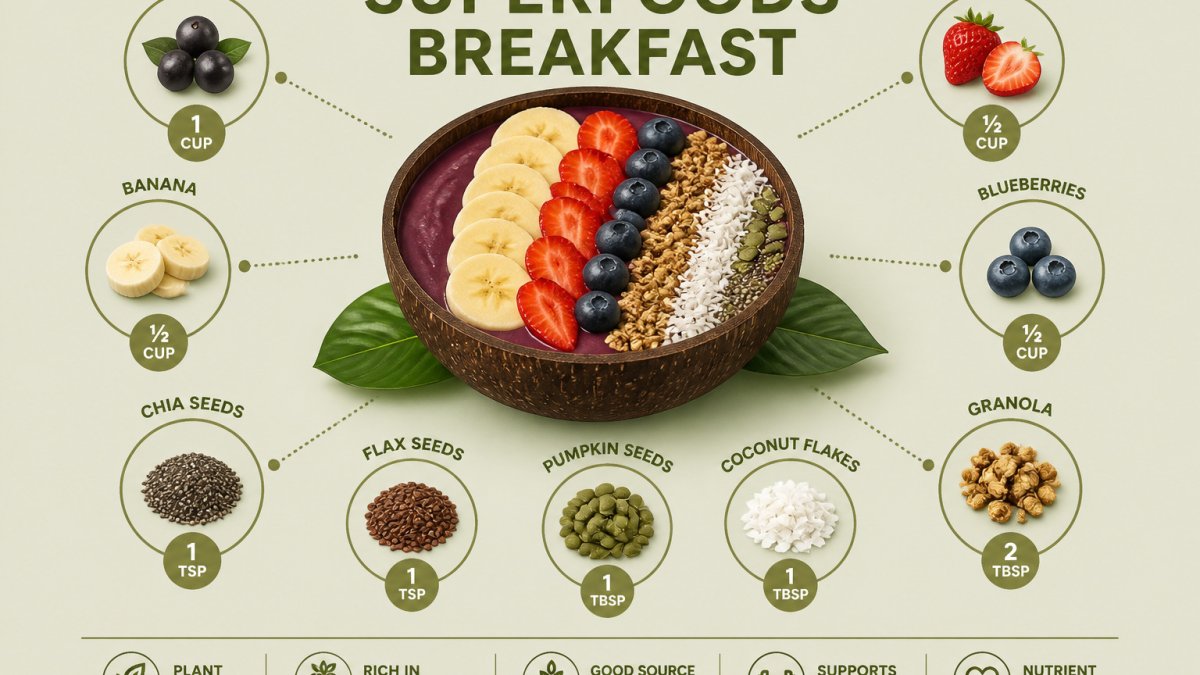
Sweet açaí bowl: 1 cup açaí base, 1/2 cup berries, 1/2 banana, 3/4 cup Greek yogurt, 1 tablespoon almond butter, 1 tablespoon granola. That lands near 18 grams of protein and 7 grams of fiber.
Savory quinoa bowl: 3/4 cup cooked quinoa, 2 scrambled eggs, 1/2 cup black beans, 1/2 cup cherry tomatoes, 1/4 avocado, a spoon of salsa. That lands near 19 grams of protein and 8 grams of fiber.
Both use the same ratio. Only the ingredients change, which is why the formula survives repetition when recipes do not.
How to Make a High-Protein Breakfast Bowl That Keeps You Full
Protein is what separates a breakfast that sticks from one that doesn't. A high-protein breakfast bowl should land near 15 grams of protein or more.
Where that protein comes from is your call:
- Greek yogurt or vanilla yogurt: stir it into the base for creaminess
- Eggs: scramble or soft-boil and arrange on top of a savory bowl
- Tofu: cube and pan-crisp it for a warm bowl
A common mistake is loading up on granola and calling it protein. Granola is mostly carbohydrates. Treat it as a topping, not a base.
If you want the full walkthrough, our guide on high protein açaí bowls shows how to build one at home step by step.
Healthy Breakfast Bowl Ideas for Sweet and Savory Cravings
Sweet or savory is the first decision, and it changes everything else. Pick your lane, then follow the formula.
Sweet bowl ideas:
- Açaí base with banana, berries, and a spoon of nut butter
- Greek yogurt with apple, cinnamon, and toasted seeds
- Oat base with raisins, honey, and a sprinkle of nuts
Savory bowl ideas:
- Quinoa with black beans, corn, avocado, and salsa
- Warm brown rice with tofu, cucumber, and a dash of sriracha
- Eggs over lettuce and tomatoes with Monterey Jack cheese
Both directions use the same portions. Only the ingredients change. The USDA Dietary Guidelines for Americans recommend building meals around a variety of food groups, which is exactly what this formula does.
Quick Healthy Breakfast Ideas for 10-Minute Mornings
Ten minutes is enough time if you prep smart and assemble fast. The trick is to cook once and arrange later.
Here is the order that saves the most time:
- Warm your base first (quinoa, rice, or oats) while you chop
- Pull prepped protein from the fridge
- Add fruit or vegetables
- Sprinkle seeds or nuts on top
- Sweeten or season, then eat
A warm bowl comes together fastest when the grain is already cooked. A sweet bowl is even quicker, since cold ingredients just get arranged.
For more fast options, see our list of quick healthy breakfast ideas that fit a tight morning.
Make-Ahead Breakfast Bowls: A Weekday Meal-Prep Workflow
Make-ahead breakfast bowls are containers you assemble in advance so weekday mornings need zero cooking. The workflow takes one prep session and covers several days. Most competitors stop at "cook once, assemble later" without saying what to cook, how much, how to store it, or how long it keeps. This is the part that actually decides whether the habit survives a busy week.
What to batch, and how much
A single prep session should cover four weekday bowls. Cook these once and you are set:
- Grains: 2 cups dry quinoa or rice, cooked, which yields roughly 6 cups cooked. That is enough for four bowls with a little left over.
- Eggs: 6 to 8 hard-boiled eggs, or a batch of scrambled eggs cooled and stored flat.
- Beans: 2 cans, rinsed, or 3 cups cooked from dry.
Fragile produce such as berries, banana, and avocado does not batch well. Add those the morning of, or the night before at the earliest.
The Sunday prep session, in order
- Start the grains first, since they take the longest and can cool while you work.
- Hard-boil the eggs and cool them in ice water.
- Cook any ground meat or tofu, then spread it on a sheet pan to cool quickly.
- Wash and chop vegetables, then dry them thoroughly. Wet vegetables are the main cause of soggy bowls.
- Portion grains and proteins into containers, label with the date, and refrigerate.
Cool cooked food before it goes into the fridge.
How to assemble a bowl in under three minutes
Each night, build one container for the next morning using the formula from earlier in this article:
- Spoon the grain into the bottom.
- Add the protein on top of the grain.
- Add sturdy vegetables next to the protein.
In the morning, add the fresh fruit and the wet or crunchy toppings, and the bowl is done. No cooking, no chopping, no decisions.
Storage times and reheating
Use these as practical limits, and always follow the food-safety guidance on the package or from the USDA Food Safety and Inspection Service when in doubt.
| Component | Refrigerator | Reheat? |
|---|---|---|
| Cooked grains | 3 to 4 days | Yes, until steaming |
| Hard-boiled eggs, peeled | About 1 week | No, eat cold |
| Cooked ground meat or tofu | 3 to 4 days | Yes, until steaming |
| Rinsed canned beans | 3 to 4 days | Yes, or eat cold |
| Chopped sturdy vegetables | 3 to 5 days | No |
| Cut fruit | 2 to 3 days | No |
Label every container with the date and eat the oldest first. If a savory bowl is meant to be warm, reheat the grain and protein together and add the cold vegetables and toppings after, so nothing turns limp.
The texture rule that makes it work
Meal prep fails on texture more than flavor. The fix is to separate components by moisture level, not by recipe. Build the bowl in layers, keep the wet parts sealed, and add the crunchy parts last.
Our healthy meal prep ideas for açaí bowls cover more combinations you can batch ahead using this same workflow.
Common Breakfast Bowl Mistakes and How to Fix Them
Most bowl problems come down to three things: too much sugar, too little protein, and the wrong texture. Each has a simple fix.
| Problem | Why It Happens | The Fix |
|---|---|---|
| Bowl tastes like dessert | Granola and honey overload | Cut granola to a topping, add protein |
| Hungry an hour later | Under 15 grams of protein | Add yogurt, eggs, or beans |
| Icy or thin texture | Frozen base blended too cold | Let it soften, blend in stages |
| Soggy by mid-morning | Wet and dry stored together | Pack toppings separately |
| Boring after three days | Same ingredients daily | Rotate one topping at a time |
One more: skipping healthy fats. A little avocado or nut butter makes the bowl more satisfying. Do not leave it out.
Order Your Bowl Online and Skip the Line
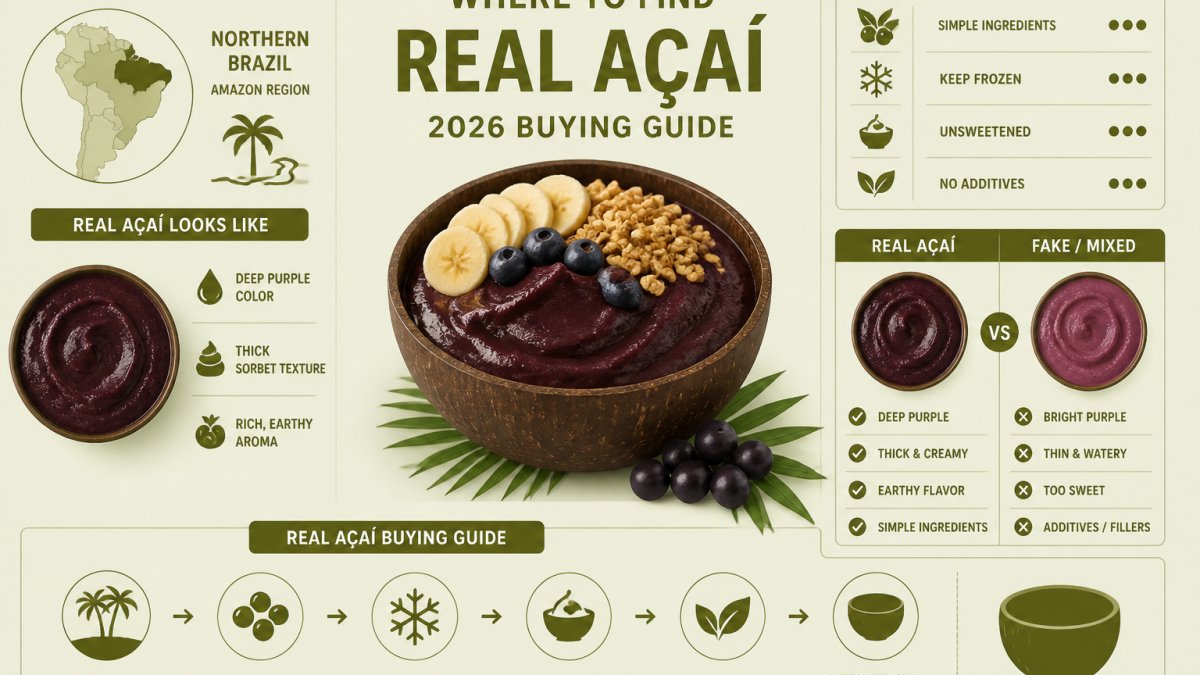
Some mornings there is no time to assemble anything, and that is fine. You can order online and pick up a bowl built on the same formula, with real organic açaí.
We are at World Green Açai in Larkspur, and our online ordering lets you skip the line on a busy lunch break. If you are grabbing one for a coworker, a gift card covers that too.
Frequently Asked Questions
What should a balanced breakfast bowl include?
A balanced breakfast bowl combines four parts: a whole-grain or fruit base, a protein source, vegetables or fruit, and a small amount of healthy fat. Aim for roughly half the bowl as produce, a quarter as protein such as eggs, Greek yogurt, tofu, or beans, and a quarter as a grain like quinoa or oats. Finish with nuts, seeds, or avocado for healthy fats. This mix of protein, fiber, and fat is what keeps a breakfast bowl satisfying until lunch.
How do you add protein to a high-protein breakfast bowl?
Start with a protein that fits your sweet or savory direction. For savory bowls, use two eggs, ground chicken, black beans, or tofu. For sweet bowls, Greek yogurt or vanilla yogurt gives you a creamy base with protein built in, and nut butter adds more. Aim for at least 15 grams of protein per bowl. Cooked leftovers from dinner, like shredded chicken or roasted vegetables, are one of the fastest ways to hit that target.
Can you prepare make-ahead breakfast bowls ahead of time?
Yes. Cook grains like quinoa or oats in a batch on Sunday, then portion them into containers. Keep wet ingredients separate from crunchy toppings so nothing turns soggy. Store assembled bowls in the refrigerator for up to three days, and add nuts, seeds, or fresh fruit the morning you eat them. For warm bowls, reheat the base and protein, then finish with cold toppings. This workflow turns a 15-minute breakfast into a two-minute assembly on busy mornings.
How do you make a breakfast bowl without added sugar?
Skip honey, syrups, and sweetened yogurts and let fruit do the work. Mashed banana, berries, raisins, and a dusting of cinnamon add sweetness without refined sugar. Choose plain Greek yogurt instead of vanilla yogurt if you want to control sweetness, and read labels on nut butter for added sugar. For savory bowls, salsa, sriracha, and fresh herbs bring flavor with no sugar at all. A balanced breakfast bowl built this way still tastes sweet or savory.
Building a balanced bowl takes a formula, not a recipe. If your mornings are too tight to assemble one, let us do it for you. Get started with World Green Açai and order online for a thick, creamy bowl made with organic açaí, ready when you walk in.