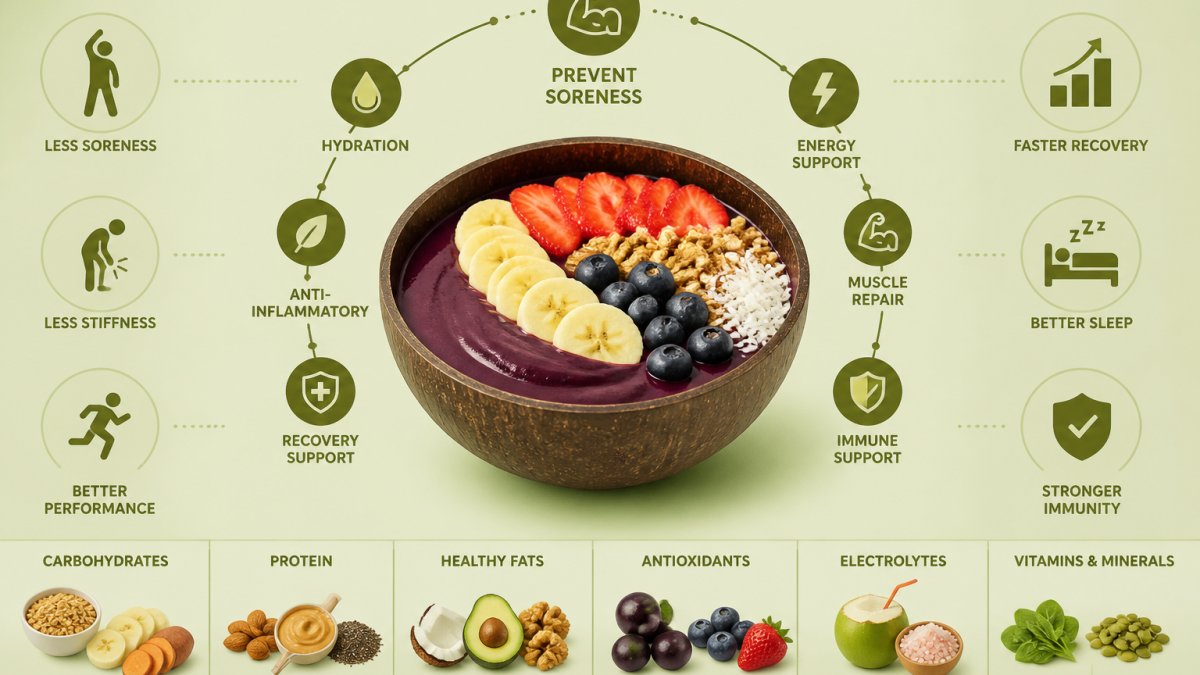
 how-to
How to Prevent Muscle Soreness With Nutrition
Last Updated: October 27, 2026
Quick Summary
To learn how to prevent muscle soreness with nutrition, combine protein and carbohydrates within a couple of hours of training, spread roughly 1.2 to 1.6 grams of protein per kilogram of body weight across the day, stay hydrated with electrolytes for long or hot sessions, and build meals around anti-inflammatory foods like fatty fish, tart cherry, berries, and leafy greens.
- Food cannot stop soreness; nutrition supports muscle repair and refills energy stores.
- Eat protein plus carbs within 1-2 hours after training for the core recovery window.
- Aim for about 1.2 to 1.6 grams of protein per kilogram of body weight daily.
- Add electrolytes for sessions over an hour or in heat, and check for pale yellow urine.
- Tart cherry and omega-3s had the most compelling evidence for reducing muscle damage.
Table of Contents
- What Causes Muscle Soreness and What Nutrition Can Actually Do
- What to Eat After a Workout for Muscle Soreness
- Protein for Muscle Recovery: How Much and When
- Carbohydrates, Glycogen, and Replenishing Energy Stores
- Hydration and Muscle Soreness: Fluids, Electrolytes, and Practical Measures
- Anti-Inflammatory Foods for Muscle Recovery
- How Recovery Nutrition Changes With Your Workout and Training Status
- Order a Recovery Bowl Before Your Next Hard Session
- Frequently Asked Questions
What Causes Muscle Soreness and What Nutrition Can Actually Do
Delayed-onset muscle soreness, or DOMS, is the stiffness and ache that shows up a day or two after hard training. It comes from tiny tears in muscle fibers and the inflammation that follows, not from lactic acid.
Here is the honest part most guides skip: food cannot stop soreness. Nutrition supports muscle repair and refills energy stores, but it will not make DOMS disappear. A 2021 review in Nutrition and Muscle Recovery found that eating protein near training supports muscle recovery, yet the effect is support, not a cure.
So how to prevent muscle soreness with nutrition comes down to stacking small advantages: enough protein, enough carbs, enough fluid, and a steady supply of anti-inflammatory foods.
What to Eat After a Workout for Muscle Soreness
The best post-workout meal combines protein and carbohydrates within a couple of hours of training. Memorial Hermann's recovery guidance recommends exactly that mix soon after exercise, and it is the simplest habit that pays off.
Think whole foods first:
- Protein: eggs, Greek yogurt, chicken, fish, or a quality protein powder
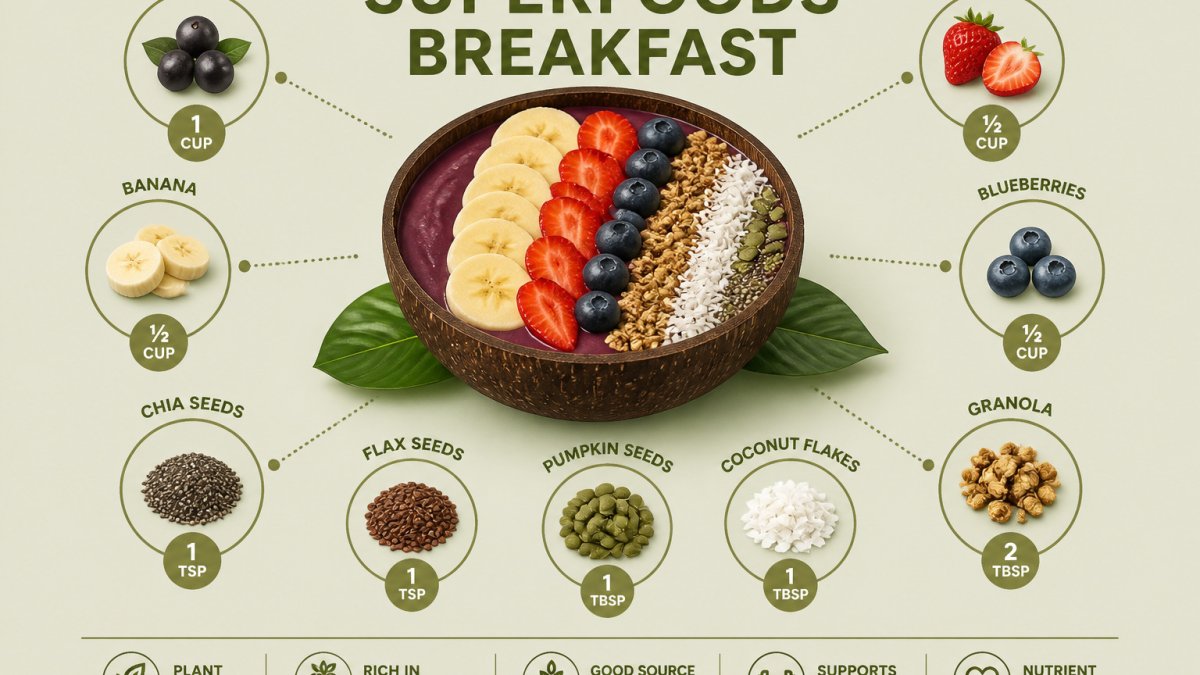
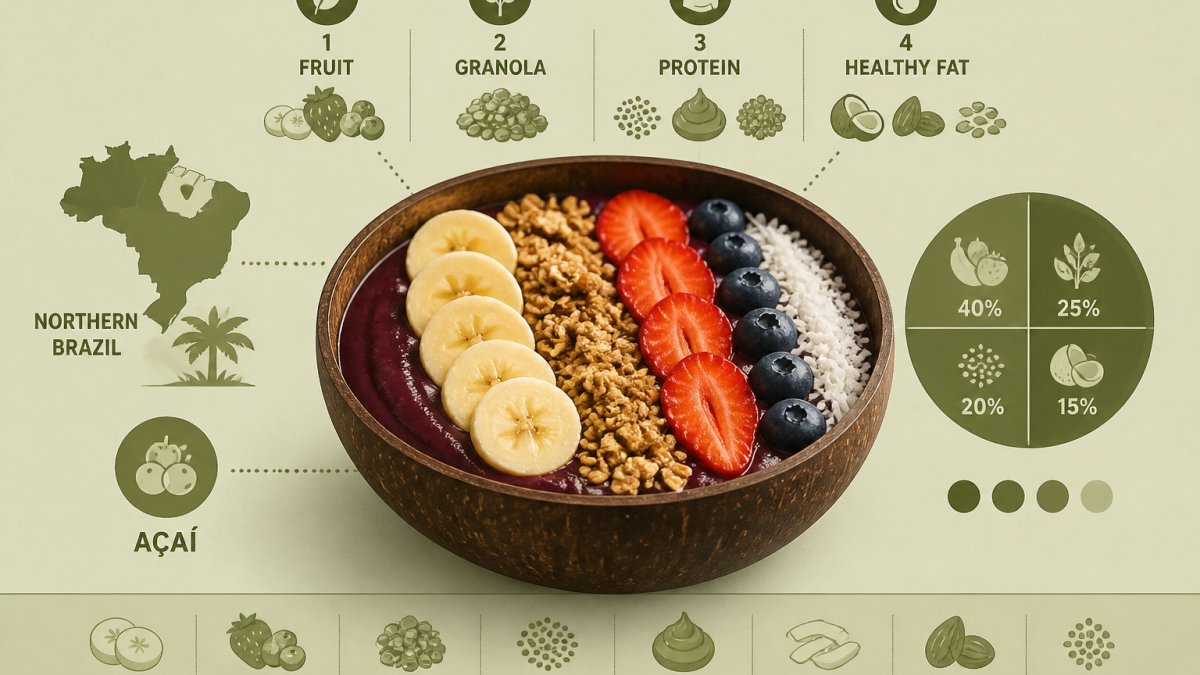
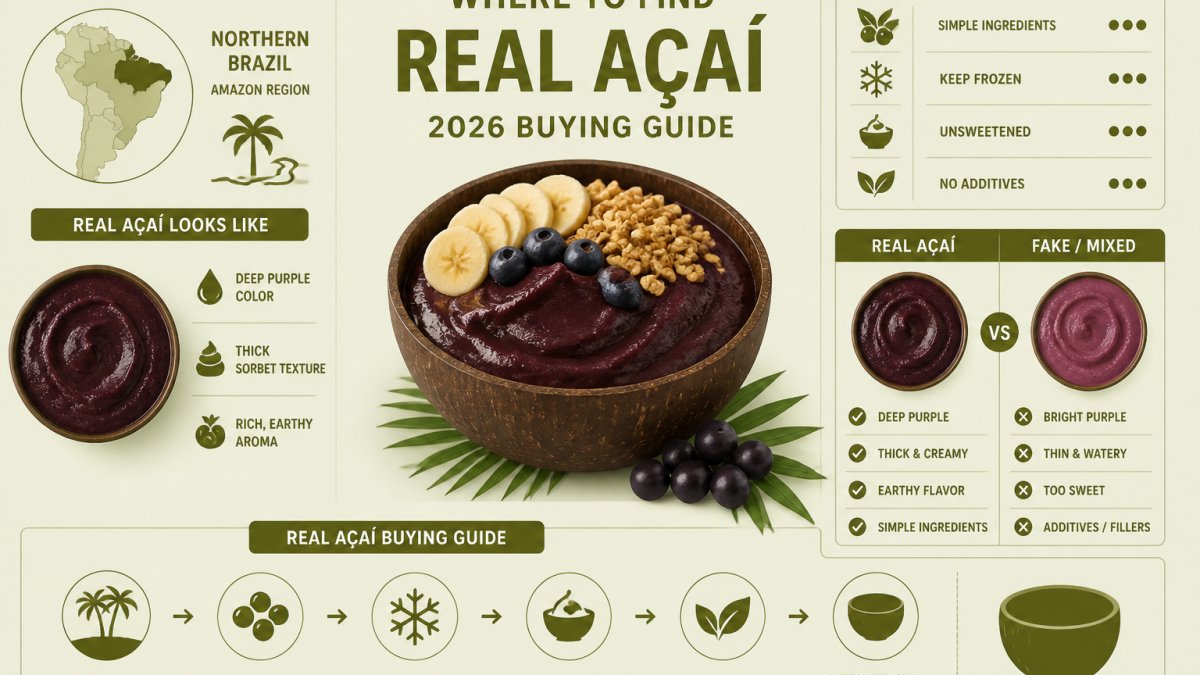
- Carbs: rice, oats, potatoes, fruit, or a bowl built on real açaí
- Color: spinach, berries, and other produce for antioxidants
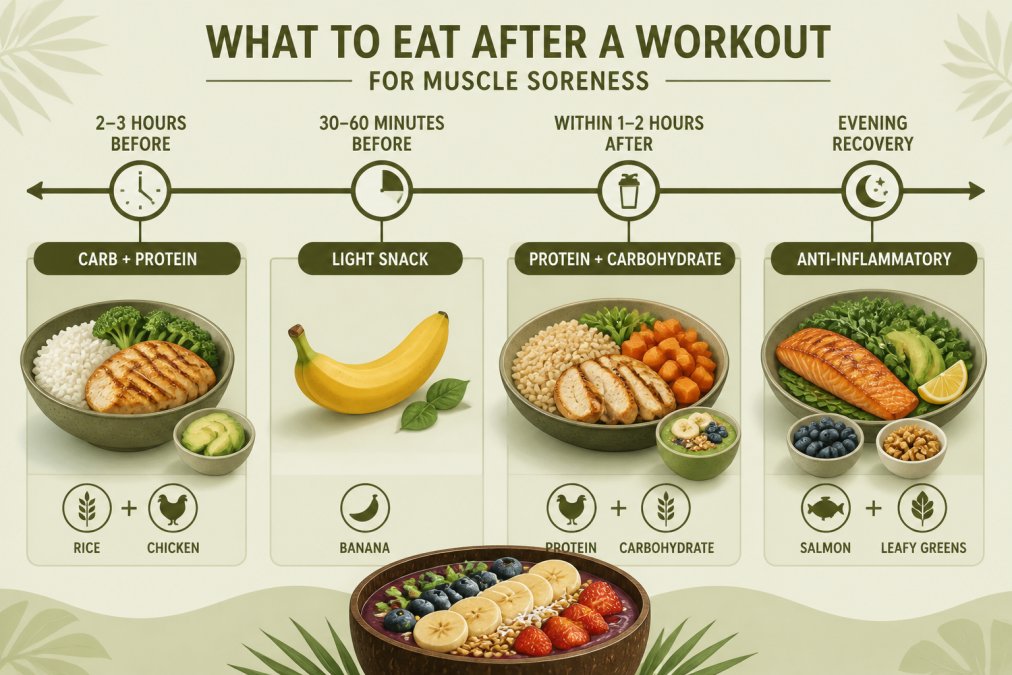
A Timed Meal and Snack Plan Around Your Workout
Timing beats perfection. You do not need a stopwatch, just a rough rhythm:
- 2-3 hours before: a normal meal with carbs and protein
- 30-60 minutes before: a light snack, like fruit or toast
- Within 1-2 hours after: protein plus carbs, the core recovery window
- Evening: anti-inflammatory foods such as fatty fish or leafy greens
For easy homemade options that fit this plan, see our recovery snacks for athletes.
Protein for Muscle Recovery: How Much and When
Protein for muscle recovery means roughly 1.2 to 1.6 grams per kilogram of body weight daily, according to the 2021 Nutrition and Muscle Recovery review. Some athletes land closer to 1.4 to 2.0 g/kg.
Spread it across the day. If you use powder to hit these targets, see our guide on how to choose the best recovery protein powder. A palm-sized portion at each meal beats one giant shake at night. Eating protein near training is the detail that matters most.
One caution: a Harvard Health article notes that protein drinks offer little help for muscle pain from exercise. Protein supports repair. It does not numb soreness.
Carbohydrates, Glycogen, and Replenishing Energy Stores
Carbohydrates refill glycogen, the fuel your muscles burn during hard sessions. Skip them and you start the next workout running on empty, which makes soreness feel worse.
Choose complex carbohydrates most of the time: oats, brown rice, sweet potatoes, whole-grain bread. Save quick carbs for right around training, when fast fuel helps.
A simple rule: match your carb intake to your training load. Easy day, smaller portions. Long run or heavy lift, bigger portions. Fruit counts, and it brings antioxidants along for the ride.
Hydration and Muscle Soreness: Fluids, Electrolytes, and Practical Measures
Hydration and muscle soreness are linked more than most people realize. Dehydration slows blood flow to working muscles, which can make stiffness drag on longer.
Practical measures that work:
- Drink water through the day, not just at meals
- Add electrolytes for sessions over an hour or in heat, and see our natural electrolyte drinks for post workout recovery for practical options
- Check urine color: pale yellow is the target
- Weigh yourself before and after long sessions to gauge fluid loss
Anti-Inflammatory Foods for Muscle Recovery
Anti-inflammatory foods for muscle recovery include fatty fish, tart cherry, berries, leafy greens, and nuts. For a deeper look, read about the benefits of eating antioxidants after intense exercise. That list is standard. What most guides skip is how strong the evidence is for each food, how much you actually need, and when to eat it. Here is the graded version.
What the Evidence Actually Shows, Food by Food
A 2023 review in Nutrients found tart cherry and omega-3 fatty acids had the most compelling evidence among the compounds it studied for reducing exercise-induced muscle damage. A 2014 review in Nutritional Intervention on Delayed Onset Muscle Soreness flagged caffeine, omega-3s, taurine, and polyphenols as the most studied options, without strong effect sizes. Most practitioners find the realistic benefit is modest: less stiffness and a faster return to normal training, not the absence of soreness.
| Food or compound | Evidence strength | Realistic effect | Practical amount |
|---|---|---|---|
| Omega-3s (fatty fish) | Moderate | Small reduction in soreness markers | 2-3 servings of salmon, sardines, or mackerel weekly |
| Tart cherry | Moderate | Small to modest reduction in soreness | 8-12 oz of tart cherry juice or concentrate around hard sessions |
| Polyphenol-rich produce | Emerging | Supports antioxidant defenses | 2-3 cups of berries, pomegranate, or leafy greens daily |
| Caffeine | Moderate | Lowers perceived soreness | 1-2 cups of coffee before training |
| Magnesium-rich foods | Emerging | Supports normal muscle function | Greens, nuts, seeds, and whole grains daily |
How to Build Anti-Inflammatory Meals
Build meals around:
- Fatty fish: salmon, sardines, mackerel
- Seeds and nuts: chia seeds, flaxseed, walnuts
- Produce: spinach, pomegranate, berries
- Extras: pistachios, coffee, and magnesium-rich greens
A simple plate rule: one palm of protein, one fist of colorful produce, one thumb of healthy fat, and a complex carb. That combination hits omega-3s, polyphenols, and magnesium in one sitting without tracking anything.
Food-First Before Supplements
Tart cherry juice and omega-3s lead the pack, but supplements are where people overspend and overcomplicate. Food-first guidance matters: two servings of fatty fish and a daily bowl of berries do more than a shelf of pills. If you do use a supplement, check for third-party testing and avoid stacking high-dose antioxidants right after training, since some research suggests very high doses may blunt adaptation signals.
How Recovery Nutrition Changes With Your Workout and Training Status
Your plan should shift with your training. A new lifter doing their first leg day needs more recovery support than a seasoned runner logging easy miles. Harder sessions, heat, and higher volume all raise your needs. Most guides give one generic plan. This is a decision guide.
Endurance vs. Resistance Training
| Training type | Primary recovery need | Practical move |
|---|---|---|
| Long endurance session | Carbs + electrolytes | 30-60 g of carbs per hour during, then a carb-plus-protein meal within 2 hours |
| Heavy strength block | Protein spread | 3-4 protein portions of 25-40 g across the day |
| Mixed training | Both | Prioritize protein first, then top off carbs based on session length |
| Hot-weather training | Fluids + electrolytes | Drink before you feel thirsty and add electrolytes for sessions over an hour |
Beginner vs. Trained Athlete
Beginners get more soreness from the same workout because the tissue is unaccustomed to the load. Most practitioners find that new trainees benefit most from hitting protein consistently and not cutting calories hard while adapting. Trained athletes already have a repair routine, so the marginal gain comes from timing and hydration rather than adding more food.
Common Dietary Restrictions
- Vegetarian or vegan: combine plant proteins (beans plus rice, tofu plus whole grains) to cover the amino acid profile, and use flaxseed or walnuts for omega-3s.
- Dairy-free: Greek-style coconut yogurt and fortified plant milks can replace dairy protein and electrolytes.
- Gluten-free: rice, oats labeled gluten-free, potatoes, and fruit cover carbs without compromise.
- Low-calorie or weight-loss phase: keep protein high and cut carbs around easy sessions, not hard ones.
A Quick Decision Checklist
- How hard was the session? Harder means more carbs and fluids.
- How new is the training? Newer means more protein consistency.
- What is the weather? Heat means electrolytes.
- What are your dietary limits? Build the plate around what you actually eat.
For easy homemade options that fit this plan, see our recovery snacks for athletes.
Order a Recovery Bowl Before Your Next Hard Session
World Green Açai offers organic açaí bowls.
Order online through our app and skip the line.
Frequently Asked Questions
Does protein help prevent delayed-onset muscle soreness?
Protein supports muscle repair, but it is not a soreness cure. A 2021 review in PMC reports suggested daily intakes of 1.2-1.6 g/kg or 1.4-2.0 g/kg, with protein eaten close to physical activity supporting muscle recovery. Harvard Health also notes that protein drinks offer little help for muscle pain from exercise. Treat protein as one part of muscle soreness nutrition, paired with carbohydrates, fluids, and sleep, rather than a standalone fix for DOMS.
What should I eat before a workout to reduce soreness?
Eat a meal with complex carbohydrates and a moderate amount of protein two to three hours before training, then a light carbohydrate snack 30 to 60 minutes out if you need one. Carbohydrates top off glycogen so you start with full energy stores, and protein gives your muscles amino acids during and after the session. Keep fat and fiber low right before exercise so digestion does not slow you down.
Can anti-inflammatory foods reduce muscle soreness?
Some can help, but the effect is modest. A 2023 review found tart cherry and omega-3 fatty acids had the most compelling evidence among the compounds it reviewed for reducing exercise-induced muscle damage, with curcumin and pomegranate also discussed. A 2014 review flagged caffeine, omega-3s, taurine, and polyphenols as commonly studied for DOMS. Build these into an overall anti-inflammatory foods for muscle recovery pattern rather than expecting a single food to erase soreness.
Can nutrition completely prevent muscle soreness?
No. Nutrition lowers training stress and supports muscle recovery, but some soreness after hard or new exercise is normal. The 2026 ScienceDirect review notes that higher carbohydrate and protein intake, plus supplements such as creatine or polyphenols, may accelerate recovery from exercise-induced muscle damage, not eliminate it. Pair good muscle soreness nutrition with sleep, gradual progression, and rest days, and see a doctor if pain is sharp, one-sided, or lasts beyond a few days.
Sore muscles after a hard session are normal. Struggling to eat well when you are busy is the real problem. World Green Açai solves it with organic açaí bowls, convenient online ordering, and easy mobile app access, so recovery food fits your schedule. Get started with World Green Açai and give your muscles the fuel they need.