 ultimate-guide
Is an Acai Bowl a Healthy Lunch? What You Need to Know
Table of Contents
- Is an Acai Bowl a Healthy Lunch? The Honest Answer
- Acai Bowl Nutrition Facts: What's Actually in Your Bowl
- Acai Bowl Sugar Content: Where It Hides and How Much Is Too Much
- DIY vs. Store-Bought: A Nutritional Breakdown
- High Protein Acai Bowl Recipes and Toppings That Keep You Full
- Acai Bowl as a Lunch vs. a Snack: Does It Replace a Meal?
- Conclusion
Last Updated: August 4, 2026
Is an Acai Bowl a Healthy Lunch? The Honest Answer
An acai bowl lunch sounds like the perfect midday meal: nutrient-dense, visually appealing, and built around a genuine superfood. At World Green Açai, we hear this question constantly from Larkspur's busy professionals and health-conscious locals. The honest answer is that it depends almost entirely on what goes into the bowl and how large the serving is.
Acai berries themselves are genuinely impressive. They're packed with antioxidants, healthy fats, and fiber, which is a rare combination for a fruit. The problem is that by the time most commercial bowls reach your table, the base has been blended with sweetened juice, and the toppings have added enough sugar to push the meal into dessert territory. A well-constructed acai bowl lunch can absolutely function as a balanced, satiating midday meal. A poorly constructed one is closer to a large smoothie with granola on top.
The good news: once you understand what to look for, the distinction is easy to make.
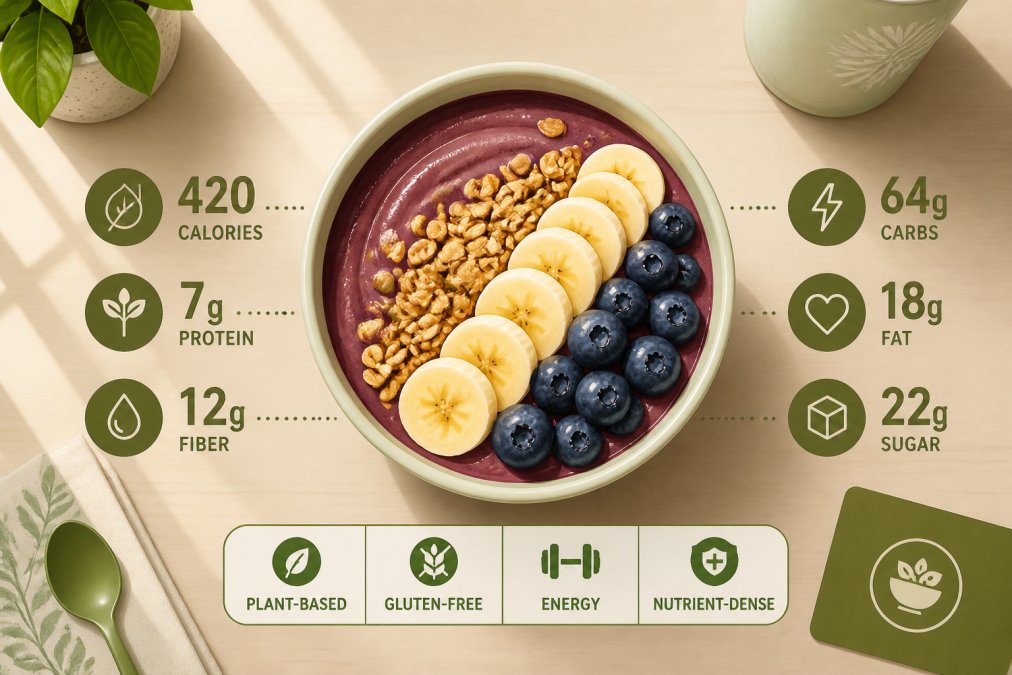
Below, we'll break down the actual nutritional profile, identify where the sugar hides, compare DIY versus store-bought options, and show you exactly how to build a bowl that keeps you full for hours rather than crashing by 2 p.m.
Acai Bowl Nutrition Facts: What's Actually in Your Bowl
The nutritional profile of an acai bowl varies more than almost any other lunch option. Understanding the base ingredients and their macronutrients is the starting point for making a smart choice.
Base Ingredients and Their Macronutrients
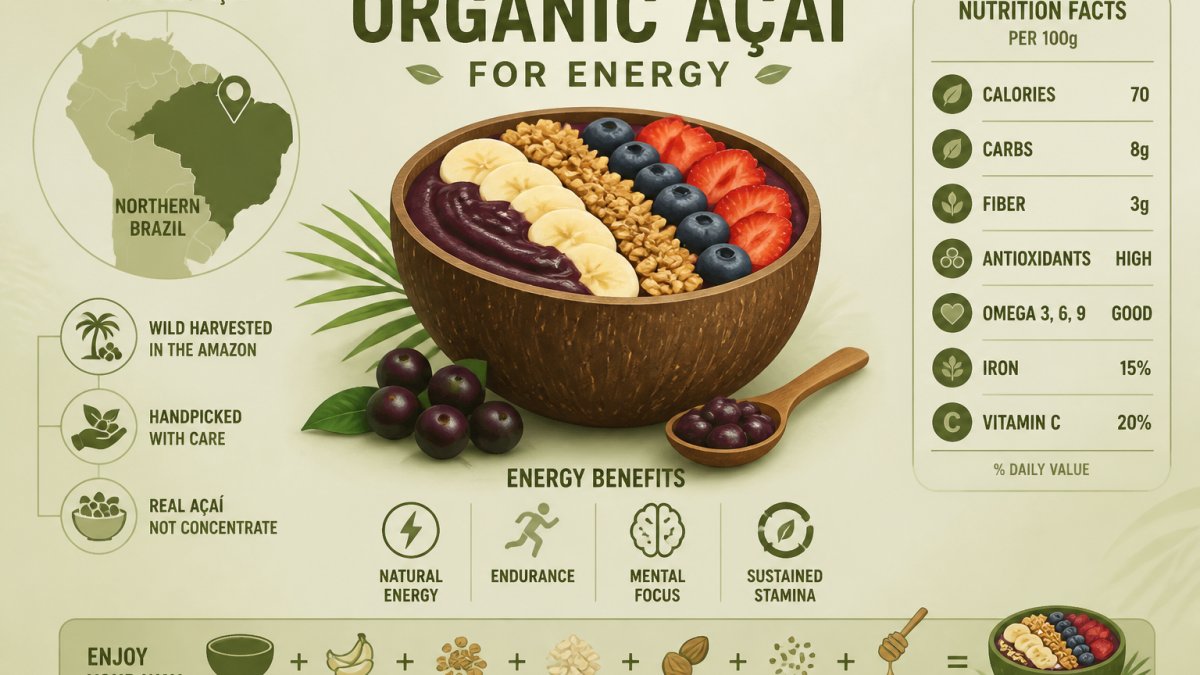
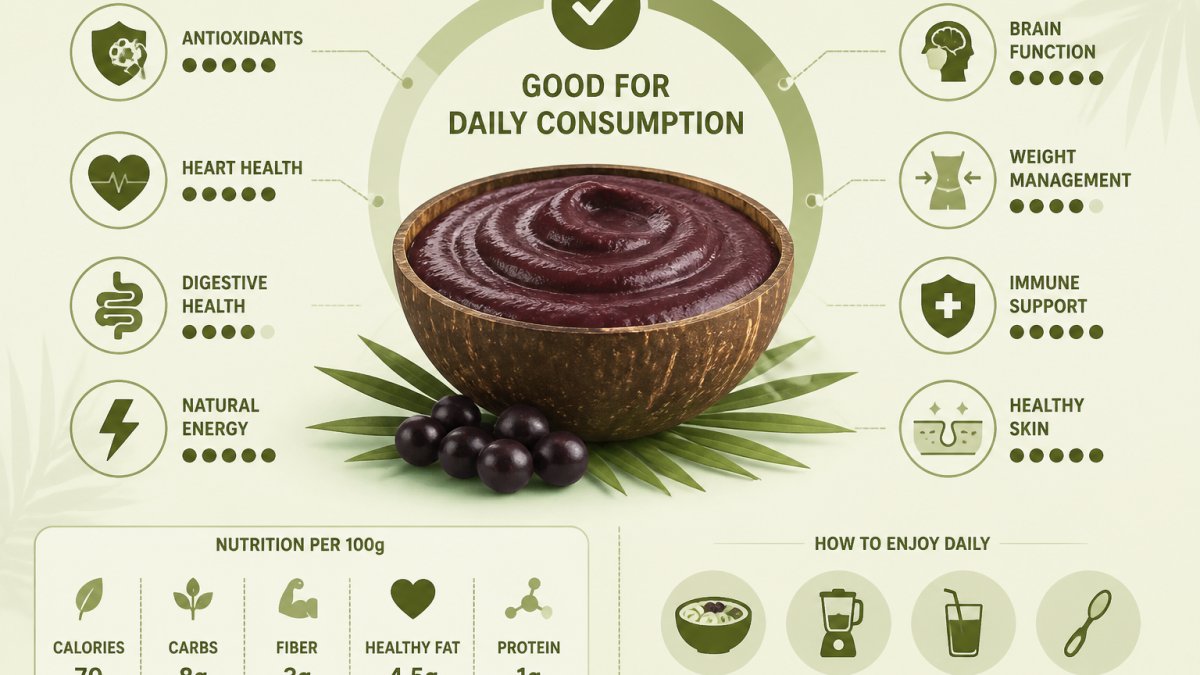
Acai berry is the foundation. The berry itself contains healthy fats, including omega-3 fatty acids, modest fiber content, and relatively low natural sugar compared to most other fruits. According to the USDA FoodData Central nutritional database, unsweetened acai pulp is low in carbohydrates and provides meaningful amounts of calcium and potassium per serving.
The macronutrient profile of a typical acai bowl base includes:
- Acai pulp: Primarily fat and fiber, minimal sugar in unsweetened form
- Liquid base: Often banana, apple juice, or coconut water, each adds carbohydrates and sugar
- Banana: A common blending ingredient that adds potassium and natural sugars
- Granola: The topping that contributes the most carbohydrates and, in many commercial versions, added sugars
A common mistake is assuming the acai itself is the main calorie driver. It isn't. The liquid used to blend the base and the granola portion are usually responsible for the majority of the bowl's caloric density. A generous serving of granola alone can add substantial carbohydrates to an otherwise balanced bowl.
Antioxidant Content and Micronutrients
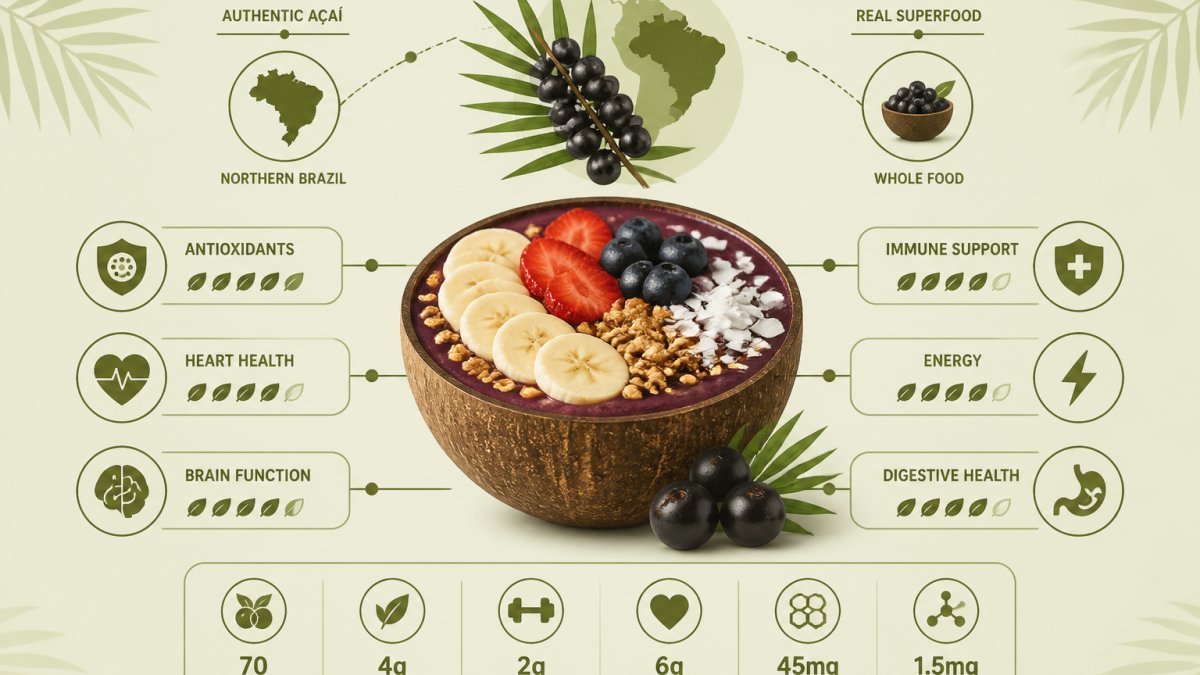
This is where acai genuinely earns its superfood status. Acai berries contain anthocyanins, the same class of antioxidants found in blueberries and red wine, but in notably higher concentrations. Antioxidants help the body manage oxidative stress, which is linked to inflammation and long-term metabolic health.
Beyond antioxidants, acai provides micronutrients including calcium, potassium, and trace amounts of iron. The fiber content supports digestive health and contributes to satiety, which matters a lot when you're evaluating whether an acai bowl lunch will actually carry you through an afternoon of work.
The antioxidant case for acai is well-documented. As noted by Harvard T.H. Chan School of Public Health's coverage of antioxidants and health, foods rich in anthocyanins are associated with reduced markers of inflammation, though whole food sources are generally preferred over concentrated supplements.
Acai Bowl Sugar Content: Where It Hides and How Much Is Too Much
Sugar is the real story with commercial acai bowls. Most people are surprised by how much accumulates across the different components of a single bowl.
Natural vs. Added Sugars in Commercial Bowls
There's a meaningful difference between the natural sugars in whole fruit and added sugars stirred into a product during processing. The acai berry itself contains minimal natural sugar. The issue is what surrounds it.
Common sources of added sugars in commercial acai bowls include:
- Sweetened acai packets or blends (many contain cane sugar or agave)
- Sweetened granola toppings
- Honey or agave drizzled on top
- Fruit juice used as the blending liquid instead of unsweetened alternatives
- Flavored nut butters with added sweeteners
The American Heart Association's dietary guidelines on added sugar recommends that most adults limit added sugar to no more than 25-36 grams per day. A large commercial acai bowl with sweetened granola and a honey drizzle can approach or exceed that threshold in a single meal.
The distinction matters because natural sugars in whole fruit come packaged with fiber, which slows absorption. Added sugars arrive without that buffer.
Glycemic Index Impact and Blood Sugar Spikes
The glycemic index measures how quickly a food raises blood sugar. This is where the acai bowl's lunch credentials get complicated.
Acai itself has a low glycemic index. The berry's fat and fiber content slow digestion and moderate the blood sugar response. The problem is that most bowls are assembled with high-glycemic additions: refined granola, ripe bananas, tropical fruits, and sweetened juice bases. The combined glycemic load of a typical commercial bowl is considerably higher than the acai component alone would suggest.
A high glycemic load at lunch produces a familiar pattern: an initial energy spike followed by a sugar crash around mid-afternoon. For anyone trying to stay focused and productive through the workday, that cycle is counterproductive. Choosing unsweetened bases, lower-sugar fruits like berries, and granola with whole grain ingredients significantly reduces the glycemic impact of an acai bowl lunch.
DIY vs. Store-Bought: A Nutritional Breakdown
The gap between a homemade acai bowl and a commercial one can be significant. Understanding that gap helps you make better choices regardless of where you're eating.
| Factor | DIY Acai Bowl | Commercial/Store-Bought |
|---|---|---|
| Sugar control | Full control, use unsweetened pulp | Often pre-sweetened blends |
| Portion size | Customizable | Frequently oversized |
| Protein additions | Easy to add protein powder, Greek yogurt | Varies; often limited options |
| Topping quality | Choose whole food toppings | May include processed granola |
| Convenience | Requires prep time | Ready immediately |
| Consistency | Depends on technique | Varies by location |
A common mistake with DIY bowls is using too much liquid to get a blendable consistency, which dilutes the thickness and increases the carbohydrate load from juice. The trick is using frozen acai pulp with minimal liquid, adding a splash of unsweetened almond milk or coconut water, and blending in short pulses.
Store-bought bowls from quality-focused shops use unsweetened organic acai as the base, offer protein add-ons, and let you customize toppings. The thing nobody tells you about commercial acai bowls is that the serving size is often designed for visual appeal rather than nutritional balance. A bowl that fills a wide, shallow dish may contain two or three times a reasonable single-serving portion of granola.
When choosing a store-bought option, the questions worth asking are: Is the acai base unsweetened? What's in the granola? Can I adjust portion sizes or swap toppings?
High Protein Acai Bowl Recipes and Toppings That Keep You Full
The biggest nutritional gap in most acai bowls is protein. A base of acai, banana, and juice is primarily carbohydrates and fat. Without meaningful protein, satiety suffers and blood sugar stability becomes harder to maintain.
How to Build a Balanced, Satiating Acai Bowl
A balanced acai bowl lunch targets all three macronutrients: carbohydrates from the fruit and granola, healthy fats from the acai and any nut-based toppings, and protein from intentional additions.
High-protein topping options:
- Hemp seeds (complete protein, also adds omega-3 fatty acids)
- Nut butter (almond or peanut, choose unsweetened varieties)
- Greek yogurt dolloped on top or blended into the base
- Protein powder blended directly into the acai base
- Chia seeds (adds fiber and some protein)
- Pumpkin seeds (good source of plant protein and zinc)
Building the bowl:
- Start with unsweetened frozen acai pulp as the base
- Blend with minimal liquid (unsweetened almond milk works well)
- Add a scoop of protein powder or a few tablespoons of Greek yogurt to the blend
- Top with a measured portion of low-sugar granola (whole grain, no honey coating)
- Add fresh berries rather than tropical fruits for lower sugar content
- Finish with hemp seeds or a small drizzle of almond butter
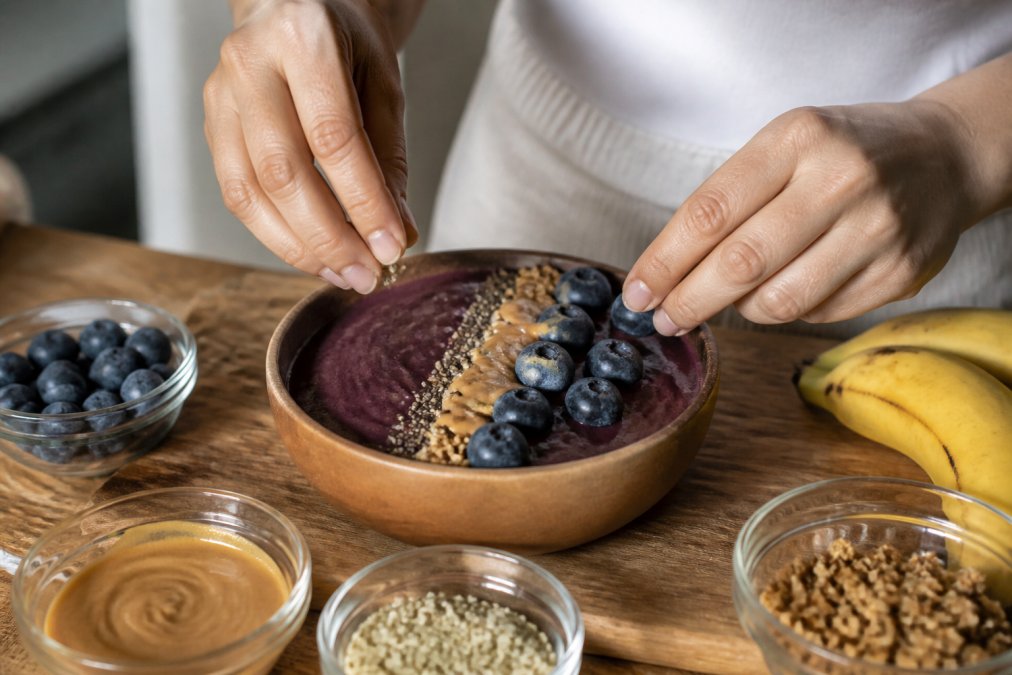
The satiety difference between a protein-enhanced bowl and a standard one is noticeable. Protein and fat both slow gastric emptying, which means you stay full longer and avoid the mid-afternoon energy dip that undermines productivity.
Acai Bowl as a Lunch vs. a Snack: Does It Replace a Meal?
A standard acai bowl can function as a lunch replacement, but only if it's built with meal-level macronutrients in mind. Most off-the-shelf bowls are sized and composed more like a substantial snack than a complete meal.
A snack-level acai bowl typically features a small base, minimal protein, and light toppings. It satisfies a craving and provides a quick energy lift, but it won't sustain a busy professional through a full afternoon of focused work.
A meal-level acai bowl requires:
- Sufficient caloric density to replace a full lunch
- At least 20 grams of protein (from additions like protein powder, Greek yogurt, or seeds)
- Meaningful fiber content to support satiety
- Balanced macronutrients rather than predominantly carbohydrates
The honest reality is that many café-style acai bowls sit in an ambiguous middle ground. They're too large to be a snack but too carbohydrate-heavy and protein-light to function as a genuinely balanced meal replacement. The visual generosity of a wide bowl loaded with granola and fruit can mask the fact that the macronutrient balance is off.
For Marin County's outdoor recreation community, an acai bowl makes excellent sense as a post-workout recovery option. The carbohydrates help replenish glycogen stores, and the antioxidants support recovery from exercise-induced inflammation. In that context, a higher-carbohydrate bowl is appropriate. For a midday desk lunch, the protein and fiber content need more attention.
World Green Açai builds its bowls with organic acai as the foundation, and the team at our Larkspur location is genuinely focused on getting the quality right. For anyone ordering as a lunch replacement, the online ordering system makes it straightforward to customize your bowl and skip the line, which matters when your lunch break is measured in minutes rather than hours.
Acai Bowl Nutrition Facts Summary
| Component | Role in the Bowl | Lunch-Friendly Tip |
|---|---|---|
| Acai base (unsweetened) | Antioxidants, healthy fats, fiber | Always request unsweetened |
| Liquid base | Blending agent, carbohydrates | Use unsweetened almond milk |
| Granola | Carbohydrates, texture | Choose whole grain, low-sugar |
| Fresh berries | Micronutrients, natural sugar | Prefer over tropical fruits |
| Protein addition | Satiety, macronutrient balance | Hemp seeds, Greek yogurt, protein powder |
| Nut butter | Healthy fats, flavor | Unsweetened; blend into base |
| Honey or agave drizzle | Added sugar | Skip or use sparingly |
The acai bowl nutrition facts picture that emerges from this breakdown is nuanced. The base ingredient is genuinely nutritious. The assembly process is where most bowls either succeed or fail as a healthy lunch option.
For anyone navigating commercial acai bowl options, the Dietary Guidelines for Americans published by the U.S. Department of Agriculture provide a useful framework for evaluating whether a meal's macronutrient composition supports daily nutritional goals. Checking added sugar content and protein levels against those benchmarks is a practical starting point.
Busy lunch hours leave little room for second-guessing your meal. The challenge with most acai bowl options is that the nutritional quality varies widely depending on the ingredients and sourcing behind the bowl. World Green Açai addresses that directly with organic acai sourced for quality, an online ordering system that lets you skip the line and pick up in minutes, and a menu built around whole food ingredients rather than sweetened shortcuts. Order online and get a genuinely balanced acai bowl lunch without the wait.
Frequently Asked Questions
Should I eat an acai bowl for lunch?
An acai bowl can work as a healthy lunch when it's built with the right balance of macronutrients. A base of organic acai provides antioxidants and healthy fats, but the bowl needs added protein, from sources like protein powder, nut butter, or Greek yogurt, and fiber-rich toppings to sustain your energy through the afternoon. Without those additions, a standard bowl may not deliver enough satiety to replace a full meal.
Do acai bowls have enough protein for a meal?
Plain acai is relatively low in protein, typically providing 2-3 grams per serving. A bowl built for lunch should target at least 20-25 grams of protein to function as a true meal replacement. You can reach that range by adding a scoop of protein powder to the base, topping with hemp seeds or nut butter, or pairing the bowl with a protein-rich side. High protein acai bowl recipes make this easy without sacrificing flavor.
Are there any downsides to acai bowls?
The main risk is acai bowl sugar content. Commercial versions can contain 40-60 grams of sugar per serving once sweetened bases, flavored granola, honey drizzles, and fruit toppings are factored in. That level of added sugar can cause a blood sugar spike followed by an energy crash, the opposite of what a productive lunch should do. Choosing unsweetened organic acai and controlling your toppings largely eliminates this downside.
What is the healthiest way to eat an acai bowl?
Start with an unsweetened, organic acai base to minimize added sugars. Add a protein source, protein powder, Greek yogurt, or nut butter, to improve satiety and macronutrient balance. Choose whole-food toppings like fresh berries, unsweetened granola, and seeds rather than sweetened syrups or candy-coated granola. Keep your portion size intentional: a lunch-sized bowl should be around 16-20 oz to provide enough calories without excess sugar.
This article was written using GrandRanker