
 how-to
How Long to See Açai Benefits for Skin
Table of Contents
- What Is an Açai Berry and Why It Matters for Skin
- Açai Berry Skin Benefits: What the Research Shows
- Topical vs. Dietary Açai for Skin: Which Works Faster
- Timeline for Visible Skin Results from Açai
- How to Use Açai for Maximum Skin Benefits
- Skin Type Suitability: Who Sees Results Fastest
- Common Mistakes That Slow Your Results
- Frequently Asked Questions
Last Updated: September 27, 2026
What Is an Açai Berry and Why It Matters for Skin
Açai berries are small, dark purple fruits native to Northern Brazil packed with compounds that deliver açai benefits for skin health. At World Green Açai, we source authentic açai directly from Northern Brazil to ensure you're getting the real thing, not a sugar-heavy imitation.
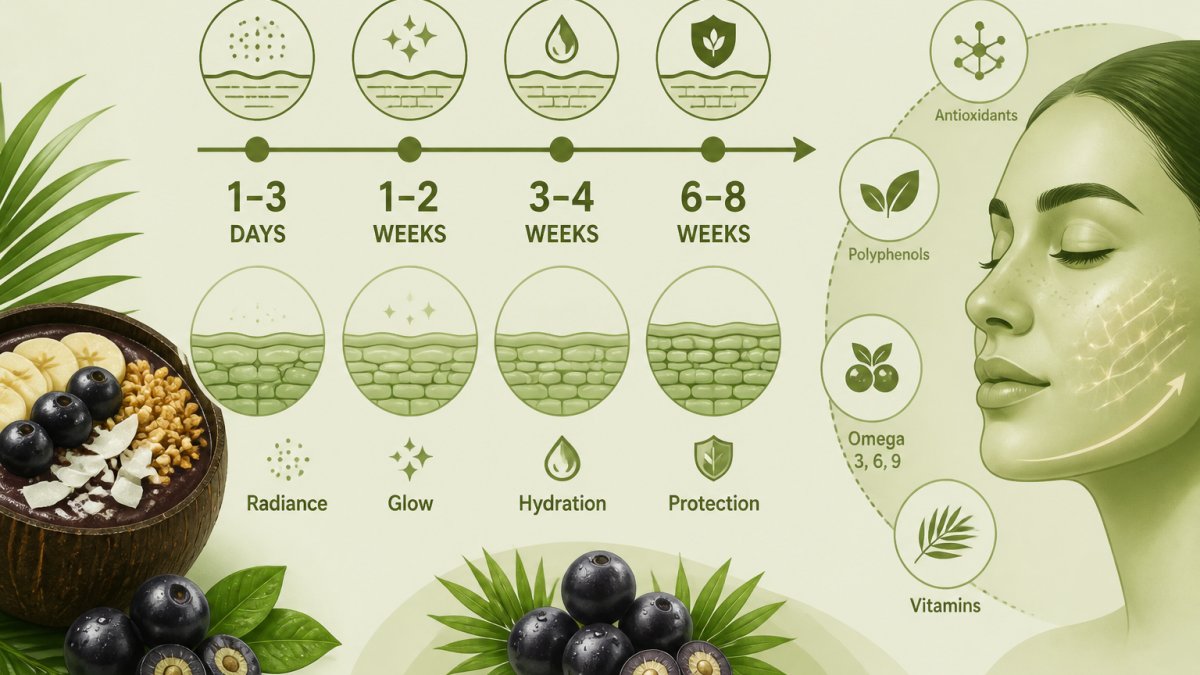
The berry contains polyphenols, anthocyanins, and omega fatty acids, compounds that deliver antioxidants and anti-inflammatory agents when consumed or applied topically.
Not all açai bowls are created equal. Some shops use açai powder mixed with fillers or heavily processed frozen açai. Real açai retains more of its nutrient profile.
Açai Berry Skin Benefits: What the Research Shows
The açai benefits for skin are measurable and work through multiple pathways. The berry works both when eaten and when applied topically, though the mechanisms differ significantly based on how the compounds are delivered to skin cells.
Antioxidants and Free Radical Protection
The açai berry's most powerful asset is its antioxidant density. Açai contains anthocyanins (the pigments responsible for its deep purple color), proanthocyanidins, and phenolic acids, compounds that neutralize free radicals before they damage skin cells.
Free radicals form from UV radiation, pollution, and metabolic stress, degrading collagen and elastin. Anthocyanins in açai neutralize these molecules, preventing cellular damage.
The antioxidant effect is cumulative.
Anti-Inflammatory and Hydration Support
Inflammation drives premature aging, acne, sensitivity, and barrier dysfunction. Açai's anthocyanins and ellagic acid suppress inflammatory signaling, reducing redness, swelling, sebum overproduction, and collagen breakdown.
Collagen Support and Elasticity
Açai's polyphenols slow collagen breakdown by reducing oxidative stress and inflammation. The improved hydration and reduced inflammation create an optimal environment for fibroblasts to function. After 6-8 weeks, most people report noticeably firmer skin and improved elasticity.
Topical vs. Dietary Açai for Skin: Which Works Faster
The form you choose matters. Topical and dietary açai both deliver benefits, but they work on different timelines and through different mechanisms.
How Topical Açai Products Work
Topical açai serums and masks deliver antioxidants to the skin's surface, producing increased radiance and smoother texture within days. However, they can't reach deeper dermal layers where collagen lives. For anti-aging effects, you need systemic delivery through diet.
How Dietary Açai Delivers Results
Dietary açai enters your bloodstream and reaches skin cells deep in the dermis, supporting collagen production and elasticity. Results take 3-6 weeks but run deeper. Combining topical and dietary approaches yields the fastest results: topical for immediate radiance, dietary for long-term skin health.
Timeline for Visible Skin Results from Açai
Real expectations matter. Here's what actually happens week by week when you start consuming authentic açai consistently.
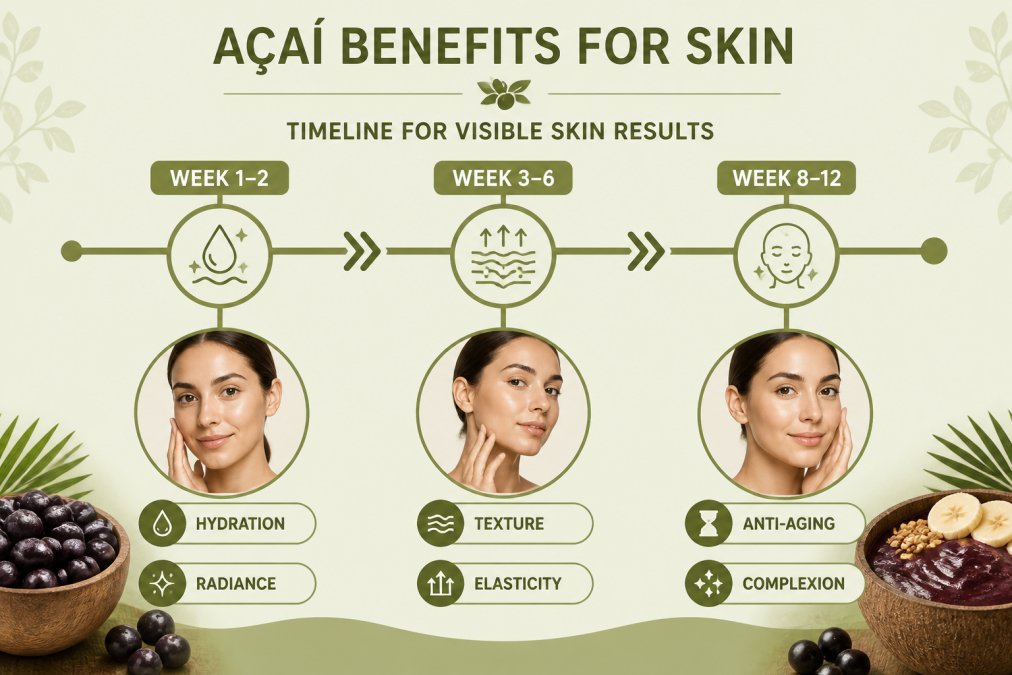
Weeks 1-2: Initial Hydration and Radiance
Your skin looks brighter and feels more hydrated as açai's antioxidants reduce inflammation and support moisture retention. Hydration improvements are the most dramatic early sign, dry patches soften and your complexion feels smoother.
Weeks 3-6: Skin Texture and Elasticity Improvements
By week three, consistent açai intake starts improving skin texture. Fine lines appear less pronounced. Your skin feels firmer and more elastic.
This is when people often report that their skin looks "better" overall, not just brighter, but actually improved. Pores appear smaller. Roughness smooths out. The texture becomes more even.
Elasticity gains come from improved collagen support. Açai's phytochemicals encourage your skin to maintain and rebuild collagen fibers. You'll notice this when you pinch your skin, it bounces back faster.
Weeks 8-12: Anti-Aging and Complexion Changes
After two months of consistent consumption, anti-aging effects become visible. Fine lines soften noticeably. Your skin tone evens out. Discoloration and uneven patches fade.
This is the payoff period. The cumulative effect of eight weeks of antioxidant and anti-inflammatory support shows up as genuine anti-aging results. Skin looks younger, not just healthier.
Complexion changes are most dramatic in this window. If you've dealt with acne scarring or sun damage, you'll see improvement. The skin's natural regeneration cycle, supported by improved collagen production, gradually replaces damaged cells with healthy ones.
How to Use Açai for Maximum Skin Benefits
Consistency beats perfection. You don't need expensive supplements or complicated routines. You need real açai, taken regularly, combined with basic skin care habits.
Dietary Açai: Consistency and Dosage
Eat or drink authentic açai regularly. A serving of real açai bowls or smoothies several times per week can be beneficial.
The key is authenticity. Açai powder mixed with fillers or heavily sweetened frozen açai won't deliver the same benefits. Real açai, like what you get at World Green Açai, contains the full nutrient profile your skin needs.
Combining Açai with Other Skin-Supporting Habits
Açai works best alongside basic skin care fundamentals:
- Drink plenty of water daily
- Use a gentle cleanser morning and night
- Apply moisturizer while skin is still damp
- Wear sunscreen every day
- Sleep 7-9 hours nightly
- Manage stress through movement or meditation
These habits amplify açai's benefits. Dehydration, poor sleep, and sun damage will slow your results. Water and sunscreen matter as much as the açai itself.
If you use topical products, choose ones with complementary ingredients. Vitamin C serums pair well with dietary açai. Retinol products work synergistically with antioxidant-rich foods. Hyaluronic acid moisturizers enhance the hydration benefits you're already getting from açai.
Skin Type Suitability: Who Sees Results Fastest
Different skin types respond to açai on different timelines because the root causes of their concerns vary. Understanding your skin type helps you set realistic expectations and identify which açai benefits will matter most to you.
Dry Skin: Fastest Results (2-3 Weeks)
Dry skin's primary issue is barrier dysfunction and insufficient lipid production. Açai's anti-inflammatory compounds directly address this. When inflammation decreases, your skin's natural ceramide and cholesterol production normalizes, and transepidermal water loss drops immediately.
Dry-skin types typically notice results fastest because hydration improvement is the most visible early benefit. Within 2-3 weeks of consistent açai consumption, tight, flaky patches soften. Your skin feels less uncomfortable. In the mirror, you'll see reduced roughness and a more even tone.
The antioxidant benefits compound on top of this. By week 6-8, fine lines (which appear more pronounced on dehydrated skin) become less visible as hydration plumps the skin. Dry skin types often report that this is when their skin looks genuinely healthier, not just less uncomfortable.
Oily and Acne-Prone Skin: Moderate Results (4-6 Weeks)
Oily and acne-prone skin's core issue is inflammation-driven sebum overproduction and bacterial proliferation. Açai's anti-inflammatory effects reduce the inflammatory signaling that triggers excess oil and acne formation.
However, results take longer because the mechanism is indirect. You're not drying out oil production (which would be counterproductive); you're reducing the inflammatory cascade that drives it. This takes 3-4 weeks to become noticeable. By week 4-6, most acne-prone individuals report fewer active breakouts and reduced redness around existing blemishes.
One important note: açai alone won't clear severe acne. It's a supportive tool that reduces inflammation and supports skin barrier health. For acne-prone skin, combine dietary açai with consistent cleansing, non-comedogenic moisturizing, and sun protection. The antioxidant benefits also help prevent post-inflammatory hyperpigmentation (dark marks left by healed acne), which becomes visible by week 8-10.
Sensitive Skin: Gradual Stabilization (3-4 Weeks)
Sensitive skin reacts to irritants because the barrier is compromised and inflammation is elevated. Açai's anti-inflammatory profile is ideal for sensitive skin, but results are subtle rather than dramatic.
You won't see a sudden transformation. Instead, you'll notice your skin becoming less reactive. Products that previously caused redness or stinging may stop triggering reactions. Your skin feels calmer. This stabilization typically becomes apparent by week 3-4.
The timeline is longer for sensitive skin because the barrier repair process is gradual. Ceramide and lipid restoration happens over weeks, not days. By week 8, most sensitive-skin types report noticeably improved tolerance to their skincare routine and fewer unexplained flare-ups. The antioxidant protection also reduces reactivity to environmental stressors (pollution, temperature changes, wind).
Combination Skin: Mixed Timeline (4-8 Weeks)
Combination skin has multiple concerns in one face: dry zones (typically cheeks and temples) and oily zones (typically T-zone). Açai benefits both, but on different schedules.
Your dry areas will improve first (within 2-3 weeks), showing hydration gains and reduced flakiness.
Mature Skin: Longest Timeline, Most Dramatic Results (8-12 Weeks)
Mature skin's primary concerns are collagen loss, elasticity decline, and accumulated sun damage. These are structural issues that require sustained antioxidant and anti-inflammatory support to address.
Common Mistakes That Slow Your Results
Most people don't see results because they make one or two critical errors.
Frequently Asked Questions
How long does it take for açai to improve skin hydration and radiance?
Açai is rich in polyphenols and anthocyanins, which can support the skin barrier and help retain moisture. The timeline for noticing improved skin hydration and a subtle glow depends on your starting skin condition and how consistently you use açai.
What are the main açai berry skin benefits for anti-aging?
Açai berries contain vitamin C, vitamin E, and omega fatty acids that can support collagen production and improve skin elasticity. These nutrients also combat oxidative stress and environmental pollutants that accelerate aging. The anti-aging benefits can build gradually as your skin's cellular regeneration improves with consistent use.
Is topical or dietary açai better for faster skin results?
Topical açai products can deliver localized benefits as the antioxidants and phytochemicals absorb directly into the skin. Dietary açai delivers nutrients through your bloodstream for broader dermal health. Many people combine both approaches.
Does skin type affect how quickly you see açai benefits?
Skin type can influence how quickly you see açai benefits. Açai's polyphenols can help regulate sebum production and reduce inflammation. Consistency matters, regular use can produce better results than sporadic application.
The timeline for seeing açai benefits for skin is clear: radiance within 2 weeks, texture improvements by week 6, and genuine anti-aging effects by week 12. The speed depends on consistency, quality, and combining dietary intake with basic skin care habits. At World Green Açai, we provide authentic Northern Brazilian açai that delivers real results. Order online through our app or website and start experiencing the difference that real, high-quality açai makes for your skin health.