 How-to
Are Açaí Bowls Good for a Sensitive Stomach?
Last Updated: November 18, 2026
Quick Summary
Açaí bowls can work well for a sensitive stomach when you control the base, sweeteners, and toppings, since plain unsweetened açaí pulp is naturally low in fermentable carbohydrates. Build your bowl with unsweetened frozen pulp, low-FODMAP fruit like strawberries and blueberries, lactose-free milk, and small portions of seeds or coconut.
- Use one packet of unsweetened frozen açaí pulp, about 3.5 oz, as your base.
- Keep fruit to ½ cup frozen strawberries and ¼ cup blueberries to limit FODMAP stacking.
- Start with ½ cup lactose-free or almond milk and add more by the tablespoon only if needed.
- Reduce chia and hemp seeds to 1 teaspoon each if fiber is a major trigger.
- Avoid honey, agave, and fruit juice concentrates, which are high in excess fructose.
Table of Contents
- Are Açaí Bowls Good for a Sensitive Stomach?
- Is Frozen Açaí Low FODMAP?
- A Low FODMAP Açaí Bowl Recipe Built for Sensitive Stomachs
- Açaí Bowl Toppings for IBS: What to Add and What to Skip
- Açaí Bowl Recipe Without Banana
- Common Mistakes to Avoid with Açaí Bowls
- Ordering a Gut-Friendly Bowl from World Green Açai
- Frequently Asked Questions
Are Açaí Bowls Good for a Sensitive Stomach?
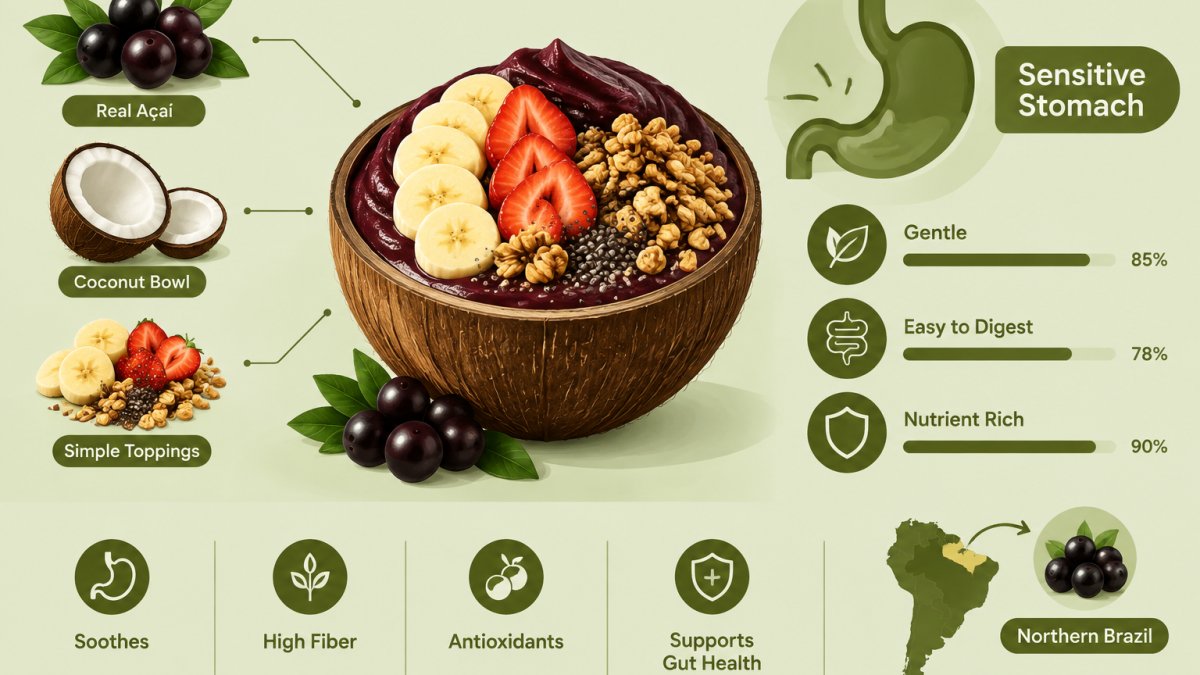
Açaí bowls can work well for a sensitive stomach, but only when you control the base, the sweeteners, and the toppings. The fruit itself is rarely the problem.
Below, we'll show you how to build a bowl that respects a touchy gut, including a full recipe, portion guidance, and the swaps that matter most.
First, a working definition. A gut-friendly açaí bowl is a blended açaí base with low-FODMAP fruit, a lactose-free liquid, and small portions of seeds or coconut, built to keep total fermentable carbohydrate load low. That last part, the total load, is what most recipes ignore.
Why Açaí Itself Is Usually Well Tolerated
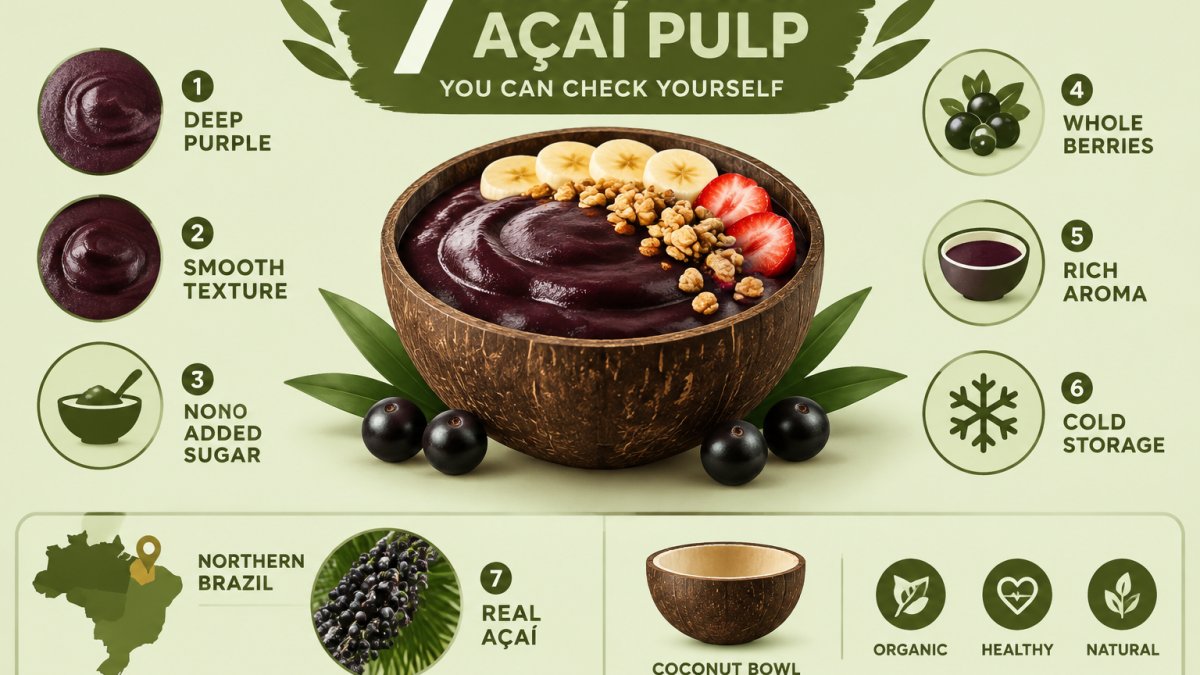
The açaí berry is naturally low in fermentable carbohydrates. Plain, unsweetened açaí pulp contains very little of the sugars that trigger IBS symptoms, which is why many people with sensitive stomachs tolerate it better than they expect.
What most guides miss is that açaí is rarely served plain. The berry arrives as a frozen pulp or powder, and the bowl around it carries the risk. If you want a deeper look at how açaí sits with digestion, our team wrote a full review of açaí and digestion issues.
One caveat: açaí is higher in fiber than people assume. A large bowl eaten fast can still feel heavy. Start with a smaller serving and see how you respond.
Where Açaí Bowls Go Wrong for Sensitive Stomachs
The bowl is the problem, not the berry. Four culprits show up again and again:
- Added sweeteners. Honey, agave, and fruit juice concentrates are high in excess fructose.
- Dairy. Cow's milk yogurt and milk carry lactose, a common trigger.
- Portion stacking. Banana plus mango plus apple juice in one bowl adds up fast.
- Speed. Eating a cold, dense bowl quickly can aggravate a sensitive gut on its own.
Fix those four and most people find açaí sits fine.
Is Frozen Açaí Low FODMAP?
Unsweetened frozen pulp is generally considered the safer base choice for a low-FODMAP bowl. The catch is that "frozen açaí" on a label does not guarantee a low-FODMAP product.
Monash University's FODMAP research is the reference point most dietitians use. The variables that matter most are the added ingredients, not the fruit.
Reading Açaí Labels for Hidden Sweeteners
Flip the package and read the ingredient list, not the front label. Look for these red flags:
- Cane sugar, agave syrup, or fruit juice concentrate in the first three ingredients
- Guarana syrup, common in Brazilian-style blends
- "Sweetened" or "with banana" on the front panel
- Added inulin or chicory root, a fiber that ferments heavily
If you want help choosing between product types, we compared frozen açaí pulp vs powder for bowls and smoothies. For most sensitive stomachs, unsweetened frozen pulp wins on texture and ingredient control.
A Low FODMAP Açaí Bowl Recipe Built for Sensitive Stomachs
This recipe is a starting point, not a universal fix. Sensitive stomachs vary: one person reacts to lactose, another to excess fructose, another to high fiber or fat. Below is a base recipe with built-in adjustment points so you can tailor it to your trigger. It makes one bowl and takes about five minutes.
What You'll Need
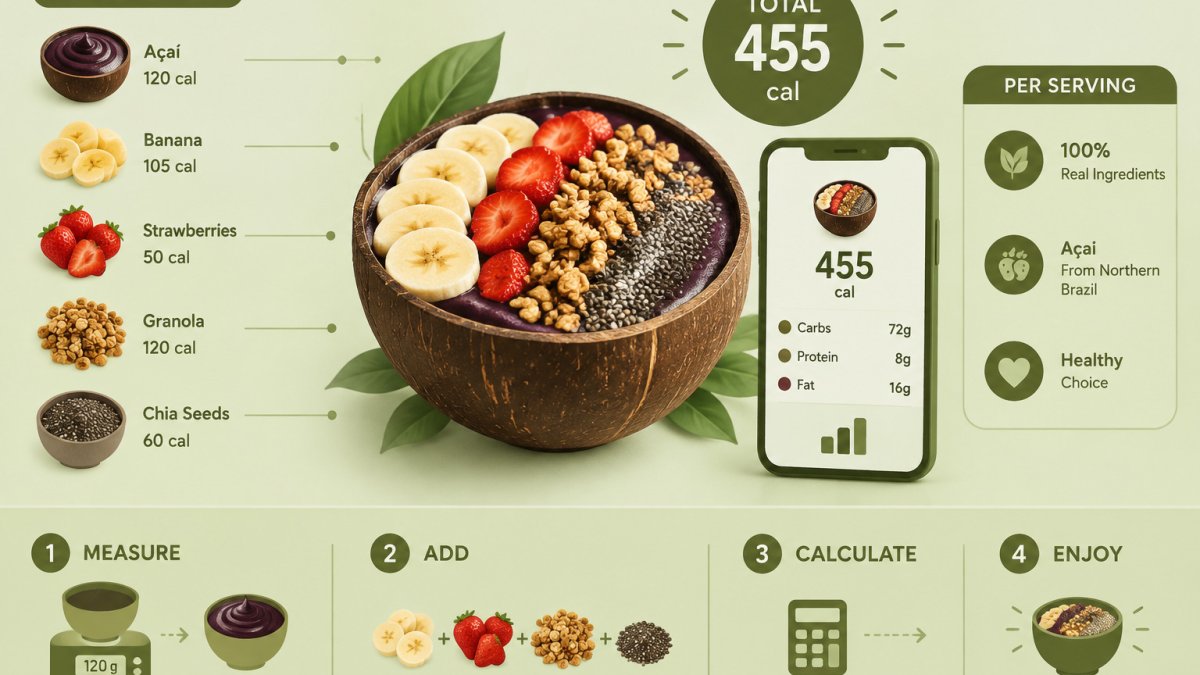
- 1 packet unsweetened frozen açaí pulp, about 3.5 oz
- ½ cup frozen strawberries
- ¼ cup blueberries
- ½ cup lactose-free milk or almond milk
- 1 tablespoon chia seeds
- 1 tablespoon hemp seeds
- 2 tablespoons toasted coconut flakes
- Optional: 1 to 2 tablespoons lactose-free yogurt for creaminess
- A high-speed blender and a spatula
Step-by-Step Instructions
- Soften the açaí. Run the frozen packet under cool water for 30 seconds and break it into chunks.
- Add liquid first. Pour the milk into the blender before any solids. This prevents jamming.
- Layer the fruit. Add strawberries, blueberries, and açaí chunks on top of the liquid.
- Blend low and slow. Start on low, using the tamper to push fruit down. Keep it thick.
- Stop before it turns soupy. The base should hold a spoon. Add liquid one tablespoon at a time only if needed.
- Spoon, don't pour. Transfer to a bowl and smooth the top.
- Top and eat soon. Add seeds and coconut last, and eat within ten minutes for the best texture.
Prep time: 5 minutes. Serving size: one bowl, roughly 12 oz.
Adjust for Your Trigger
- Lactose: Use lactose-free milk or almond milk. Skip cow's milk yogurt; use lactose-free yogurt or omit.
- Excess fructose: Keep fruit to the amounts listed. Avoid honey, agave, and fruit juice. Strawberries and blueberries are lower in excess fructose than banana or mango.
- High fiber: Reduce chia and hemp seeds to 1 teaspoon each. Use less coconut. Consider peeling and seeding the strawberries if fiber is a major trigger.
- High fat: Coconut flakes and seeds add fat. Cut coconut to 1 tablespoon and seeds to 1 teaspoon each. Use almond milk instead of full-fat coconut milk.
- Large portions: Split the bowl into two smaller servings and eat slowly. A dense, cold bowl eaten fast can bother a sensitive gut.
FODMAP Stacking: Why Portions Matter
Low-FODMAP ingredients can add up. A half cup of strawberries is low FODMAP, but a half cup of strawberries plus a quarter cup of blueberries plus a tablespoon of chia plus a tablespoon of hemp plus two tablespoons of coconut may push total fermentable carbohydrates higher than one serving. Monash University's FODMAP app is the standard reference for serving limits. If you are highly sensitive, start with half the recipe and see how you feel. Keep a simple note of portions and symptoms to find your personal threshold.
Watch out: doubling the fruit or seeds because the bowl looks small can turn a gentle recipe into a trigger. Measure once, then adjust based on your response.
Açaí Bowl Toppings for IBS: What to Add and What to Skip
Toppings decide whether a bowl stays gentle. But "gentle" depends on your trigger. A topping that suits one person may bother another. Use the table below as a starting point, then adjust based on your pattern.
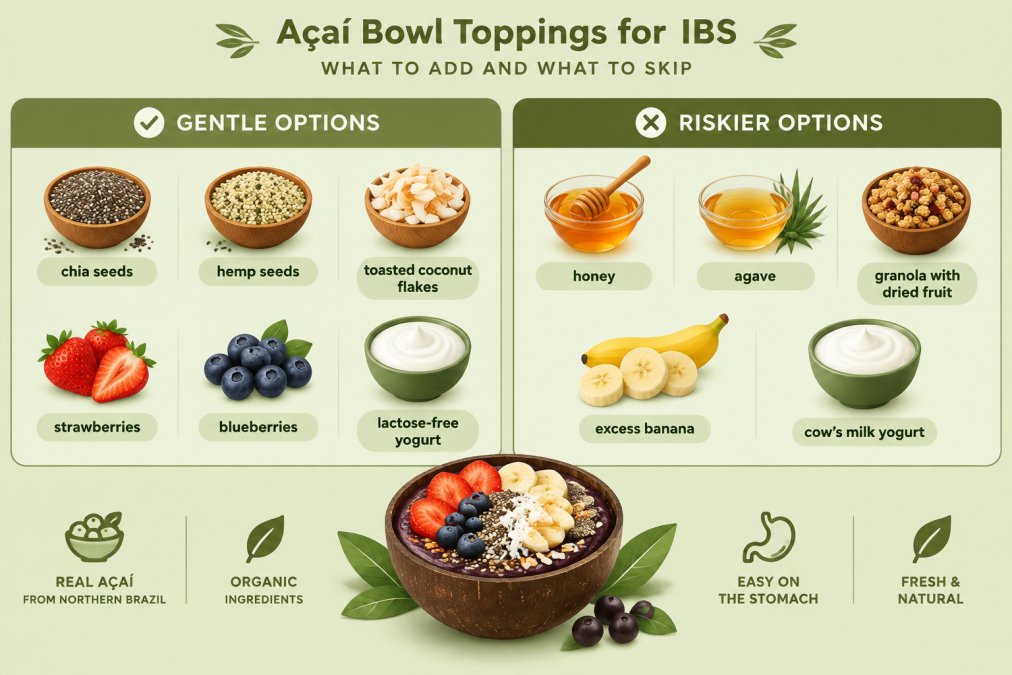
| Gentle Toppings | Riskier Toppings |
|---|---|
| Chia seeds, 1 tbsp | Honey or agave |
| Hemp seeds, 1 tbsp | Granola with dried fruit |
| Toasted coconut flakes, 2 tbsp | Large banana portions |
| Strawberries, ¼ cup | Cow's milk yogurt |
| Blueberries, ¼ cup | Fruit juice sweetened syrups |
Match Toppings to Your Trigger
- Lactose: Choose lactose-free yogurt or skip creamy toppings. Cow's milk yogurt and milk are common triggers.
- Excess fructose: Avoid honey, agave, and fruit juice sweetened syrups. Keep fruit portions small; strawberries and blueberries are lower in excess fructose than banana or mango.
- High fiber: Reduce seeds and coconut. Chia and hemp are high in fiber; start with 1 teaspoon each. Toasted coconut flakes add fiber too, use 1 tablespoon. If fiber is a major trigger, consider peeling and seeding strawberries.
- High fat: Coconut flakes and seeds are fat sources. Cut coconut to 1 tablespoon and seeds to 1 teaspoon each. Avoid full-fat coconut milk as a base.
- Seed sensitivity: Some people find seeds hard to digest. Omit chia and hemp; use a small amount of lactose-free yogurt for creaminess instead.
- Texture sensitivity: A thick, cold bowl can feel uncomfortable. Thin the base with a little extra lactose-free milk, or let the bowl sit for five minutes to take the chill off.
Label Reading for Toppings
Granola is a common trap. Many granolas contain dried fruit, honey, and added fiber like inulin or chicory root, all of which can trigger symptoms. Read the ingredient list, not the front label. Look for added sweeteners in the first three ingredients and avoid "with inulin" or "chicory root fiber." If you want more fruit ideas, our guide to fresh fruit toppings for açaí bowls covers options beyond the basics.
Watch out: a "healthy" granola with dried fruit and honey can undo an otherwise gentle bowl. Measure your toppings; a handful can easily become two servings.
Açaí Bowl Recipe Without Banana
Banana is the most common thickener in açaí recipes, and it is also a common trigger when eaten in large amounts. You can skip it entirely.
Use frozen strawberries and a small amount of frozen blueberries as your thickener instead. A tablespoon of lactose-free yogurt adds creaminess without banana. The texture lands slightly less dense, so blend a few seconds less and keep the liquid low.
For a full walkthrough, our guide on making authentic açaí bowls at home covers the technique in detail.
Common Mistakes to Avoid with Açaí Bowls
The same errors show up in most homemade bowls. Fix these and you will notice the difference.
- Over-blending. Too much blending melts the base and makes it thin and icy.
- Too much liquid. Start with ½ cup and add by the tablespoon.
- Stacking high-FODMAP fruit. Banana, mango, apple juice, and honey together is a heavy load.
- Skipping the label check. Sweetened pulp undermines the whole point.
- Eating too fast. A dense cold bowl eaten in three minutes can bother a sensitive gut.
- Ignoring your own pattern. Keep a simple note of what you ate and how you felt.
Watch out: adding a "healthy" granola with dried fruit and honey can undo an otherwise gentle bowl. Read that label too.
Ordering a Gut-Friendly Bowl from World Green Açai
You can build a gentle bowl at home, and you can also skip the guesswork. World Green Açai serves açaí bowls in Larkspur.
Ordering online means you can skip the line, which matters when lunch is a short window. Our app also makes reordering easy, and gift cards are available for a healthy treat.
If you have been avoiding açaí because of past bloating, the fix is usually in the bowl, not the berry. World Green Açai makes organic açaí bowls with simple bases, online ordering that skips the line, and an app that makes reordering quick. Get started with World Green Açai and enjoy a bowl that fits your gut and your schedule.
Frequently Asked Questions
Are açaí bowls good for stomach issues?
Açaí bowls can be gentle on the stomach when you control the ingredients. Plain frozen açaí is low FODMAP, but many bowls add honey, agave, excess banana, or high-fiber granola that can trigger bloating or cramping. Start with a small serving, use low-FODMAP milk and lactose-free yogurt, and keep toppings simple. If symptoms persist, track what you ate and discuss it with a healthcare provider.
Is frozen açaí low FODMAP?
Unsweetened frozen açaí is considered low FODMAP in standard servings, but flavored açaí packs and ready-made blends often contain added sweeteners like honey, agave, or fruit juice concentrates that raise the FODMAP load. Check the label for added sugars and choose plain frozen açaí or unsweetened açaí powder. If you are following a low FODMAP açai bowl recipe, start with a modest portion and adjust.
Which açaí bowl toppings are easiest on a sensitive stomach?
For IBS-friendly açaí bowl toppings, choose chia seeds, hemp seeds, toasted coconut flakes, strawberries, blueberries, and lactose-free yogurt. Skip honey, agave, dried fruit, and granola with added sweeteners. Keep portions small and introduce one new topping at a time so you can identify triggers. A simple bowl with two or three toppings is often easier to digest than a loaded one.
Can I make an açaí bowl without banana?
Yes. Use frozen strawberries, blueberries, or raspberries as the base instead of banana. For creaminess, add a spoonful of lactose-free yogurt or a tablespoon of chia seeds. An açaí bowl recipe without banana is helpful if you are sensitive to banana or watching FODMAP stacking. Adjust the liquid slowly to keep the texture thick and spoonable.