
 listicle
Is Açai Good for Digestion Issues? A Detailed Review
Table of Contents
- Does Açai Actually Help with Digestion Issues?
- Açai Fiber Content and Its Role in Digestive Health
- Antioxidants and Anti-Inflammatory Properties
- Açai Bowl Ingredients for Digestion: What to Look For
- Potential Side Effects: Bloating and Stomach Discomfort
- How Preparation Methods Impact Digestive Benefits
- Real Açai vs. Commercial Bowls: What Makes the Difference
- Frequently Asked Questions
Last Updated: September 22, 2026
Does Açai Actually Help with Digestion Issues?
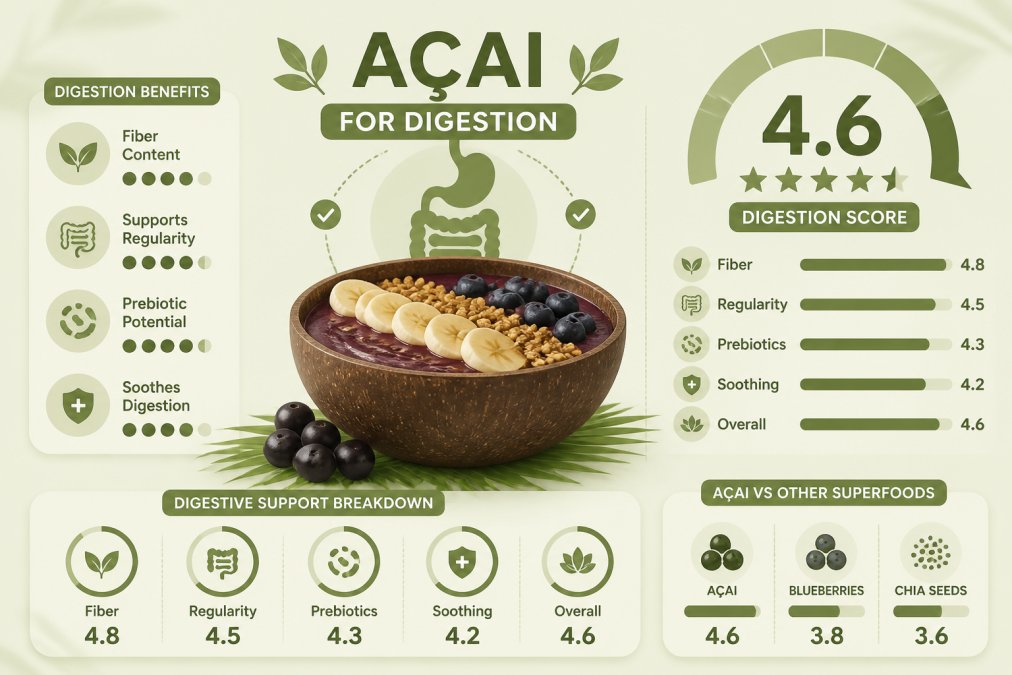
Açai can support digestive health, but quality matters. Real, unsweetened berries from Northern Brazil deliver genuine digestive benefits that processed versions don't. The question isn't whether açai works, but whether you're consuming it in a way that actually supports your gut.
Most açai bowls aren't created equal. Frozen unsweetened pulp supports digestive regularity; commercial bowls loaded with syrups and sweeteners spike blood sugar instead. Here's what research shows about is açai good for digestion issues, and how to get the benefits without the downsides.
Açai Fiber Content and Its Role in Digestive Health
Açai berries contain meaningful amounts of dietary fiber, roughly 7 grams per 100 grams of frozen pulp. That's comparable to raspberries and blackberries, making it a legitimate fiber source for digestive support.
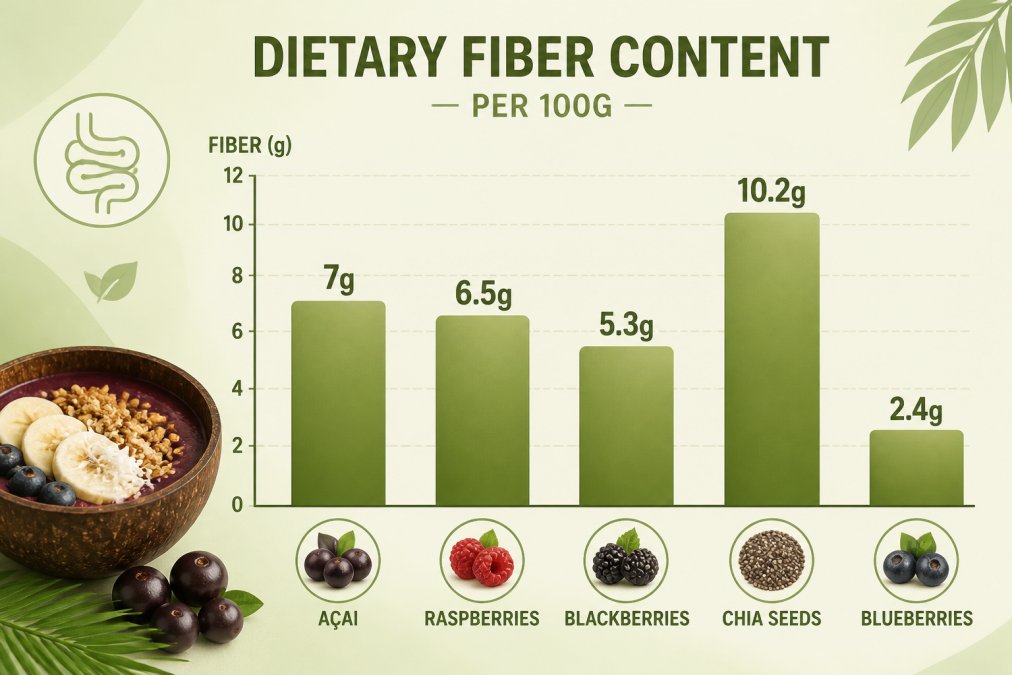
Dietary fiber adds bulk to stool and feeds beneficial bacteria, supporting bowel regularity and preventing constipation. Açai's fiber mix includes soluble fiber (which feeds good bacteria) and insoluble fiber (which adds bulk to move things through your system).
A bowl can deliver a meaningful amount of fiber as part of a broader strategy. Most adults need 25-35 grams daily, so açai alone won't fix chronic constipation.
Antioxidants and Anti-Inflammatory Properties
Açai berries contain exceptionally high concentrations of anthocyanins and other polyphenols, compounds that reduce inflammation in your digestive tract. This is where açai genuinely stands out among berries, and the mechanism matters for understanding whether it will actually help your specific digestion issue.
Anthocyanins reduce oxidative stress in gut cells and suppress pro-inflammatory cytokines, interrupting the inflammation cycle that causes bloating, irregular bowel movements, and abdominal discomfort.
A serving can deliver anthocyanins. Consistent daily intake can produce measurable reductions in inflammatory markers within 2-4 weeks, meaningful for reducing low-grade inflammation that causes everyday digestive discomfort, though not a cure for inflammatory bowel disease.
Açai's antioxidant profile addresses inflammation-based digestion issues, especially for those with mild gastric sensitivity or stress-induced gut inflammation. The anti-inflammatory effect is synergistic when combined with hydration, stress management, and a balanced diet.
Anthocyanins degrade with heat and processing. Frozen unsweetened pulp retains nearly 100% of anthocyanin content; powdered versions lose 30-50% during freeze-drying. Preparation method directly impacts efficacy.
Açai Bowl Ingredients for Digestion: What to Look For
Not all açai bowls support digestive health. The bowl you order matters as much as the açai itself.
A digestion-friendly bowl contains pure açai (frozen pulp, no added sugars), fiber-rich toppings (whole grains, chia, flaxseed, almonds), fresh fruit, healthy fats (coconut, nuts, almond butter), and minimal sweetener. Toppings matter more than the açai itself, sweetened granola, chocolate chips, and syrups spike blood sugar and cause bloating.
The Sugar Problem in Commercial Bowls
Most commercial bowls fail digestive health by adding sweetened bases, sugary granolas, and syrups, transforming a snack into a dessert with more sugar than cake. Added sugar feeds harmful bacteria and triggers bloating and gas; 30-40 grams of added sugar overwhelms the fiber's benefits.
World Green Açai uses authentic, unsweetened açai from Northern Brazil, no added sugars in the base. This means the bowl's sweetness comes from fresh fruit toppings you choose, giving you control over sugar intake. That's the difference between a bowl that supports digestion and one that sabotages it.
FODMAP Sensitivity and Individual Tolerance
Here's what most guides miss: some people's digestive systems react poorly to açai regardless of quality or preparation. This often comes down to FODMAP sensitivity.
FODMAPs are carbohydrates that are hard to digest for some people, triggering bloating, gas, and stomach discomfort. Açai berries are low in FODMAPs, which is good news for most people. However, common bowl toppings, honey, high-fructose fruits like mango, and certain nuts, are high in FODMAPs. If you have IBS or FODMAP sensitivity, the toppings matter more than the açai itself.
Individual tolerance testing is essential. Start with a small bowl with minimal toppings. Monitor how your digestive system responds. If you feel bloated or uncomfortable, the issue might be a specific topping, not the açai. Try removing one ingredient at a time to identify the culprit.
Potential Side Effects: Bloating and Stomach Discomfort
Açai itself is unlikely to cause bloating or stomach discomfort. The real culprits are usually sugar load, fiber overload, or individual sensitivities.
Sugar-induced bloating happens when added sugars feed fermentation in your gut. You feel uncomfortably full and gassy within 30-60 minutes of eating.
Fiber-induced bloating occurs when you suddenly increase fiber intake without adequate hydration. If you're not used to high-fiber foods and jump into a large açai bowl, your digestive system may react with temporary bloating or gas. This usually resolves within a few days as your gut adjusts.
Topping reactions can trigger discomfort if you're sensitive to specific ingredients. Coconut, nuts, or certain fruits may not agree with everyone's digestive system.
The solution: start small, stay hydrated, and introduce açai gradually. A bowl with simple toppings is a safer starting point than a massive bowl loaded with mix-ins.
How Preparation Methods Impact Digestive Benefits
The way you prepare açai dramatically affects its digestive benefits, and the difference shows up in your symptoms within hours. Each preparation method alters fiber structure, nutrient bioavailability, and how your digestive system processes the berries.
Frozen unsweetened pulp is the gold standard for digestive support. It retains all 7 grams of fiber per 100 grams in its original structure, a mix of soluble and insoluble fibers that work synergistically. Soluble fiber dissolves in water and feeds beneficial bacteria; insoluble fiber adds bulk to move stool through your colon. When you consume whole frozen pulp, your digestive system processes both fiber types intact, which means more effective stool bulk and faster transit time. The fiber also remains available to feed your microbiome, supporting long-term regularity. You control every ingredient that goes into your bowl, eliminating hidden sugars and additives that trigger bloating.
Blended smoothies break down fiber structure mechanically, reducing the bulk that supports bowel regularity. When you blend frozen açai with liquid, you're essentially pre-digesting the fiber, making it easier for your stomach to process but less effective for constipation relief. A blended smoothie reaches your small intestine faster and produces softer, less-formed stools. This is gentler on a sensitive or inflamed digestive system, useful if you have gastritis or are recovering from digestive upset, but it's a trade-off: you lose the mechanical bulk that prevents constipation. Blended preparations also increase the surface area of fiber exposed to your gut bacteria, which can trigger more gas production as your microbiome adjusts.
Freeze-dried powder concentrates nutrients but loses structural fiber integrity. Freeze-drying removes 90% of water content, so you're consuming a denser form of açai. A single tablespoon of powder is nutritionally equivalent to frozen pulp, but the fiber is fragmented and less effective at adding bulk. Powders are convenient for travel or mixing into other foods, but they're harder on your stomach in large amounts, the concentrated polyphenols and fiber can trigger bloating or mild cramping if you consume more than 2-3 tablespoons daily. Powders also have a longer shelf life compared to frozen pulp, but nutrient degradation accelerates once the package is opened.
Pre-made commercial bowls often contain added sugars, preservatives, and processed toppings that offset digestive benefits entirely. Many chains use açai bases that are diluted with other fruit purees, sweetened with syrups, or thickened with additives. These bowls deliver the flavor of açai without the fiber density or antioxidant concentration of whole pulp. Added sugars feed harmful bacteria and trigger fermentation, which produces gas and bloating. The processed toppings, sweetened granola, chocolate chips, candy, add more sugar. You're essentially eating a dessert with an açai label, and your digestive system responds accordingly: blood sugar spike, insulin response, dysbiosis, and bloating.
The decision framework: Choose your preparation method based on your specific digestive goal.
Real Açai vs. Commercial Bowls: What Makes the Difference
This is where World Green Açai's commitment to authentic berries from Northern Brazil actually matters for your digestion.
Frequently Asked Questions
Does açai help with constipation?
Açai contains dietary fiber that supports bowel regularity and can help reduce constipation when consumed as part of a balanced diet. The fiber works by adding bulk to stool and promoting healthy gut microbiome function. However, individual responses vary, some people see improvement within days, while others need consistent consumption over weeks. Starting with moderate portions helps your digestive system adjust without triggering discomfort.
Is açai high in fiber?
Yes, açai is notably high in dietary fiber. This makes it comparable to raspberries and blackberries. The fiber supports gastrointestinal health by feeding beneficial bacteria in your gut microbiome and promoting regular bowel movements. Real, unsweetened açai provides these benefits without the added sugars found in many commercial bowls.
Can açai bowls cause bloating or stomach discomfort?
Açai bowls can trigger bloating in some people, especially if they contain added sugars, high-fiber toppings, or ingredients high in FODMAPs. Commercial bowls often include granola, honey, and sweetened coconut, which can overwhelm a sensitive digestive system. If you experience discomfort, start with smaller portions of real açai and simple toppings like banana or almonds. Individual tolerance testing helps identify which ingredients work for your digestive system.
What's the difference between real açai and commercial açai bowls?
Real açai is unsweetened frozen pulp from Northern Brazil with no added ingredients, just the berry itself. Commercial bowls often mix açai with added sugars, syrups, and processed toppings that can compromise digestive benefits and spike blood sugar. Real açai supports nutrient absorption and gut microbiome health, while heavily processed versions may cause inflammation and digestive distress. Checking ingredient labels ensures you're getting authentic, whole-food açai.