 Listicle
7 Low-Sugar Açai Bowl Ideas for Steady Energy
Last Updated: November 7, 2026
Quick Summary
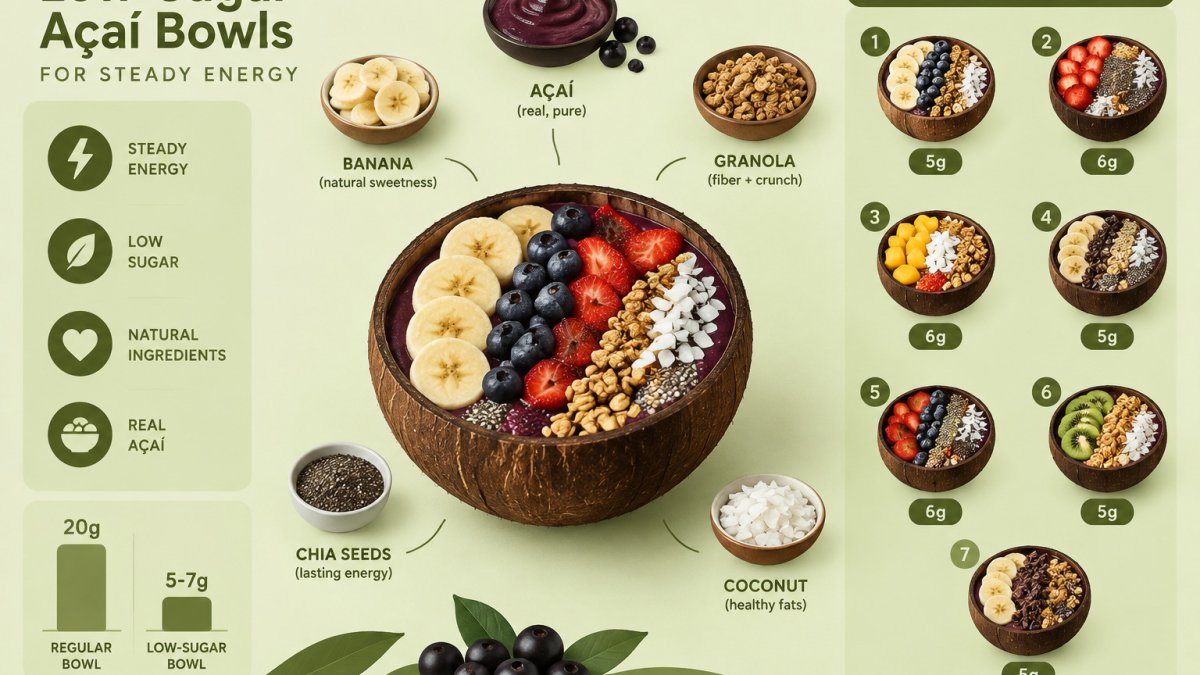
A low-sugar açai bowl starts with unsweetened açai as the base, so you control how sweet it gets. Add one modest portion of fruit, one protein source and one fat source, then finish with unsweetened or low-sugar toppings for crunch.
- Choose unsweetened açai packets or puree, and avoid blends listing sugar, syrup or juice concentrate.
- Use about 1/2 cup frozen berries or 1/2 small frozen banana as the only fruit.
- Aim for roughly 15 to 25 g of protein from unflavored powder, plain Greek-style yogurt or silken tofu.
- Pick one fat source such as 1 tablespoon nut butter, chia seeds or hemp seeds.
- Swap granola and honey for unsweetened coconut flakes, toasted nuts or pumpkin seeds.
Table of Contents
- Why Most Açai Bowls Spike Sugar Levels
- Choosing Unsweetened Açai as Your Base
- Building a Low-Sugar Açai Bowl Recipe
- Adding Protein and Healthy Fats for Steady Energy
- Healthy Açai Bowl Toppings That Add Fiber and Crunch
- A Low-Calorie Açai Bowl Recipe You Can Make in Minutes
- Order Your Next Bowl From World Green Açai
- Frequently Asked Questions
Why Most Açai Bowls Spike Sugar Levels
Many açai bowls are closer to a dessert than a meal. If you want to build your own, a step-by-step guide to making authentic açaí bowls at home walks through the base, blend and toppings. Juice, sherbet, granola and honey can each add a lot of sugar before you reach the toppings. The fruit itself is only part of the story.
Look at what goes into a typical bowl. A base blended with juice, a scoop of sherbet, a drizzle of honey and a handful of granola can carry more sugar than a sweet snack. That combination often leaves people hungry again within a couple of hours.
Choosing Unsweetened Açai as Your Base
Unsweetened açai is the starting point for a lower-sugar bowl. It lets you decide how sweet the bowl becomes, rather than inheriting sugar from a pre-sweetened blend.
Read the label before you buy. Pure açai puree or frozen unsweetened packets give you the earthy, slightly berry flavor without the added sweetener. Several recipe resources, including Holistic Nutrition Nut's low-sugar açai bowl guide, recommend starting with unsweetened açai for this reason.
Be careful with flavored packets and "açai blends." Those often include syrups or fruit concentrates that push sugar back up.
Building a Low-Sugar Açai Bowl Recipe
A balanced low-sugar bowl comes together in a clear order, and the portions matter as much as the ingredients. Start with the base, add fruit in measured amounts, then finish with protein, fat and crunch. The formula below is the one we use to keep sugar predictable without sacrificing texture.
Most low-sugar recipes follow a similar build. The Açaí (Euterpe oleracea Mart.) review in PubMed Central describes the fruit's antioxidant profile, but it does not establish that any bowl will lower blood sugar. Treat the recipe as a way to keep sugar in check, not as a medical claim.
The Balanced-Bowl Formula
Use these ranges as a starting point, then adjust to your taste and goals:
- Açai base: 1 unsweetened frozen packet (typically 3.5 to 4 oz) or about 1/2 cup of unsweetened puree.
- Liquid: 2 to 4 tablespoons of unsweetened almond milk, coconut milk beverage, or water, just enough to move the blender blades.
- Fruit: 1/2 cup frozen berries, or 1/2 small frozen banana. Keep it to one modest portion so the fruit's natural sugar stays in check.
- Protein: 1 scoop (about 20 g) unflavored or lightly sweetened protein powder, or 1/2 cup plain Greek-style yogurt.
- Fat: 1 tablespoon nut butter, or 1 tablespoon chia, hemp, or pumpkin seeds.
- Crunch topping: 1 to 2 tablespoons unsweetened coconut flakes, toasted nuts, or a low-sugar granola.
Exact numbers depend on the brands you use, so read the labels.
Reading Labels to Keep Sugar Low
The biggest hidden sugar sources in an açai bowl are packaged, not fresh. Check these before you buy:
- Açai packets: Look for "unsweetened" on the front and an ingredient list that is just açai (sometimes with water or citric acid). Avoid packets listing sugar, cane syrup, glucose, fruit juice concentrate, or guarana syrup near the top.
- Protein powder: Flavored powders often carry 5 to 15 g of added sugar per scoop. Choose unflavored or lightly sweetened versions, or use plain Greek-style yogurt instead.
- Granola: Many granolas list sugar, honey, or brown rice syrup as the second or third ingredient. Compare the "added sugars" line on the Nutrition Facts panel and pick the lowest one you can find.
- Nut butter: Choose one with just nuts and salt. Chocolate or honey-sweetened spreads add sugar fast.
- Yogurt: Plain Greek-style yogurt has far less sugar than flavored varieties, which can carry 10 g or more per serving.
Watch out: "Açai blend" and "açai smoothie pack" products often include fruit juice concentrates or syrups, so the front-of-package claim can hide a sweetened base.
Making It Ahead and Keeping the Texture Thick
A thick, spoonable bowl is the goal, and it is easier to achieve with technique than with added sweetener.
- Freeze the fruit, not the liquid. Frozen berries and frozen banana chunks give the bowl body without juice.
- Blend in stages. Start with the açai and a small splash of liquid, then add more a tablespoon at a time only if the blender stalls.
- Prep components ahead. Portion fruit and toppings into containers and store them in the freezer so assembly takes minutes on a busy morning.
- Store leftovers tightly. A blended base keeps in an airtight container in the freezer for up to a week; stir before serving and add a splash of liquid if it firms up too much.
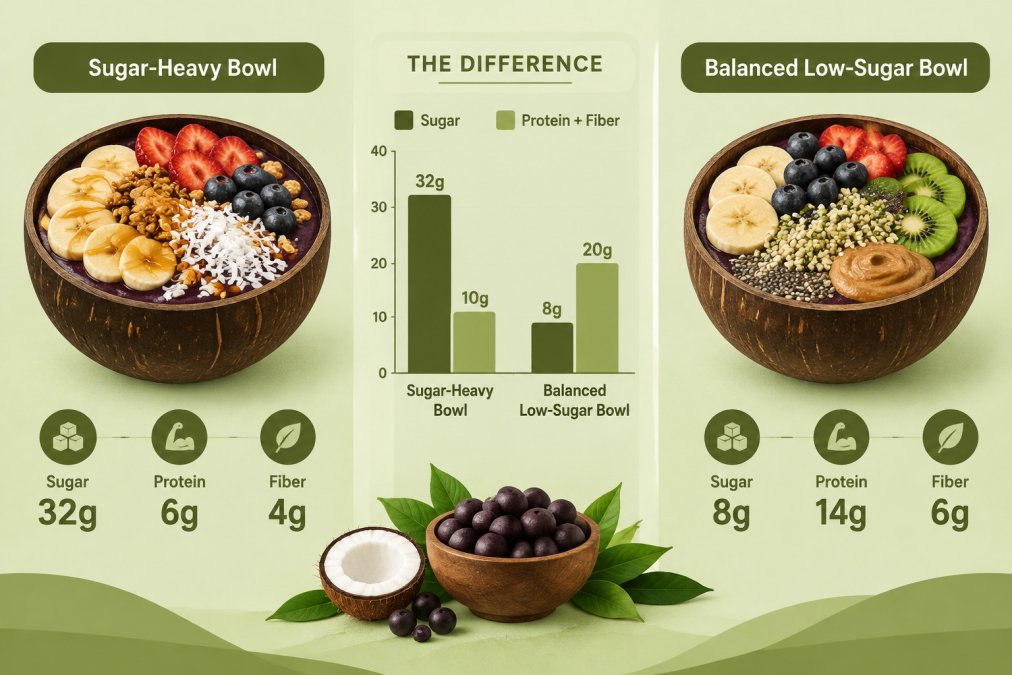
Checking your bowl against this formula is faster than guessing by eye, and it makes the recipe easy to adapt to whatever fruit, protein, and toppings you have on hand.
Adding Protein and Healthy Fats for Steady Energy
Fruit alone does not keep you full for long. Adding protein and healthy fat slows digestion and helps the bowl hold you over, but the amounts and the type of fat matter, and it is worth being precise about what "steady energy" actually means.
A Ernie's Açaí guide on açai bowl nutrition notes that fruit-focused bowls can provide quick energy but very little protein on their own. Protein powder, nut butter, or seeds fill that gap.
How Protein, Fiber, and Fat Support Fullness
A bowl with added protein and fiber can feel more filling than a fruit-only version, though individual responses vary.
It is important to be honest about the limits: no bowl can promise to prevent an energy crash or control blood sugar.
Protein Sources and Amounts
Pick one protein source per bowl and aim for roughly 15 to 25 g:
- Unflavored or lightly sweetened protein powder: about 20 g per scoop. Choose one with minimal added sugar.
- Plain Greek-style yogurt: about 1/2 cup delivers roughly 10 to 12 g of protein. It also adds creaminess to the base.
- Silken tofu: about 1/4 cup blended into the base adds protein without changing the flavor much.
- Hemp seeds: 3 tablespoons add about 10 g of protein along with healthy fat.
Healthy Fats for Satiety
Healthy fats matter too. Nut butter, chia seeds, hemp seeds and pumpkin seeds all add staying power. Start with one protein source and one fat source, not both at full size, and adjust from there. Learn how to balance macronutrients in açai bowls to get the proportions right.
- Nut butter: 1 tablespoon of almond or peanut butter adds about 8 g of fat and a little protein.
- Chia seeds: 1 tablespoon adds about 5 g of fat and 5 g of fiber, a useful two-for-one.
- Hemp seeds: 3 tablespoons add about 10 g of fat and 10 g of protein.
- Pumpkin seeds: 1 tablespoon adds about 5 g of fat and a small amount of protein.
Dietary Swaps
Not every bowl works for every eater, so keep these swaps in mind:
- Nut-free: Replace nut butter with sunflower seed butter or tahini, and use seeds instead of nuts for crunch.
- Soy-free: Skip silken tofu and choose a soy-free protein powder or Greek-style yogurt.
- Dairy-free: Use a plant-based protein powder or silken tofu instead of yogurt, and unsweetened almond or coconut milk for the liquid.
- Higher-protein: Add a second scoop of protein powder or a spoonful of hemp seeds rather than more fruit.
Watch out: stacking a full scoop of protein powder, a full serving of nut butter, and a full serving of seeds can push a bowl well past 500 calories, so start with one protein and one fat source and add only if you are still hungry.
Healthy Açai Bowl Toppings That Add Fiber and Crunch
Toppings are where many bowls quietly add sugar. Granola, honey and dried fruit are the usual culprits.
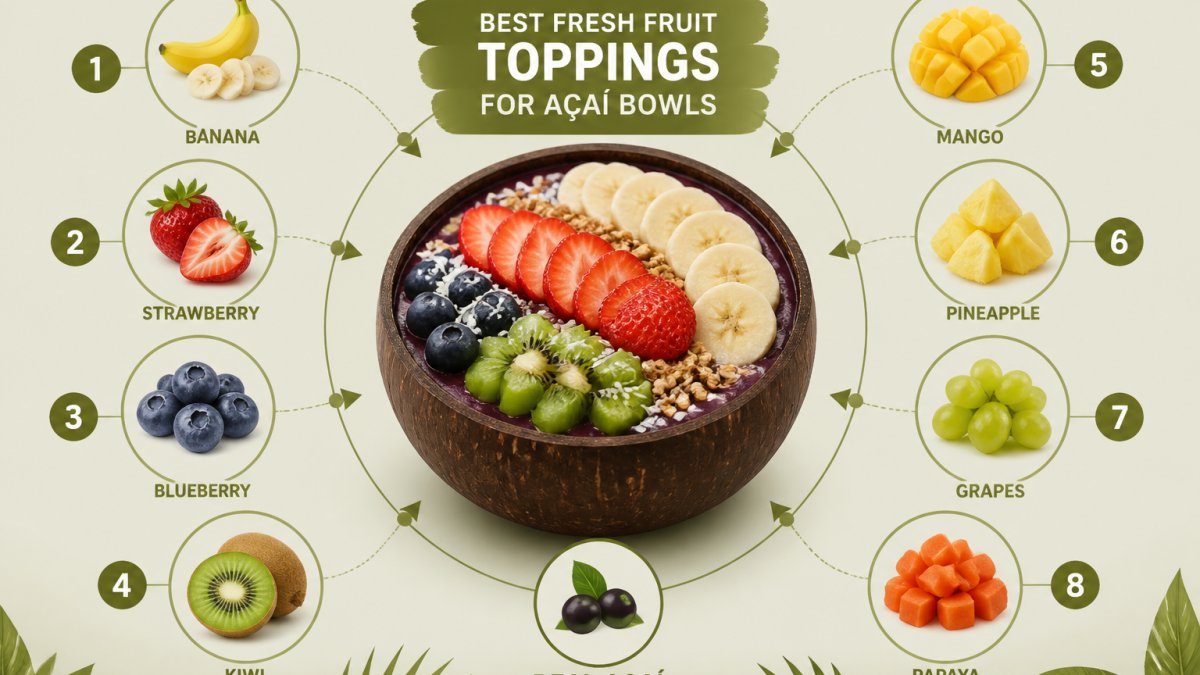
Swap them for better options. Unsweetened coconut flakes, toasted nuts, pumpkin seeds, and fresh berries all add crunch or fiber without a sugar spike. Compare more superfood toppings that add fiber and energy to find other options. A Swoon Food low-sugar açai bowl recipe suggests nut butter and toasted nuts as useful toppings, which fits this approach well.
Keep portions small. A tablespoon of nut butter or a small handful of seeds goes a long way. See how different toppings balance nutrition before you pick your combination.
A Low-Calorie Açai Bowl Recipe You Can Make in Minutes
When you want a quick version, use this approach. Blend one unsweetened açai packet with a splash of unsweetened almond milk and a half frozen banana. Pour into a bowl and top with fresh berries, a spoonful of nut butter and a few pumpkin seeds.
This keeps calories moderate while giving you protein-friendly toppings. Prep time is short, and you can make it at home without special equipment.
For the fastest option, you can also skip the prep and order a ready-made bowl.
Order Your Next Bowl From World Green Açai
If you want the flavor without the prep, World Green Açai makes organic açai bowls in Larkspur and lets you order ahead online, so you can skip the line during a busy lunch break.
Ready for a bowl that keeps your energy steady? Order online with World Green Açai and skip the wait.
Frequently Asked Questions
Is there a low sugar açai bowl?
Yes. A low-sugar açai bowl starts with unsweetened açai puree or packets instead of sweetened blends, skips juice, sherbet, honey and agave, and relies on frozen banana or berries for texture. Adding protein powder, nut butter or seeds keeps the bowl filling without leaning on fruit sugar. Check ingredient labels on packaged açai and toppings, since some sweeten the base or add granola with added sugar. Pairing the bowl with a small portion of fruit rather than a heavy sweetened topping helps keep the sugar load modest.
What is the healthiest açai bowl to get?
The healthiest choice is usually a bowl made with unsweetened açai, a modest portion of fruit, a protein source and a fat source such as nut butter, chia or hemp seeds. Ask how the base is blended and whether juice, sweetened yogurt or granola is included, because those ingredients can add substantial sugar. Bowls labeled low-sugar still vary, so comparing ingredient lists and asking staff about portions gives a clearer picture than the name alone. Pricing and nutrition details depend on the specific ingredients, so check the menu or website for current information.
How do you make a low-sugar açai bowl at home?
Blend one unsweetened açai packet with a splash of unsweetened almond milk until thick, then add half a frozen banana for creaminess. Pour it into a bowl and top with fresh berries, a spoonful of nut butter, pumpkin seeds and unsweetened coconut flakes. Add protein powder to the blend if you want a more filling meal. Thick texture comes from using less liquid and frozen ingredients. Skip sherbet, juice and honey, which are common additions that raise sugar without adding much fiber or protein.
Can an açai bowl provide steady energy?
An açai bowl can support steadier energy when it combines carbohydrates from fruit with protein and healthy fats, which slow digestion compared with a bowl built mostly from sweetened fruit. Fruit-focused bowls can provide quick energy but usually contain little protein on their own, so adding protein powder, nuts or seeds makes a difference. Individual responses vary, and an açai bowl is one part of a balanced diet rather than a guaranteed fix for energy dips.