 Listicle
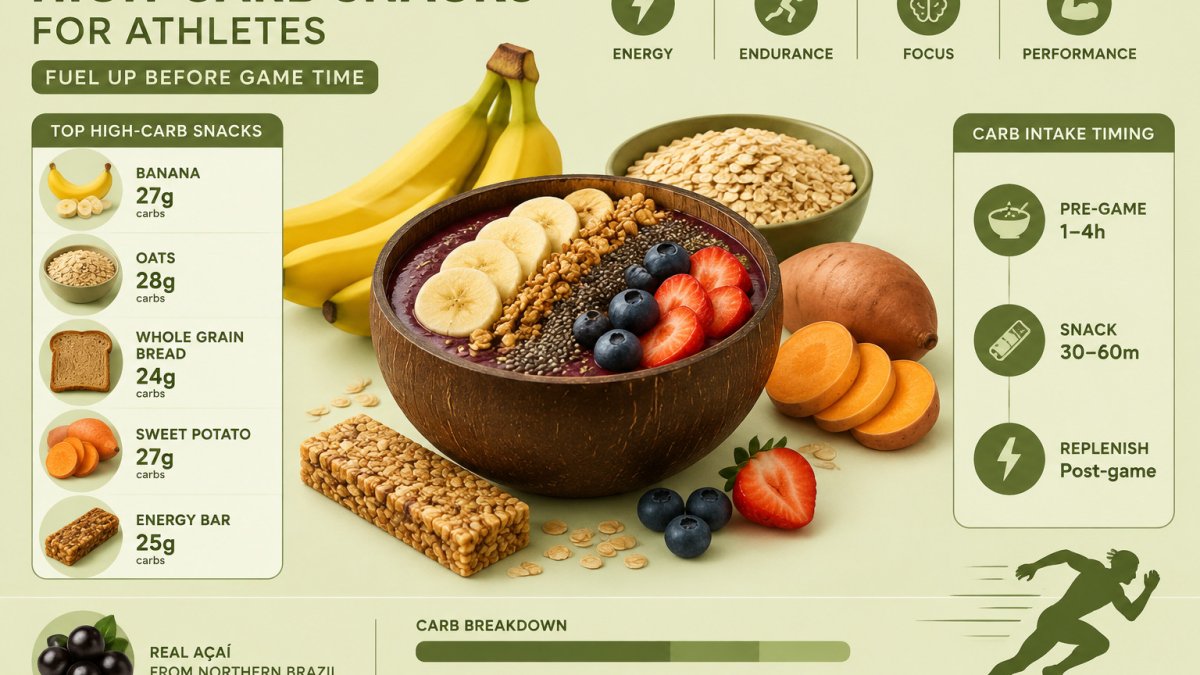
High-Carb Snacks for Athletes: Fuel Up Before Game Time
Last Updated: November 10, 2026
Quick Summary
The best high-carb snacks for athletes before a game are simple, easy-to-digest foods such as bananas, applesauce, pretzels, crackers, rice cakes and plain bread with jam. Timing matters: eat a larger carbohydrate-rich snack one to two hours before play, then switch to something small and low in fat and fiber 30 to 60 minutes out.
- Eat a moderate snack of 30 to 60 grams of easily digested carbohydrate one to two hours before play.
- Keep pre-game snacks low in fat, fiber and protein so they digest quickly.
- Choose small, nearly fat-free options like pretzels or crackers 30 to 60 minutes before kickoff.
- Test every snack during practice first and never try a new food on game day.
- Sip water steadily before play, since fluid helps your body process carbohydrates.
Table of Contents
- Why High-Carb Snacks Matter Before a Game
- Timing Your Pre-Game Snack: A Window-by-Window Guide
- Easy High-Carb Snacks for Athletes Before a Game
- Healthy Portable Snacks for Athletes on the Go
- Pre-Game Snacks and Drinks: Pairing Carbs with Fluids
- Foods to Skip and How to Avoid Digestive Trouble
- Building Your Game-Day Snack Plan
- Frequently Asked Questions
Why High-Carb Snacks Matter Before a Game
Carbohydrates are the main fuel your muscles use during hard, sustained effort. A pre-game snack that is rich in carbohydrates helps top up the energy you have stored and keeps you from running on empty by the second half. Athletes often plan their fueling before weekend tournaments, and those who do tend to feel sharper when the whistle blows.
The American College of Sports Medicine guidance cited in a 2014 review recommends 30 to 60 grams of carbohydrate per hour during exercise (Carbohydrate Intake During Exercise review, PubMed Central). That figure applies to intake during activity, not to the snack you eat beforehand, but it shows how central carbohydrates are to sustained performance. Think of the pre-game snack as the starting tank, and the in-game fuel as the refill.
Here is the practical point: the right snack is one you can digest comfortably and that supplies quick, simple carbohydrates. Heavy, greasy or very high-protein foods can sit poorly right before competition.
Timing Your Pre-Game Snack: A Window-by-Window Guide
Timing matters as much as the food itself. Eating a large meal too close to kickoff is a common mistake, and it often leads to cramping or sluggishness. The goal is to match both the size and the makeup of your snack to how much time you have before play.
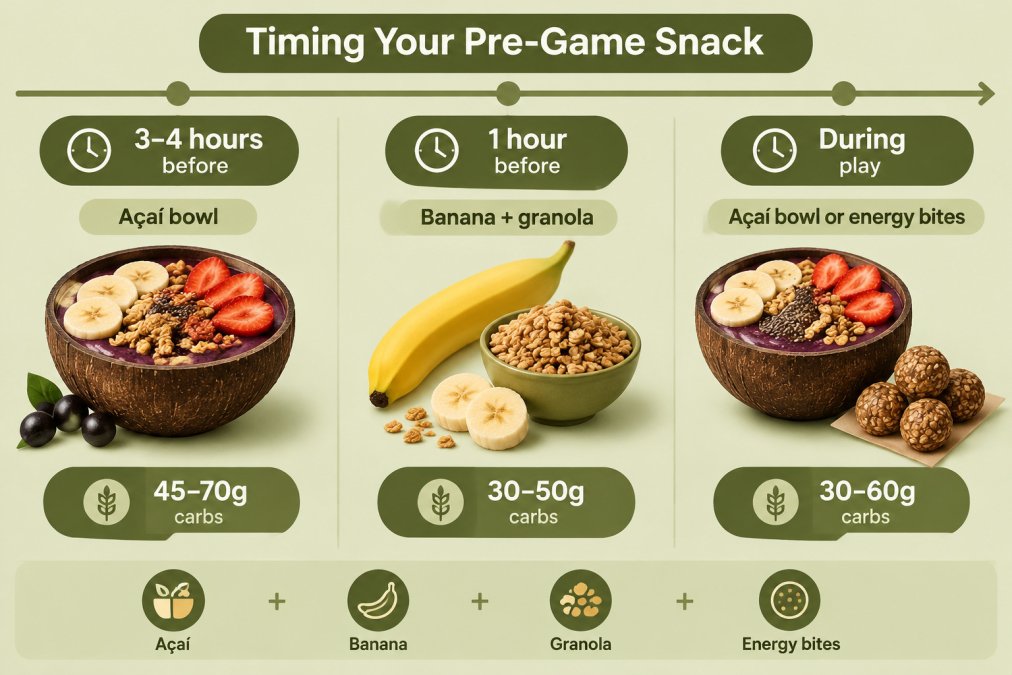
A practical way to plan is to work backward from start time, changing the food as the clock runs down:
-
3 to 4 hours before: This is the window for a full meal. Build it around complex carbohydrates such as oatmeal, rice, potatoes or whole-grain pasta, with a moderate amount of lean protein and a little fat. Carbohydrate needs vary widely with body size and training load. Because you have time to digest, protein and fat can stay in the meal.
-
1 to 2 hours before: Shrink the portion and reduce fat, fiber and protein, since these slow stomach emptying. Aim for a snack that delivers something like 30 to 60 grams of mostly simple or easily digested carbohydrate, such as a banana with a small amount of honey, a bagel with jam, or a cup of applesauce with pretzels. Smaller athletes or those with a sensitive stomach may do better with a smaller portion.
-
30 to 60 minutes before: Keep it small and nearly fat-free. A few crackers, a fruit snack, a handful of pretzels or a small sports drink with carbohydrate is usually enough. The food should be quick to digest and easy to stop eating if you feel full.
As you move closer to play, the logic is consistent: less volume, less fat, less fiber, and simpler carbohydrate. A large meal eaten at the one-hour mark is one of the most common reasons athletes feel heavy on the field.
Treat these windows as a guide, not a rule. Every athlete digests differently, so test the timing during practice before you rely on it in a game. Keep a short note of what you ate and how you felt, and adjust the portion or the gap before kickoff until you find the window that works.
Easy High-Carb Snacks for Athletes Before a Game
The best pre-game snacks are simple, familiar and portable. What separates a useful snack from a random one is knowing roughly how much carbohydrate it delivers and when in the pre-game window it fits. The examples below describe common snack options so you can build a snack that matches the time you have before play.
Choose foods your body already handles well. A snack you have eaten in practice is far safer on game day than something new. Our homemade recovery snack ideas show easy options you can prepare ahead of a tournament.
Snacks Sorted by Timing
Best for 1 to 2 hours before:
- One medium banana
- One cup of applesauce
- Two slices of plain white or whole-wheat bread with jam
- A bagel with a thin layer of jam
- One cup of cooked white rice with a light sprinkle of salt
Best for 30 to 60 minutes before:
- One ounce of pretzels
- Four to six saltine crackers
- A rice cake, which works well stacked with a little honey
- One pouch of applesauce
- A small handful of dried fruit such as raisins
Check the label on the packages you actually buy for exact carbohydrate content.
Fresh and Dried Fruit Options
Fruit is one of the easiest pre-game carbohydrate sources. A banana, a handful of raisins or a cup of applesauce delivers quick energy with little bulk. Dried fruit is concentrated, so a small portion goes a long way. Pair it with water, because dried fruit is easy to overeat without fluid, and a large amount of fruit fiber eaten close to play can cause bloating for some athletes.
Pretzels, Crackers, and Grain-Based Picks
Pretzels, plain crackers and rice cakes are low in fat and fiber, which is why many coaches and dietitians favor them close to game time. A small handful of pretzels with a few crackers is a reliable choice. Plain bread or a simple jam sandwich works too, provided it sits well with you.
Dietary Restrictions and Easy Substitutions
Athletes with dietary restrictions can still build an effective snack plan:
- Gluten-free: Choose certified gluten-free pretzels, rice cakes, corn tortillas, or cooked white rice. Check labels, because many crackers contain wheat.
- Dairy-free: Most fruit, pretzels, rice cakes and applesauce are naturally dairy-free. Avoid yogurt-based or cheese-based pre-game snacks unless you know you tolerate them.
- Nut-free: Many granola bars and trail mixes contain nuts or are made in facilities that process them. Read the allergen statement, and favor fruit, pretzels and plain bread.
- Vegetarian and vegan: Fruit, grain-based snacks, rice, oats and fruit snacks are all plant-based. Watch for gelatin in some fruit snacks and marshmallow-based bars, and choose gelatin-free versions.
For athletes with a true allergy, a dietitian can help you confirm which products are safe for you.
Healthy Portable Snacks for Athletes on the Go
Tournament days often mean long stretches between meals, so portability counts. Pack snacks that survive a bag, a hot car and a crowded bleacher. Granola bars, fruit snacks, dried fruit, pretzels and single-serve applesauce pouches all travel well.
If you want a fresh option, a World Green Açai gift card from $25 lets someone pick up an organic açai bowl or Brazilian snack at our Larkspur shop, which can make a good post-tournament treat. Our Quick Healthy Snacks for Athletes: 2026 Guide covers more ideas that pack easily.
Pre-Game Snacks and Drinks: Pairing Carbs with Fluids
Carbohydrates and fluids work together. Your body needs water to process the carbohydrates you eat, so a carb-rich snack without fluid can leave you feeling heavy. Sip water steadily in the hour before play rather than gulping a large amount just before you start.
Keep drinks simple. Water is usually enough for a short session. For longer, hotter events, sports drinks can supply both fluid and carbohydrate. If you are building a balanced recovery plan after the game, our Best Açaí Bowl for Post Workout guide explains how to pair a bowl with fluids and protein.
A quick açai bowl with toppings can also be part of a balanced pre- or post-game routine. See Açaí Bowl Toppings for Balanced Nutrition for ideas on balancing the bowl.
Foods to Skip and How to Avoid Digestive Trouble
Some foods cause problems right before competition. Skip fried foods, heavy cream sauces, very spicy dishes and large portions of high-fiber beans or cruciferous vegetables. These slow digestion or cause bloating and cramping.
Watch out: never try a new food for the first time on game day. Digestive trouble is most often caused by something untested.
If you struggle with stomach upset, try smaller portions, eat earlier, and stick with the same few snacks you trust. Remember that individual needs vary, so talk with a doctor or sports dietitian about persistent symptoms.
Building Your Game-Day Snack Plan
Put together a plan you can repeat. Choose two or three snacks you know agree with you, decide the timing for each, and pack them the night before. Keep fluids on hand and adjust after each practice based on how you felt.
Start by testing one snack at a practice session this week, then build from there. Find a plan that fits your schedule and your stomach, and you will walk onto the field with energy to spare.
Frequently Asked Questions
What are good carbs to eat before a game?
Simple, easy-to-digest carbohydrates work best close to game time. Fresh fruit such as bananas, applesauce, pretzels, crackers, and fruit snacks are common choices because they digest quickly and sit comfortably in the stomach. Granola bars and rice treats are also common options for the hour before competition. Avoid large amounts of fat, fiber, or protein right before play, since those foods take longer to digest and can upset the stomach. Test any snack during practice first so you know how your body responds.
What should I feed my athlete before a game?
Aim for a carbohydrate-focused snack about one hour before the game, paired with water or a sports drink. Fruit, pretzels or crackers, and granola bars are practical options. For a larger pre-game meal several hours earlier, include a mix of carbohydrates with a moderate amount of lean protein. Keep portions modest for younger athletes and let them choose from a few familiar options so they eat reliably and feel comfortable on the field.
How long before a game should an athlete eat a snack?
Most sports nutrition guidance places a high-carbohydrate snack about one hour before play, giving the body time to start digesting without lingering heaviness. A larger meal typically works best two to three hours before the game. If an athlete has less time, a small, easy-to-digest snack in the 30 to 60 minutes before warm-ups is a reasonable choice. Adjust the timing based on how the athlete feels during practice.
What should athletes drink before a game?
Water is the foundation of pre-game hydration, and a sports drink can add carbohydrates and electrolytes for longer or hotter events. Pairing fluids with a high-carbohydrate snack supports energy without making the stomach feel overly full. Sip steadily in the hour or two before play rather than gulping large volumes right before the game. Avoid sugary sodas and very high-sugar drinks close to kickoff, since they can cause discomfort for some athletes.