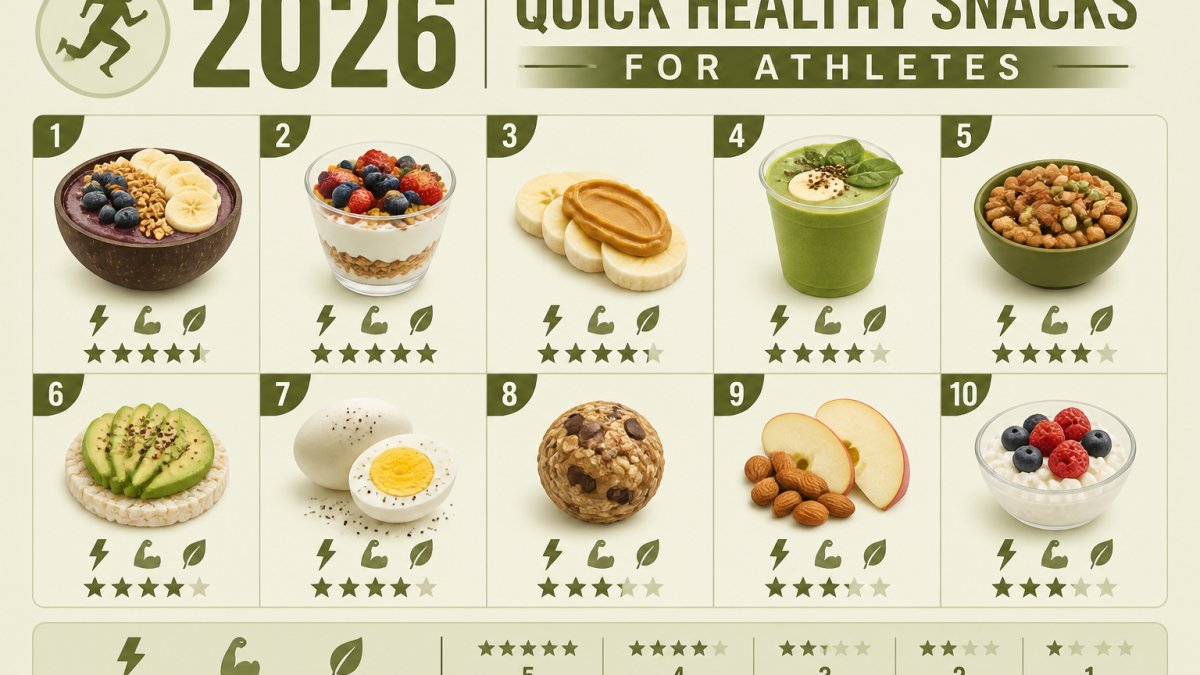
 blog
blog
Quick Healthy Snacks for Athletes: 2026 Guide
Table of Contents
- Quick Energy Snacks for Athletes: Fuel Without the Slump
- Pre-Workout Snacks for Athletes: What to Eat Before Training
- Post-Workout Snacks for Athletes: Recovery Starts Within 30 Minutes
- High-Protein Snacks for Athletes: Rebuild Muscle on the Go
- Portable Snacks and Food Safety: What Travels Well
- Hydration and Electrolytes: The Snack Pairing Most Athletes Miss
- Dietary Restrictions and Allergy-Friendly Substitutions
- Conclusion: Build Your Snack Rotation
- Frequently Asked Questions
Last Updated: October 14, 2026
Quick Energy Snacks for Athletes: Fuel Without the Slump
Quick healthy snacks for athletes are simple, portable foods that deliver fast carbs and a little protein to power training and speed recovery. At World Green Açai, we see how much timing matters for anyone squeezing a workout into a busy day. A good snack can lift your energy in minutes. A bad one leaves you sluggish.
The trick is picking the right fuel for the moment.
- Before training: easy carbs your body burns fast
- During long sessions: quick sugar plus fluids
- After training: carbs and protein together
- Anytime: fruit, dairy, or a blended bowl
Bananas, apple slices, dried fruit, and rice cakes all work as fast energy. Add a little peanut butter or yogurt and the fuel lasts longer. Below, we break down what to eat, when to eat it, and how to keep it simple.
Pre-Workout Snacks for Athletes: What to Eat Before Training
Pre-workout snacks for athletes should be mostly carbs, low in fat and fiber, and eaten 1 to 2 hours before training. Easy-to-digest options keep blood flowing to your muscles instead of your stomach. The single biggest mistake athletes make is guessing at portion size. A snack that fuels a 45-minute practice will leave you hungry two hours into a long ride.
Use this timing and portion framework as a starting point, then adjust based on how you feel:
- 3 to 4 hours before: a full meal with 1 to 2 grams of carbohydrate per pound of body weight, plus a moderate amount of protein and low fat.
- 1 to 2 hours before: a snack with roughly 0.5 to 1 gram of carbohydrate per pound of body weight. For a 150-pound athlete, that is about 75 to 150 grams of carbs.
- 30 to 60 minutes before: a light, fast-digesting carb snack of about 15 to 30 grams of carbohydrate, low in fiber and fat.
- Under 30 minutes: a small, liquid or easily chewed carb source, or a few sips of a sports drink, if you tend to feel full or jittery close to game time.
Good choices, with rough carb counts:
- A medium banana with a spoon of peanut butter (about 27 grams of carbs)
- Oatmeal with dried fruit (about 40 to 50 grams of carbs per bowl)
- A small smoothie with fruit and yogurt (about 30 to 40 grams of carbs)
- Two rice cakes with a thin layer of nut butter (about 20 to 25 grams of carbs)
- Apple slices with a little cheese (about 20 grams of carbs)
- A handful of pretzels or a low-fiber cereal bar (about 20 to 30 grams of carbs)
Match the snack to the session. Before a short, high-intensity practice or a sprint-heavy game, keep the snack small and carb-focused so nothing sits heavy. Before an endurance session lasting more than 90 minutes, lean toward the higher end of the carb range and add a little sodium. Before strength training, a slightly larger carb snack with a small amount of protein works well.
Keep portions small if you are short on time. A light carb snack 30 to 60 minutes before a game works better than a heavy meal. Many athletes find that a small, simple snack sits easier than a full plate.
The Academy of Nutrition and Dietetics sports nutrition guidance notes that timing and portion matter as much as the food itself. Eat too much too close to practice and you will feel it.
Post-Workout Snacks for Athletes: Recovery Starts Within 30 Minutes
Post-workout snacks for athletes should combine carbs and protein within 30 minutes of finishing. That window helps your body refill energy stores and start repairing muscle. The exact amounts matter more than most athletes realize, and they shift depending on what kind of session you just finished.
Use these targets as a starting point:
- Carbohydrate: roughly 0.5 to 1 gram per pound of body weight within 30 minutes, especially after endurance or high-volume sessions.
- Protein: roughly 15 to 25 grams for most athletes, or about 0.1 to 0.15 grams per pound of body weight.
- Ratio: a carb-to-protein mix near 3-to-1 works well after hard endurance work; a ratio closer to 2-to-1 fits strength or team-sport sessions.
- Calories: most recovery snacks land between 200 and 400 calories, depending on body size and session length.
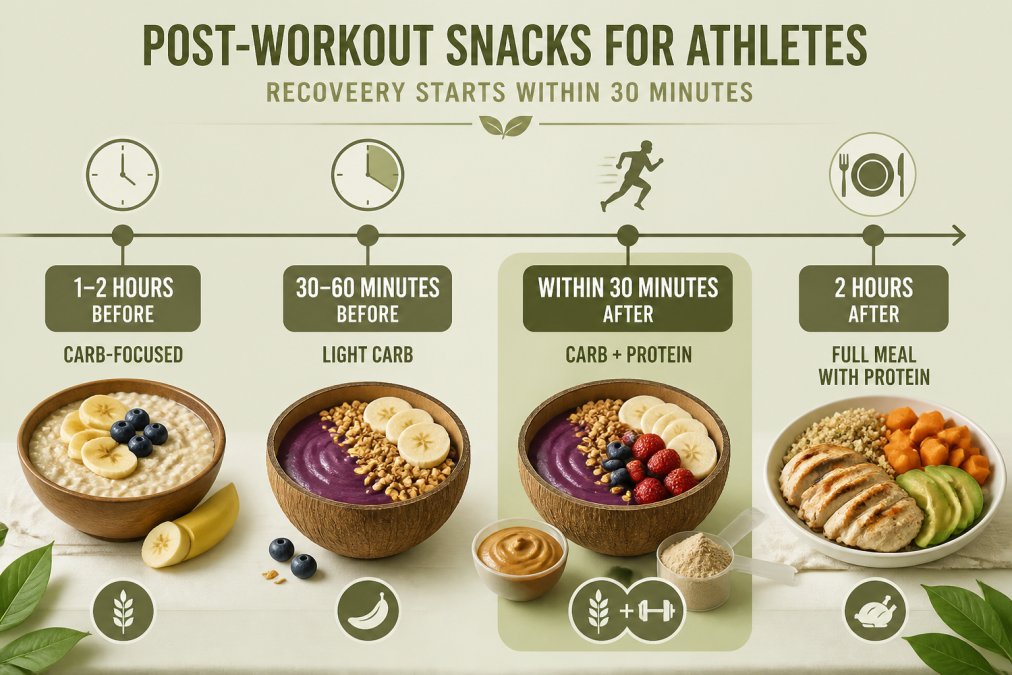
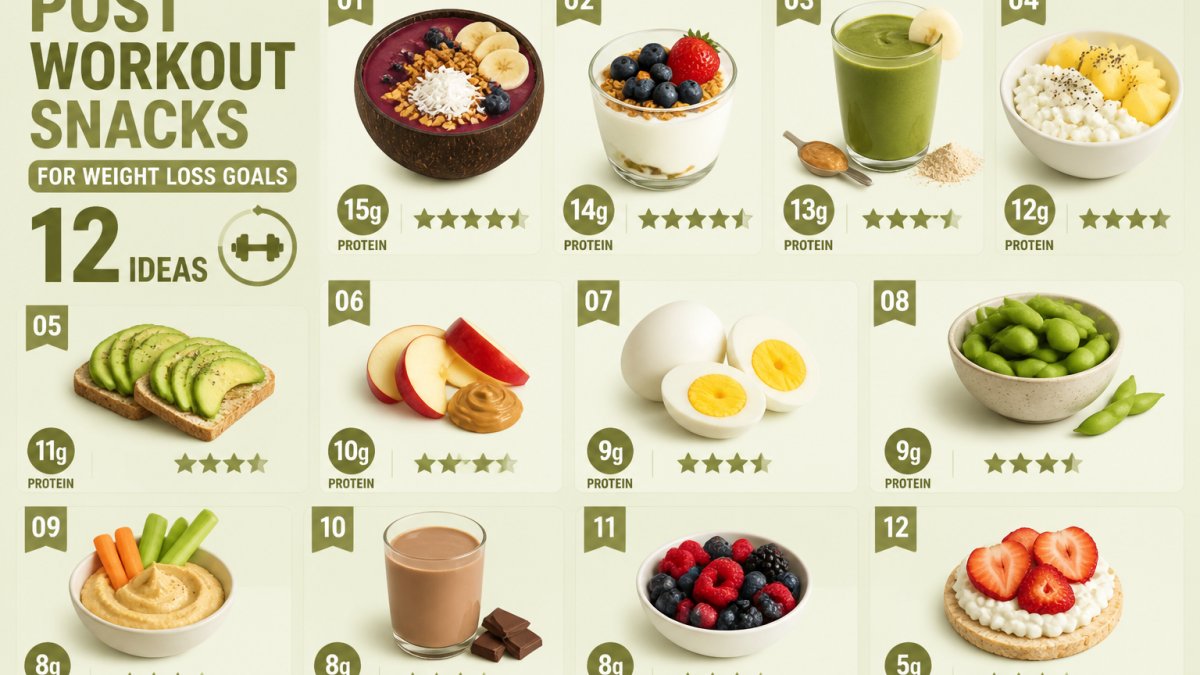
Simple recovery combos, with rough carb and protein counts:
- Greek yogurt with fruit and a drizzle of honey (about 30 grams of carbs, 15 to 20 grams of protein)
- Chocolate milk and a banana (about 45 grams of carbs, 8 to 10 grams of protein)
- A blended bowl with granola and nut butter (about 45 to 60 grams of carbs, 10 to 15 grams of protein)
- Hard-boiled eggs with crackers (about 20 grams of carbs, 12 grams of protein)
- A tuna or bean wrap (about 35 grams of carbs, 20 grams of protein)
- A fruit smoothie with a scoop of protein powder (about 40 grams of carbs, 20 to 25 grams of protein)
Match the snack to the session. After a long endurance session, prioritize the higher end of the carb range and add fluids with sodium. After a strength session, push protein toward the upper end and keep carbs moderate. After a team-sport practice with repeated sprints, a balanced 3-to-1 combo covers both fuel and repair.
If you are not hungry right away, a smoothie or a blended bowl goes down easy and still counts. Liquid recovery options are especially useful after hot, sweaty sessions when appetite lags.
High-Protein Snacks for Athletes: Rebuild Muscle on the Go
High-protein snacks for athletes help rebuild muscle and keep you full between meals. Protein-rich foods are the backbone of recovery, especially after strength work.
Best portable picks:
- Hard-boiled eggs
- Greek yogurt
- Cheese sticks
- Tuna pouches
- Roasted chickpeas or beans
- Pumpkin seeds
- Nut butter with crackers
Pair protein with a carb for the best result. A cheese stick plus an apple, or yogurt plus granola, gives your body both fuel and building blocks. The U.S. Department of Agriculture's nutrition resources is a solid reference for building balanced snack combinations.
Portable Snacks and Food Safety: What Travels Well
Portable snacks should survive a gym bag, a car, and a long day without spoiling. Convenient, shelf-stable foods are your best friends when you are on a busy schedule.
Great travelers:
- Bananas and apples
- Dried fruit
- Crackers and rice cakes
- Nut butter packets
- Pumpkin seeds
- Shelf-stable milk or juice boxes
Keep perishable items like yogurt, eggs, and tuna cool with an ice pack. In warm weather, dairy and meat can spoil fast, so pack them with care. For a snack that needs no cooler, a blended bowl ordered ahead and picked up fresh is hard to beat.
Hydration and Electrolytes: The Snack Pairing Most Athletes Miss
Hydration matters as much as food, and most athletes underrate it. Pairing snacks with fluids and electrolytes keeps energy steady and prevents the slump that hits mid-session.
Simple ways to stay on top of it:
- Drink water with every snack
- Add electrolytes for long or hot sessions
- Choose flavored milk or a smoothie for fluids plus nutrients
- Eat fruit, which brings water along with carbs
For sessions under an hour, plain water usually does the job. For longer or sweaty workouts, a drink with sodium and potassium helps replace what you lose. Many athletes find that a salty snack plus water works as well as a pricey sports drink.
Dietary Restrictions and Allergy-Friendly Substitutions
Nearly any snack can be adjusted for allergies and dietary needs with a simple swap. The goal is to keep the carb-and-protein pairing while removing the problem ingredient.
Easy substitutions:
- Dairy-free: coconut yogurt instead of Greek yogurt
- Nut-free: sunflower seed butter instead of peanut butter
- Gluten-free: rice cakes instead of crackers
- Vegan: beans, chickpeas, and seeds for protein
- Egg-free: hummus or a bean dip instead of eggs
Check labels if you have a serious allergy. Cross-contact can happen even in foods you would not expect. When in doubt, build your snack from whole foods you can identify.
Conclusion: Build Your Snack Rotation
The best snack plan is one you will actually follow. Build a small rotation, keep the basics on hand, and match each snack to your training. Fast carbs before, carbs plus protein after, and fluids throughout.
That is where World Green Açai comes in. Our organic açai bowls give you carbs, healthy fats, and real fruit in one convenient cup. Order online through our Square ordering page or the World Green Açai app, and skip the line on your way to or from training. For a quick, nutrient-packed snack that fits a busy schedule, order online with World Green Açai and get back to what matters.
Frequently Asked Questions
What are good post-workout snacks for athletes?
A recovery snack should combine carbohydrates and protein within 30 minutes of finishing training. Good options include Greek yogurt with banana slices, a smoothie made with milk and fruit, hard-boiled eggs with crackers, or a bowl with granola and nut butter. Aim for roughly 3:1 carbs to protein to replenish glycogen and support muscle repair.
What is the best snack for quick energy?
Bananas, apple slices with peanut butter, rice cakes, and dried fruit deliver fast carbohydrates your body converts to fuel quickly. For training sessions lasting over an hour, pair these with a small amount of protein to sustain energy. A portable açai bowl also works well because it combines carbohydrates from fruit with added toppings for staying power.
What should athletes eat before practice?
Eat a carbohydrate-focused snack 30 to 60 minutes before practice. Good choices include oatmeal, a banana with honey, crackers with hummus, or a small smoothie. Keep fat and fiber low right before training to avoid stomach discomfort. If you have 2 to 3 hours before practice, a larger snack with some protein works well.
How can athletes make a quick snack with carbohydrates and protein?
Pair a carb source with a protein source in one portable package. Examples: Greek yogurt with granola, peanut butter on rice cakes, tuna with crackers, or a smoothie blended with milk, banana, and nut butter. These combinations take under five minutes to assemble and deliver both macronutrients your muscles need after training.