 blog
7 Best Superfood Toppings for Extra Fiber and Energy
Table of Contents
- Why Superfood Toppings Beat Another Energy Drink
- How to Judge a Topping: Fiber, Energy, and Real Serving Sizes
- 1. Chia Seeds: The Chia Seeds Benefits That Actually Matter
- 2. Flaxseeds: Ground, Not Whole
- 3. Pumpkin Seeds: The Crunch That Keeps You Full
- 4. Almonds and Nut Butter: Healthy Fats Plus Fiber
- 5. Berries: The Lowest-Sugar Fruit Topping
- 6. Oats and Oatmeal: Complex Carbohydrates for Steady Energy
- 7. Beans and Legumes: The Most Underrated Topping
- Simple Combinations and Meal Applications
- Where Açai Bowls Fit In
- Frequently Asked Questions
Last Updated: October 18, 2026
Why Superfood Toppings Beat Another Energy Drink
Most energy drinks hand you a quick jolt and a crash an hour later. Superfood toppings work differently: they pair dietary fiber with healthy fats and steady carbohydrates, so your body gets fuel it can actually use. At World Green Açai, we build bowls around this idea every day.
Fiber is the quiet hero here. It slows digestion, helps you stay full longer, and supports gut health and regularity. That is a very different outcome from a can of caffeine and sugar.
Below, we break down seven versatile superfood toppings. Each one earns its spot for two reasons: real fiber per serving and clean, sustained energy.
How to Judge a Topping: Fiber, Energy, and Real Serving Sizes
A topping only counts if you would actually eat the amount that delivers the fiber. That is the first thing most guides get wrong.
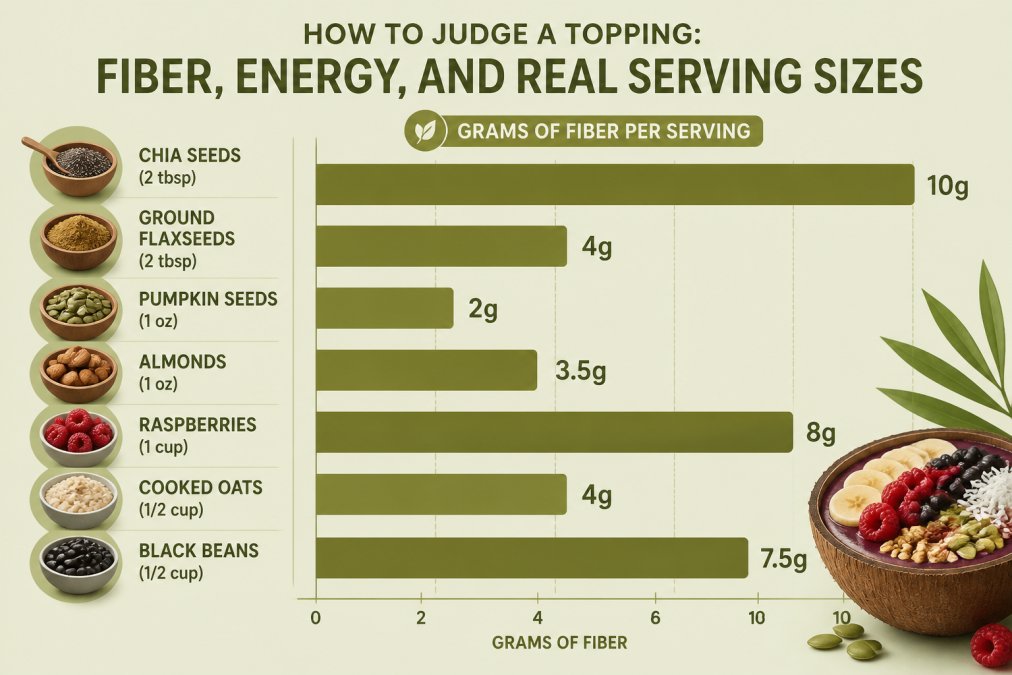
Here is the framework we use:
- Fiber per realistic serving. Measured per tablespoon, per ounce, or per half-cup, the amount that lands in your bowl.
- Soluble vs. insoluble fiber. Soluble fiber forms a gel that slows digestion and supports steadier blood sugar; insoluble fiber adds bulk and helps regularity. Most whole toppings carry both, in different ratios.
- Energy pairing. Fiber alone is not fuel. The best toppings also bring healthy fats, plant-based protein, or complex carbohydrates so the meal releases energy over hours, not minutes.
- Sugar load. A topping that adds fiber but dumps in added sugar defeats the purpose.
- Preparation and tolerance. Seeds and nuts may need grinding, soaking, or toasting to be usable and gentle on the gut.
Use this table as your quick reference. It summarizes all seven toppings, the fiber you get per realistic portion, and where each one shines.
| Topping | Fiber per Realistic Serving | Soluble/Insoluble Mix | Energy Role | Best For |
|---|---|---|---|---|
| Chia seeds | About 10 g per 2 tbsp | Mostly soluble | Slow-release fuel | Smoothies, yogurt bowls, puddings |
| Ground flaxseeds | About 4 g per 2 tbsp | Mostly soluble | Healthy fats plus fiber | Oatmeal, smoothies, baked goods |
| Pumpkin seeds | About 2 g per 1 oz | Mostly insoluble | Protein and crunch | Salads, snack bowls |
| Almonds and nut butter | About 3.5 g per 1 oz almonds or 2 tbsp almond butter | Mostly insoluble | Healthy fats, satiety | Toast, bowls, smoothies |
| Berries | About 8 g per 1 cup raspberries | Mixed | Low-sugar sweetness | Yogurt, açai bowls, oatmeal |
| Oats and oatmeal | About 4 g per 1/2 cup cooked | Mostly soluble (beta-glucan) | Complex carbohydrates | Breakfast bowls |
| Beans and legumes | About 7.5 g per 1/2 cup black beans | Mixed | Protein plus fiber | Savory bowls, salads |
A few practical rules sit behind that table. Fiber needs fluid to move smoothly through the gut, so drink more water as you add these toppings.
The seven superfood toppings below follow this framework. Each entry gives you the fiber story, the energy story, and a simple way to use it.
1. Chia Seeds: The Chia Seeds Benefits That Actually Matter
Chia seeds are the most fiber-dense topping on this list. Two tablespoons deliver roughly 10 grams of fiber, most of it soluble.
That soluble fiber is where the chia seeds benefits show up. It forms a gel in your gut, which slows digestion and helps you stay full longer. The same gel supports steadier blood sugar instead of a spike-and-crash.
Chia also brings plant-based protein and healthy fats. Together, that is a slow-release energy combo.
How to use it: stir a spoonful into a smoothie, sprinkle over a yogurt bowl, or make a quick chia pudding. Let it sit for a few minutes so it softens.
2. Flaxseeds: Ground, Not Whole
Ground flaxseeds are the practical choice. Whole seeds can pass through your body undigested, so you miss much of the benefit.
Two tablespoons of ground flaxseed add about 4 grams of fiber plus healthy fats. That fat content makes flax a strong partner for complex carbohydrates, since it slows how fast your body absorbs them.
Flax has a mild, nutty taste. It disappears into oatmeal, smoothies, and baked goods without changing the flavor much.
One caveat: flaxseed oil goes rancid faster than the seeds. Keep ground flax in the fridge and use it within a few weeks.
3. Pumpkin Seeds: The Crunch That Keeps You Full
Pumpkin seeds bring the texture that bowls and salads usually lack. One ounce adds about 2 grams of fiber along with plant-based protein and healthy fats.
That protein-and-fat combo is why pumpkin seeds help you stay full longer. They turn a light snack into something that actually holds you until your next meal.
They also carry magnesium and zinc, two minerals tied to normal energy metabolism.
Scatter a handful over a salad, a grain bowl, or a smoothie bowl. Toast them dry in a pan for a deeper flavor.
4. Almonds and Nut Butter: Healthy Fats Plus Fiber
Almonds and nut butter earn their place through satiety. One ounce of almonds gives you about 3.5 grams of fiber, and two tablespoons of almond butter delivers a similar hit.
The healthy fats in nuts slow digestion and help flatten the blood sugar curve after a meal. That is the opposite of what a sugary snack does.
Nut butter is the easier option for busy days. A spoonful stirs into oatmeal or a smoothie in seconds.
Watch the labels. Many nut butters add sugar and palm oil. Look for one with nuts and salt, nothing more.
5. Berries: The Lowest-Sugar Fruit Topping
Berries are the smartest fruit topping if you care about blood sugar. One cup of raspberries adds about 8 grams of fiber with far less sugar than most fruits.
That fiber slows how quickly the fruit's natural sugar reaches your bloodstream. You get sweetness without the sharp spike.
Berries also bring antioxidants and vitamin C. Fresh or frozen both work; frozen berries hold their nutrients well and cost less out of season.
Layer them over Greek yogurt, fold them into oatmeal, or pile them on a smoothie bowl. For a real treat, they are the classic healthy açai bowl topping.
6. Oats and Oatmeal: Complex Carbohydrates for Steady Energy
Oats are the clearest example of complex carbohydrates done right. A half cup of cooked oats delivers about 4 grams of fiber, including beta-glucan, a soluble fiber linked to heart health.
Because oats digest slowly, they release energy over a longer window. That is why oatmeal keeps so many people steady through the morning.
Rolled oats beat instant packets, which often carry added sugar. Cook them with milk or water, then top with fruit, nuts, or seeds for a complete bowl.
7. Beans and Legumes: The Most Underrated Topping
Beans and legumes are the topping nobody expects, and they deserve better. A half cup of black beans adds about 7.5 grams of fiber plus plant-based protein.
That fiber-and-protein pairing is the strongest satiety combo on this list. It keeps you full and feeds gut health at the same time.
Green peas and edamame work the same way. Toss them warm over a grain bowl or a spinach salad.
Start small if beans are new to you. A few spoonfuls at a time lets your gut adjust without discomfort.
Simple Combinations and Meal Applications
The fastest way to add fiber is to stack two or three toppings in one bowl. What most guides skip is the math: how much fiber a realistic combination actually delivers, and how the textures and preparation steps work together.
- Morning energy bowl: 1/2 cup cooked oatmeal (about 4 g) + 1 tbsp ground flaxseed (about 2 g) + 1/2 cup raspberries (about 4 g) + 1 tbsp almond butter (about 1 g). Total: roughly 11 g of fiber, with complex carbohydrates, healthy fats, and a little protein for a slow morning release.
- Post-workout recovery bowl: 3/4 cup Greek yogurt + 1 tbsp chia seeds (about 5 g) + 1/2 banana + 1 tbsp pumpkin seeds (about 1 g). Total: roughly 6 g of fiber plus protein from the yogurt and seeds.
- Lunch salad: 2 cups spinach and kale + 1/2 cup black beans (about 7.5 g) + 1 tbsp pumpkin seeds (about 1 g) + 1/4 avocado. Total: roughly 9 g of fiber with plant protein and healthy fats.
- Quick smoothie: 1/2 cup berries (about 4 g) + 1 tbsp chia seeds (about 5 g) + 1 tbsp nut butter (about 1 g) + 2 tbsp oats (about 1 g). Total: roughly 11 g of fiber in a drinkable meal.
- Toast upgrade: whole-grain toast + 2 tbsp almond butter (about 3.5 g) + 1/2 cup sliced strawberries (about 1.5 g). Total: roughly 5 g of fiber before the bread is counted.
A few practical notes. Increase fiber gradually over a week or two rather than all at once; a sudden jump is the most common reason people feel bloated when they start adding seeds and beans.
Allergies and restrictions matter here. Seeds and nuts are common allergens, so check labels and introduce one new topping at a time if you have a sensitive system.
Where Açai Bowls Fit In
Açai bowls are a natural home for these superfood toppings. The base brings antioxidants and a smooth texture, and the toppings do the fiber and energy work.
That is the model we follow at World Green Açai. We start with organic açai berries and let you build from there. You can order online through our online ordering page and skip the line, or use our app to reorder a favorite in seconds.
For anyone who wants proof of quality, ask about sourcing. Real açai should taste tart and deep, not like sweetened frozen yogurt.
Frequently Asked Questions
Which toppings add the most fiber to a bowl?
Chia seeds deliver the most fiber per realistic serving: about 10 grams in 2 tablespoons. Raspberries follow at roughly 8 grams per cup, and half a cup of black beans adds about 7.5 grams. Ground flaxseeds contribute around 4 grams per 2 tablespoons, and half a cup of cooked oats adds about 4 grams. Pair two or three of these superfood toppings in one bowl and you can clear 15 grams of fiber without changing anything else about your meal.
Can fiber-rich foods help support steady energy?
Fiber slows how quickly a meal's carbohydrates reach your bloodstream, which is why high-fiber foods tend to produce a gentler rise and fall in blood sugar than refined carbs alone. That flatter curve is what people mean by steady energy. The effect is strongest when fiber arrives with protein and healthy fats, so a bowl topped with chia seeds, nut butter, and berries will hold you longer than the same bowl with nothing on it.
Are chia seeds and flaxseeds good sources of fiber?
Yes, with one practical difference. Two tablespoons of chia seeds pack about 10 grams of fiber, most of it soluble, and they gel in liquid, which thickens smoothies and yogurt bowls. Ground flaxseeds give you about 4 grams per 2 tablespoons plus omega-3 fats, but they must be ground: whole flaxseeds pass through largely undigested. Store ground flaxseeds in the fridge, since they go rancid faster than chia.
What are the best toppings for an açai bowl?
Start with a thick, unsweetened açai base, then add one fiber-heavy topping (chia seeds or ground flaxseeds), one fruit (berries or sliced banana), and one source of healthy fats or plant-based protein (almonds, nut butter, or pumpkin seeds). That three-part structure keeps the bowl nutrient-dense without turning it into dessert. If you order out, ask for toppings on the side so you control the portion and skip the sugary granola.
Adding fiber does not have to mean a boring diet. Start with one topping, then build a bowl that keeps you full and steady. At World Green Açai, we make that easy with organic açai, online ordering, and a menu built for busy days. Order online and build your next bowl with the toppings that work for you.