 how-to
How to Identify Authentic Organic Açai: A Complete Guide
Table of Contents
- What Authentic Organic Açai Actually Looks Like
- Understanding USDA Organic Acai Certification
- Reading Ingredient Labels: What to Look For
- Acai Pulp vs. Acai Powder: Which Is More Authentic
- Supply Chain Transparency and Sourcing Verification
- Home Testing Methods to Verify Authenticity
- Why American Açai Often Tastes Different
- Conclusion
Last Updated: August 13, 2026
What Authentic Organic Açai Actually Looks Like
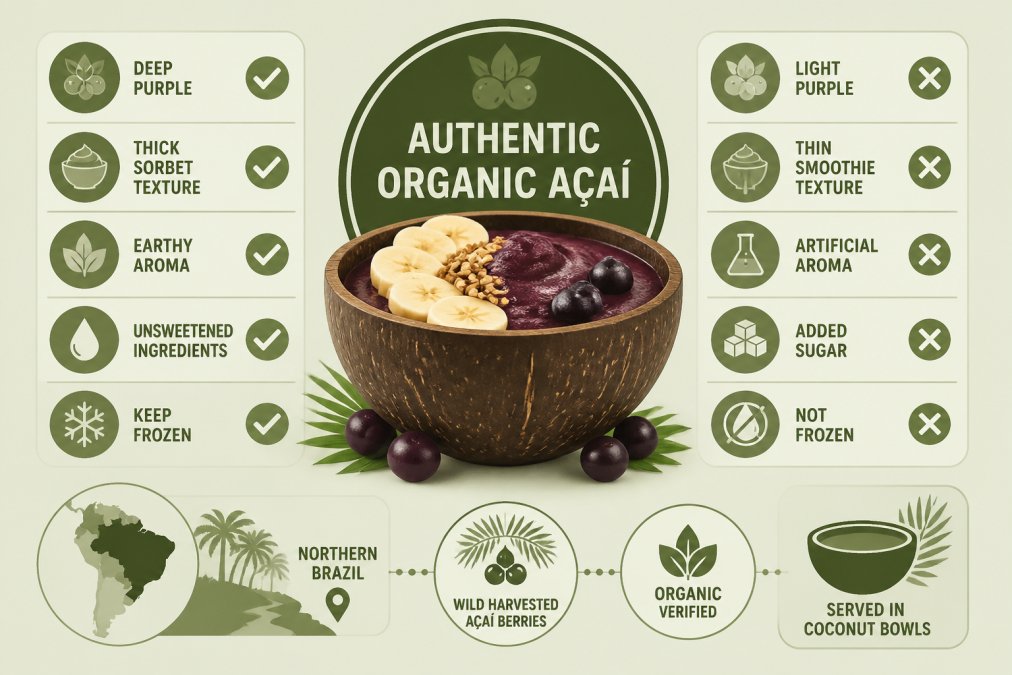
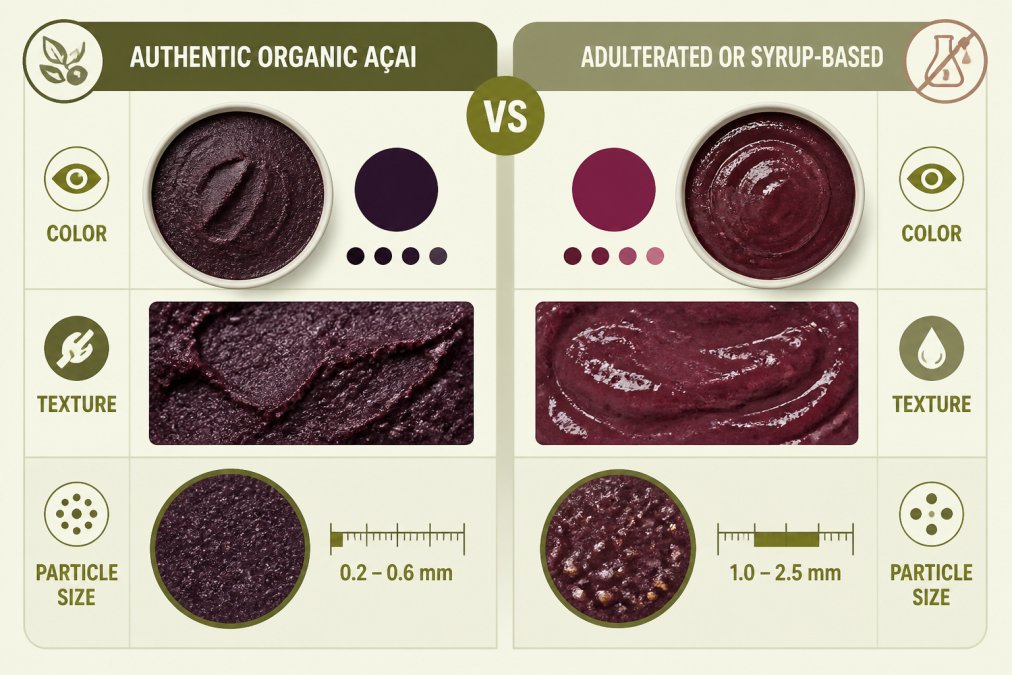
Real organic açai has a distinctive deep purple color, almost black in certain light, with a texture between thick berry puree and soft ice cream. The color comes naturally from anthocyanin content, not added dyes or syrups. Bright, neon purple is usually a red flag for additives or excessive processing.
USDA organic standards for fruit processing define how certified organic açai must be handled from harvest through packaging. Authentic açai should smell earthy and slightly tart with subtle berry-like notes. Overly sweet or artificial smells indicate added sweeteners masking inferior fruit quality.
Color, Texture, and Sensory Profile
Genuine açai pulp displays deep purple with possible brown undertones, never bright fuchsia or artificial violet. The texture should be smooth and creamy, suggesting frozen fruit rather than syrup or thickeners.
Real açai has an earthy profile with subtle tartness and possible stone fruit or nutty undertones. The flavor sits between tart and mildly sweet, never cloying. This sensory complexity indicates minimal processing and no synthetic additives. Adulterated açai relies on added sugars or corn syrup to create dessert-like taste rather than capturing natural fruit flavor.
How Real Açai Tastes vs. Imposters
Authentic organic açai brings tartness first, followed by subtle sweetness and earthy undertones. Imposters taste flat and sugary because they rely on added sweeteners to compensate for low-quality fruit or dilution.
Real açai leaves slight astringency on your palate, similar to red wine or dark berries. Syrup-based versions leave only sugar residue. Authentic pulp has creamy consistency from natural fat content, while adulterated versions feel slimy or overly thick from added gums.
A practical test: mix a small amount with plain yogurt or milk. Real açai blends smoothly and maintains its color, while imposters may separate or show unnatural hue shifts.
Understanding USDA Organic Acai Certification
Certified organic açai must meet strict standards throughout its entire supply chain. The certification verifies that fruit was grown without synthetic pesticides, herbicides, or fertilizers. For imported açai from Brazil, the USDA National Organic Program rules require documentation at every stage from harvest to final packaging.
Organic certification confirms the fruit meets rigorous production standards and passed independent audits. When you see the USDA organic seal, you know the palms weren't treated with prohibited chemicals and the harvesting environment meets environmental stewardship requirements.
What the Label Should Say
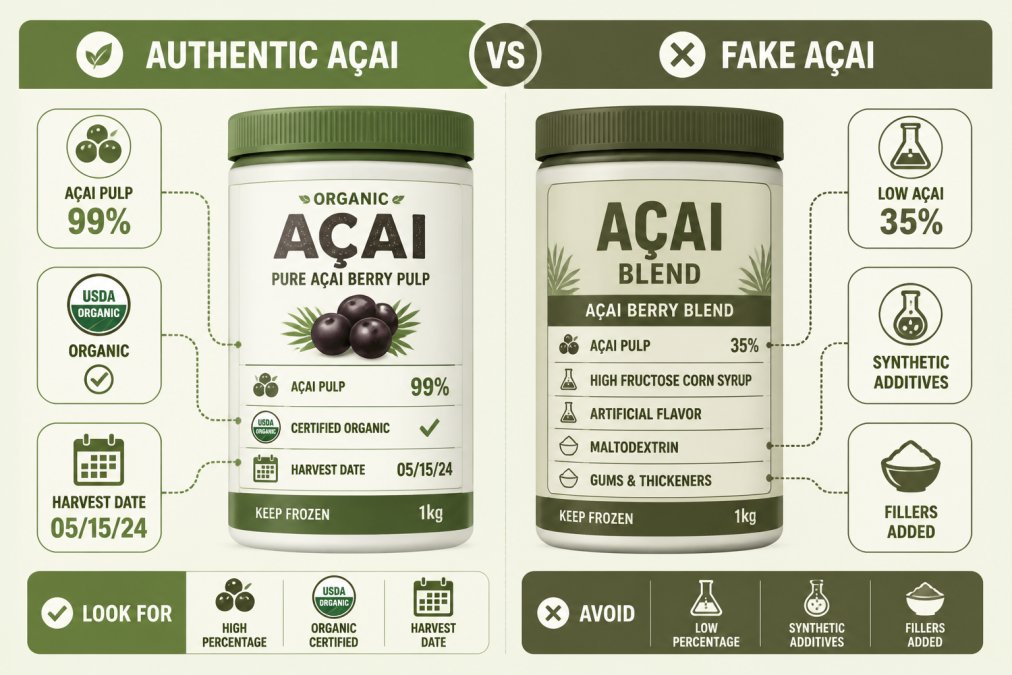
An authentic organic açai product displays the USDA organic seal prominently. The label should list "organic açai pulp" or "organic acai" as the first ingredient. If it shows "açai puree" or "açai juice concentrate," the product is diluted. Pure organic açai pulp should have minimal additional ingredients.
Look for a certification number you can verify through the USDA database. The label must include the certifying agent's name, typically an organization like Oregon Tilth or Quality Assurance International. Fresh-frozen organic açai typically has an 18-24 month shelf life from harvest date.
Verifying Certification Status
Verify USDA organic certification through the USDA Organic Integrity Database. Enter the certifying agent's name or company name to confirm active certification status and check for violations.
Contact suppliers directly if you can't find verification information. Legitimate organic producers welcome questions about certification and can provide documentation. If a vendor becomes evasive or can't provide details, the product likely isn't truly organic.
For açai bowls from local vendors, ask to see supplier documentation. Reputable shops maintain transparent supply chains and can explain exactly where their organic açai comes from and which certifying agent verified it.
Reading Ingredient Labels: What to Look For
A pure product should list "organic açai pulp" as the first ingredient, ideally as the only ingredient or with minimal additions. If multiple ingredients appear before açai, or if açai appears partway down the list, the product is diluted.
Real açai pulp contains natural fats (around 5-8g per serving) and moderate natural sugars. Unusually high sugar content relative to serving size indicates added sweeteners. Fat content should be consistent with berry-based products.
Common Additives and Fillers to Avoid
Syrup-based products list corn syrup, high-fructose corn syrup, or fruit juice concentrates early in ingredient lists. These create bright purple color and excessive sweetness masking inferior fruit quality. Avoid products where these appear before or near the top.
Thickening agents like guar gum, xanthan gum, or modified food starch indicate artificial texture. While small amounts are acceptable in frozen products, excessive use suggests the product lacks natural creamy consistency.
Artificial colors or dyes should never appear in organic açai products. If you see FD&C colors or synthetic dyes, the product isn't authentic. Natural color variation is normal, but it should never appear artificially bright or uniform.
Preservatives beyond natural vitamin E or ascorbic acid warrant scrutiny. Excessive additives indicate the manufacturer is compensating for poor-quality fruit or improper handling.
Acai Pulp vs. Acai Powder: Which Is More Authentic
Acai pulp is the frozen puree of the fruit, processed minimally after harvest. It retains the most nutritional value and authentic flavor profile, freezing the fruit within hours of harvest to preserve natural fat content and antioxidants.
Acai powder is freeze-dried pulp ground into powder form. This extends shelf life and eases transport, but concentrates flavor and removes some natural texture. Powder has more concentrated earthy profile and less creamy mouthfeel than fresh-frozen pulp.
Pulp is closer to the original fruit, requiring less additional processing. However, high-quality organic powder from reputable suppliers still maintains excellent nutritional density and authentic flavor.
Processing Methods and What They Mean
Flash-freezing is the gold standard for preserving acai quality. The fruit freezes within hours of harvest at extremely low temperatures, halting oxidation and preserving the natural nutrient profile.
Cold-pressed extraction preserves more natural properties than heat-based processing. This method typically results in thicker, creamier products while protecting heat-sensitive antioxidants.
Freeze-drying for powder production removes water content while preserving most nutrients. This creates shelf-stable powder retaining much of the original flavor intensity, though the taste becomes concentrated.
Heat-based pasteurization is sometimes used for food safety, but excessive heat damages delicate antioxidants. Look for products specifying gentle pasteurization or cold processing methods.
Supply Chain Transparency and Sourcing Verification
Authentic organic acai sourcing begins in Northern Brazil, where the açai palm naturally grows. The fruit thrives in floodplain forests requiring specific environmental conditions primarily found in the Amazon region. Reputable suppliers trace acai directly back to specific harvest regions and farming operations.
Transparent suppliers provide detailed information about sourcing practices, documenting the journey from palm to processor to final product. This traceability ensures acai actually comes from organic-certified sources and hasn't been adulterated or mislabeled during transport or processing.
Traceability and Audits
Independent audits verify that acai products meet organic standards throughout the supply chain. Certifying agents conduct regular inspections of processing facilities, storage conditions, and handling practices, confirming organic acai hasn't been contaminated by non-organic products or synthetic additives.
Ask suppliers about their audit schedule and results. Legitimate businesses welcome this scrutiny and maintain current audit documentation. Batch numbers on packaging allow suppliers to identify exactly which harvest and processing batch your product came from.
World Green Açai sources authentic organic acai directly from verified Northern Brazilian suppliers, maintaining complete traceability from harvest through their Larkspur location. This commitment to supply chain transparency means you can verify exactly where your acai originates and confirm its organic certification status.
Home Testing Methods to Verify Authenticity
A simple water test reveals whether your acai contains synthetic additives. Place a small amount of acai pulp in cold water. Real acai gradually disperses and colors the water evenly, creating consistent purple hue. Adulterated products often separate or show unnatural color patterns.
The taste test remains one of the most reliable verification methods. Authentic organic acai tastes tart first, followed by subtle sweetness with complexity and earthiness. If your acai tastes predominantly sweet with no tartness, additives are likely present.
Texture examination provides additional clues. Real acai pulp feels creamy and smooth when thawed. Imposters often feel slimy or grainy due to added thickeners or poor-quality fruit. Texture should be consistent throughout, not separated or clumpy.
Authentic acai melts smoothly when thawed, maintaining creamy consistency. Products with added gums may become gelatinous or develop unnatural texture as they warm. The melting process should feel natural, similar to ice cream rather than gel or paste.
Why American Açai Often Tastes Different
Most acai sold in the United States is imported frozen pulp from Brazil. The journey from harvest to retail involves freezing, transport, and storage that can affect flavor and texture. Properly handled organic acai maintains excellent quality despite these changes.
Processing standards differ between Brazilian suppliers and American distributors. Some processors add minor ingredients for stability during transport, subtly altering flavor profile. Reputable suppliers minimize these additions.
Storage conditions significantly impact the final product. Acai stored at inconsistent temperatures or exposed to light shows flavor degradation. Professional suppliers maintain strict cold-chain protocols, but smaller vendors may lack adequate infrastructure.
Different regions of Northern Brazil produce acai with slightly different flavor profiles. Some show more pronounced tartness, others display more stone fruit characteristics. Flavor variations may reflect different palm varieties rather than quality differences.
Identifying authentic organic acai requires attention to visual characteristics, label verification, sensory evaluation, and supply chain transparency. The combination of these verification methods gives you confidence that you're purchasing genuine organic acai rather than an adulterated substitute.
When selecting an acai bowl or purchasing acai products, apply these identification techniques. Check for the USDA organic seal, examine ingredient lists for additives, and trust your senses regarding flavor and texture. Suppliers who maintain transparent supply chains and verify their certification status deserve your business. World Green Açai sources authentic organic acai from Northern Brazil and provides the quality and transparency you deserve.
Frequently Asked Questions
How can I tell the difference between fake and authentic acai?
Authentic açai has a deep purple color, earthy profile, and slight tartness. Fake or adulterated versions often appear lighter, taste overly sweet, or contain syrup-based fillers. Check the ingredient list, real açai should list açai pulp as the first ingredient with minimal additives. Look for USDA organic certification and verify the sourcing information on the label or supplier website.
What should I look for on an acai ingredient label to verify it's real?
The first ingredient should be açai pulp, not syrup, sugar, or water. Look for USDA organic certification, a harvest date, and the country of origin. Avoid products listing synthetic additives, artificial flavors, or excessive sweeteners. The label should also indicate whether it's flash-frozen or cold-pressed, which preserves nutrient density and authentic flavor profile better than shelf-stable alternatives.
Is all acai sold in stores organic, and how do I verify USDA organic acai certification?
No, not all açai is organic. Verify USDA organic certification by looking for the official USDA organic seal on packaging. You can cross-reference the producer's name with the USDA Organic Integrity Database online. Request documentation from the supplier showing audits and traceability records. Reputable sources provide transparent supply chain information and can confirm their organic status without hesitation.
What's the difference between acai pulp and acai powder, and which is more authentic?
Açai pulp is the frozen form closest to the original berry, it retains more of the authentic earthy profile, stone fruit notes, and nutrient density. Açai powder is dehydrated and processed further, which can introduce additives and may not taste as true to the original. For maximum authenticity, choose flash-frozen or cold-pressed pulp. Powder is convenient but often contains fillers or has been stripped of some natural sugars and flavor complexity.
This article was written using GrandRanker