 comparison
Is Pure Acai Worth the Price? An Honest 2026 Review
Table of Contents
- What Pure Acai Actually Costs You
- Acai Pulp vs Sorbet: Which One Are You Paying For?
- The Benefits of Organic Acai: What Your Money Actually Buys
- How to Identify Authentic Acai Before You Buy
- Nutritional Profile: Pure Acai vs Sweetened Alternatives
- Taste, Texture, and Best Uses for Each Form
- Sustainability, Sourcing, and Cost-Per-Serving Analysis
- Verdict: When Pure Acai Is Worth the Price
- Frequently Asked Questions
Last Updated: September 15, 2026
What Pure Acai Actually Costs You
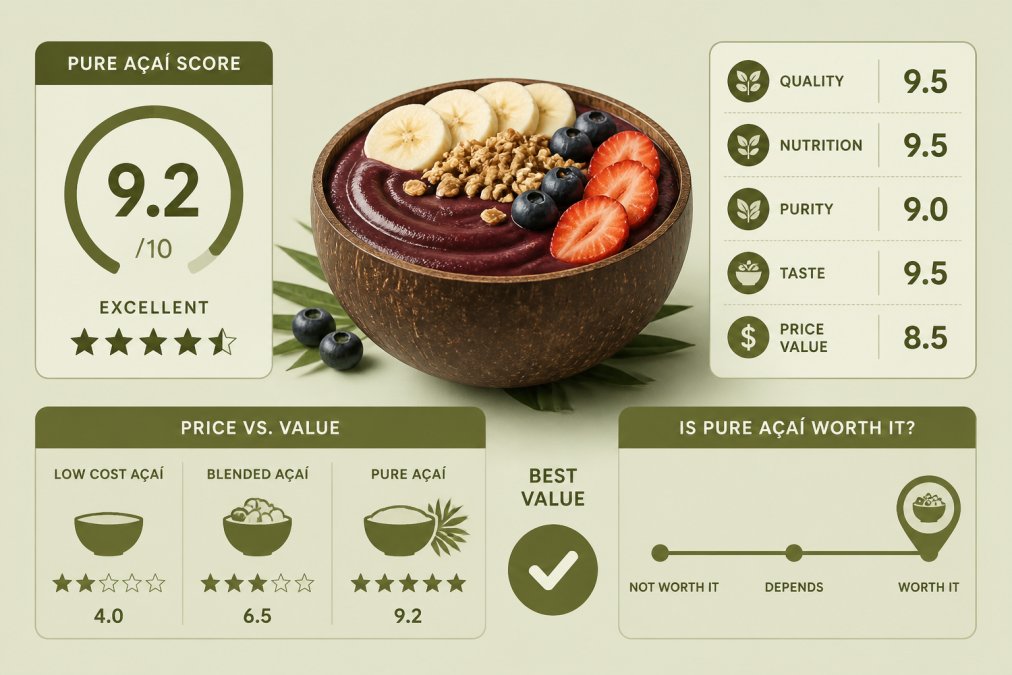
If you have ever stood in line at a juice bar wondering whether the premium price tag matches what is in the cup, you are asking the right question. Pure acai worth the price only when the product is genuinely unsweetened, properly sourced, and sold in a form that preserves its nutrients. When it is diluted with fillers, sweetened syrups, or stabilizers, you are paying a premium for a dessert, not a superfood.
At World Green Açai, we field this question daily from customers comparing a grocery-store frozen pack to a freshly prepared bowl. The honest answer comes down to what you are actually buying: berry concentration, processing method, and how much of the cup is acai versus everything else.
Below, we break down cost per serving, the difference between pulp and sorbet, and how to tell authentic acai from a sugar bomb before you spend a cent.
The Price Per Serving Breakdown
Cost per serving is the only number that matters when you compare acai options. A tub of frozen puree and a finished bowl are not the same purchase, so comparing their sticker prices directly tells you nothing.
Here is how the trade-offs stack up across the forms you will encounter:
| Form | What You're Buying | Convenience | Control Over Sugar |
|---|---|---|---|
| Frozen puree packs | Pre-portioned acai base | High | Low (often pre-sweetened) |
| Bulk unsweetened puree | Pure berry, no additives | Medium | Full |
| Freshly prepared bowl | Acai plus toppings, made to order | Highest | Varies by shop |
| Acai supplements | Concentrated extract | Highest | Not applicable |
Frozen puree packs sold in grocery stores are typically the cheapest entry point, but many contain added sweeteners, which means you are paying for sugar alongside the fruit. Bulk unsweetened puree costs more per pack but stretches further because you control the pulp-to-liquid ratio. A freshly prepared bowl carries the highest convenience premium, which is why the same acai costs more when someone else blends, portions, and tops it for you.
Acai Pulp vs Sorbet: Which One Are You Paying For?
Acai pulp is frozen, pasteurized acai berry puree with little or nothing added. Acai sorbet is a churned frozen dessert built on an acai base, blended with sweeteners, water or juice, and often emulsifiers to keep it scoopable. These two products sit in the same freezer aisle and get confused constantly, but they behave nothing alike.
If you want the nutritional benefits of the fruit, you want pulp. If you want a smooth, sweet frozen dessert, sorbet delivers that, at the cost of added sugar and a lower berry concentration.
Ingredients and Processing Differences
The ingredients list settles the pulp-versus-sorbet question faster than any marketing claim. A true puree lists acai and nothing else. A sorbet lists acai somewhere after water, cane sugar, or a syrup.
Processing diverges too. Pulp is typically pasteurized and frozen soon after harvest to preserve antioxidants and healthy fats, including omega fatty acids. Sorbet goes through a churning process in an ice cream machine, which introduces air and requires stabilizers or emulsifiers to maintain a smooth consistency once frozen.
That churning step is why sorbet feels creamier straight from the tub. It is also why the texture profile collapses faster when it melts and refreezes.
The Glycemic Index Angle Most Comparisons Skip
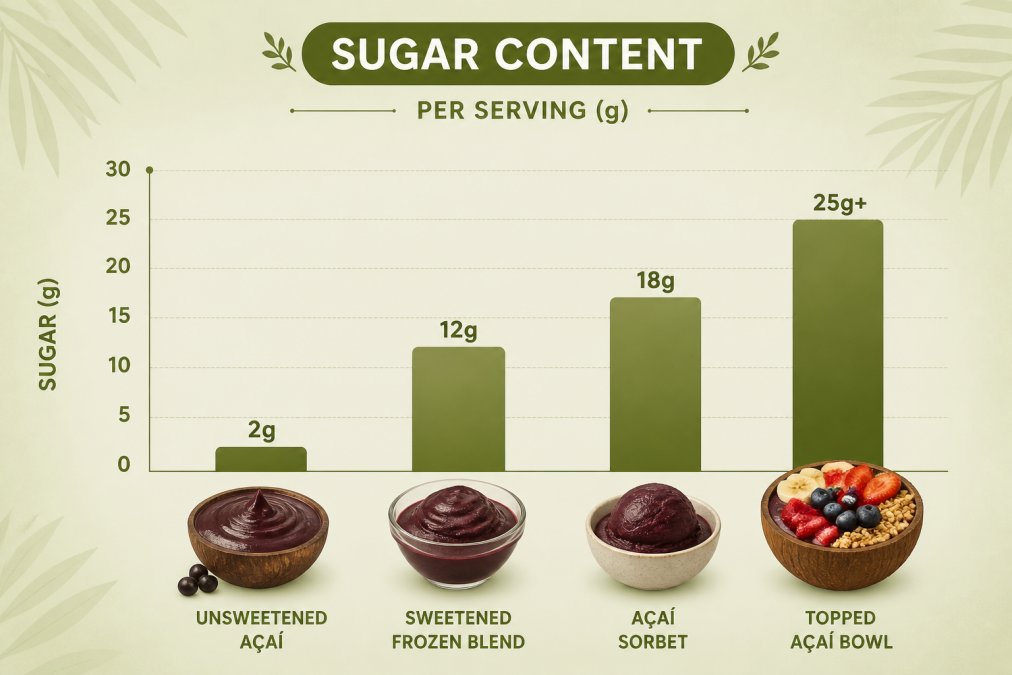
Pure unsweetened acai carries roughly 2 grams of sugar per serving, while sweetened sorbets push past 12 to 18 grams. That gap is not just a number on a label, it changes how the food behaves in your body. The fruit's natural fats and fiber slow digestion, so a pure acai base releases its sugar gradually. A sorbet built on added sweeteners behaves much more like a standard frozen dessert, which matters if you are watching blood sugar or choosing a post-workout recovery snack.
This is the angle most comparisons skip. Two products can both say "acai" on the front and land in completely different places on your plate. If blood sugar response is part of your decision, the ingredient list is the only reliable signal, not the front of the package.
DIY: Turning Frozen Pulp Into a Sorbet-Like Texture at Home
You do not need a commercial churn to get a scoopable result from pure pulp. The trick is controlling the ratio of frozen to liquid and blending just long enough to break down the fiber without melting the base.
A method that works reliably:
- Let the pulp packs thaw slightly, about five minutes at room temperature, so they break into chunks rather than a solid block.
- Add a small amount of liquid, roughly two to three tablespoons per pack, and no more. Too much liquid is the most common reason home acai turns soupy.
- Blend on low, scraping down the sides, until the texture turns thick and spoonable. Stop before it looks glossy; that is the point where it starts melting.
- For a sweeter result without refined sugar, blend in a frozen banana or a date rather than a syrup. The fruit adds body as well as sweetness.
- Serve immediately. Acai that sits out re-freezes into ice crystals and loses the creamy texture you just built.
That last point trips up home buyers constantly. Acai that has been thawed and refrozen develops ice crystals, and a bowl made from it turns out thin no matter how you blend it.
The Benefits of Organic Acai: What Your Money Actually Buys
The benefits of organic acai come down to two things: what is in the berry, and what is not sprayed on it. Organic certification means the fruit was grown without synthetic pesticides, and it usually signals tighter control over the harvest window, since organic operations tend to process berries quickly to protect their value.
Acai itself is dense in antioxidants, healthy fats, and omega fatty acids. Those compounds are the reason the fruit earned its superfood reputation, and they are also the reason processing method matters so much. Heat and time degrade them, so a berry processed and frozen quickly retains more of what you are paying for than one that sat in transit.
What your money buys with organic acai is largely a nutrient preservation story. The USDA National Organic Program sets the standards a product must meet to carry the organic seal, so that label is a verifiable claim rather than a marketing word. When a shop or brand claims organic sourcing, the certification is what makes the claim checkable.
How to Identify Authentic Acai Before You Buy
Authentic acai has three tells: a short ingredient list, a deep purple-black color, and a tart, earthy flavor with bitter notes rather than sweetness.
Use this checklist before you buy:
Nutritional Profile: Pure Acai vs Sweetened Alternatives
Taste, Texture, and Best Uses for Each Form
Serving suggestions that work well with pure pulp:
Sustainability, Sourcing, and Cost-Per-Serving Analysis
Verdict: When Pure Acai Is Worth the Price
Frequently Asked Questions
Is acai sorbet actually healthy?
Acai sorbet can be healthy, but it depends on the ingredients. Pure acai sorbet made from unsweetened pulp and minimal added sugar retains antioxidants and healthy fats. Many commercial sorbets, however, contain added sweeteners, emulsifiers, and natural flavors that dilute the nutritional value. Check the label for added sugar content and look for acai as the first ingredient. If you want the full benefits of organic acai, choose unsweetened puree or sorbet with no added sugar.
What is the best form of acai to take?
The best form depends on your goals. For maximum nutrient preservation and control over sweetness, frozen unsweetened puree or pulp is ideal. For convenience and a thicker texture, acai sorbet made with minimal ingredients works well. Supplements offer a shelf-stable option but lack the satiety and culinary enjoyment of a bowl. If you want the benefits of organic acai without added sugar, pure frozen pulp is your best bet.
How can you tell if an acai bowl is high quality?
High-quality acai bowls start with authentic acai that is deep purple, thick, and has an earthy, slightly tart flavor. They should not taste overwhelmingly sweet or resemble frozen yogurt. Ask about the source: authentic acai comes from the Amazon, often Northern Brazil. Look for organic certification and minimal added sweeteners. The texture should be smooth and creamy, not icy or thin. A bowl that melts quickly into liquid likely has a low pulp-to-liquid ratio.
Does pure acai pulp have added sugar?
No, pure acai pulp should contain only acai berries. Unsweetened frozen puree has no added sugar, though it does contain naturally occurring sugars from the fruit itself (about 2 grams per serving). Many commercial acai products labeled as 'pure' may still add sweeteners or fillers. Always read the ingredient list: it should say 'acai' and nothing else. If you see sugar, cane syrup, or natural flavors, it is not pure.
Is pure acai worth the price compared to homemade bowls?
Pure acai is worth the price if you value convenience, consistent texture, and authentic flavor. Making acai bowls at home with frozen puree can be more cost-effective per serving, but achieving the thick, creamy consistency of a professionally prepared bowl takes practice. If you lack time or want a reliable nutrient-dense meal, buying from a trusted shop may justify the premium. For daily consumption, homemade with high-quality puree often balances cost and quality.