 how-to
What Makes Açai Bowl Thick: The Complete Technique
Table of Contents
- What Makes Açai Bowl Thick: The Core Principles
- The Acai Bowl Liquid Ratio That Creates Thickness
- Best Frozen Fruit for Thick Smoothie Bowls
- How to Blend Açai Without Melting
- Blender Power and Blade Speed: The Physics of Texture
- Step-by-Step Blending Technique for Scoopable Results
- Troubleshooting Runny Bowls and Common Blending Mistakes
- Conclusion
Last Updated: August 19, 2026
What Makes Açai Bowl Thick: The Core Principles
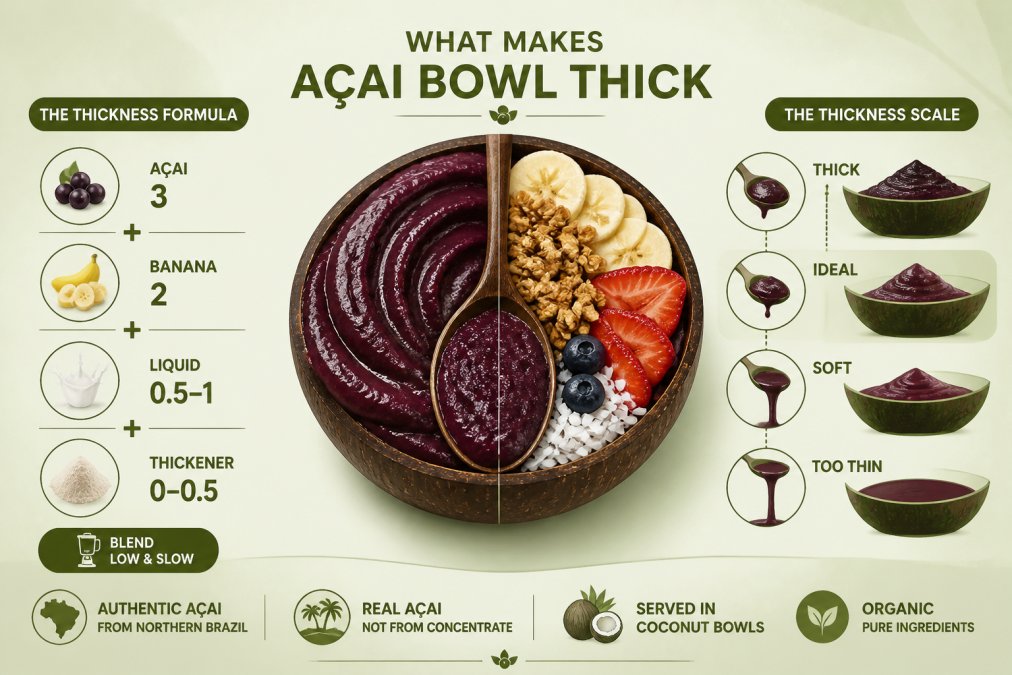
The consistency of an açai bowl comes down to one fundamental equation: the ratio of frozen fruit to liquid, combined with blending technique and temperature control. Get this wrong, and you end up with a smoothie. Get it right, and you have that signature thick, scoopable texture that defines a great bowl.
Most people think thickness is about adding more fruit. That's partially true, but it misses the real story. The actual science involves understanding how frozen fruit releases moisture, how blending speed affects emulsification, and why temperature management matters as much as your ingredient ratios.
At World Green Açai, we've refined this process using authentic açai from Northern Brazil combined with careful attention to every step. The difference between a runny bowl and a perfectly thick one often comes down to technique, and a few details most guides skip entirely.
Below, we'll walk you through exactly how to achieve consistent thickness, troubleshoot common problems, and understand the physics behind what makes an açai bowl thick.
The Acai Bowl Liquid Ratio That Creates Thickness
The liquid-to-fruit ratio is your primary control lever for thickness. The ideal starting point is roughly one part liquid to three parts frozen fruit by volume, though this shifts based on your specific ingredients and blender power.
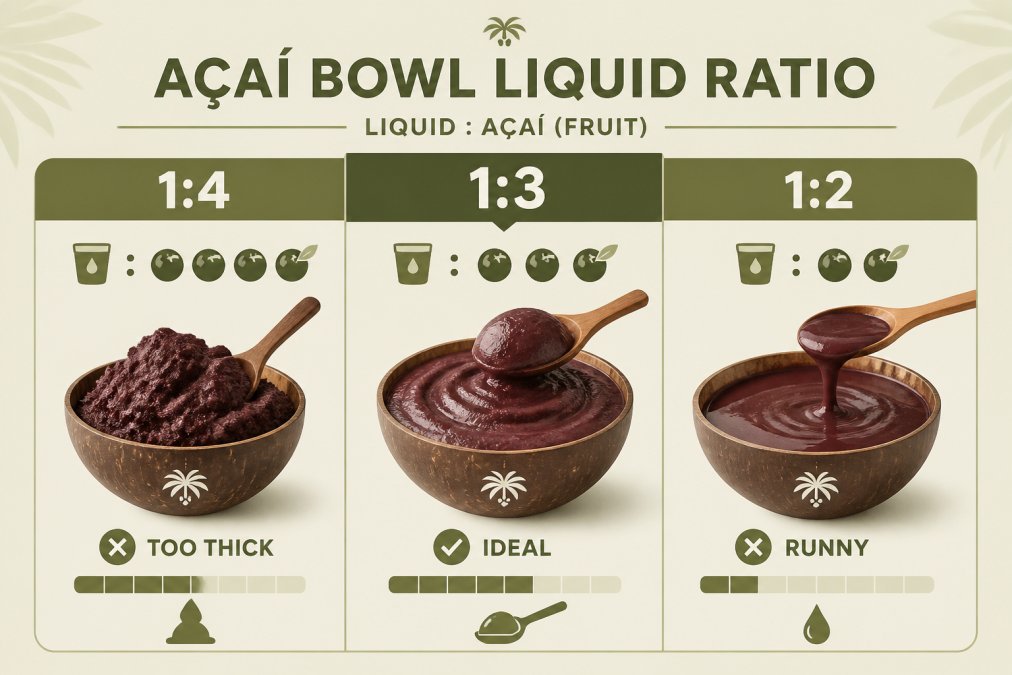
Here's where most recipes go wrong: they recommend a fixed ratio without accounting for moisture content variation. Frozen bananas release more water than frozen berries. Açai puree itself contains moisture that varies by brand and storage. A ratio that works perfectly with one brand of frozen mango might produce a runny bowl with another.
The practical approach is to start conservative, use less liquid than you think you need. You can always add more, but you cannot remove it. Begin with a 1:3 ratio, blend partially, and assess. If the mixture is moving too freely in the blender, it needs more frozen fruit or less liquid. If it's straining your blender motor, reduce the frozen fruit slightly or add a touch more liquid.
Temperature matters here too. Cold liquid, whether that's cold milk, coconut water, or juice, blends more efficiently with frozen fruit and helps maintain the emulsion longer. Room-temperature liquid causes premature melting and breaks down your texture faster.
The viscosity you're aiming for should feel like soft-serve ice cream consistency when you first pour it into your bowl. It should hold its shape but yield easily to a spoon.
Best Frozen Fruit for Thick Smoothie Bowls
Not all frozen fruits contribute equally to thickness. Some fruits are naturally denser, while others contain more water. Your choice of frozen base directly impacts how much liquid you need and how stable your final texture will be.
Frozen açai puree itself is your foundation. The quality and concentration matter significantly. Pure açai with minimal added ingredients creates a denser, more stable base than açai blends that include cheaper fillers. Authentic açai from Northern Brazil, the source World Green Açai uses, delivers superior thickness naturally because of its dense fruit structure.
Why Frozen Bananas Are the Thickening Foundation
Frozen bananas are the secret weapon for achieving that ice-cream-like consistency. They contribute density, natural sweetness, and a creamy texture that other fruits cannot match. A single frozen banana can transform a thin mixture into something scoopable.
The reason bananas work so effectively comes down to their starch content and how they freeze. When bananas freeze, their cellular structure breaks down slightly, creating a denser, more compact frozen form than most other fruits. This density means they take up more volume relative to their water content.
Use ripe bananas before freezing, the riper they are, the sweeter and creamier they become when frozen. A banana that's slightly brown on the skin will produce a thicker, more luxurious texture than a green banana.
One caution: overblending frozen banana creates a gluey texture. Pulse rather than continuously blend once the banana is incorporated. We'll cover this technique in detail in the blending section below.
Non-Banana Thickening Alternatives
If you're avoiding bananas or want variety, several frozen fruits deliver comparable thickness when used strategically.
Frozen mango is your closest alternative. It's denser than most berries and contributes natural sweetness without adding strong flavor competition. Use frozen mango chunks in a 1:1 ratio with frozen açai for a thick, tropical bowl.
Frozen blueberries and blackberries work well as secondary thickeners. They're less dense than bananas or mango, so use them alongside a primary thickener rather than as your only frozen base. A mix of frozen açai, frozen mango, and frozen blueberries creates both thickness and flavor complexity.
Frozen coconut meat is underrated for thickness. It adds density and a subtle creaminess. Use sparingly, about one-quarter cup per bowl, because it can overpower other flavors.
Protein powder and stabilizers like chia seeds or ground flax add viscosity without relying solely on fruit volume. A tablespoon of protein powder increases thickness noticeably and adds nutritional value. Chia seeds absorb liquid and expand, creating a thicker emulsion naturally.
How to Blend Açai Without Melting
Melting is your enemy. The moment your frozen mixture starts warming, it loses viscosity and begins separating into liquid and solids. Your blender generates heat through friction, so technique is critical.
Start with a cold bowl. Literally, place your serving bowl in the freezer for five minutes before you plan to blend. This small step extends the working window and helps maintain temperature throughout the process.
Pulse vs. Continuous Blending: Which Method Wins
This is where most guides miss a crucial detail. Continuous blending generates more heat and breaks down the fruit structure more aggressively, creating a smoother but thinner emulsion. Pulsing, short bursts of high speed with pauses between, achieves thickness faster while generating less heat.
The physics here matters. Continuous blending allows the blade to work the frozen fruit evenly, which sounds ideal. In practice, this extended contact creates friction heat that melts the mixture. Pulsing creates more turbulent, less uniform blending that breaks down fruit faster without sustained heat generation.
Your technique should be: pulse five to seven times at high speed, pause for three seconds, assess consistency, repeat. Stop as soon as the mixture reaches your target thickness. Overblending, whether pulsing or continuous, destroys the texture by breaking down the fruit structure completely and releasing excess moisture.
A high-speed blender with a tamper (like a Vitamix or Ninja) gives you the most control. The tamper lets you guide fruit toward the blade without opening the lid, maintaining temperature. If your blender lacks a tamper, use a long spoon or spatula carefully, never insert your hand.
Temperature Control and Serving Bowl Strategies
Beyond blender technique, your serving strategy impacts final thickness. A cold bowl preserves texture longer. A room-temperature or warm bowl accelerates melting immediately upon serving.
Freeze your serving bowls for at least 15 minutes before plating. Some enthusiasts freeze them for 30 minutes or longer. The colder the bowl, the longer your açai bowl maintains its ideal consistency before softening.
Serve immediately after blending. Every minute between blending and eating allows heat to transfer and moisture to separate. If you must prepare bowls in advance, cover them tightly and return them to the freezer until serving.
The temperature of your toppings matters too. Room-temperature granola, nuts, and fresh fruit will slightly warm your bowl. Cold toppings (briefly chilled fruit, chilled granola) maintain consistency longer. It's a small detail, but when you're aiming for that perfect scoopable texture, these details compound.
Blender Power and Blade Speed: The Physics of Texture
Your blender's motor power and blade design directly determine how quickly you can achieve thickness and how much control you have over final texture.
A high-speed blender (3+ horsepower) with sharp blades can reduce frozen fruit to the ideal consistency in seconds. A standard blender (1-2 horsepower) takes longer, generates more heat during the process, and often struggles with dense frozen fruit combinations.
Blade speed matters as much as raw power. Blenders with variable speed control let you start slow (to avoid splattering and excessive heat generation) and increase speed only as needed. Fixed-speed blenders force you to choose between slow blending (which takes forever and generates heat through extended contact) or fast blending (which creates heat through friction).
The blade design affects how the mixture moves through the blender. Straight blades create more uniform blending but also more heat. Serrated or angled blades create more turbulence and can handle dense mixtures more efficiently.
For achieving thick açai bowls, a high-speed variable-speed blender is the gold standard. If you're working with a standard blender, compensate by using more frozen fruit relative to liquid and blending in very short pulses.
Step-by-Step Blending Technique for Scoopable Results
Here's the process that delivers consistent thickness every time.
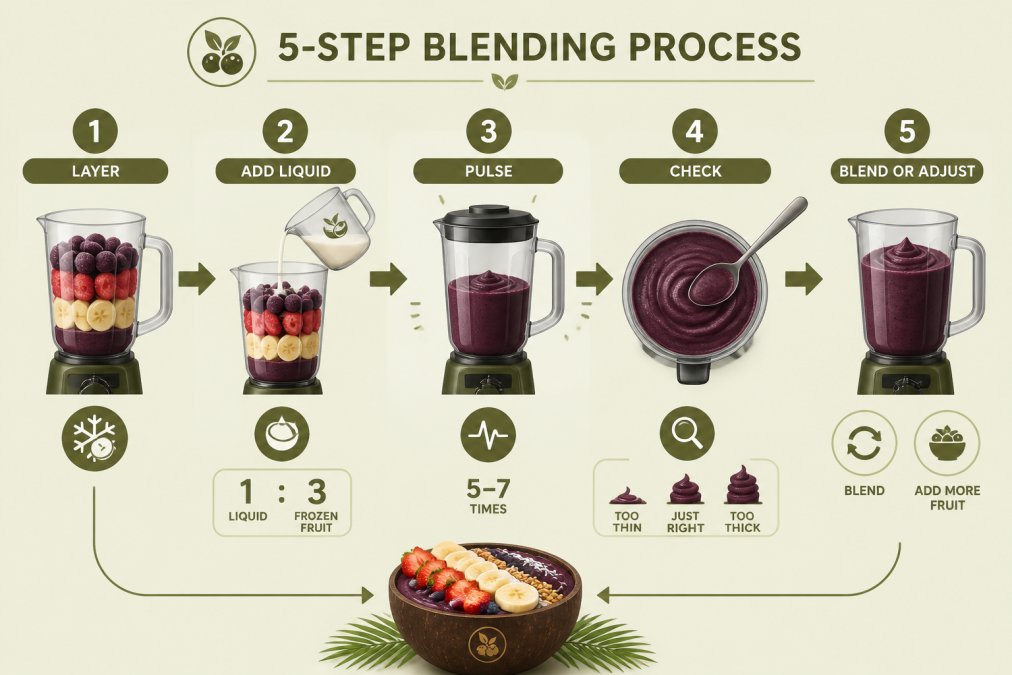
Step 1: Layer your ingredients strategically. Place frozen açai first, then add other frozen fruit, then liquid on top. This layering helps the liquid flow through the frozen fruit during blending rather than sitting at the bottom where it creates a thin layer.
Step 2: Use the correct liquid ratio. Start with one part liquid to three parts frozen fruit. If using a 100-gram packet of frozen açai, use roughly 30-35 ml of liquid. Adjust based on your specific fruits and blender.
Step 3: Pulse, don't blend continuously. High speed for 5-7 seconds, pause for 3 seconds, repeat. Count your pulses. Most bowls reach ideal thickness in 15-25 seconds of total blending time (3-5 pulse cycles).
Step 4: Check consistency after each pulse cycle. Stop the blender and observe. The mixture should move slowly in the blender bowl. If it's flowing freely, add more frozen fruit or reduce liquid. If the blender is struggling, add a small amount of liquid.
Step 5: Stop immediately when you reach target thickness. The moment your mixture reaches soft-serve ice cream consistency, stop blending. One extra pulse cycle can tip it from perfect to melting.
Timing expectation: The entire blending process should take 20-30 seconds from start to finish. If you're blending longer than this, your blender lacks sufficient power or you're using too much liquid relative to frozen fruit.
Troubleshooting Runny Bowls and Common Blending Mistakes
Runny bowls happen to everyone. Understanding what caused the problem helps you fix it next time.
Problem: The mixture is too thin to hold its shape. This is typically a liquid-to-fruit ratio issue. You used too much liquid or too little frozen fruit. Solution: For your next bowl, reduce liquid by 10 ml (roughly one tablespoon) or add an extra handful of frozen fruit. Start with the liquid reduction first, it's easier to adjust than adding more frozen fruit mid-blend.
Problem: The mixture is melting before you finish blending. Your blender is generating too much heat or you're blending too long. Solution: Use shorter pulse cycles, increase your frozen fruit ratio, or switch to a higher-powered blender. If your blender has variable speed, start at 50% speed and increase only as needed.
Problem: The texture is grainy or icy rather than creamy. You're not blending long enough to fully incorporate the frozen fruit, or your frozen fruit is too hard. Solution: Blend slightly longer (but still in pulses), or soften your frozen fruit by removing it from the freezer for two minutes before blending.
Problem: The bowl separates into liquid and solids within minutes of serving. The emulsion is breaking down. This happens when you overblend (breaking down fruit cell structure too completely) or when your liquid is too warm. Solution: Blend less, use colder liquid, and serve in a pre-frozen bowl immediately after blending.
Problem: The mixture is too thick to blend. You've used too much frozen fruit or too little liquid. Solution: Add liquid in small increments (5 ml at a time) until the blender can process the mixture. It's easier to add liquid than to add more frozen fruit mid-blend.
A common mistake is assuming more blending equals better results. The opposite is true. Minimal, precise blending creates better texture than aggressive, prolonged blending. Another mistake is using room-temperature liquid or serving bowls. Temperature management is as important as ingredient ratios.
Achieving that perfect thick, scoopable açai bowl texture requires attention to three variables: frozen fruit selection, liquid ratio, and blending technique. The liquid-to-fruit ratio is your primary control, start with one part liquid to three parts frozen fruit and adjust from there. Frozen bananas and authentic açai puree from Northern Brazil provide the density you need. Pulse blending in short cycles generates less heat than continuous blending and delivers superior texture.
When you're ready to order bowls crafted with this precision, World Green Açai delivers authentic açai from Northern Brazil combined with careful technique. Order online through our World Green Açai app or our Square ordering system to skip the lines and have thick, perfectly textured bowls ready when you arrive. Every bowl is made with the finest organic ingredients and served in a pre-chilled bowl to maintain that ideal consistency from first spoon to last.
Frequently Asked Questions
What liquid-to-fruit ratio makes an açai bowl thick?
The ideal acai bowl liquid ratio is 1 part liquid to 3-4 parts frozen fruit by volume. Start with less liquid and add gradually, you can always thin it out, but you cannot thicken it once overblended. Nut milk, coconut milk, and juice all work; the key is restraint. Most runny bowls result from too much liquid added at the start.
Why does my acai bowl keep melting too fast?
Temperature control is critical. Use a pre-chilled bowl stored in the freezer for at least 30 minutes before serving. Overblending generates friction heat that begins melting the mixture immediately. Use the pulse setting instead of continuous blending, and keep your blender's duration under 45 seconds total. Serve within 2 minutes of blending for maximum texture retention.
How do I know if I'm using authentic acai?
Real açai from Northern Brazil has a deep purple color and earthy, slightly bitter taste, not sweet or artificially flavored. Authentic açai comes frozen in unsweetened form, often as a puree or frozen packs with minimal additives. World Green Açai sources genuine açai directly from Northern Brazil, ensuring you get the real thing without added sugars or fillers that compromise texture and nutrition.
What's the best frozen fruit to use for thickness?
Frozen bananas are the gold standard because their high starch and moisture content create natural emulsification and ice-cream texture. Frozen berries (blueberries, strawberries, acai itself) add flavor but contribute less thickening power. Combine frozen bananas as your base with 30-40% frozen berries for flavor. Avoid fresh fruit entirely, only frozen fruit has the solid structure needed for scoopable consistency.
This article was written using GrandRanker