 how-to
Why Is My Açai Icy? A Complete Texture Guide
Table of Contents
- Why Is My Açai Icy: The Core Problem
- How to Make a Thick Açai Bowl
- Best Liquid for Açai Bowls
- Açai Bowl Troubleshooting: Fixing Common Issues
- Storage and Ingredient Quality
- Conclusion: Achieving the Perfect Consistency
Last Updated: August 22, 2026
Why Is My Açai Icy: The Core Problem
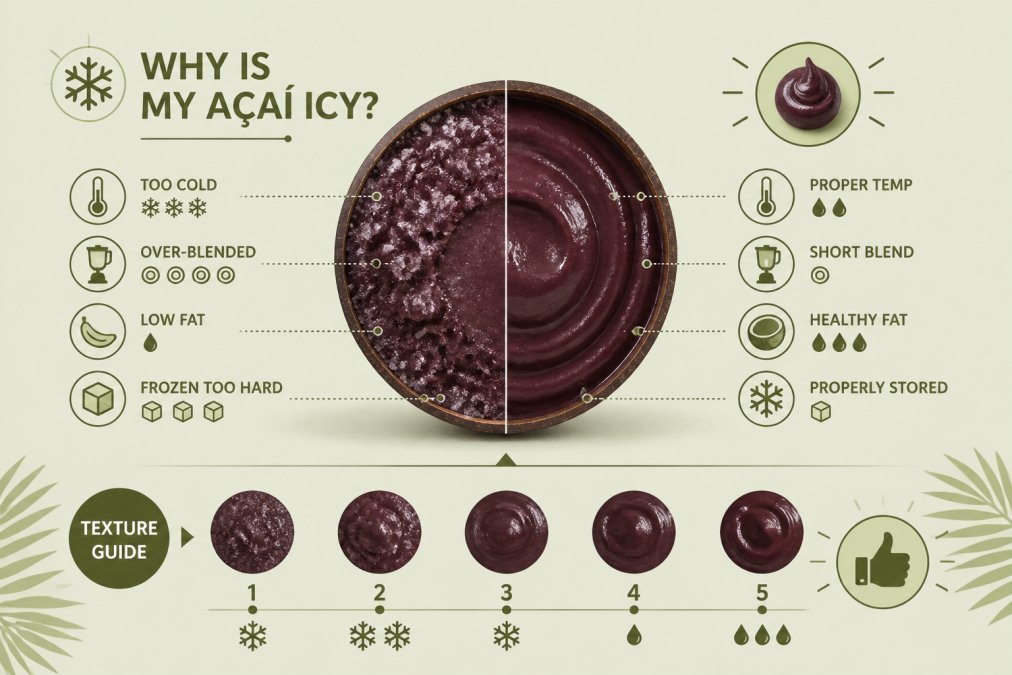
If your homemade açai bowl tastes like a frozen slurpee instead of a creamy, scoopable treat, you're not alone. The reason why is my acai icy comes down to a few specific factors: ice crystal formation, blender power, and the ratio of frozen fruit to liquid. Understanding these three elements will transform your bowl from watery disappointment to the thick, luxurious texture that makes açai bowls worth eating.
The science here is straightforward but often misunderstood. When you blend frozen açai with liquid, you're not just mixing ingredients, you're creating a specific texture through emulsification and ice crystal management. Most people assume more fruit equals thicker results. The opposite is often true. The problem isn't what you're using; it's how you're using it.
At World Green Açai, we start with the finest organic açai berries from Northern Brazil, but even premium fruit won't deliver the right consistency without proper technique. The icy texture you're experiencing is a solvable problem, and the fix usually involves one or two simple adjustments.
Ice Crystals and Frozen Fruit
When you freeze açai, water inside the fruit forms ice crystals. These crystals are the enemy of creaminess. The larger the crystals, the icier your bowl will feel on the spoon and in your mouth. This happens because ice crystals create a grainy, frozen texture rather than a smooth purée.
The key is understanding that not all frozen fruit has the same crystal structure. Açai that's been frozen quickly at very cold temperatures creates smaller, tighter crystals. Açai that's thawed and refrozen, or stored at inconsistent temperatures, develops larger crystals that give you that unwanted icy sensation. Storage temperature matters far more than most guides mention.
When you blend frozen fruit, friction heat from the blender blades slightly thaws the outer surface of the fruit, breaking down some of those ice crystals. But if your blender isn't powerful enough, or if you're not blending long enough, most of those crystals stay intact. That's why blender power directly impacts texture.
Blender Power and Blade Type Matter
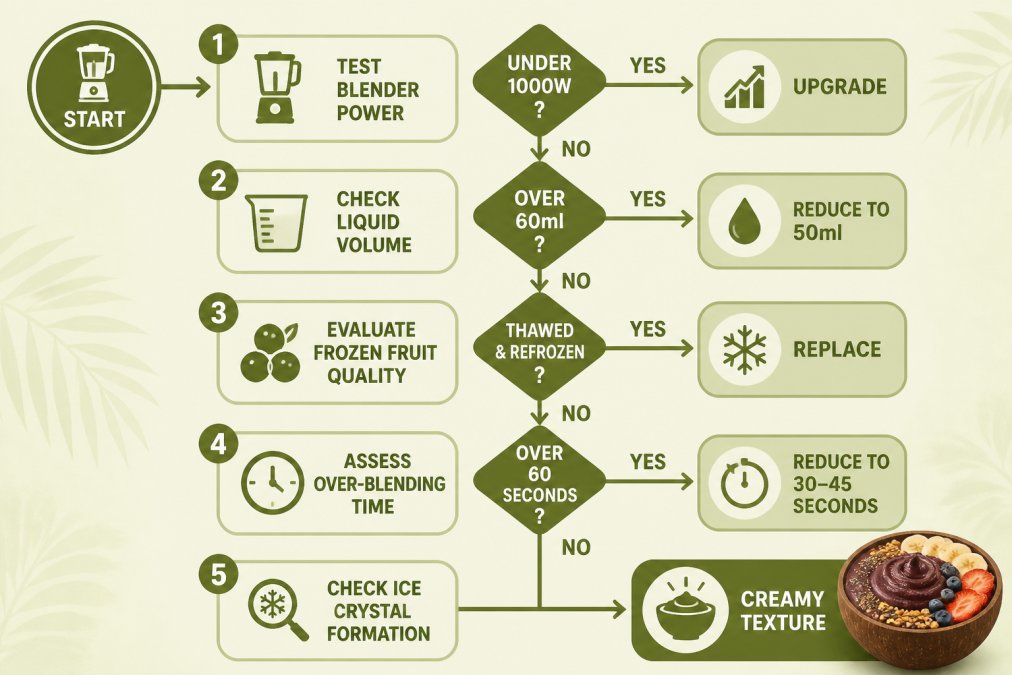
A high-speed blender with at least 1,000 watts of power will break down frozen fruit and ice crystals more effectively than a standard blender (peer-reviewed research). This isn't marketing hype, it's physics. More powerful motors spin faster, create more friction heat, and pulverize frozen solids into a smoother consistency.
But power alone isn't enough. The blade type also determines how efficiently your blender handles frozen fruit. Blenders with wider, more aggressive blades designed for frozen ingredients will create better emulsification than blenders with thinner blades meant for soft foods. If you're using a blender designed for smoothies, you might be fighting an uphill battle with açai.
The common mistake is assuming a standard kitchen blender will work fine. It won't, not for achieving that thick, scoopable texture. A standard blender will produce something closer to a drinkable smoothie, not a bowl-worthy consistency. If you're serious about avoiding the icy texture, invest in a high-speed blender designed for frozen applications.
How to Make a Thick Açai Bowl
Creating thick, creamy açai comes down to three controllable variables: the solid-to-liquid ratio, the type of thickener you use, and the blending technique itself. Get these right, and the icy texture disappears.
The Solid-to-Liquid Ratio
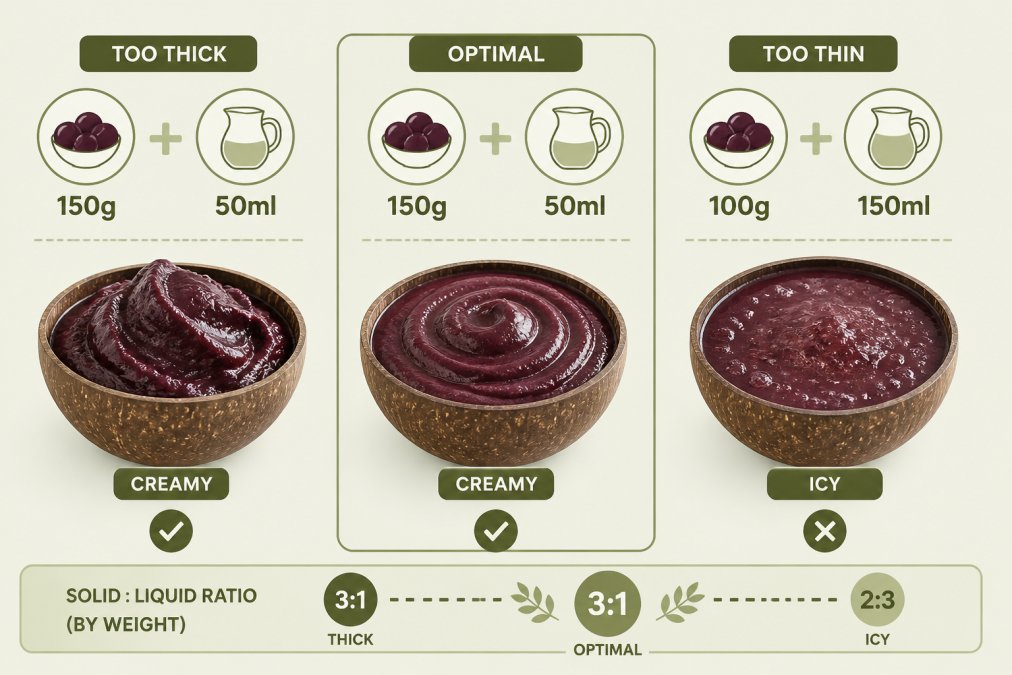
The most important number to remember is the ratio of frozen fruit to liquid. A 3:1 ratio (three parts frozen fruit to one part liquid) produces a thick, scoopable consistency. A 1:1 ratio (equal parts) produces something closer to a drinkable smoothie. Most people who end up with icy açai are using too much liquid.
Measure by weight, not volume. A cup of frozen açai weighs roughly 150 grams. A cup of liquid (milk, juice, or water) weighs about 240 grams. If you're using the same volume of each, you're already creating an imbalance that favors liquid. This is why your bowl turns out watery.
Start with 150 grams of frozen açai and 50 milliliters of liquid. Blend for 30-45 seconds. If the consistency is still too icy, reduce the liquid to 40 milliliters. If it's too thick to blend, add 10 milliliters more. This method gives you control over the final texture instead of relying on guesswork.
The liquid you choose matters for flavor, but not for texture. Coconut milk, almond milk, oat milk, or fruit juice will all work. What matters is the quantity. Keep it minimal, and you'll avoid the icy problem entirely.
Thickening with Banana or Mango
If you want an even thicker result without reducing liquid further, add a frozen banana or frozen mango chunk. These fruits are naturally thicker and less icy than açai alone because they have lower water content and different emulsification properties.
A half-frozen banana (about 60 grams) will noticeably thicken your bowl while adding natural sweetness and creaminess. The banana's starches and fiber help create viscosity, making the final texture feel more substantial on your spoon. This is why many commercial açai bowls include banana, it's a texture hack that actually works.
Frozen mango works similarly. Add 80-100 grams of frozen mango to your base açai, and you'll get a thicker, creamier result. The mango adds a subtle sweetness and helps emulsify the mixture more effectively than açai alone.
The key is not to overdo it. Adding too much banana or mango will change the flavor profile and make your bowl taste less like açai. Use these as texture adjusters, not as primary ingredients. A 70-20-10 ratio (70% açai, 20% banana or mango, 10% other fruit) keeps the authentic açai flavor while improving consistency.
Best Liquid for Açai Bowls
The type of liquid you choose affects both flavor and how well your bowl emulsifies. Not all liquids are created equal when it comes to creating a smooth, creamy texture.
Coconut milk (the canned, full-fat version) creates the thickest, creamiest result. The fat content helps emulsify the frozen fruit and creates a smoother mouthfeel. If you want maximum thickness and richness, use coconut milk. The trade-off is a more pronounced coconut flavor, which some people love and others want to avoid. managing frozen toppings.
Almond milk and oat milk are lighter alternatives that still provide decent emulsification. Oat milk, in particular, has a higher starch content that helps create viscosity. If you're using oat milk, you might get away with slightly more liquid than you would with coconut milk because the oats add body to the mixture.
Water is the thinnest option and will produce the iciest result if you're not careful with your ratio. If you use water, reduce the quantity even further, aim for a 4:1 fruit-to-water ratio instead of 3:1.
Fruit juices (coconut water, pineapple juice, orange juice) will work, but they add sweetness and acidity that can affect flavor balance. Use them sparingly, or combine them with a thicker base like coconut milk.
The mistake most people make is choosing liquid based on flavor alone. Texture should be your first consideration. Pick a liquid that helps you achieve the right consistency, then adjust flavoring with toppings, sweeteners, or additional fruit.
Açai Bowl Troubleshooting: Fixing Common Issues
If you've adjusted your ratio and blender but still end up with icy or watery results, one of these specific issues is likely the culprit.
The Over-Blending Phenomenon
Blending too long actually makes your açai icier, not creamier. This counterintuitive fact trips up most people. When you blend for 60+ seconds, you're creating excessive friction heat that melts the frozen fruit too much. The result is a mixture that's closer to a liquid than a thick purée.
The optimal blending time is 30-45 seconds. Start at 30 seconds, check the consistency, and add 10-15 more seconds if needed. Anything beyond 60 seconds is working against you. The goal is to break down ice crystals and emulsify the mixture, not to liquefy it.
If your blender has a "frozen fruit" or "smoothie bowl" setting, use it. These settings are designed to pulse and blend in shorter bursts, preventing the over-blending problem. Manual blending with short pulses (3-5 pulses of 5-8 seconds each) gives you more control than running the blender continuously.
Temperature Control and Bowl Vessel
The temperature of your serving bowl affects how quickly your açai thaws and breaks down. A room-temperature ceramic bowl will cause your thick açai to start melting immediately. A frozen bowl keeps your açai at the right temperature for longer, maintaining that scoopable texture.
Freeze your serving bowl for at least 30 minutes before adding your açai. This simple step extends the time your bowl stays thick and creamy. Some people freeze their bowls overnight. The colder the vessel, the longer your açai stays in the ideal texture range.
The type of bowl also matters. Ceramic and glass retain cold longer than plastic. Stainless steel bowls (particularly the double-walled insulated kind) keep your açai coldest. If you're serious about texture, invest in a quality cold-retaining bowl.
Temperature control also applies to your ingredients. Use frozen fruit straight from the freezer, not partially thawed fruit. Use chilled liquid, not room-temperature liquid. Every degree matters when you're trying to maintain that creamy, thick consistency.
Storage and Ingredient Quality
The way you store your açai directly impacts the texture you'll achieve when you blend it. Poor storage creates larger ice crystals, which leads to that icy texture you're trying to avoid.
Açai should be stored at 0°F or colder in your freezer (the FDA). If your freezer fluctuates in temperature (common in older freezers), the açai will experience thaw-refreeze cycles that create larger, grainier ice crystals. Invest in a freezer thermometer and check regularly. If your freezer is above 0°F, your açai quality will suffer.
The quality of the açai itself matters enormously. Açai from reputable sources that freeze quickly and maintain consistent cold temperatures will have smaller, tighter ice crystals. Açai that's been stored improperly or transported in warm conditions will have larger crystals that create that unwanted icy texture.
This is where sourcing becomes critical. Not all açai is frozen the same way. Açai from Northern Brazil that's flash-frozen immediately after harvest will perform better than açai that's been sitting in warmer storage. When you buy açai, ask about the source and freezing method. The difference shows up directly in your bowl's texture.
World Green Açai sources authentic açai directly from Northern Brazil, where the fruit is flash-frozen to preserve the smallest possible ice crystals. Premium sourcing isn't a luxury; it's a practical solution to the icy texture problem.
Store your prepared açai bowls in the freezer if you're making them ahead. They'll keep for up to 48 hours and maintain their texture better than thawing and refreezing. When you're ready to eat, let the bowl sit at room temperature for 2-3 minutes before eating to allow the toppings to set properly while the açai stays thick.
The reason why is my acai icy almost always comes back to one of three factors: too much liquid, insufficient blender power, or poor ingredient quality. Fix the ratio, invest in a proper blender, and source high-quality açai, and you'll solve the problem. The thick, creamy, scoopable bowl you're after isn't a mystery, it's the result of understanding these specific variables and controlling them. Order online through World Green Açai's mobile app to skip the lines and get a perfectly textured bowl made with authentic organic açai from Northern Brazil, delivered fresh to your table.
Frequently Asked Questions
Why is my açai bowl icy instead of creamy?
An icy texture usually results from too much liquid relative to frozen fruit, or ice crystals forming during blending. Use a proper frozen fruit-to-liquid ratio, blend in short pulses rather than continuous cycles, and ensure your frozen açai is stored at proper temperatures. Thickeners like frozen banana or mango also help achieve that scoopable consistency.
What is the best liquid for açai bowls?
Coconut milk and plant-based milks create a creamy texture without excess water. Coconut milk provides natural fat content that coats your palate and prevents watery texture. Avoid water or thin juices alone; they increase icy crystallization. Combine liquids strategically: use coconut milk as your base, then add juice only if needed for flavor.
How do I prevent my açai from becoming icy during blending?
Over-blending is a primary culprit. Friction heat from continuous blending melts frozen fruit, and when it refreezes, ice crystals form. Use a high-speed blender set to pulse mode rather than continuous blending, aim for 10-15 second pulses with 3-5 second rests. Keep your bowl and utensils chilled before assembly. Use frozen fruit straight from storage without thawing; whole frozen purée gives you better texture control.
Can ingredient quality affect whether my açai becomes icy?
Yes. High-quality, authentic açai from reputable sources has better moisture content and natural emulsifying properties, making it less prone to icy texture. Lower-quality or thawed-and-refrozen açai has already experienced ice crystal formation and oxidation, which damages the fruit's structure. When you start with premium, properly frozen organic açai, the base blends more smoothly and maintains that creamy, scoopable consistency. Storage temperature also matters, açai stored below 0°F maintains its integrity better than fruit stored at warmer freezer temperatures.
This article was written using GrandRanker