 how-to
7 Eco-Friendly Acai Bowl Toppings to Choose From
Last Updated: November 4, 2026
Quick Summary
The best eco friendly toppings for an açaí bowl are seasonal fresh fruit, plain nuts and seeds bought in bulk, and a light natural sweetener. Choose local, in-season produce and skip sweetened granola and single-serve packaging to lower the bowl's footprint.
- Check toppings for verifiable certifications such as USDA Organic, Fair Trade Certified, or Rainforest Alliance Certified.
- Buy nuts, seeds and granola from bulk bins into reusable jars instead of single-serve pouches.
- Favor in-season local fruit, which cuts transport distance, spoilage and waste.
- Freeze extra fruit at peak season in portions you can use for future bowls.
- Use a small amount of raw honey or maple syrup and skip flavored syrups and chocolate sauces.
Table of Contents
- Why Topping Choices Matter for Sustainability
- How to Pick the Best Açaí Bowl Toppings for Low Impact
- Seasonal Fruit Toppings for Açaí Bowls That Cut Waste
- Nuts, Seeds and Crunch Without the Excess Packaging
- Low-Waste Açaí Bowl Toppings and How to Store Them
- Sweeteners, Drizzles and What to Skip
- Building Your Eco-Friendly Bowl Order at World Green Açai
- Frequently Asked Questions
Why Topping Choices Matter for Sustainability
Most people think about the açaí base and forget that the toppings carry their own environmental footprint. Every granola bag, plastic squeeze bottle and out-of-season fruit adds to it. Choosing eco friendly toppings with more care is one of the simplest ways to make your bowl lighter on the planet.
The açaí market itself is growing fast. The acai berry market in North America was valued at USD 0.47 billion in 2025, according to North America Acai Berry Market Size, Share and Trends report. More demand means more pressure on sourcing and packaging, so the choices made at the bowl matter more than they used to.
Choosing eco friendly toppings does not mean complicated. It means asking a few simple questions about each topping before it goes on your bowl.
How to Pick the Best Açaí Bowl Toppings for Low Impact
A low-impact bowl is not about eliminating toppings, it is about knowing which questions to ask before each ingredient lands on the bowl. Most ranking guides stop at "choose organic," which is not specific enough to act on. Use the four checks below as a repeatable filter.
Check 1: Sourcing and Certification
Look for third-party certifications that are verifiable, not marketing language. The most useful ones on a topping label are:
- USDA Organic, verifies the ingredient was grown without synthetic pesticides and, for processed items, without certain synthetic additives.
- Fair Trade Certified, indicates a third-party audited supply chain with a social premium paid to producers; relevant for cacao, coffee-derived drizzles, and tropical fruit.
- Rainforest Alliance Certified, covers biodiversity, deforestation, and farm-level environmental standards; common on imported tropical fruit and some nut butters.
- Non-GMO Project Verified, useful when you want to avoid genetically engineered inputs in granola or sweetened toppings.
A common pattern is that a topping carries one certification but not another, organic does not automatically mean fair trade, and fair trade does not automatically mean organic. Decide which dimension matters most to you and prioritize accordingly rather than expecting a single seal to cover everything.
Check 2: Packaging and Format
The format a topping arrives in often matters more than the topping itself. A few concrete comparisons:
- Bulk bins vs. single-serve pouches. A single-serve nut or seed pouch uses roughly the same plastic per gram as a full-size bag but for a fraction of the food. Buying from a bulk bin into a reusable jar eliminates the retail package entirely.
- Glass vs. plastic for drizzles. Honey, maple syrup, and nut butters in glass jars are widely recyclable and the glass is often reused; plastic squeeze bottles for the same products are typically single-use.
- Frozen vs. fresh for out-of-season fruit. Frozen fruit is often packed at peak ripeness with less spoilage in transit, and the packaging (a single poly bag) is usually lighter than clamshells. The trade-off is that frozen fruit may travel farther than fresh local fruit, check the origin label.
Watch out: "compostable" and "biodegradable" claims on topping packaging are only meaningful if your municipality actually accepts that material in its compost stream; most curbside programs do not accept bioplastics, so those items often end up in landfill anyway.
Check 3: Processing Level
Fewer processing steps generally mean fewer additives. A useful ranking, from lowest to highest impact:
- Whole fresh fruit
- Frozen whole fruit
- Plain raw nuts and seeds
- Plain rolled oats and unsweetened shredded coconut
- Unsweetened nut butters and plain dried fruit
- Sweetened granola, candied nuts, chocolate chips, flavored syrups
This is a general pattern, not an absolute rule, a locally grown, unsweetened granola can beat an imported out-of-season berry. But as a default filter, moving up this list reduces packaging, added sugar, and transport weight.
Check 4: Origin and Transport Mode
Ask where each topping was grown, not just where it was packaged. Learn how to verify authentic, organic açaí sourcing before you buy. Two useful rules of thumb:
- Domestic over imported when the domestic option is in season. A strawberry from a nearby farm in spring has a far shorter cold chain than an imported one.
- Sea freight over air freight for tropical items you cannot source domestically. Açaí, mango, and pineapple that arrive by ship carry a fraction of the emissions of air-freighted equivalents; some importers now label the mode of transport, and asking is a fair question.
A good bowl shop will know the origin of its açaí and its main toppings. If the answer is "we don't know," that is itself information, it usually means the supply chain has not been mapped.
Seasonal Fruit Toppings for Açaí Bowls That Cut Waste
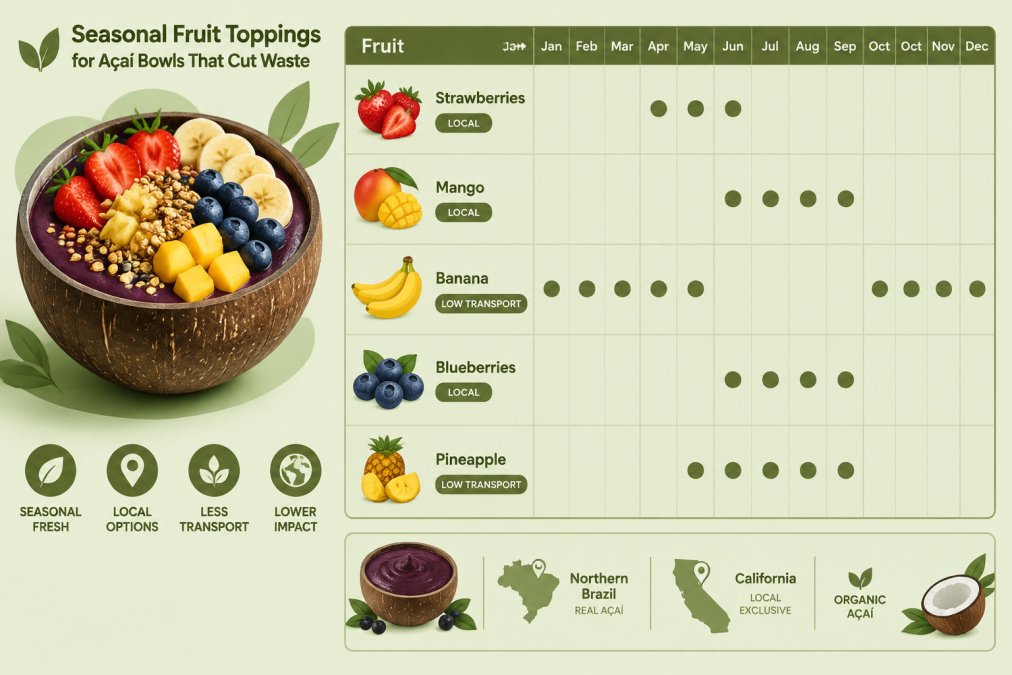
Seasonality is the single most underused eco-friendly lever in açaí bowl toppings. Browse our full guide to fresh fruit pairings for açaí bowls to see which fruits work with açaí and how to use them without waste. Most guides list fruit by flavor and ignore when it is actually available, which is why the same bowls carry out-of-season imports year-round. Eating with the season cuts transport distance, cuts spoilage, and usually cuts price at the same time.
A Practical Seasonal Calendar
The exact windows shift by region, but the general pattern across most of the country looks like this:
- Spring (March-May): strawberries, rhubarb, early blueberries, apricots
- Summer (June-August): blueberries, raspberries, blackberries, peaches, nectarines, cherries, watermelon, cantaloupe
- Fall (September-November): apples, pears, figs, cranberries, late raspberries, grapes
- Winter (December-February): citrus (oranges, grapefruit, mandarins), pomegranate, stored apples and pears, frozen berries from the summer harvest
Tropical fruit, mango, pineapple, banana, passion fruit, does not have a domestic season in most of the country, so treat it as an occasional topping rather than a daily staple. When you do use it, favor frozen or sea-freighted over air-freighted, and check the origin label.
Why Seasonality Cuts Waste, Not Just Miles
Out-of-season fruit is often harvested underripe so it can survive a long cold chain, which means it arrives with less flavor and a shorter usable window once it hits your kitchen. In-season fruit is picked closer to ripeness, tastes better, and, because it is abundant and cheap, is less likely to sit in the fridge until it spoils.
The waste math is straightforward: a pint of out-of-season berries that goes soft before you finish it wastes the fruit, the packaging, and the transport emissions all at once. A pint of in-season berries that you actually eat wastes none of those. Buying in-season is therefore a waste-reduction strategy as much as a sourcing one.
Waste-Reduction Tactics for the Kitchen
A few concrete habits cut topping waste without changing what you eat:
- Freeze at peak. When a fruit is in season and cheap, buy extra and freeze it in single-bowl portions. Frozen local berries in January beat fresh imported ones on both flavor and footprint.
- Use the whole fruit. Citrus zest goes into the base or over the bowl; apple and pear cores can be simmered into a compote; strawberry tops can be blended into the base rather than discarded.
- Repurpose leftover base. A smoothie base that is too thin or too thick still works as a topping drizzle or a frozen bark, spread it thin on parchment, freeze, and break into shards.
- Plan the week. Chop fruit once, portion it into containers, and use the ripest fruit first. A simple "eat first" shelf in the fridge prevents the half-used produce problem.
- Buy the amount you will actually use. Bulk is only lower-waste if you finish it; a five-pound bag of nuts that goes stale is worse than a one-pound bag you finish.
Watch out: freezing fruit in plastic zip bags is convenient but single-use; reusable silicone bags or glass containers with headspace for expansion do the same job without the plastic.
Building a Seasonal Bowl
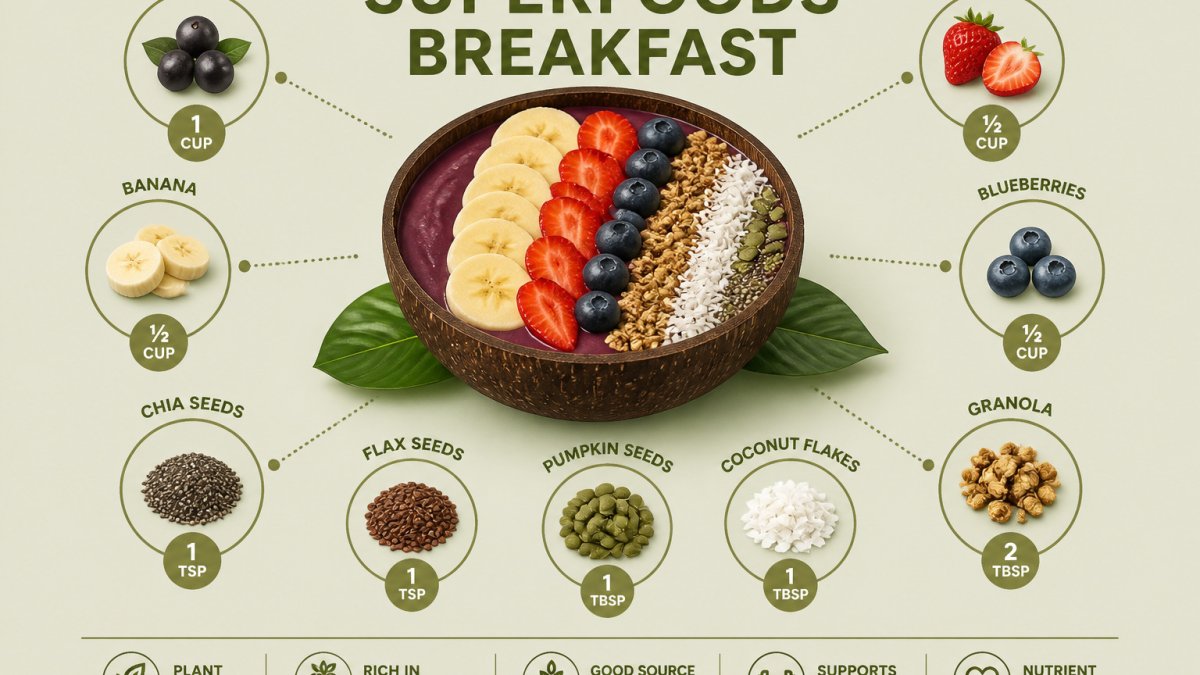
A seasonal bowl is not a compromise. In summer, a base of açaí with local berries, peaches, and a scatter of chia delivers more flavor than an out-of-season mango bowl. In winter, citrus segments, pomegranate arils, and frozen summer berries carry the bowl. The point is to let the calendar, not the import aisle, decide what goes on top.
Nuts, Seeds and Crunch Without the Excess Packaging
Crunch is the part most people miss when they cut back on processed toppings. Nuts and seeds deliver it without much packaging if you buy them loose or in bulk.
Good options include:
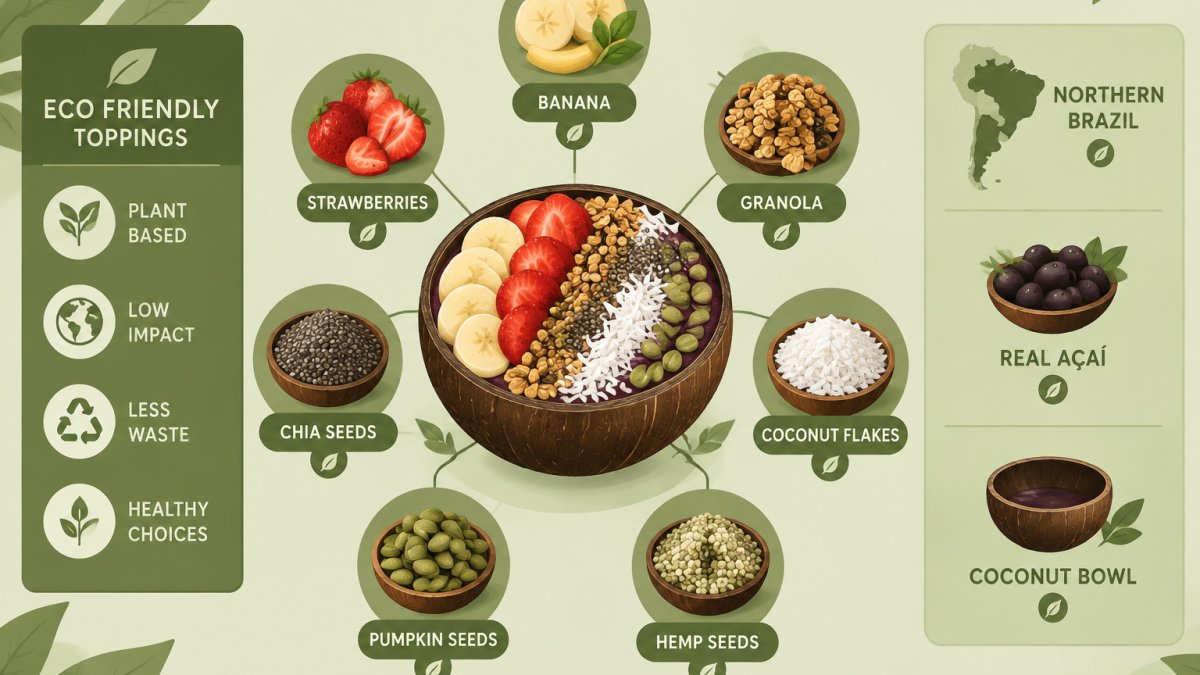
- Chia seeds, which add fiber and a light texture
- Hemp seeds, which add protein and a nutty taste
- Pumpkin seeds, which add crunch and minerals
- Raw nuts, such as almonds or pistachios
Store them in a jar you already own. Compare frozen açaí pulp and powder to see which base format creates less packaging and waste. Skip single-serve pouches when you can.
Low-Waste Açaí Bowl Toppings and How to Store Them
Waste often happens after you buy the topping, not before. Plan storage so that nothing goes bad before you use it.
Keep nuts and seeds in airtight jars in a cool, dark cupboard. Freeze fresh fruit in portions so you can grab exactly what one bowl needs. Store açaí pulp frozen until you are ready to blend it.
Batch your prep. Chop fruit once a week and portion it into containers. This cuts down on half-used produce sitting in the fridge.
Sweeteners, Drizzles and What to Skip
Sweetness is where a bowl can go from healthy to sugary fast. Use a small amount of a natural sweetener and let ripe fruit do most of the work.
Better choices include:
- A drizzle of raw honey or maple syrup
- A few dates blended into the base
- Fresh berries for natural sweetness
Skip sweetened granola, chocolate sauces and flavored syrups. See low-sugar topping options for a cleaner bowl for sweetener and drizzle choices that fit. They add sugar and extra packaging without adding much nutrition. Use plain toppings and let the açaí taste like açaí.
Building Your Eco-Friendly Bowl Order at World Green Açai
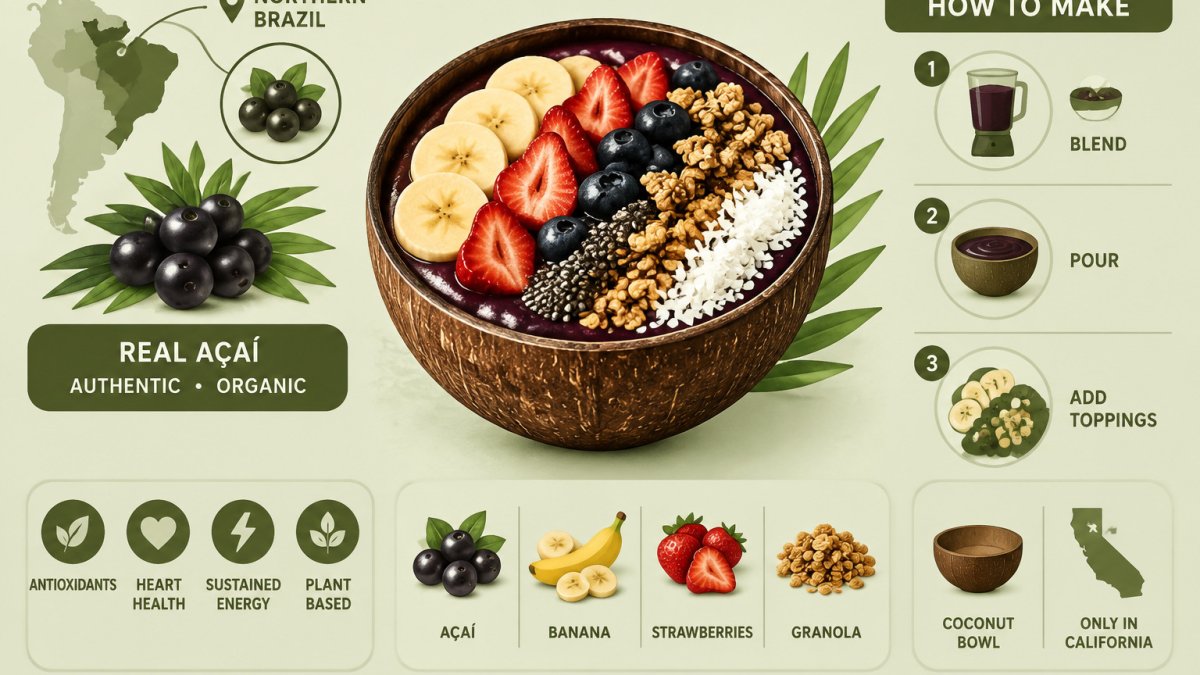
Putting these ideas together is simple. Start with a base of organic açaí, add one or two seasonal fruits, and finish with a single crunchy topping such as seeds or nuts. Skip the extra syrups and extra packaging.
At World Green Açai, you can order online and skip the line, which saves you time at pickup. Order online to build your bowl today.
Frequently Asked Questions
What are the most sustainable açaí bowl toppings?
The most sustainable açaí bowl toppings are whole-food items with short supply chains and minimal packaging. Fresh seasonal fruit such as bananas, strawberries and blueberries, bought loose or in reusable containers, is a strong starting point. Raw seeds like chia and hemp, sold in bulk or in recyclable bags, add nutrition with little waste. Shredded coconut and nut butters bought in glass jars also work well. Avoid single-serve sachets of syrup and sweetened granola in plastic pouches, since these add packaging without adding much nutritional value.
How can I reduce packaging waste when buying açaí bowl toppings?
Start by buying toppings in bulk or from containers you can refill, rather than individually packaged portions. Choose fresh fruit over pre-cut fruit in plastic clamshells when possible. Store leftover toppings in airtight glass containers so they stay fresh and you do not need to rebuy them as often. Each of these steps lowers the amount of single-use material that ends up in the trash.
Are local or organic toppings better for the environment?
Local toppings usually have a smaller footprint because they travel shorter distances and often need less refrigeration during transport. Organic toppings avoid synthetic pesticides, which supports soil and pollinator health, though organic does not automatically mean low-impact. The best choice combines both: seasonal, locally grown produce when it is available, and organic certified items for crops that are heavily sprayed. Check labels and ask suppliers where ingredients were grown before deciding.