 How-to
How to Accommodate Dietary Restrictions at Office Lunches
Last Updated: November 5, 2026
Quick Summary
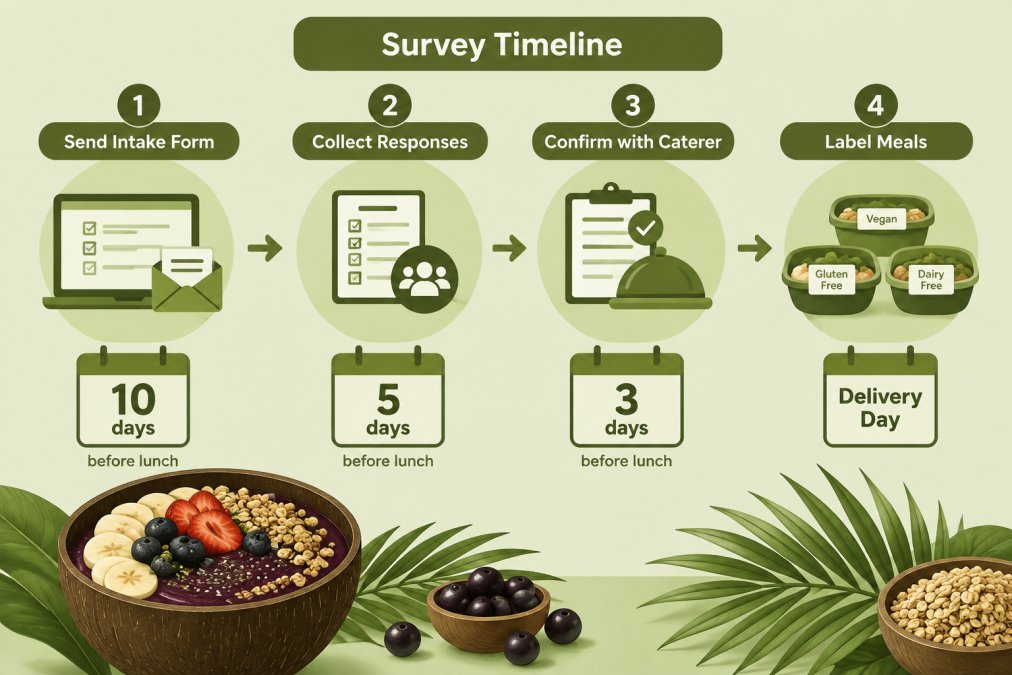
To accommodate dietary restrictions at office lunches, collect every employee's dietary restrictions through a short survey before you pick a single menu item. Send the intake form about 10 days before the lunch, collect responses about 5 days out, and confirm the final count with the caterer about 3 days before. Label each meal clearly on delivery day.
- Ask about dietary needs, not health conditions, and keep all survey responses private.
- Ask about allergies separately from preferences, since a nut allergy differs from a dislike of mushrooms.
- Build a menu where most dishes work for most people, such as a build-your-own bar with separate components.
- Ask the caterer to send ingredient lists for every dish and compare them against collected restrictions.
- Keep a backup kit of sealed shelf-stable options covering the most common restrictions.
Table of Contents
- Start with a Dietary Restriction Survey Before You Plan the Menu
- How to Ask Employees About Food Allergies Respectfully
- Build a Dietary Restriction Survey Template for Employees
- Inclusive Office Lunch Ideas That Cover the Most Common Diets
- Preventing Cross-Contact at Catered Meals: A Practical Checklist
- Choose a Caterer Who Can Handle Dietary Accommodations
- Plan Your Next Office Lunch with Confidence
- Frequently Asked Questions
Start with a Dietary Restriction Survey Before You Plan the Menu
The best way to accommodate dietary restrictions at office lunches is to collect every employee's dietary restrictions before you pick a single menu item. Planning from a survey instead of a guess prevents wasted food, missed meals, and awkward moments on delivery day.
A shared meal is one of the few perks that every employee experiences at the same time. Get it wrong, and the person who can't eat anything remembers it for months.
According to Fooda's guide to dietary accommodations in the workplace, roughly 6 in 10 American adults say they restrict at least one nutritional component. That means a ten-person team probably has several people with real limits on what they can eat.
Here is one way to run it:
- Send a short intake form about 10 days before the lunch.
- Collect responses about 5 days out.
- Confirm the final count with the caterer about 3 days before.
- Label each meal clearly on delivery day.
That timeline gives you room to fix problems. Skip it, and you're calling a caterer the morning of the lunch asking for a vegan option that doesn't exist.
How to Ask Employees About Food Allergies Respectfully
A dietary survey works only if people answer honestly. The way you ask matters as much as the questions.
Start with an explanation, not a demand. Tell the team why you're asking: so everyone gets a meal they can actually eat. Then make it clear that answering is optional and that no one needs to share a medical diagnosis.
A few habits make the process smoother:
- Ask about dietary needs, not about health conditions.
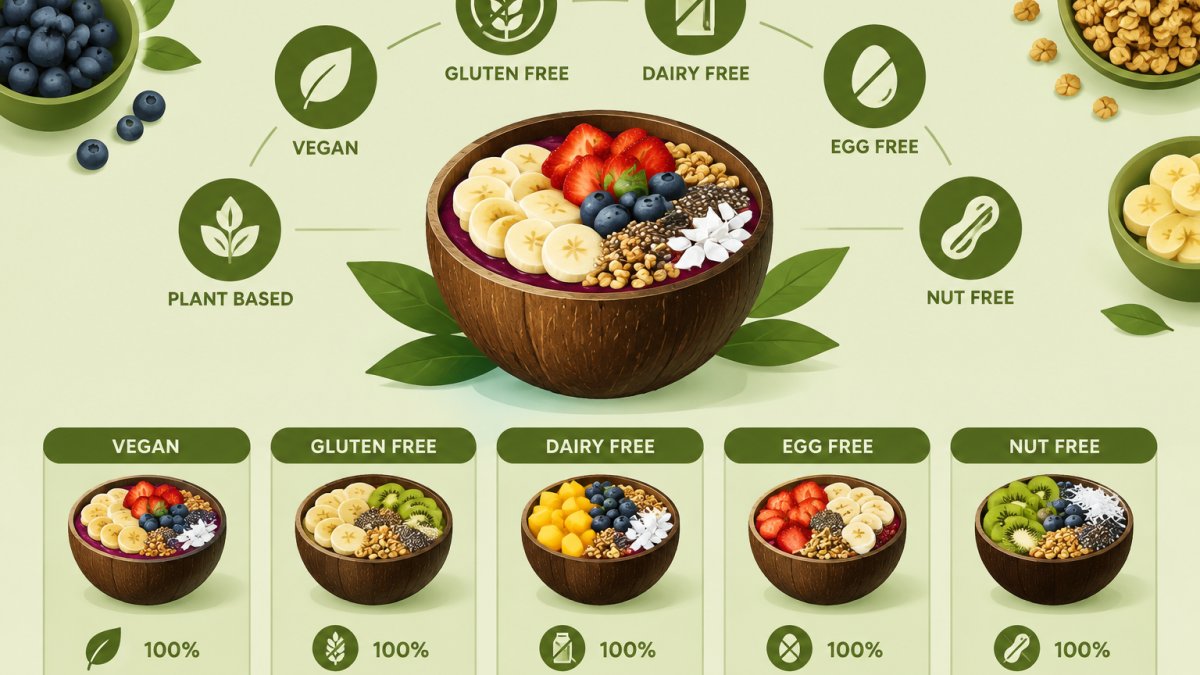
- Use broad categories: vegetarian, vegan, gluten-free, dairy-free, no pork, no shellfish.
- Add an open field for anything the list misses.
- Keep responses private. Share only the final counts with the caterer.
Watch out: never post a spreadsheet with names next to restrictions in a team channel. That turns a helpful survey into a privacy problem and makes people less likely to answer next time.
One more thing. Ask about allergies separately from preferences. A nut allergy is not the same as a dislike of mushrooms, and your caterer needs to treat them differently.
Build a Dietary Restriction Survey Template for Employees
A good template takes five minutes to fill out and gives you everything you need to order. Here is the structure we recommend.
Section 1: Basics
- Name
- Will you attend? Yes / No
- Any dietary needs we should know about? Yes / No
Section 2: Restrictions (check all that apply)
- Vegetarian
- Vegan
- Gluten-free
- Dairy-free
- Nut-free (allergy)
- Shellfish-free (allergy)
- No pork
- No red meat
- Other (please describe)
Section 3: Severity
- Is this a preference or a medical allergy?
- If an allergy, how serious is cross-contact?
Section 4: Open comment
- Anything else the caterer should know?
Keep the form short. Long surveys get ignored, and ignored surveys mean bad data.
Set a firm order deadline and remind the team once. People who miss the deadline can still attend, but tell them upfront that their options may be limited.
Inclusive Office Lunch Ideas That Cover the Most Common Diets
The easiest way to feed a mixed group is to build a menu where most dishes work for most people. A build-your-own bar does this well.
Set out separate components: a base, a protein, a sauce, and toppings. Then let people assemble their own plate. Someone who is vegan skips the meat. Someone who is gluten-free skips the bread. Everyone eats together.
Here is a menu that covers the common diets:
| Diet | What to Include | What to Avoid |
|---|---|---|
| Vegetarian | Beans, cheese, eggs, roasted vegetables | Meat, fish, meat stock |
| Vegan | Legumes, grains, plant proteins, avocado | Dairy, eggs, honey |
| Gluten-free | Rice bowls, corn tortillas, quinoa | Wheat bread, pasta, breaded items |
| Dairy-free | Olive oil dressings, coconut-based sauces | Cream sauces, butter, cheese |
| Nut-free | Seed butters, sunflower garnish | Peanuts, tree nuts, nut oils |
If you want to keep added sugar low across the menu, our guide on how to avoid sugar bombs walks through the labels to check. And for colleagues who eat plant-based and still want protein, what vegans should eat after a workout has menu ideas that work for a lunch setting too.
Label every dish. A small card that says "vegan" or "contains dairy" saves ten questions and prevents mistakes.
Preventing Cross-Contact at Catered Meals: A Practical Checklist
Cross-contact happens when a safe food touches an allergen during prep, serving, or transport. For someone with a serious allergy, that small touch is the whole problem. Most guides stop at "label the food." The harder work is verifying what is actually in each container and having a plan for when a caterer cannot promise safety.
Start with verification before delivery day. Ask the caterer to send ingredient lists for every dish, not just the allergy meals. Compare those lists against the restrictions you collected. If a sauce or dressing is unlisted, call and ask. A common pattern is that marinades, dressings, and garnishes hide allergens that the main ingredient list misses.
On delivery day, use this checklist:
- Confirm allergy meals are wrapped, sealed, and labeled with the employee's name and restriction.
- Give each allergy meal its own serving utensils, kept in the packaging until serving.
- Keep nut-free dishes on a separate table or end of the buffet from dishes with nuts.
- Ask the caterer to list every ingredient on each label, including oils and sauces.
- Set allergy meals aside before the buffet opens so they are not handled by the group.
- Have one person own the allergy table, not five.
- Keep original packaging and labels until the meal is over in case a question comes up.
Watch out: never let a guest "just pick around" an ingredient. If a dish contains an allergen, the person with the allergy should not serve themselves from it at all, because utensils and serving spoons carry residue.
When a caterer cannot guarantee safety, do not force it. Ask whether they can prepare that meal in a separate area or pack it sealed. If they cannot, arrange a backup meal from a source you trust, or let the employee choose their own meal and reimburse a reasonable amount. The FDA's guidance on food allergens explains why clear labeling matters for anyone managing a serious allergy.
Finally, brief the person serving or setting out food. A two-minute conversation about which containers are allergy meals prevents the most common mistake: someone opening the wrong lid.
Choose a Caterer Who Can Handle Dietary Accommodations
The right caterer makes this whole process easy. The wrong one makes you the person apologizing to a colleague who couldn't eat. Choosing well starts with asking the right questions, then building a backup plan before you need it.
Ask these questions before you book:
- Can you handle allergy meals separately from the main order, including separate prep and packaging?
- Do you label every dish with its full ingredient list, including oils, sauces, and garnishes?
- Can you confirm dietary counts 3 days before delivery and again the morning of?
- What happens if a meal arrives wrong, late, or missing?
- Can you provide a single point of contact on delivery day?
A caterer who hesitates on any of these is a risk. A good one answers without blinking and offers a process, not just a promise.
Assign ownership before the order goes in. One person should collect responses, one should confirm the order and counts with the caterer, and one should check the food on arrival against the labels.
Plan for the meal that goes wrong. Even good caterers miss items. Keep a small backup kit on hand: sealed shelf-stable options that cover the most common restrictions, such as gluten-free crackers, nut-free protein bars, and shelf-stable plant-based meals.
Keep accommodated meals comparable. A vegan meal should match the main meal in portion, presentation, and quality, not arrive as a smaller side plate. When you review the order, compare the accommodated meals to the standard meals side by side.
For larger teams, it helps to understand how bulk ordering works before you commit. Our guide to bulk açai orders for teams covers quantities, timing, and how to coordinate a group order without chaos.
Options that let people order ahead can help. Online ordering lets a team place its order in advance so no one waits in line on lunch day.
Plan Your Next Office Lunch with Confidence
The process is simple once you break it down: survey the team, respect their privacy, build a menu that works for most diets, confirm with the caterer, and label everything on delivery day. Do those five things, and the lunch runs itself.
The hard part is the follow-through. A survey nobody fills out is useless. A caterer who can't confirm allergy meals is a gamble. The teams that get this right treat dietary accommodations as a routine step, not an afterthought.
At World Green Açai, we make group lunches easier with organic açai bowls, online ordering, and a mobile app that lets you skip the line. You can see our menu and offerings before you order, and contact us to plan your next office lunch.
Frequently Asked Questions
What are some examples of dietary restrictions I should plan for?
Common dietary restrictions include food allergies (peanuts, tree nuts, shellfish, eggs, dairy, wheat, soy), intolerances (lactose, gluten), and lifestyle choices such as vegetarian, vegan, keto, and plant-based diets. Roughly 6 in 10 American adults say they restrict at least one nutritional component, according to Fooda's guide on dietary accommodations in the workplace. Build your survey around these categories, and always ask employees to list any additional restrictions so your menu planning captures the full range.
How can I accommodate food allergies at an office lunch without making anyone feel singled out?
Use a private intake form instead of a public sign-up sheet, and phrase questions as 'What would help you enjoy the meal?' rather than 'What's wrong with you?' Provide individually labeled portions for employees with allergies, and brief the caterer on cross-contact procedures. Keep allergy information confidential and share only what the caterer needs to know. This approach protects safety while respecting privacy, and it helps you avoid the awkwardness of public discussions about someone's medical needs.
How should I label food for an office lunch?
Label every dish with its name and a clear list of the top allergens it contains, plus a separate 'contains' and 'does not contain' note for gluten, dairy, eggs, soy, peanuts, and tree nuts. Use tent cards or printed labels that are easy to read from a distance. For build-your-own bars, label each component separately so employees can assemble a safe meal. Good labeling reduces questions, prevents accidental exposure, and makes the lunch feel more inclusive for everyone.
What should I do if a coworker has a dietary restriction I didn't plan for?
Keep a small contingency stash of shelf-stable, clearly labeled backup meals that cover common restrictions, such as gluten-free and vegan options. If a missing meal is discovered on the day, assign one person to contact the caterer for a quick replacement or send a runner to a nearby restaurant. After the lunch, update your survey and vendor checklist so the gap doesn't repeat. A simple contingency plan turns a stressful moment into a minor hiccup.
Feeding a team with different diets doesn't have to be stressful. Start with a clear survey, pick a caterer who takes allergies seriously, and give everyone a meal they can enjoy. Get started with World Green Açai and make your next office lunch the one people actually look forward to.