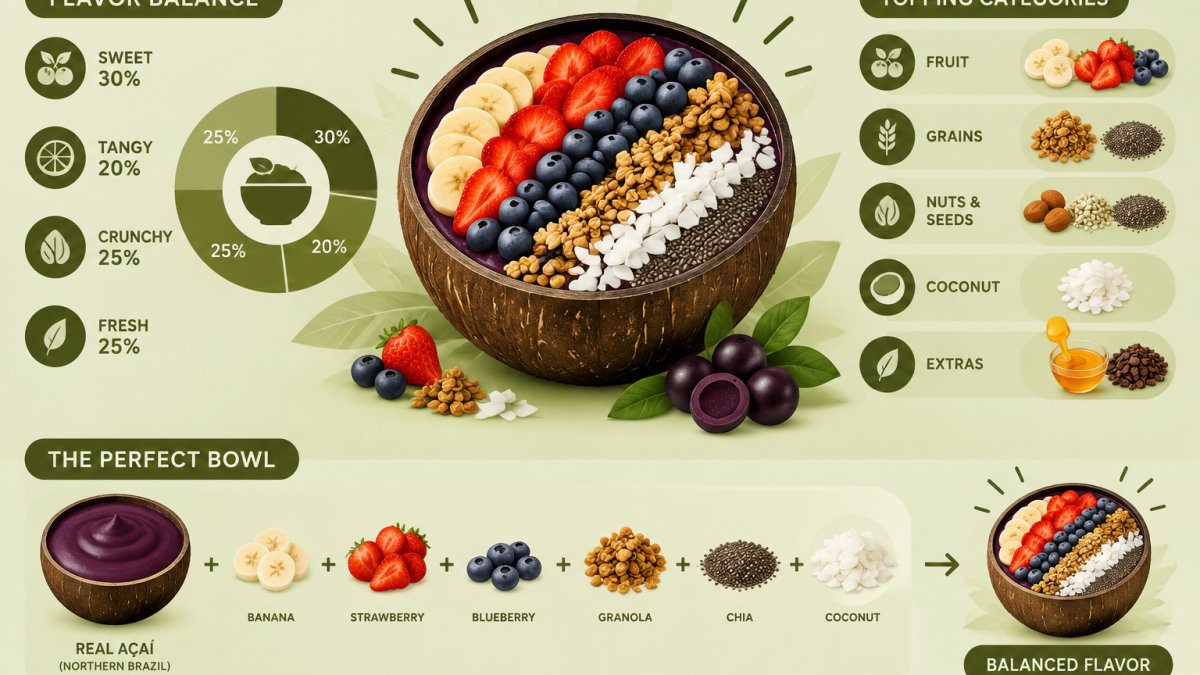
 How-to
How to Choose Breakfast Bowl Toppings That Balance Flavor
Last Updated: November 16, 2026
Quick Summary
Choose breakfast bowl toppings by layering four parts: a base, a protein, fruit or vegetables, and crunch. Match toppings to the base, so creamy bases get crunch and acid while starchy bases get protein and something fresh.
- Creamy bases like yogurt need crunch and acid, while starchy bases like oats need protein and fresh toppings.
- Aim for about one-half to one cup of fruit per bowl, split between juicy and firm fruit.
- Measure dense toppings: one tablespoon of nut butter and two to three tablespoons of granola.
- Keep wet and dry toppings apart until you eat, since assembled bowls turn soggy.
- Store granola and nuts in an airtight jar for up to two weeks.
Table of Contents
- Start With the Base, Then Choose Breakfast Bowl Toppings
- A Simple Framework for Healthy Breakfast Bowl Toppings
- Breakfast Bowl Fruit: Berries, Bananas and Beyond
- Savory Breakfast Bowl Ideas With Eggs
- A Breakfast Bowl Recipe With Potatoes and Eggs
- Crunch, Protein and Portion Control: Toppings That Do the Most Work
- Prep and Store Toppings for Faster Bowl Assembly
- Build Your Bowl Without the Guesswork at World Green Açai
- Frequently Asked Questions
Start With the Base, Then Choose Breakfast Bowl Toppings
Breakfast bowl toppings only make sense once you know what sits underneath them. A bowl built on oats needs different toppings than one built on eggs and potatoes. Get the base right, and the toppings almost pick themselves.
The pattern that works best for a bowl is base first, then contrast. Creamy bases want crunch. Bland bases want acid or salt. Heavy bases want something bright.
A good breakfast bowl is a layered meal where each layer adds something the others lack, whether that is texture, flavor, or protein. That definition matters, because it stops you from piling on five sweet things and calling it balanced.
Here is the short version of how we think about it:
- Creamy base like yogurt or a smoothie blend: add crunch and acid
- Starchy base like oats or potatoes: add protein and something fresh
- Savory base like eggs: add herbs, salsa, or roasted vegetables
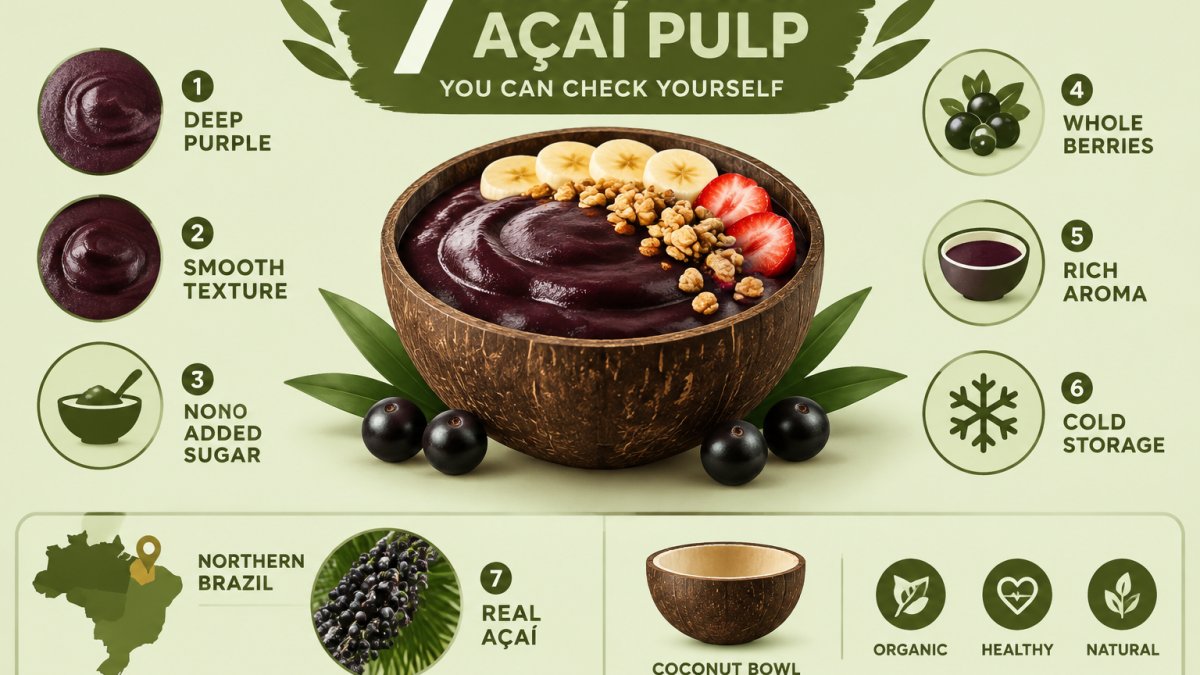
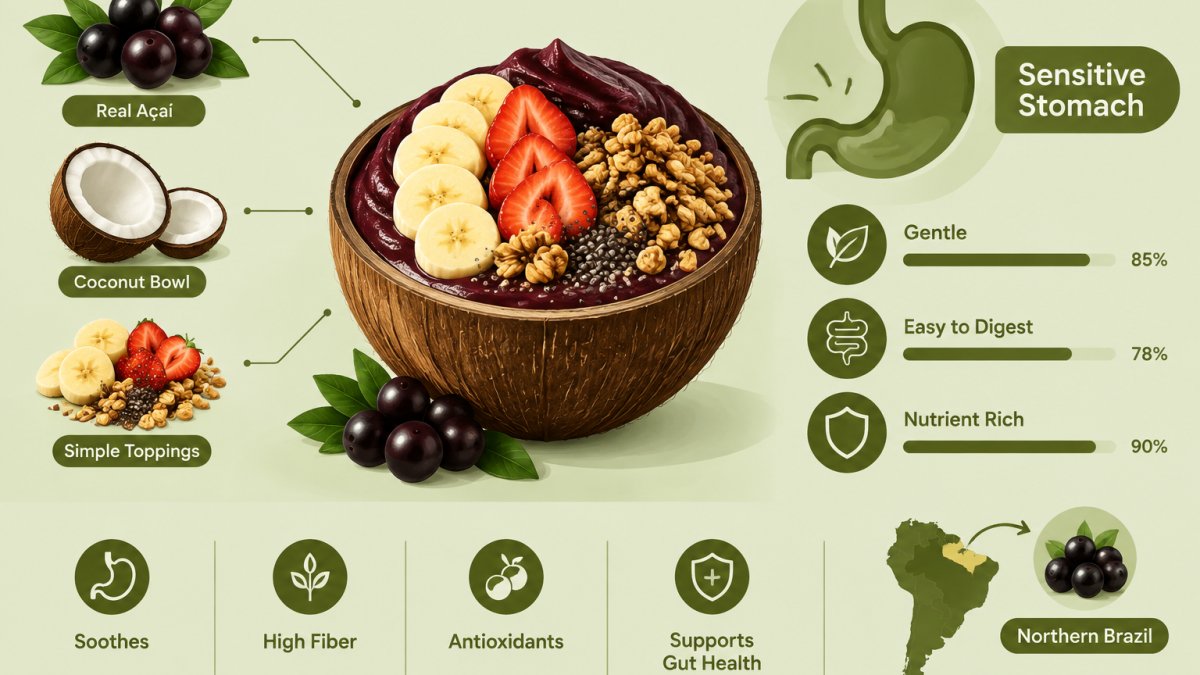
- Fruit-heavy base like an açai blend: add nuts, seeds, or granola
That is the whole game. The rest of this guide is just detail.
A Simple Framework for Healthy Breakfast Bowl Toppings
Healthy breakfast bowl toppings follow a four-part framework: base, protein, fruit or vegetables, and crunch. Each part does one job, and a bowl that skips a part usually feels flat or leaves you hungry an hour later.
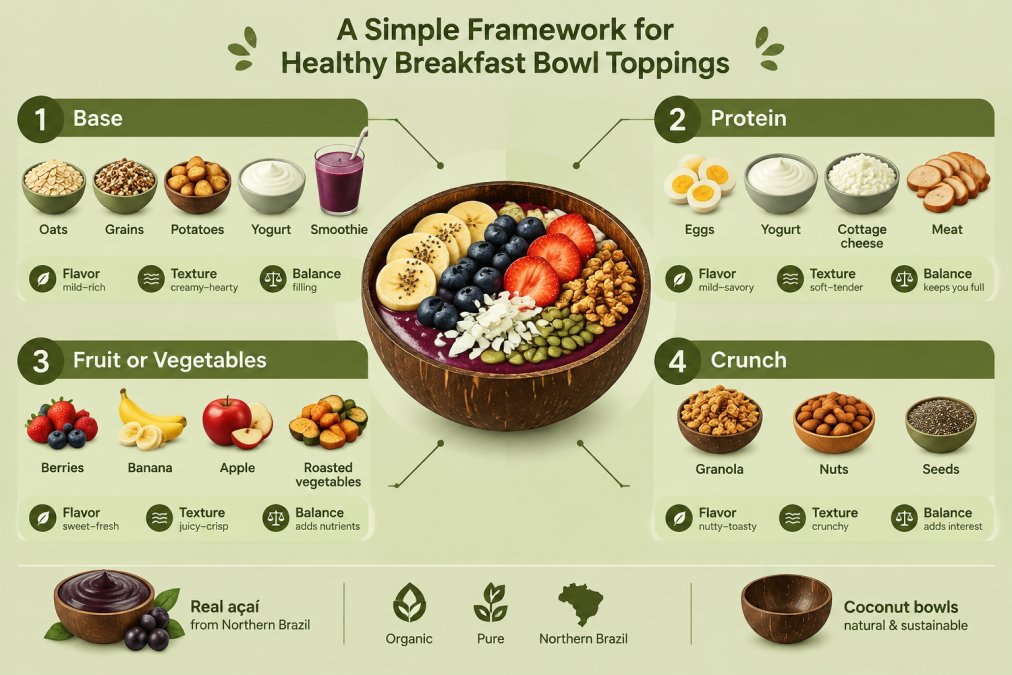
Here is how the four parts work in practice:
- Base: grains, oats, potatoes, yogurt, or a smoothie blend
- Protein: eggs, yogurt, cottage cheese, or meat
- Fruit or vegetables: berries, banana, apple, or roasted vegetables
- Crunch: granola, nuts, seeds, or toasted coconut
Most people get parts one and three right and forget two and four. That is why so many homemade bowls taste like dessert and digest like one too.
Breakfast habits often lean on familiar picks like fruit and nuts, which leaves protein and texture as the common gap.
If you want a deeper walkthrough of the nutrition side, our guide to açaí bowl toppings for balanced nutrition goes layer by layer.
Breakfast Bowl Fruit: Berries, Bananas and Beyond
Breakfast bowl fruit works best when you choose by three variables rather than by habit: water content, sugar level, and how the fruit behaves against the base. Berries bring acid and color, bananas bring creaminess, and apples bring crunch that holds up for hours. Stack three sweet, wet fruits and you get a soggy, dessert-like bowl; mix one juicy fruit, one firm fruit, and one tart accent and the bowl stays balanced.
A practical way to sort fruit before it goes on the bowl:
- High-water fruit (berries, sliced peaches, melon): pat dry, add last, and never assemble ahead
- Soft, sweet fruit (banana, mango, ripe pear): best on creamy bases like yogurt or a smoothie blend, where the texture matches
- Firm, crisp fruit (apple, pear, firm grapes): best on oats and grain bowls, where the crunch survives
- Tart accents (pomegranate seeds, cranberries, kiwi): use a small amount to cut richness from nut butter or granola
- Frozen fruit: works fine blended into a smoothie base, less so as a topping because it releases water as it thaws
Match fruit to the base rather than treating all fruit as interchangeable:
- Oatmeal or grain bowls: diced apple or pear, plus a small handful of berries for acid
- Yogurt or cottage cheese bowls: banana slices, berries, and a tart accent
- Smoothie or açaí blends: banana and berries on top, pomegranate seeds for pop
- Savory egg or potato bowls: fruit usually fights the salt; keep it to a small side of berries or skip it
Portion guidance keeps fruit from crowding out protein and crunch. A common pattern is about one-half to one cup of fruit total per bowl, split between a juicy fruit and a firm one, with tart accents measured in tablespoons rather than handfuls.
Dietary and allergen notes: fruit is naturally dairy-free, gluten-free, vegan, and nut-free, which makes it the easiest layer to lean on when other toppings are restricted.
Watch out: wet fruit sinks and makes the base soggy. Pat berries dry before they go on top, add them last, and never slice banana ahead, because it browns and softens within minutes.
For a closer look at which fruits perform best, see our roundup of the best fresh fruit toppings for açaí bowls.
Savory Breakfast Bowl Ideas With Eggs
Savory breakfast bowl ideas with eggs start with one rule: cook the egg to match the base. Soft eggs suit soft bases. Crisp-edged eggs suit grains and potatoes.
Three combinations that work:
- Fried egg over quinoa with roasted tomatoes and a spoon of salsa
- Soft scrambled eggs over yogurt with olive oil, herbs, and flaky salt
- Hard-boiled egg over greens with avocado and toasted seeds
Eggs are the easiest protein to add because they carry salt and fat without needing sauce. They also pair with almost any vegetable you have in the fridge.
Watch out: eggs release water as they sit. If you are assembling ahead, keep the egg separate and add it at the end, or the base turns soupy.
A Breakfast Bowl Recipe With Potatoes and Eggs
This breakfast bowl recipe with potatoes and eggs is the one we make when we want something hearty that still feels light. It takes about 25 minutes and feeds two.
What you need:
- 2 medium potatoes, diced small
- 3 eggs
- 1 cup spinach
- 2 tablespoons salsa
- 1 tablespoon olive oil
- Salt, pepper, smoked paprika
Steps:
- Heat the oil in a skillet over medium heat.
- Add the diced potatoes in a single layer. Cook 12 to 15 minutes, turning twice, until golden and tender.
- Season with salt, pepper, and paprika.
- Wilt the spinach in the same pan for one minute, then move everything to bowls.
- Fry or scramble the eggs to your liking and slide them on top.
- Finish with salsa and a crack of black pepper.
The potatoes do the heavy lifting here. They give the bowl structure, so a small amount of egg and salsa goes a long way.
Crunch, Protein and Portion Control: Toppings That Do the Most Work
Crunch and protein are the two toppings that change how full you feel, and portion control is where most bowls go wrong. A bowl can be nutritious on paper and still leave you hungry if the crunch and protein are missing, or it can be so dense that it eats like a dessert. The fix is to give each layer a job and a rough range rather than pouring freely.
A usable starting point for a single bowl:
- Protein: one egg, one-half cup of Greek yogurt or cottage cheese, or three to four ounces of meat or tofu
- Crunch: two to three tablespoons of granola, or one to two tablespoons of nuts or seeds
- Nut or seed butter: one tablespoon, thinned with warm water so it drizzles instead of clumps
- Shredded coconut: one to two teaspoons for flavor, not a layer
- Cheese: one to two tablespoons crumbled, not blanketed
- Avocado: one-quarter to one-half of a fruit, sliced
These ranges are starting points, not rules. The point is that dense toppings are measured while light, watery toppings like berries and greens can be added more freely.
How the layers interact matters more than any single number. Protein and fiber-rich carbohydrates slow digestion and support steadiness through the morning; fat adds richness and carries flavor but is calorie-dense, so it is the layer to measure first.
Bowls often include one or two higher-calorie ingredients such as hard cheese, avocado, shredded coconut, or granola, so measuring the dense ones is a practical approach to portion control.
Dietary and allergen swaps for these layers:
- Dairy-free: swap Greek yogurt for a coconut or soy yogurt, and cottage cheese for mashed white beans or silken tofu
- Gluten-free: choose certified gluten-free granola and oats
- Nut-free: replace nuts with seeds such as pumpkin or sunflower, and nut butter with seed butter
- Vegan: use tofu, tempeh, or beans in place of eggs and meat, and plant yogurt in place of dairy
Watch out: granola and nut butter are the two toppings most likely to turn a balanced bowl into a heavy one, because both are easy to pour generously and hard to eyeball. Measure them once or twice until the portion looks familiar.
For more on building a bowl that actually holds you until lunch, our guide on how to make açai bowls more filling covers seven practical steps.
Prep and Store Toppings for Faster Bowl Assembly
Prepping toppings ahead is the difference between a five-minute breakfast and a twenty-minute one. Most toppings hold well for several days if you store them dry and separate.
What holds well:
- Granola and nuts: airtight jar, two weeks
- Seeds: airtight jar, one month
- Washed berries: paper towel-lined container, three to four days
- Sliced banana: no. Slice fresh, always
- Roasted vegetables: sealed container, four days
- Hard-boiled eggs: peeled and sealed, five days
The rule we follow: keep wet and dry apart until the moment you eat. A bowl assembled the night before will always be worse than one assembled in the morning from prepped parts.
For batch ideas, see our healthy meal prep ideas for açai bowls.
Most toppings hold well for several days if you store them dry and separate.
| Topping | Storage | How long it keeps |
|---|---|---|
| Granola and nuts | Airtight jar | Two weeks |
| Seeds | Airtight jar | One month |
| Washed berries | Paper towel-lined container | Three to four days |
| Sliced banana | None; slice fresh | Always slice fresh |
| Roasted vegetables | Sealed container | Four days |
| Hard-boiled eggs | Peeled and sealed | Five days |
Build Your Bowl Without the Guesswork at World Green Açai
Choosing breakfast bowl toppings gets easier once you start layering with intent. Base, protein, fruit or vegetables, crunch. Four parts, one bowl, no soggy surprises.
If you would rather skip the assembly entirely, we make it simple. World Green Açai offers organic açaí bowls in Larkspur, and you can order online. The app makes reordering easy, and gift cards are available for a healthy treat.
Get started with World Green Açai and build a bowl that tastes as good as it looks.
Frequently Asked Questions
What are healthy toppings for a breakfast bowl?
Healthy breakfast bowl toppings start with whole ingredients rather than sugary add-ons. Fresh fruit such as berries, sliced banana and apple adds natural sweetness and fiber. Plain Greek yogurt, cottage cheese or eggs add protein. Nuts, seeds and granola add crunch, though Today's Dietitian advises measuring higher-calorie options like granola, shredded coconut and avocado. Build toward a mix of fruit or vegetables, a protein source and a small crunchy element so the bowl stays balanced and satisfying.
How do you build a balanced breakfast bowl?
Think in layers: a base, a protein, produce and a crunchy finish. Start with oats, quinoa, potatoes, yogurt or a smoothie blend. Add a protein such as eggs, cottage cheese or plant-based yogurt. Pile on fruit or roasted vegetables for flavor and fiber. Finish with nuts, seeds or granola, measuring the calorie-dense ones. The goal is a bowl that tastes good and keeps you full, not one that piles every topping on at once.
Can you put eggs in a breakfast bowl?
Yes. Eggs are one of the most versatile savory toppings and work on grain bowls, potato bowls and even some smoothie-style bases. Scrambled, fried, soft-boiled or sliced, they add protein and richness. Pair them with roasted potatoes, salsa, cheese and greens for a hearty savory bowl, or keep it simple with eggs, avocado and seeds. Cook eggs fresh when possible and add them just before serving so they stay warm.
How do you keep breakfast bowl toppings fresh for meal prep?
Prep components separately and combine them the morning you eat. Wash and dry berries, slice bananas just before serving, and store cut apple with a little lemon juice. Keep granola, nuts and seeds in airtight containers at room temperature. Roasted potatoes and cooked grains keep several days in the refrigerator. Dressings, salsa and yogurt go in small containers on the side so nothing turns soggy before lunch.