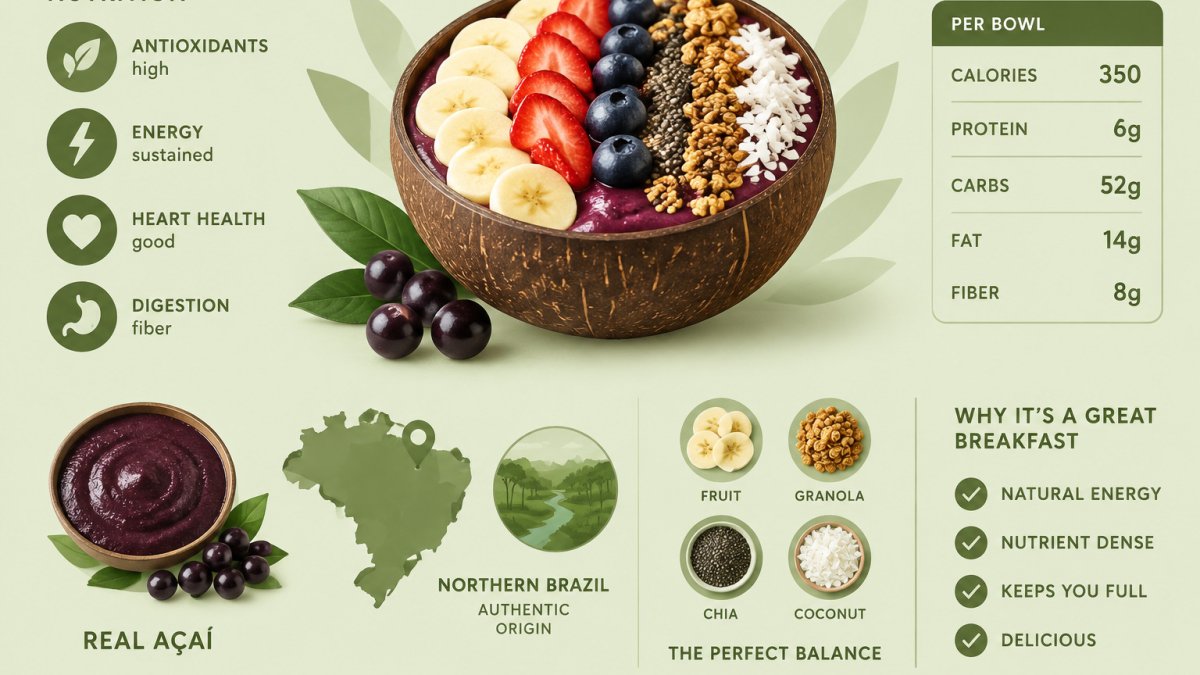
 How-to
Is an Açaí Bowl a Healthy Breakfast?
Last Updated: November 22, 2026
Quick Summary
An açaí bowl can be a healthy breakfast when the base is unsweetened purée and the toppings are measured. One unsweetened packet adds about 3 grams of fiber, but sweetened bases, honey, and heavy granola can push the sugar and calories much higher.
- Choose unsweetened açaí purée and check the label for added sugars.
- Add a protein source such as Greek yogurt, nut butter, or protein powder to stay full.
- Build the bowl with one cup of fresh fruit and one tablespoon of low-sugar granola.
- Limit sweet toppings to two or three, since stacking them drives sugar up fast.
Table of Contents
- Is an Açaí Bowl a Healthy Breakfast?
- How Many Calories Are in an Açaí Bowl?
- Macronutrients and Fiber in a Typical Bowl
- How Much Sugar Is in an Açaí Bowl?
- Choosing Healthy Açaí Bowl Toppings
- How Much Protein Does an Açaí Bowl Have?
- Building a Balanced Breakfast Bowl at Home
- Frequently Asked Questions
Is an Açaí Bowl a Healthy Breakfast?
An açaí bowl can be a healthy breakfast, but the answer depends on what goes into it. The base is nutritious, but the toppings and portion size decide whether the meal fits your day.
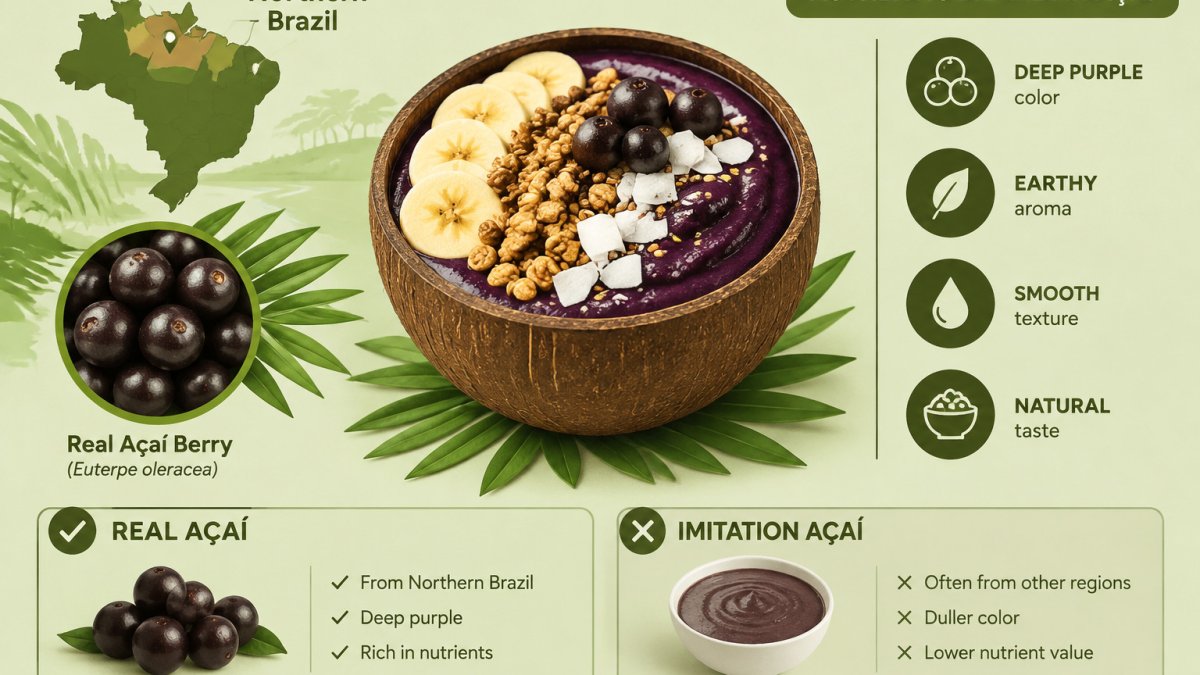
Plain açaí purée is the foundation. One packet of unsweetened purée has about 70 calories and 3 grams of fiber, according to Noom's açaí bowl nutrition guide. That is a modest start, not a full meal.
Here is the catch. Many bowls are not automatically low-calorie or low-sugar. Read a realistic review of whether açaí bowls support weight loss. Two bowls can look alike and differ widely in what they deliver.
- A bowl with unsweetened purée and measured granola can be a moderate-calorie meal.
- A larger bowl with sweetened add-ins and heavy toppings can climb much higher.
- Sweetened juice bases and added syrups push sugar up fast.
So a bowl can be a healthy breakfast when you keep the base simple and portion the toppings. It becomes a dessert when you do not.
How Many Calories Are in an Açaí Bowl?
Bigger café-style bowls can run well past a homemade bowl with unsweetened açaí purée and measured granola.
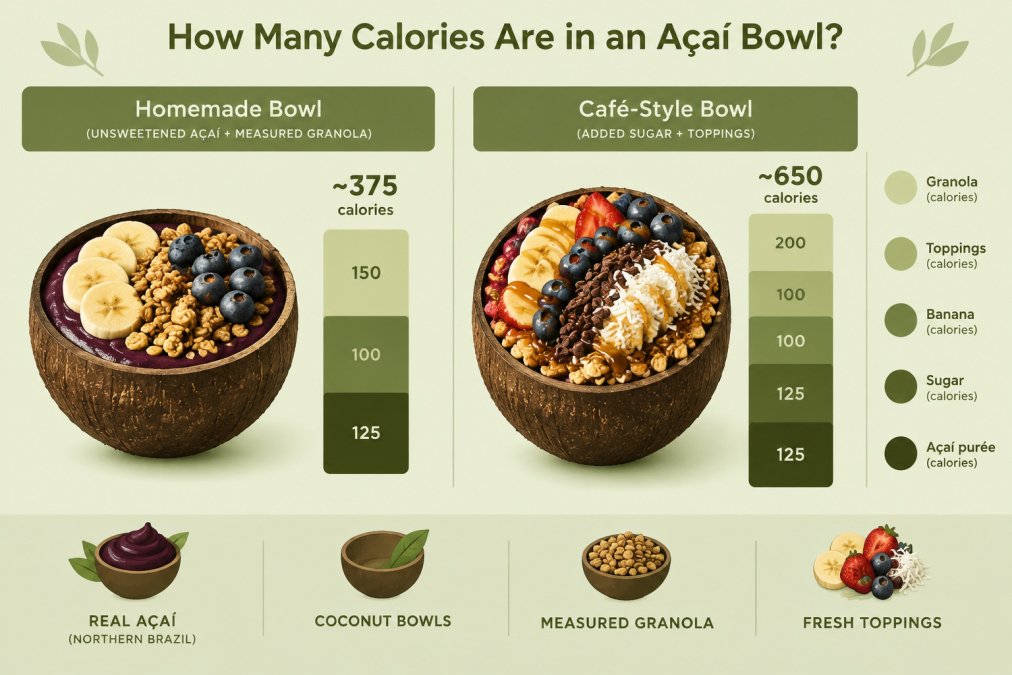
The calorie count comes from three parts: the purée, the granola, and the extras. Each one adds up quickly.
If you want to track your own bowl, weigh or measure each ingredient and add the numbers. Learn how to track calories in a homemade açaí bowl step by step. This gives you a real total instead of a guess. Check the labels on your granola and any sweetener, because brands vary.
Macronutrients and Fiber in a Typical Bowl
Açaí bowls are carbohydrate-forward, moderate in fat, and low in protein unless you add a protein source. The most useful way to understand the macro profile is to build it ingredient by ingredient, because the base and each topping move the numbers in different directions.
Here is a realistic ingredient-by-ingredient estimate for a moderate homemade bowl. Figures are approximate and drawn from common label values; check your own labels because brands vary.
| Ingredient | Amount | Carbs | Protein | Fat | Fiber |
|---|---|---|---|---|---|
| Unsweetened açaí purée | 1 packet (about 100 g) | 6 g | 1 g | 5 g | 3 g |
| Plain Greek yogurt | 1/2 cup | 4 g | 12 g | 0 g | 0 g |
| Sliced banana | 1/2 medium | 14 g | 1 g | 0 g | 2 g |
| Mixed berries | 1/2 cup | 10 g | 1 g | 0 g | 3 g |
| Low-sugar granola | 2 tablespoons | 12 g | 2 g | 4 g | 2 g |
| Chia seeds | 1 tablespoon | 4 g | 2 g | 3 g | 4 g |
| Bowl total | , | ~50 g | ~19 g | ~12 g | ~14 g |
Protein
That total lands near 380 to 420 calories, with carbohydrates doing most of the work. The fiber figure is the standout: roughly 14 grams is about half of the daily target most adults are advised to reach, and it comes from the purée, fruit, seeds, and granola together rather than from any single ingredient.
Three mechanisms explain why the macro profile shifts so much from bowl to bowl:
- The base sets the floor. Unsweetened purée contributes fat from the fruit itself and a few grams of fiber, but almost no protein. A juice-based or sweetened base adds carbohydrate and sugar without adding protein or fiber.
- Toppings decide the ceiling. Granola is carbohydrate- and fat-dense per small scoop, nut butter is calorie-dense but adds protein and fat, and fresh fruit adds carbohydrate and fiber with water weight that keeps the portion satisfying.
- Protein only arrives if you invite it. Yogurt, protein powder, nut butter, hemp, and chia are the levers. Without at least one of them, a bowl is a carbohydrate-heavy meal that most people find they are hungry again from within a couple of hours.
Watch out: a bowl that looks balanced can still be low in protein if the only add-ons are fruit and granola, so count the protein sources before you call the bowl a full breakfast.
Fiber is the macro most worth protecting. A bowl built on purée, berries, and seeds tends to carry more fiber than one built on sweetened base and heavy granola. If you want to raise fiber without raising calories much, prioritize chia, hemp, and berries over extra granola.
How Much Sugar Is in an Açaí Bowl?
Sugar is the number that varies most in an açaí bowl, and the reason is that two very different kinds of sugar end up in the same bowl. Naturally occurring sugar arrives packaged with water, fiber, and micronutrients in whole fruit. Added sugar arrives on its own, usually as sweetened purée, juice concentrate, honey, syrup, or sweetened granola, and it brings calories without the fiber or water that make fruit filling.
A useful way to see the difference is to tally a bowl ingredient by ingredient.
| Ingredient | Amount | Total sugar | Added sugar |
|---|---|---|---|
| Unsweetened açaí purée | 1 packet | ~2 g | 0 g |
| Sweetened açaí blend | 1 packet | ~14 g | ~10 g |
| Sliced banana | 1/2 medium | ~7 g | 0 g |
| Mixed berries | 1/2 cup | ~7 g | 0 g |
| Honey | 1 tablespoon | ~17 g | ~17 g |
| Maple syrup | 1 tablespoon | ~12 g | ~12 g |
| Sweetened granola | 1/4 cup | ~8 g | ~5 g |
| Low-sugar granola | 2 tablespoons | ~3 g | ~1 g |
The pattern is clear. Fruit contributes sugar that comes with fiber and water, so it is self-limiting: most people stop at a cup of berries. Sweetened purée, honey, and syrup contribute sugar with nothing to slow it down, and a single tablespoon of honey can add more added sugar than an entire serving of fruit.
The practical lever is the label. On a Nutrition Facts panel, total sugars include both kinds, and added sugars are listed separately underneath. That separate line is the one to watch when you buy purée, granola, plant milk, and yogurt. A purée labeled unsweetened should show zero added sugars; a blend that lists cane sugar, fruit juice concentrate, or agave near the top of the ingredient list is a sweetened product even if the front of the package emphasizes fruit.
Four changes cut added sugar without flattening flavor:
- Buy unsweetened purée and sweeten with fruit. Mashed ripe banana or a few dates blended into the base add sweetness with fiber attached.
- Swap syrup for spice. Cinnamon, vanilla extract, and a pinch of salt make a bowl taste sweeter than it is.
- Choose granola by the added-sugar line, not the front label. Many "healthy" granolas carry several grams of added sugar per small serving.
- Use berries as the default fruit. They deliver sweetness and fiber at a lower sugar load than tropical fruit or dried fruit.
Watch out: a bowl can be labeled dairy-free, vegan, or gluten-free and still be high in added sugar, because those claims say nothing about sweeteners.
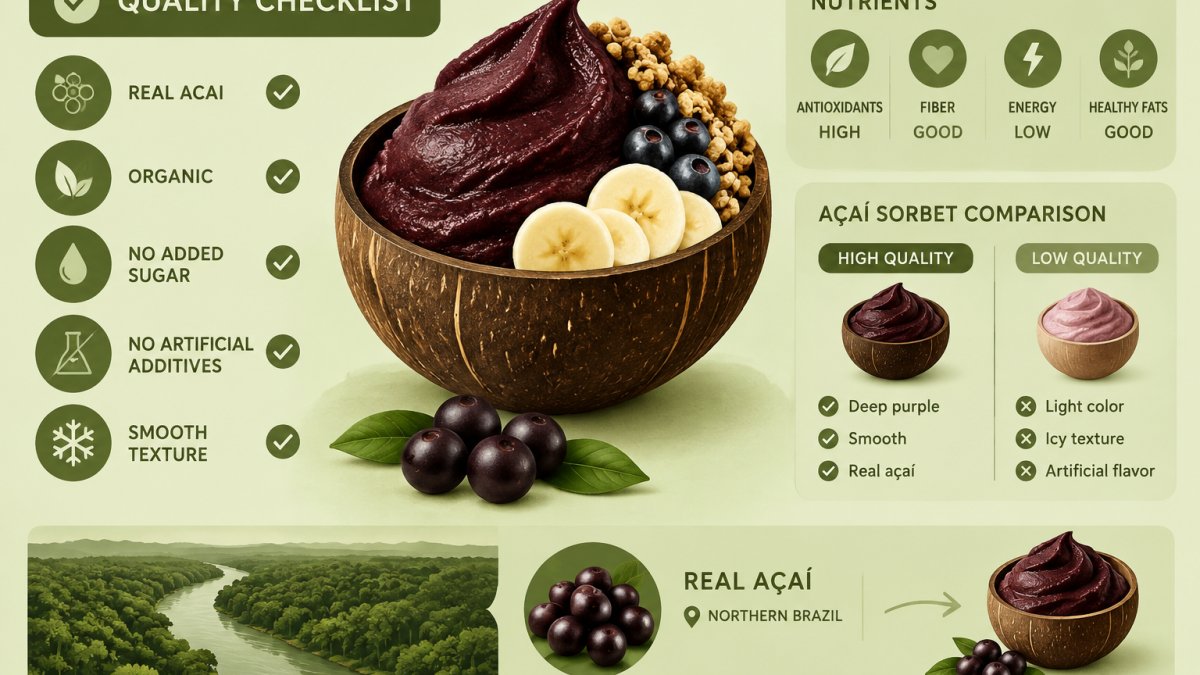
A café bowl with a sweetened base, honey, and sweetened granola can contain a substantial amount of added sugar, while a bowl built on unsweetened purée, berries, and low-sugar granola contains considerably less.
Choosing Healthy Açaí Bowl Toppings
The right toppings add fiber, protein, and healthy fats without piling on sugar. Choose a few and keep portions measured. Browse our curated list of the best toppings for an authentic açaí bowl.
Good options include: see seven superfood toppings that add extra fiber and energy.
- Fresh berries for fiber and color
- Sliced banana for natural sweetness
- Chia or hemp seeds for fiber and protein
- A spoonful of nut butter for staying power
- A small amount of low-sugar granola for crunch
Avoid stacking several sweet toppings at once. Two or three toppings are enough for most people. Your best toppings are the ones that keep the bowl balanced. Compare toppings for balanced nutrition in açaí bowls.
How Much Protein Does an Açaí Bowl Have?
Plain açaí bowls are low in protein. Most of the calories come from carbohydrates, so the bowl alone will not keep you full for long.
To raise the protein, add:
- Greek yogurt or a protein-rich milk on the base
- Nut butter or a scoop of protein powder
- Hemp or chia seeds
A bowl with yogurt and nut butter can provide a much more filling meal. Check labels for the protein content of any add-on you use.
Building a Balanced Breakfast Bowl at Home
A balanced bowl follows a simple formula: a measured base, one protein add-on, fiber-rich fruit, and a small crunch. Follow these steps:
- Start with one unsweetened açaí purée packet.
- Add a half cup of plain Greek yogurt or milk to thin and add protein.
- Top with one cup of fresh fruit, such as berries or banana.
- Add one tablespoon of nut butter or seeds.
- Sprinkle one tablespoon of low-sugar granola for crunch.
This keeps the bowl near a moderate calorie range while covering protein, fiber, and healthy fats. Adjust the portions for your needs and your calorie goals.
If you want a bowl made for you, visit World Green Açai in Larkspur, or order online through our app and skip the line. We use real açaí and serve our bowls in coconut bowls.
Frequently Asked Questions
Are açaí bowls actually healthy for breakfast?
They can be, depending on what goes in them. A bowl built from unsweetened açaí purée, a measured portion of granola and fresh fruit can provide fiber and nutrients in a reasonable calorie range. Many café versions add sweetened bases, juice, honey and large portions of granola, which raise the calories and added sugar considerably. Checking the ingredients and portion size matters more than the word açaí on the menu.
How many calories are in an açaí bowl?
Calorie counts vary widely by recipe and serving size. A homemade bowl using unsweetened purée and measured granola is a moderate-calorie meal, while larger commercial bowls with sweetened blends and heavy toppings can be substantially higher. Weighing or measuring your toppings is the most reliable way to know your own number.
Do açaí bowls have a lot of sugar?
They can. Some recipes include added sugar, sweetened juice or sweetened yogurt, . Naturally occurring sugar from fruit is different from added sugar, so reading the ingredient list helps you tell which is which. Asking for an unsweetened base and limiting honey or sweetened granola keeps added sugar lower.