 How-to
Identifying High Quality Acai Sorbet: A Buyer's Checklist
Last Updated: November 23, 2026
Quick Summary
Identifying high quality acai sorbet starts with three checks: a deep purple color, a thick scoop that holds its shape, and a short ingredient list led by acai itself. Miss any one of those, and you are likely holding a sugar-forward dessert instead of real fruit.
- Real acai sorbet ranges from deep purple to almost black, never pale pink or lavender.
- A high-quality label lists acai first and stays within four or five ingredients.
- Count non-acai, non-water ingredients: zero to two is a clean product.
- Water listed first is the single biggest red flag on an acai sorbet label.
- The thaw test: authentic acai softens into a thick puree, while weak sorbet separates into water and grit.
Table of Contents
- Identifying High Quality Acai Sorbet: What Should You Look For?
- Decoding the Ingredient Label for Additives and Fillers
- Acai Sorbet vs Pure Acai Packs: How the Two Compare
- Why Authentic Organic Acai Tastes Tart, Earthy, and Different
- Home Testing Methods for Texture, Thaw, and Berry Density
- Comparing Nutritional Density: Real Fruit Solids vs Sugar
- Ordering a Bowl You Can Trust at World Green Acai
- Frequently Asked Questions
Identifying High Quality Acai Sorbet: What Should You Look For?
Identifying high quality acai sorbet starts with three checks: a deep purple color, a thick scoop that holds its shape, and a short ingredient list led by acai itself. For a broader guide to choosing high-quality açaí products, see our How to Choose High Quality Açaí Products. Miss any one of those, and you are likely holding a sugar-forward dessert instead of real fruit.
At World Green Açai, we built our menu around that difference. The global açaí berry market is projected to expand from USD 10,006.8 million in 2026 to USD 23,359.8 million by 2036, according to Accesswire's 2026 market outlook. More products are landing on shelves. Not all of them are worth your money.
Below, we walk through the exact checklist we use, from color and texture to label reading and home tests.
The Visual and Textual Checklist
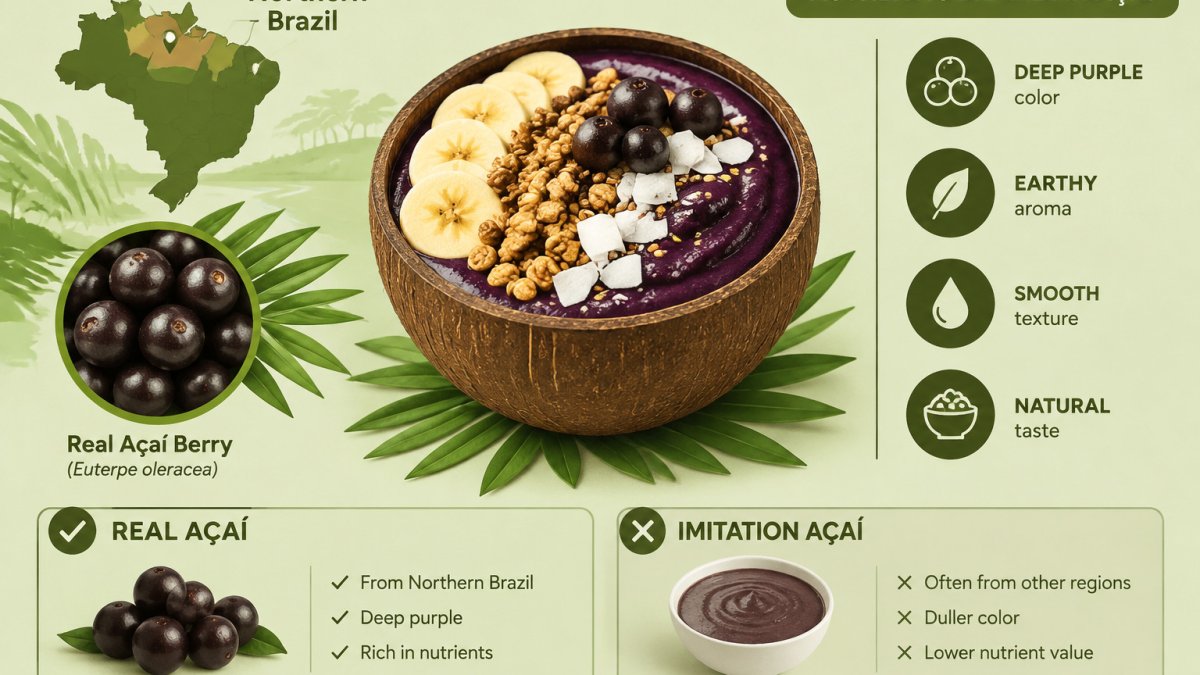
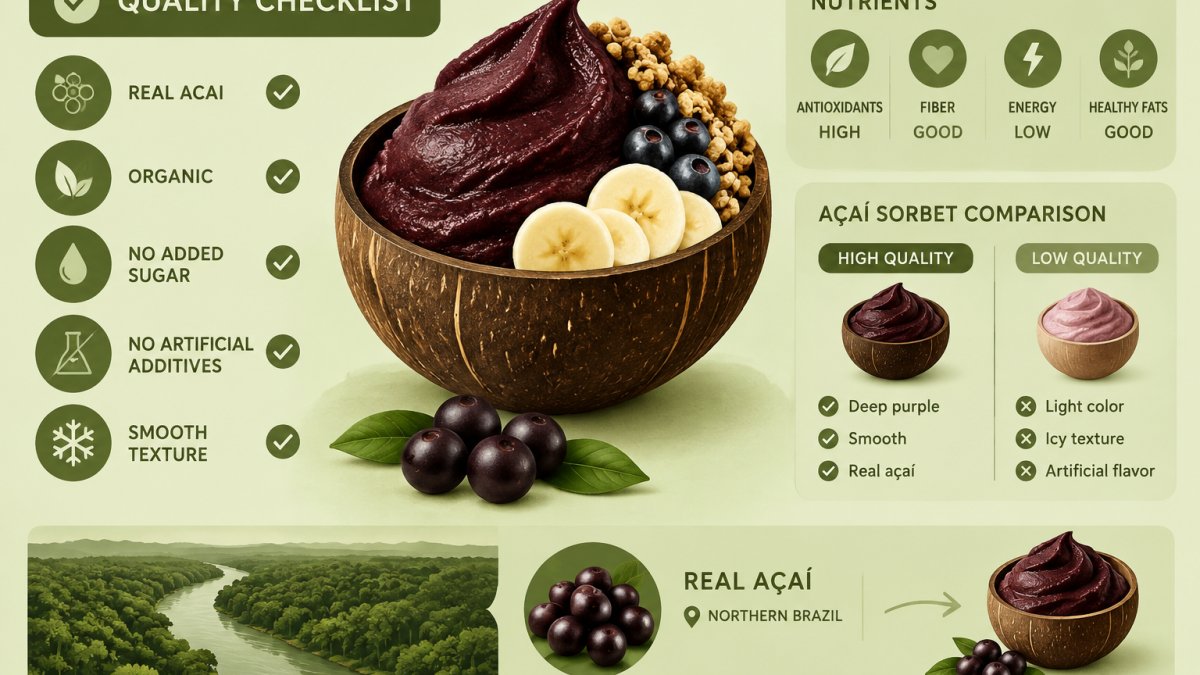
Color is your first clue. Real acai sorbet ranges from deep purple to almost black, never pale pink or lavender. A light shade usually means water, sugar, or dairy has diluted the fruit.
Next, check the texture:
- A proper scoop holds a soft peak and does not drip
- The surface looks smooth, not icy or grainy
- It feels dense when you press it, like frozen puree
- It thaws evenly, without watery pools forming at the edges
Flavor follows texture. Authentic acai tastes tart and earthy, with a faint note of dark chocolate. If your first bite reads as sweet vanilla, the fruit is doing very little work.
Decoding the Ingredient Label for Additives and Fillers
A high-quality acai sorbet label should list acai first and keep the rest of the ingredients short. Anything beyond four or five ingredients deserves a closer look. The order matters because ingredients are listed by weight, so the first three names tell you what you are actually buying.
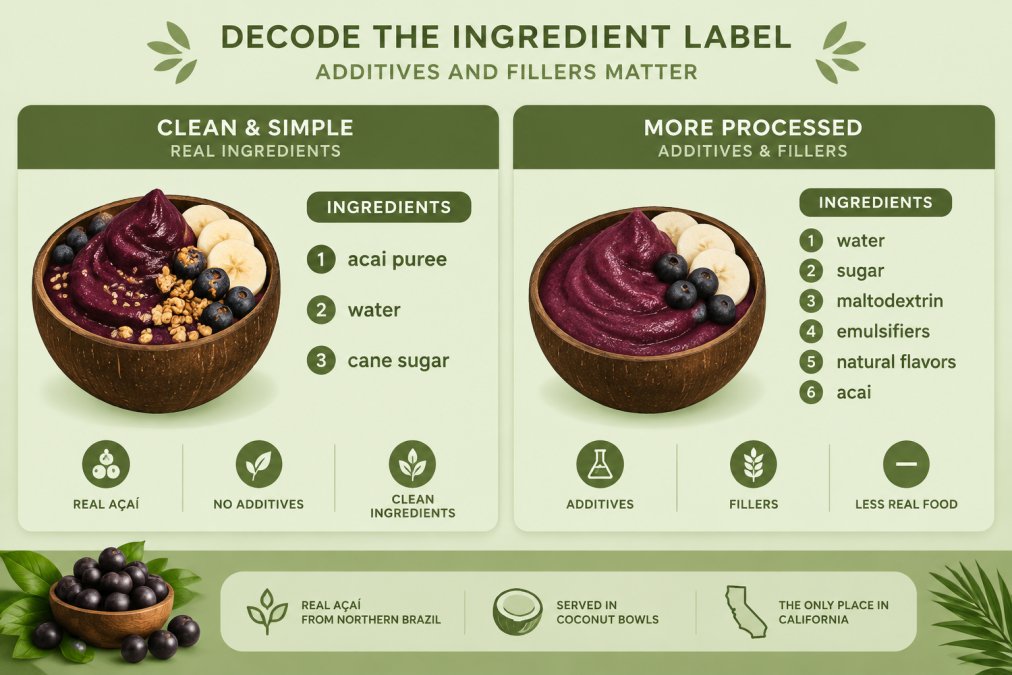
Most guides stop at naming the additives. The useful part is knowing what each one does, because a thickener or bulking agent is often the tell that fruit content is low. Here is the working decoder:
- Maltodextrin: a cheap bulking agent derived from starch. It adds carbs and mouthfeel without fruit, and it is a common way to stretch a small amount of puree across a large batch.
- Guar gum and carrageenan: thickeners that build body the fruit should provide on its own. When either appears high on the list, the sorbet is being engineered to feel denser than its fruit solids justify.
- Emulsifiers (mono- and diglycerides, polysorbates): used to fake a creamy, uniform texture and to slow ice crystal formation. Real fruit puree does not need them to scoop well.
- Added sugars under many names: cane syrup, fruit juice concentrate, dextrose, and agave all count. A label can avoid the word "sugar" and still be sugar-forward.
- Natural flavors: a catch-all that can mask weak or diluted fruit. It is legal and common, but it tells you the flavor is being propped up rather than coming from the acai itself.
- Water listed first: the single biggest red flag. If water outweighs acai, you are buying diluted puree, not fruit.
A useful rule of thumb: count the ingredients that are not acai or water. Zero to two is a clean product. Three to four is worth a second look. Five or more usually means the maker is compensating for low fruit content with texture and sweetness.
Watch out: "acai flavor" or "acai extract" on a label is not the same as acai puree, so read the ingredient list closely.
For a deeper walkthrough of bowl labels and what to avoid, see our organic açaí bowl ingredient label guide.
Federal standards cap finished food products at 50,000 bacteria per gram under official identification, per the Electronic Code of Federal Regulations. That covers safety, not quality. Quality is on you, and it starts with the label.
Acai Sorbet vs Pure Acai Packs: How the Two Compare
Acai sorbet is a finished, frozen dessert, while pure acai packs are unsweetened fruit pulp frozen in sealed pouches. The packs put you in control. The sorbet puts the maker in control. That single difference drives everything else, sugar, texture, sourcing transparency, and how much you can actually verify about the fruit.
| Feature | Acai Sorbet | Pure Acai Packs |
|---|---|---|
| Main ingredient | Acai plus water, sugar, binders | Acai pulp only |
| Sugar content | Often added | None added |
| Texture control | Set by the maker | You blend it |
| Sourcing visibility | Hidden behind the finished product | Traceable to the batch and origin |
| Storage | Eat within a few weeks of opening | Keep frozen until use; reseal tightly |
| Best for | Eating straight from the scoop | Bowls and smoothies you build |
Sorbet wins on convenience. Packs win on transparency. If you want to taste the fruit itself, packs are the safer bet.
The sourcing difference is the part most comparisons skip. A sorbet can blend fruit from multiple suppliers, add water and sugar, and still call itself acai, the finished product hides the origin. A pure pack is closer to a single-ingredient food, so the label and batch code tell you far more about where the fruit came from and how it was handled. Suppliers are increasingly asked to provide audit-ready documentation and confirm organic status, according to New Acai Amazonas, and that paper trail is much easier to follow on a pack than on a tub of sorbet.
Storage matters too. Packs should stay frozen solid until you are ready to blend, and they should be resealed tightly to avoid freezer burn, which dulls the flavor and darkens the color. Sorbet is more forgiving on the shelf but less forgiving on quality, the sugar and binders that keep it scoopable also mask how the fruit has aged.
You can verify a pack at home with a simple thaw test: let a portion soften, then look at what separates. Real pulp softens into a thick, even puree with a deep purple color. A pack cut with water or filler will throw off pale liquid and leave a grainy residue. Run the same test on sorbet and you will usually see more water, because that is what the recipe is built on.
For a full breakdown, read our guide to frozen açaí pulp vs powder.
Why Authentic Organic Acai Tastes Tart, Earthy, and Different
Authentic organic acai tastes tart, earthy, and slightly bitter because the fruit is low in natural sugar and high in anthocyanins, the pigments behind its deep color. That flavor is the point, not a flaw.
Most people meet acai through sweetened sorbet or smoothie chains, so the real thing surprises them. It should. Acai is a berry, not a dessert base. Its natural profile carries earthy undertones and a clean, dry finish.
Organic certification matters here too. It signals that the fruit was grown without synthetic pesticides and handled through a verified supply chain. Suppliers are increasingly asked to provide audit-ready documentation and confirm organic status, according to New Acai Amazonas.
If the taste throws you, check our list of 7 signs of authentic açaí pulp before you write the fruit off.
Home Testing Methods for Texture, Thaw, and Berry Density
You can test acai sorbet at home in about ten minutes with nothing but a bowl, a spoon, and a timer.
Try these three checks:
- The scoop test: press a cold spoon into the sorbet. Real fruit resists, then curls. Sugar-heavy sorbet gives way instantly.
- The thaw test: leave a scoop at room temperature for five minutes. Authentic acai softens into a thick puree. Weak sorbet separates into water and grit.
- The melt test: watch the liquid. Dark, even runoff points to high fruit solids. Pale, thin runoff points to fillers.
- The spoon-stand test: push a spoon upright into a fresh scoop. If it stands for several seconds, berry density is high.
These tests will not tell you the exact fruit percentage. They will tell you whether the product behaves like fruit or like frozen syrup.
Comparing Nutritional Density: Real Fruit Solids vs Sugar
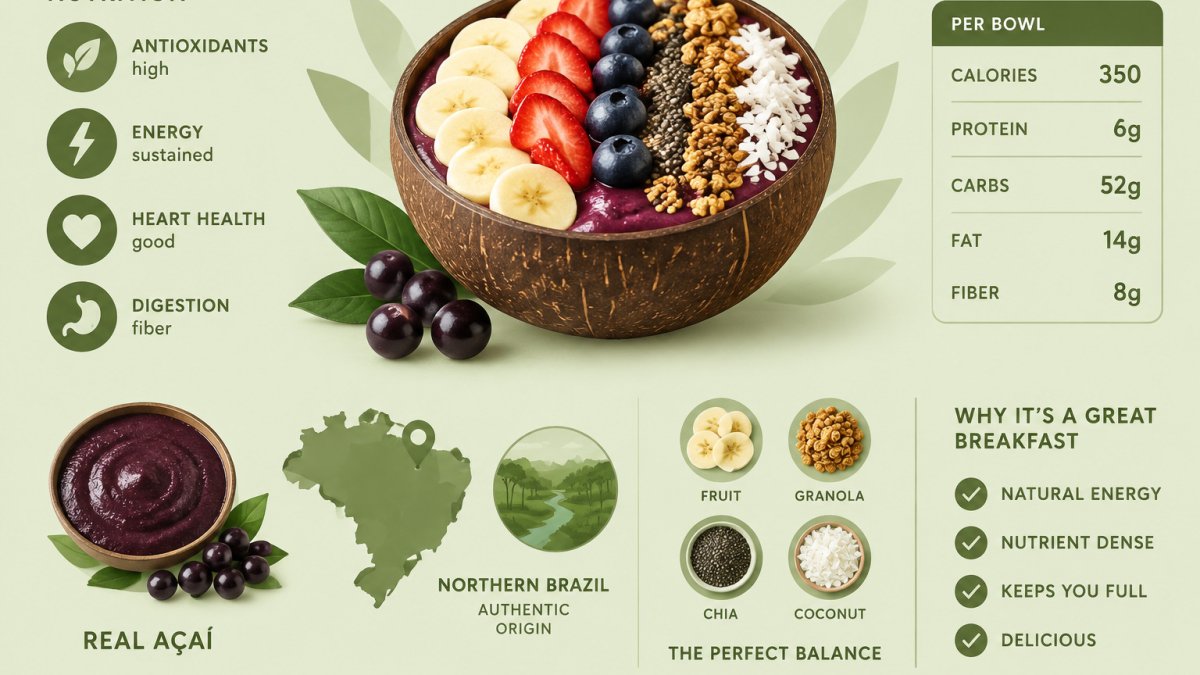
Real fruit solids contribute fiber and natural plant compounds. Added sugar delivers calories and little else, and it often pushes the acai further down the ingredient list.
A narrative review in MDPI's 2026 açaí science review examined acai's nutritional makeup, biological activity, and food technology properties, noting its anthocyanin content and fiber. That density is what you are paying for. When a label lists water and sugar ahead of acai, you are paying for something else.
Here is the trade-off in plain terms:
- High fruit solids: thicker scoop, tarter taste, darker color, more fiber
- High sugar and fillers: softer scoop, sweeter taste, lighter color, fewer nutrients
Neither option is poison. One is a fruit product. The other is a dessert wearing fruit's label.
Ordering a Bowl You Can Trust at World Green Acai
The fastest way to skip the guesswork is to buy from a shop that shows its standards. At World Green Açai, we focus on the fruit and offer high-quality organic açai.
Ordering takes minutes. Use our app to order online and skip the line, or send a gift card to someone who deserves a better lunch.
You do not need a degree in food science to spot good acai sorbet. You need a label, a spoon, and five minutes. Start with the color. Then read the ingredients. Then taste for tartness. If all three line up, you found the real thing.
Most acai bowls taste sweet because the fruit is an afterthought. We built World Green Açai to reverse that, with organic berries, online ordering through our app, and pickup that fits a short lunch break. Get started with World Green Açai and taste what acai is supposed to taste like.
Frequently Asked Questions
How can you tell if acai sorbet is high quality?
Start with the ingredient list: acai puree or pulp should be the first item, not water or sugar. Check the color (deep purple, not pale brown), the texture (thick and scoopable, not icy), and the flavor (tart and earthy, not candy-sweet). A sorbet that tastes like dessert first and fruit second usually carries more added sugar than berry.
What is the difference between acai sorbet and pure acai packs?
Pure acai packs contain only frozen, blended acai pulp, so you control what goes in. Acai sorbet is a finished product that usually adds water, sweetener, and sometimes stabilizers to make it scoopable. Packs give you more berry per bite; sorbet gives you convenience. If you want to judge quality, packs are the clearer benchmark because nothing hides the fruit's natural tartness.
Does high-quality acai sorbet contain added sugars?
Most sorbet contains some sweetener, because pure acai is sharply tart. The quality question is how much and what kind. Look for cane sugar or fruit juice near the end of the list, and watch for maltodextrin, corn syrup, or multiple sweeteners stacked together. A sorbet with acai first and one sweetener low on the label is a better sign than one where sugar appears before the fruit.
Why does authentic acai taste different from commercial sorbet?
Real acai has an earthy, almost unsweet tartness with a finish some people describe as grassy or like dark chocolate. Commercial sorbet often tastes sweeter and flatter because added sugar and dairy or emulsifiers soften that edge. If your first spoonful reminds you of frozen yogurt, the blend is probably light on actual berry. Authentic organic acai keeps that tart backbone even after freezing.