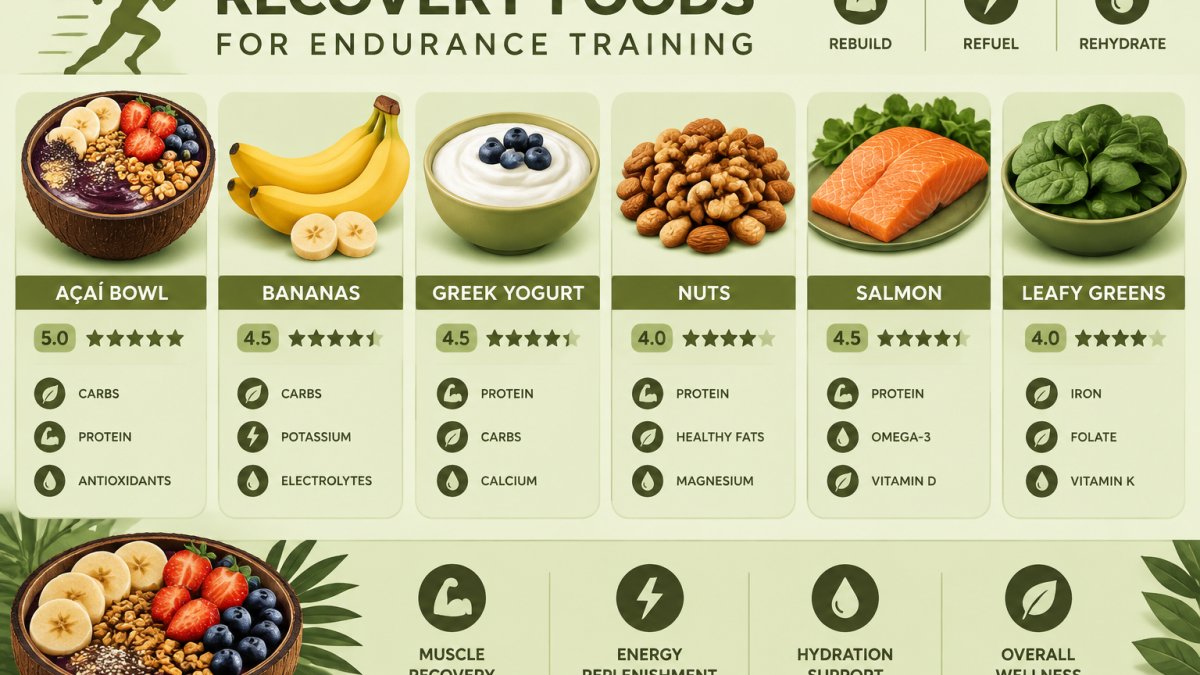
 Listicle
Best Recovery Foods for Endurance Training
Last Updated: November 25, 2026
Quick Summary
The best recovery foods for endurance training pair carbohydrates to refill glycogen with high-quality protein to repair muscle, and top options include chocolate milk, Greek yogurt with berries, salmon with rice, tart cherry juice, and açaí bowls. Choose based on how hard you trained and how soon your next session comes.
- Endurance athletes should aim for roughly 1.2 to 1.8 grams of high-quality protein per kilogram of body weight daily.
- Eat a meal or snack with both carbohydrate and protein within about an hour of finishing a hard or long session.
- For a 70-kilogram athlete, pair roughly 1 to 1.2 grams of carbohydrate per kilogram of body weight within the first hour.
- Each pound lost during a long run represents roughly 16 to 24 ounces of fluid to replace.
- Build an açaí bowl with yogurt, protein powder, or nut butter to push protein toward 20 to 40 grams.
Table of Contents
- What are the best recovery foods for endurance training?
- Nutrient comparison table for top recovery foods
- 1. Chocolate milk: the classic post-run drink
- 2. Greek yogurt with berries: protein and antioxidants
- 3. Salmon with rice: omega-3s and glycogen replenishment
- 4. Tart cherry juice: reducing muscle soreness
- 5. Açaí bowls: antioxidant-rich recovery
- What to eat after running: timing and portion guidance
- Frequently Asked Questions
What are the best recovery foods for endurance training?
The best recovery foods for endurance training combine carbohydrates to refill glycogen with high-quality protein to repair muscle, and the strongest options include chocolate milk, Greek yogurt with berries, salmon with rice, tart cherry juice, and açaí bowls. Each one covers a different piece of the recovery puzzle, so the right pick depends on how hard you trained and how soon you need to back it up.
Here is the part most guides skip: recovery eating is not about one magic food. A 2025 review in Nutritional Strategies to Improve Post-exercise Recovery reports a recommended intake of roughly 1.2 to 1.8 grams of high-quality protein per kilogram of body weight for endurance athletes. That is a daily target, not a single shake.
Below, we break down five recovery foods, what each one actually does, and how to time them around your runs.
Nutrient comparison table for top recovery foods
No single food wins every category. This table shows where each option earns its place, so you can match the food to the gap in your day.
| Recovery Food | Main Strength | Key Nutrients | Best Timing |
|---|---|---|---|
| Chocolate milk | Fast liquid carbs plus protein | Carbohydrates, protein, fluids, electrolytes | Within 30-60 minutes |
| Greek yogurt with berries | Protein with antioxidants | Protein, carbohydrates, electrolytes, vitamins | Snack or light meal |
| Salmon with rice | Full meal, omega-3s | High-quality protein, carbohydrates, healthy fats | Main meal after training |
| Tart cherry juice | Soreness support | Antioxidants, carbohydrates | Daily, around hard sessions |
| Açaí bowl | Antioxidants plus carbs | Carbohydrates, antioxidants, healthy fats | Post-run meal or snack |
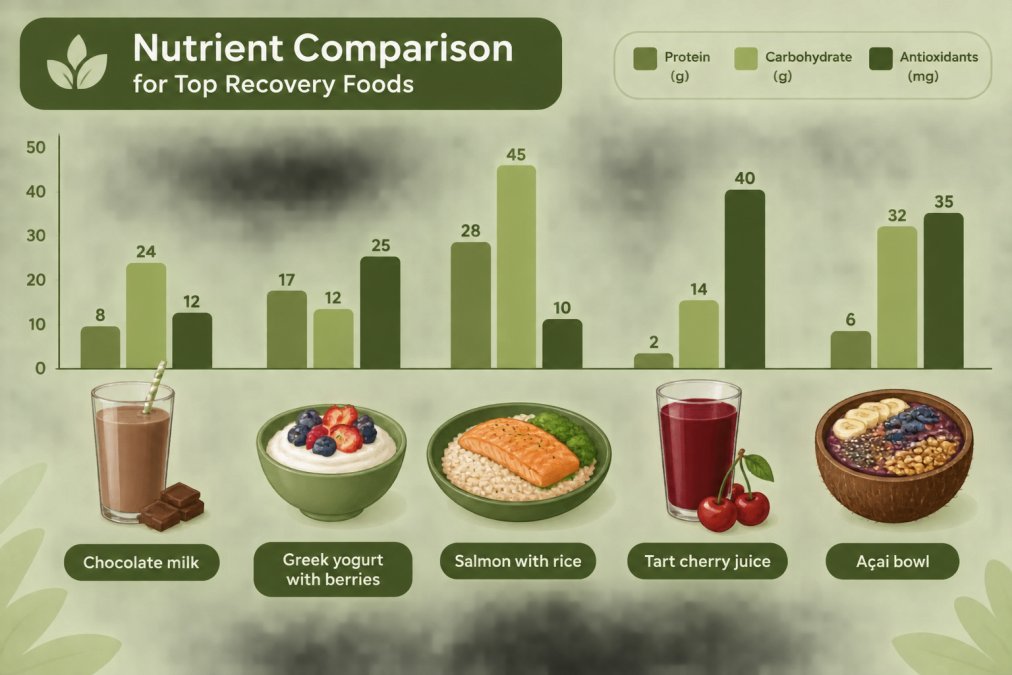
That table is the map. The sections below explain the reasoning behind each pick.
1. Chocolate milk: the classic post-run drink
Chocolate milk delivers carbohydrate and protein in a liquid that is easy to drink when your appetite has not caught up with your effort. Research cited by Johns Hopkins Medicine's runner nutrition guidance and other recovery-food roundups places it among practical post-exercise options, and one cited comparison found it performed better than sports drinks on recovery markers.
The catch is that most comparisons do not publish the full study details, so treat the "better than sports drinks" claim as directionally useful rather than definitive. Pair a glass with a banana and you have a simple, portable snack that covers both carbohydrate and protein.
Best for: runners who want a ready-to-drink option within the first hour.
Skip if: you avoid dairy, in which case a fortified plant milk with a piece of fruit is a reasonable swap.
2. Greek yogurt with berries: protein and antioxidants
Greek yogurt with berries is one of the easiest ways to hit protein and antioxidants in a single bowl. Greek yogurt supplies protein, carbohydrates, and electrolytes, while berries add vitamins and antioxidant compounds that support recovery.
What most guides miss is the portion question. A small single-serve cup often carries less protein than people assume, so if this is your main recovery snack, go for a larger serving and add a handful of berries rather than a spoonful. The cited sources do not specify exact serving sizes or nutrient amounts, so read your labels and build the portion around your daily protein target.
This is a snack, not a meal. On heavy training days, add oats or a slice of whole-grain toast to push the carbohydrate higher.
3. Salmon with rice: omega-3s and glycogen replenishment
Salmon with rice works as a full recovery meal because it pairs high-quality protein with a carbohydrate base. Outside Online's nutrition guidance describes salmon as a source of high-quality protein for recovery and muscle maintenance, and rice refills the glycogen you burned on a long run.
A 2024 review in Emerging Perspectives on Post-Exercise Recovery Nutrition identifies omega-3 fatty-acid sources among functional foods with potential recovery benefits. Salmon fits that category naturally.
This is the pick for the meal after your hardest session of the week, when you have time to sit down and eat properly. The tradeoff is preparation time, so plan it for evenings rather than a rushed lunch.
4. Tart cherry juice: reducing muscle soreness
The same 2024 review in Emerging Perspectives on Post-Exercise Recovery Nutrition names tart cherry juice among functional foods with potential recovery benefits, largely because of its antioxidant content.
One honest limitation: the evidence is review-level, not a guarantee that a glass will erase soreness. Think of it as a support tool around demanding blocks of training, not a magic fix. It also carries natural sugar, so count it toward your carbohydrate intake rather than treating it as a free extra.
For a broader look at managing soreness through food, see our guide on how to prevent muscle soreness with nutrition.
Best for: athletes in a heavy training block who want an easy daily add-on.
Skip if: you are watching sugar intake closely or prefer to get antioxidants from whole fruit.
5. Açaí bowls: antioxidant-rich recovery
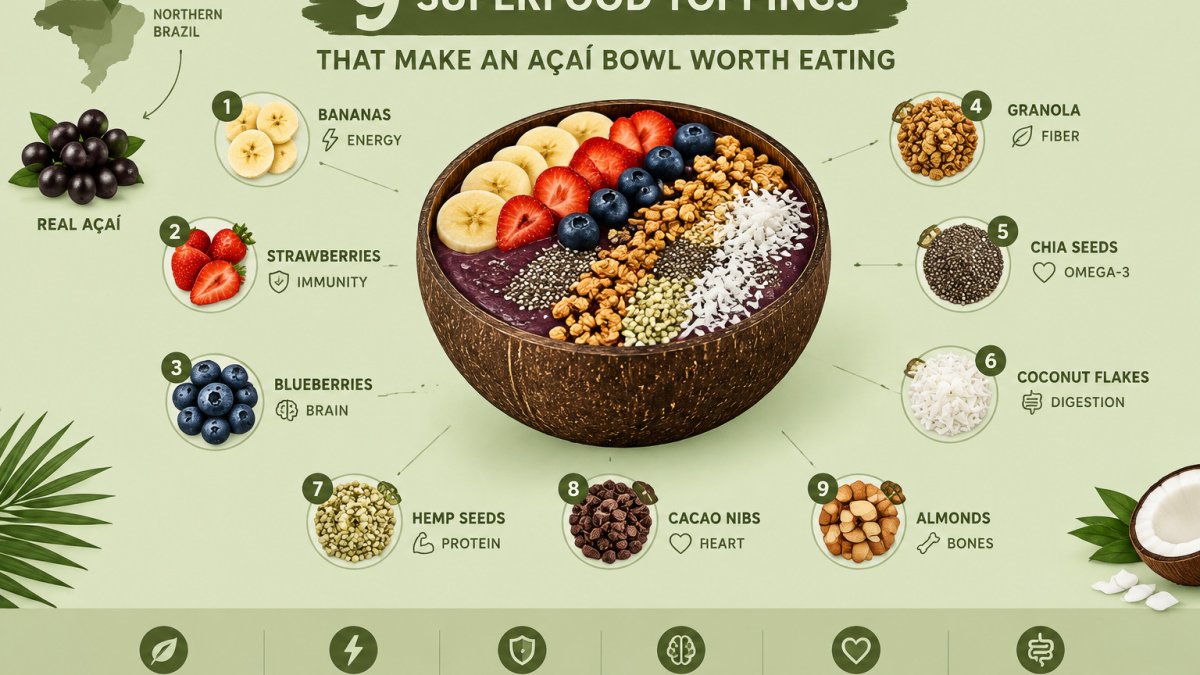
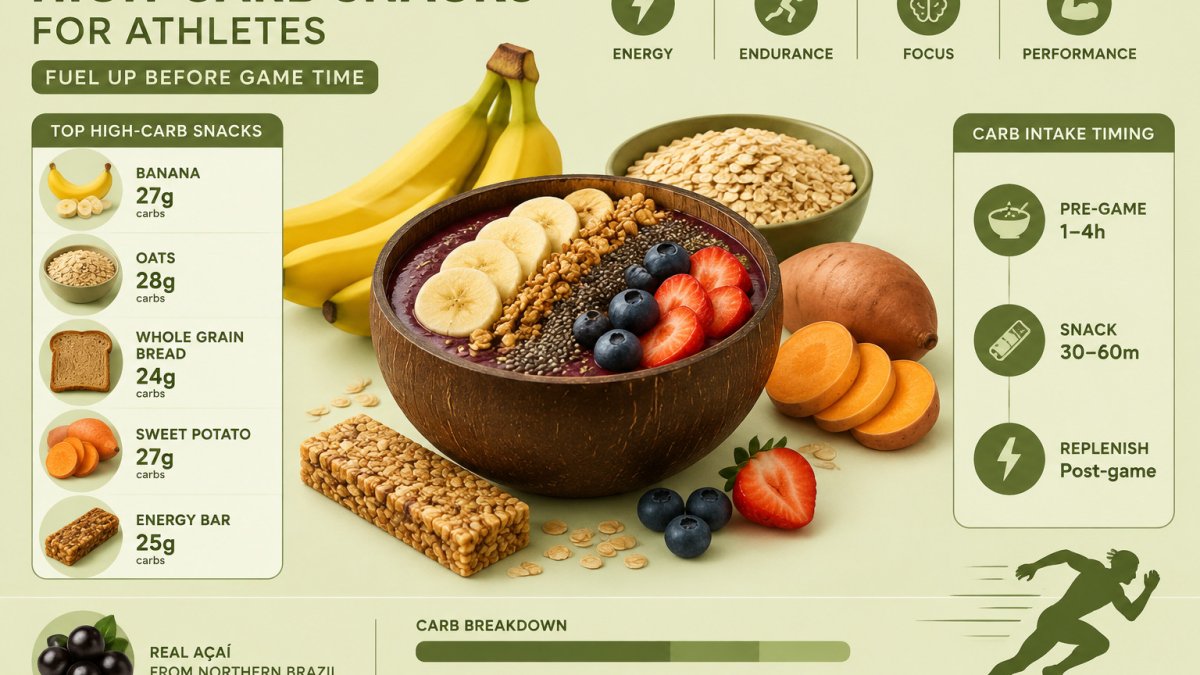
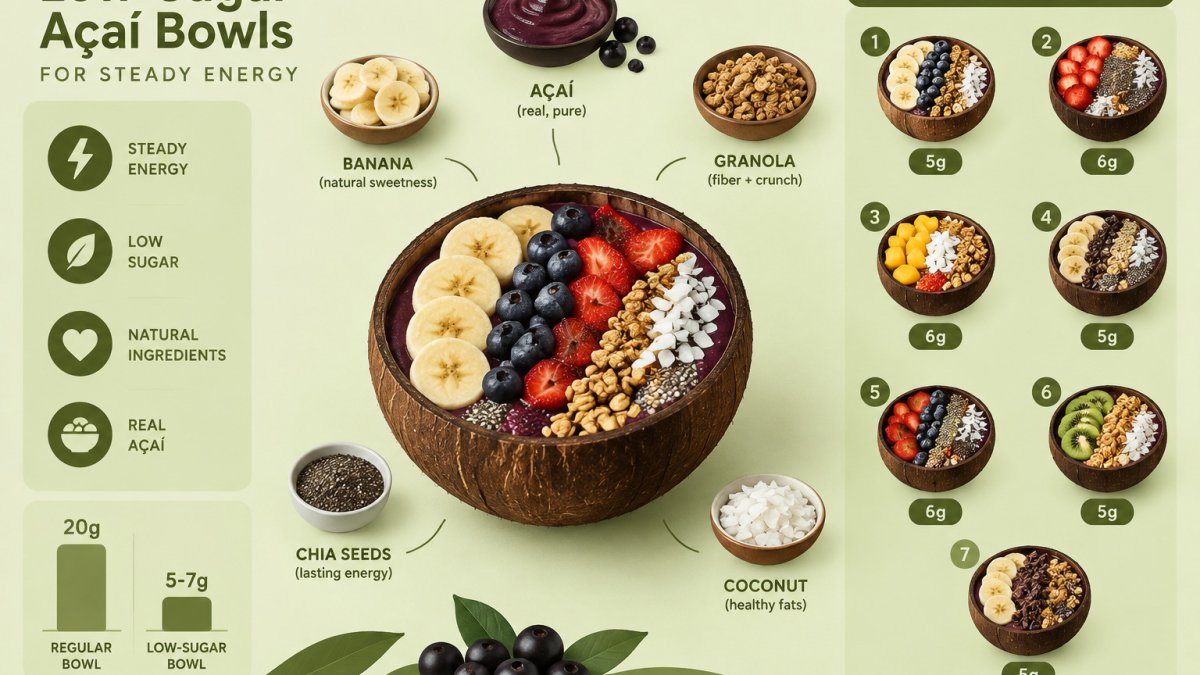
Açaí bowls fit recovery because they combine carbohydrate from fruit and granola with antioxidants and healthy fats, which makes them a satisfying post-run meal rather than a thin snack. The antioxidant angle matters after intense exercise.
The honest framing is that açaí is a useful carbohydrate-and-antioxidant base, not a magic recovery food on its own. What makes a bowl work for recovery is what you build around it.
Build the bowl around the numbers. A recovery bowl should carry both carbohydrate and protein. A base of açaí and fruit supplies carbohydrate; add Greek yogurt, a scoop of protein powder, or a spoon of nut butter to push protein toward the 20-to-40-gram range that most practitioners target per recovery meal. Granola adds carbohydrate and crunch but also sugar and fat, so treat it as a topping rather than the foundation. For a 70-kilogram athlete aiming at roughly 70 to 84 grams of carbohydrate after a long session, a bowl with a banana, a cup of berries, and a half-cup of granola gets you most of the way there.
This is where we are biased, and we will say so plainly. At World Green Açai, you can order online through our app to skip the line when you are pressed for time. If you want to understand why antioxidants matter after a hard session, read our piece on the benefits of eating antioxidants after intense exercise, or browse our list of the best açaí bowl for post workout to pick one that fits your training day.
A word of caution: not every bowl on the market is built for recovery. Ask what goes into the base if you want the recovery benefit rather than just the flavor.
Best for: athletes who want a whole-food carbohydrate and antioxidant base after a long run or ride.
Skip if: you need a high-protein meal and the bowl has no yogurt or protein add-in, in that case, pair it with eggs, Greek yogurt, or a protein shake.
What to eat after running: timing and portion guidance
The window right after a run matters, but not as much as the internet claims. Aim to eat a meal or snack with both carbohydrate and protein within roughly an hour of finishing, and prioritize total daily intake over perfect timing.
What most guides skip is the math. Recovery eating works when you scale it to the session, not when you copy a generic snack. Here is how to build the numbers around your training.
Protein: anchor the day, then the meal. The 2025 review in Nutritional Strategies to Improve Post-exercise Recovery puts the daily target at roughly 1.2 to 1.8 grams of high-quality protein per kilogram of body weight for endurance athletes. For a 70-kilogram athlete, that is about 84 to 126 grams per day. Spread it across three to five eating occasions of roughly 20 to 40 grams each rather than loading it all into one shake. A 6-ounce serving of Greek yogurt, a 3-ounce portion of salmon, two eggs, or a cup of cooked lentils each land in the 12-to-25-gram range, so most recovery meals need two protein sources to hit the target.
Carbohydrate: match the refill to the burn. Carbohydrate needs climb with training volume. A common practitioner pattern is to pair roughly 1 to 1.2 grams of carbohydrate per kilogram of body weight within the first hour after a hard or long session, then return to normal meals.
Fluid and electrolytes: replace what you lost. Hydration belongs in the same conversation. A simple field method is to weigh yourself before and after a long run: each pound lost represents roughly 16 to 24 ounces of fluid to replace. For runs over an hour, or any session in heat, include sodium, an electrolyte drink or a salty snack, rather than plain water alone.
Timing by session type. After an easy 30-to-45-minute run, a normal meal within a couple of hours is enough. After a long run or ride of 90 minutes or more, or a high-intensity session, eat within about an hour and make sure the meal carries both carbohydrate and protein.
Sample recovery combinations by schedule. For a rushed morning: chocolate milk plus a banana. For a midday break: Greek yogurt with berries and a slice of whole-grain toast. For an evening meal: salmon with rice and a side of cooked vegetables. For a plant-based athlete: lentils with rice and a piece of fruit.
If you want ready-made options, our guides to easy homemade recovery snacks for athletes and quick healthy snacks for athletes give you practical, fast ideas you can prepare ahead of time.
Frequently Asked Questions
What to eat for endurance training?
Endurance athletes should prioritize a mix of carbohydrates and protein. A 2025 review recommends 1.2-1.8 grams of high-quality protein per kilogram of body weight daily. Combine that with carb-rich foods like oats, rice, or potatoes to replenish glycogen. Include fruits and vegetables for antioxidants, and hydrate with electrolytes. Practical options include chocolate milk, Greek yogurt with berries, salmon with rice, or an açaí bowl.
What is the 3-3-3 rule for food?
The 3-3-3 rule is not a standard sports nutrition guideline. For recovery, focus on eating within 30-60 minutes post-exercise, aiming for a 3:1 or 4:1 carbohydrate-to-protein ratio. A meal with 3 parts carbs to 1 part protein, such as chocolate milk or a turkey sandwich, supports glycogen replenishment and muscle repair. Always prioritize whole foods and hydration over rigid rules.
What food gives you endurance?
Carbohydrates are the primary fuel for endurance. A 2023 review lists cooked lentils, oats, honey, raisins, rice, and potatoes as mixed-carbohydrate foods that can serve as pre-exercise carbohydrate sources. For sustained energy, choose complex carbohydrates like whole grains, legumes, and starchy vegetables. Pair with protein for longer sessions. Hydration and electrolytes also support endurance.
What should I eat for recovery after a long run?
After a long run, combine carbohydrates and protein within 30-60 minutes. Examples include chocolate milk with a banana, Greek yogurt with berries and granola, or a rice bowl with beans or chicken. A 2024 review highlights tart cherry juice and omega-3 sources like salmon for recovery benefits. Aim for 1.2-1.8 g protein per kg body weight daily, and rehydrate with fluids and electrolytes.
How soon should I eat after an endurance workout?
Eat within 30-60 minutes after an endurance workout to maximize glycogen replenishment and muscle repair. If you have little appetite, opt for liquid recovery foods like chocolate milk or a smoothie. A 2024 article quoting dietitians says recovery meals should combine carbohydrates and protein. Prioritize hydration immediately after exercise, then a balanced meal within two hours.